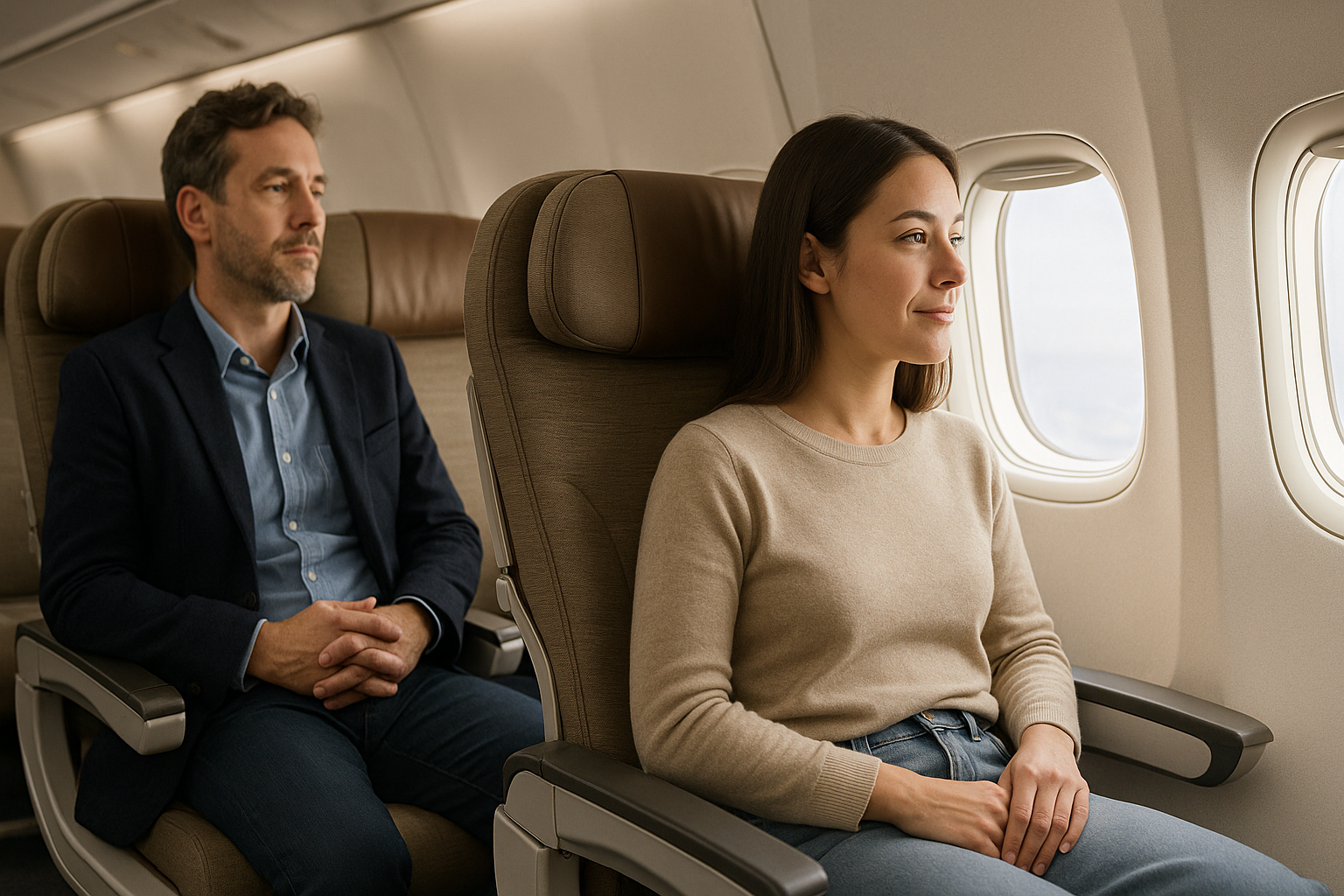
I used to think this was just a preference thing. Like, window people are cozy little cave creatures, aisle people are freedom-loving snack goblins, end of story. But after a bunch of long-haul flights over the last couple years, including one brutal 13-hour one where my ankles got weirdly puffy and my lower back felt like it belonged to a 94-year-old man, I kinda realized seat choice is actually a health decision too. Not a dramatic life-or-death choice for most healthy people, obviously, but still. It matters more than we pretend.
And if you fly long enough, you start noticing patterns. With a window seat, I sleep better. Usually. But I also move less, drink less water because I don't wanna climb over strangers, and then I arrive feeling like a dried-out pretzel. In an aisle seat, I get up more, stretch more, my hips complain less... but I also get bumped by carts, shoulders, random butts, and for some reason I never really settle. So yeah, this is one of those annoying wellness questions where the answer is: it depends. I know, sorry. That's the truth though.
Why this even matters from a health and wellness angle
#Long flights are rough on the human body. You're sitting for hours, cabin humidity is super low compared to what most of us are used to, sleep gets messed up, digestion gets lazy, and circulation can slow down when you barely move. That's not fear-mongering, just basic physiology. Public health guidance for years has warned that prolonged immobility during travel can raise the risk of blood clots, especially deep vein thrombosis, or DVT, in some travelers. The overall risk for healthy people is still low, but it does go up with long-duration travel and with certain risk factors like recent surgery, pregnancy, estrogen-containing meds, prior clot history, cancer, older age, obesity, smoking, or inherited clotting disorders.
What feels more current in 2026 is that wellness travelers are way more aware of all the little in-flight stressors now, not just clot risk. People are talking about mobility snacks, circadian health, glucose stability while traveling, compression socks that don't look like hospital gear, hydration powders, even wearable reminders to stand every hour. Some of it is trend-chasing, sure. But a lot of it lines up with common-sense travel medicine advice. Move regularly. Hydrate. Don't overdo alcohol. Keep blood flowing. Protect sleep where you can. Basically your grandma was right, just with better branding.
If your biggest concern is circulation, aisle usually wins. Yeah, I said it.
#For pure physical health on a long flight, especially 6 hours and up, I think aisle has the edge for most adults. Not because the seat itself is magical, but because it removes friction. You can stand up without doing that awkward half-squat over two sleeping strangers. You can walk to the galley. You can do calf raises while pretending you're waiting for the restroom. You can stretch your knees for a sec. And movement matters. Travel health recommendations generally suggest getting up and moving at intervals on longer flights, plus doing seated ankle circles and calf contractions if you can't walk much.
I noticed this myself on a flight from New York to Lisbon last year. Window seat, red-eye, very romantic in theory. In reality? I didn't want to disturb the couple next to me, so I stayed put way too long. My feet felt hot and tight by landing, and my jeans left marks on my calves. Nothing dangerous happened, to be clear, but it was enough to make me rethink my little 'window is elite' identity. Me and my ego had to have a talk lol.
- Aisle makes it easier to walk every 1 to 2 hours on long flights
- It's easier to keep up with hydration because bathroom access isn't a whole social event
- You can subtly stretch one leg at a time into the aisle area when safe, which my cranky hips appreciate
- If you have clot risk factors, easier movement is a real advantage, though you should talk to a clinician before travel if your risk is high
But window can be better for sleep, stress, and sensory overload
#Okay but... window lovers aren't delusional. There are legit wellness benefits. If your biggest struggle on long-haul trips is sleep deprivation, anxiety, or being overstimulated, the window seat can be fantastic. You get something to lean on. You control the shade, at least partly. Fewer people climb over you. You're not getting whacked by service carts. And there is something weirdly regulating about having a boundary on one side of your body. I sleep lighter in aisle seats because I stay half-alert, like a meerkat in economy class.
Sleep matters a lot more than people think for travel wellness. It's not just mood. Poor sleep can worsen pain sensitivity, increase hunger and cravings, mess with glucose control, and make jet lag feel ten times more disgusting. Recent sleep and circadian-health conversations in 2026 have gone way beyond 'just rest when you can.' More clinicians and travel wellness folks are talking about timing light exposure, meal timing, and sleep banking before trips. And for some people, getting even a couple extra solid hours leaning against the window is worth the tradeoff of moving a bit less, if they intentionally stand up on a schedule.
If you're choosing between a seat where you'll actually sleep and a seat where you'll maybe move more, the better choice might be the one you'll use well. A perfect aisle seat doesn't help if you never get up anyway.
So who should probably pick aisle?
#This is where I get a little opinionated. If you have any tendency toward swelling, stiffness, low back pain, frequent urination, anxiety about asking people to move, or any elevated blood clot risk, aisle is often the practical call. Also if you're over 40 and notice that getting up after sitting forever suddenly feels like starting an old lawnmower... hi, welcome, same.
- People with prior leg swelling on flights or a history of feeling super stiff and achey
- Travelers with higher DVT risk factors who have already been told to prioritize movement and maybe wear compression socks
- Anyone who drinks lots of water and knows they're gonna need the bathroom a lot
- People with restless legs, back tightness, hip pain, or general 'if I stay folded up too long I turn into plywood' syndrome
One thing I wanna say carefully here: if you have significant clot risk, seat choice is not your only strategy, not even close. Evidence-based prevention can include frequent movement, hydration, loose clothing, and for some higher-risk travelers, graduated compression stockings or clinician-advised medication. Not everybody needs meds, obviously. Actually most people don't. But if you've had a previous clot or major risk factors, just guessing your way through it isn't the move.
And who might genuinely do better in the window seat?
#People who prioritize sleep. People who get touched-out or overwhelmed. People who don't want the constant traffic. Folks with flight anxiety who feel calmer when they can look outside, weird as that sounds. Also, if you're the kind of person who can commit to getting up every couple hours no matter what, window gets a lot more defensible from a health perspective.
I have a friend who swears her motion sickness is less annoying by the window because she can orient herself and not get jostled by aisle movement all night. The research on airplane motion sickness tips is a bit broader than seat warfare, but visually stabilizing yourself and avoiding excessive head movement can absolutely help some people. For her, the reduced nausea means she drinks water, eats a little, and doesn't arrive trashed. That's a wellness win, honestly.
The sneaky stuff nobody mentions enough: hydration, skin, digestion, and gross travel body feelings
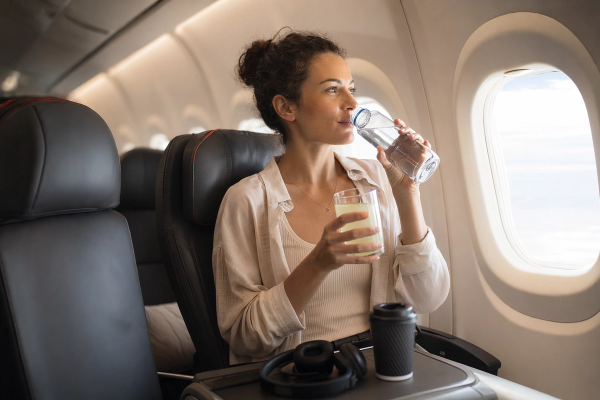
#Airplane cabins are dry. Like, really dry. Humidity in flight is often much lower than normal indoor levels, and I always feel it in my eyes, lips, skin, and sinuses. Aisle seat people tend to get up and drink more, in my experience, because bathroom access is easy. Window people, me included, sometimes accidentally do this dumb little self-own where we avoid drinking so we don't have to pee. Then we get headaches, constipation, dry skin, and that fuzzy tired feeling. Not ideal.
Digestion is another thing. Sitting still forever, eating salty airport food, crossing time zones, and being mildly dehydrated is basically a recipe for bloating. The current wellness world in 2026 is obsessed with gut health, sometimes in a very goofy supplement-marketing way, but one piece of that trend is actually useful here: routine matters. On travel days, simple stuff helps more than miracle powders. Walk before boarding if you can. Eat something with fiber and protein. Go easy on alcohol. And if you know your stomach gets weird, aisle can make those little movement breaks way easier. Your intestines, um, appreciate a stroll too.
My personal verdict after too many flights and too much overthinking
#For flights under maybe 4 or 5 hours, I still pick window a lot. I like the wall, I like not being climbed over, I like the tiny fake sense of privacy. But for true long-haul flying, especially overnight or anything above 7 or 8 hours, I increasingly think aisle is the healthier default for most adults. Not more luxurious. Not more peaceful. Just healthier in a boring, practical, body-maintenance way.
That said, I don't think there is one universal winner. If the aisle means you never sleep and arrive wrecked, cortisol buzzing, neck spasming, and emotionally feral, then maybe that wasn't the best health choice for you after all. Wellness is annoyingly individual like that. The best seat is the one that helps you reduce your biggest in-flight stressors while still covering the basics of movement and hydration.
A simple seat-choice cheat sheet I wish I'd made years ago
#- Pick aisle if your legs swell, you hate asking people to move, you pee often, you have back or hip stiffness, or you've got any clot-risk concerns
- Pick window if sleep is your top priority, you get anxious with aisle traffic, or you need a wall to lean on and can reliably get up on a timer
- If you can afford it, bulkhead or extra-legroom aisle is kind of the sweet spot for long-haul body comfort
- If you're in a middle seat... honestly I'm sorry. Then your best wellness tools are compression socks, hydration, and radical acceptance
What I do now on long flights, regardless of seat
#I finally stopped treating flying like some weird survival challenge and started treating it like a health event. That sounds dramatic, but it helps. My routine now is pretty simple and backed by standard travel-health advice more than internet hype. I wear compression socks on longer flights, especially if it's over 6 hours. I set a quiet reminder to move. I do ankle pumps during movies. I drink water regularly, not obsessively. I limit alcohol because plane wine has betrayed me one too many times. And I try to align sleep with destination night if I'm crossing major time zones. None of this is sexy, but it works.
I also bring a tiny kit that makes me feel less disgusting: lip balm, moisturizer, electrolyte packets for after I land, eye drops if my doctor says they're okay for me, and a neck pillow I used to make fun of and now would defend in court. In 2026, travel wellness trends are full of wearables and smart recovery gadgets and all that, and some are cool, sure, but the old-school basics still carry the whole team. Move. Hydrate. Sleep when you can. Support circulation. Don't overcomplicate it.
A quick note on when to get medical advice before flying
#If you've had a previous DVT or pulmonary embolism, recent surgery, active cancer, are pregnant or recently postpartum, take estrogen-containing meds, have serious heart or lung disease, or you've been told you have clotting issues, don't just use a blog post to make the call. Ask your healthcare professional what precautions make sense for your trip. Same goes if your legs swell dramatically, you get chest pain, or shortness of breath after travel. Most post-flight aches are just normal travel junk, but sudden one-sided leg swelling, chest pain, or unexplained breathlessness needs urgent medical attention. Better safe than trying to be chill about something not chill.
So... window or aisle?
#My honest answer? Aisle is usually better for physical health on long flights. Window is often better for sleep, calm, and feeling a bit human. If I had to recommend one seat to the average traveler thinking specifically about circulation, stiffness, hydration, and overall body comfort, I'd say aisle. If I was talking to an anxious sleeper who never functions well without rest, I might say window with a strict stand-up plan. See? Contradicting myself a little, but not really.
That's the thing with wellness. The best choice isn't always the one that sounds most optimized on paper. It's the one you'll actually do. If you know yourself, like really know yourself, the answer gets easier. And if you're still torn, book the aisle for the flight out and the window on the way back. Very scientific, very mature, definitely something I would do.
Anyway, that's my very human take after years of arriving either sore, sleepy, dehydrated, or all three. Hope it helps you pick smarter for your next long-haul trip. If you're into this kind of practical health stuff without too much wellness fluff, I've found some nice reads over on AllBlogs.in too.