I’ll say this right at the start: Assam is not the easiest place to understand through one meal. It looks simple at first. Rice, dal, some greens, a few mashed things, a chutney that bites back a little, maybe a bowl of tenga if you’re lucky. But then you sit down, the brass plate or banana leaf comes out, and suddenly you’re tasting river fog, backyard gardens, mustard oil, smoke, bamboo shoots, lemon, herbs you can’t name, and that calm Assamese way of feeding people where nobody makes a big drama about it. They just keep adding one more spoon of something until you’re basically surrendering.
My first proper Assamese vegetarian thali happened in Guwahati after a wet, sticky afternoon near Uzan Bazaar. I had walked too much, argued with Google Maps, got splashed by a passing auto, and then followed the smell of mustard oil and rice steam into a small local place that didn’t look “travel blog pretty” at all. Plastic chairs, steel tumblers, a fan making heroic but pointless circles. And honestly? One of the best meals I’ve had in Northeast India. Not fancy. Not Instagram-perfect. Just deeply, quietly delicious.
First, What Actually Is an Assamese Vegetarian Thali?
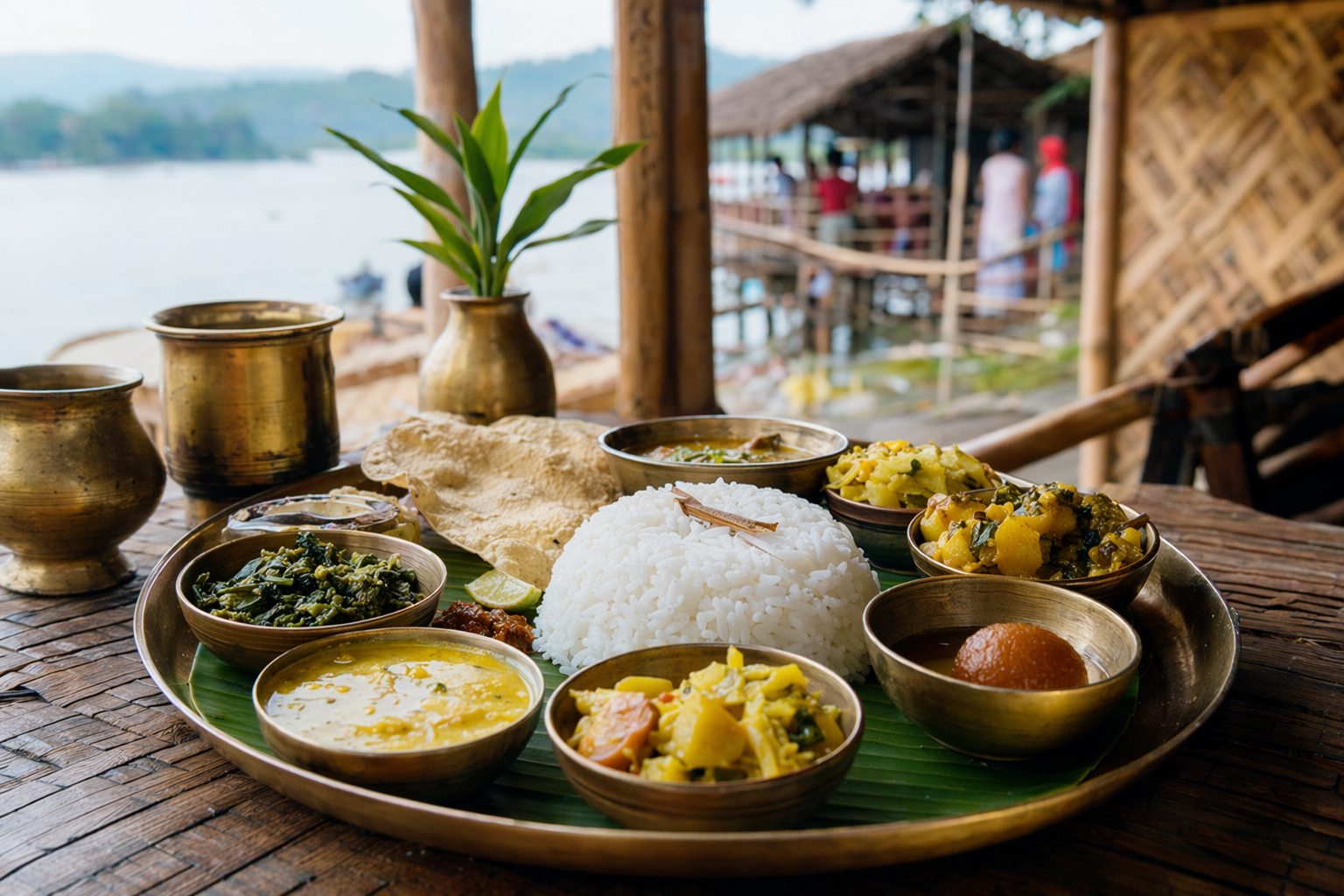
#An Assamese thali is usually built around rice, because rice is not just food here, it’s the main character. You’ll often get steamed joha rice or regular local rice, dal, seasonal vegetables, leafy greens called xaak, pitika which is a mashed preparation, khar which is the famous alkaline dish, chutney or pickle, sometimes tenga-style sour curry, and if you’re in a home or a very traditional restaurant, there might be tiny extras that change with the season. It’s not heavy like some North Indian thalis. There’s usually no mountain of paneer butter masala sitting there looking proud. Assamese vegetarian food is lighter, greener, more herbal, a bit sour, sometimes smoky, and honestly very good for travelers who’ve been eating fried snacks for three days straight and need to feel like a decent human again.
The thing that surprised me most was the restraint. Like, Assamese cooks don’t always attack food with spices. They let vegetables taste like themselves. Pumpkin tastes like pumpkin. Banana flower has that slightly bitter earthiness. Mustard greens taste sharp. Herbs are fresh, not hidden. Some travelers mistake this for blandness, especially if they’re coming from Delhi, Punjab, Rajasthan, or anywhere with big masala energy. I get it. But give it two meals. By the third one your tongue starts noticing the small stuff, and then you’re in trouble because you’ll want more.
The Core Dishes You’ll Meet on a Vegetarian Assamese Thali
#If you’re traveling vegetarian in Assam, learn these names. Not because you need to become an expert or act smug at restaurants, please don’t be that person, but because it helps you order better and also understand what’s being served. Assamese food has a lot of seasonal variation, so your thali in Guwahati in January won’t feel exactly like one in Majuli in July. That’s actually the fun bit.
- Bhaat: Steamed rice, usually the center of the meal. Joha rice, when available, has a beautiful aroma and is worth asking for.
- Dail or dal: Often lighter than what you might expect elsewhere in India. Sometimes with bottle gourd, papaya, or other vegetables.
- Khar: A signature Assamese preparation made with an alkaline ingredient traditionally from sun-dried banana peel ash water. Vegetarian versions may use raw papaya, pulses, or vegetables. It has a very particular taste, slippery and mild and weirdly addictive.
- Xaak bhaji: Stir-fried leafy greens. Lai xaak, dhekia xaak or fiddlehead fern when in season, mustard greens, spinach, and many local greens show up.
- Pitika: Mashed vegetables, usually with mustard oil, onion, green chilli, salt, sometimes coriander. Aloo pitika is common, but begun pitika, roasted brinjal mash, is my personal weakness.
- Tenga: A sour curry. Fish tenga is famous, yes, but vegetarian tenga with elephant apple, tomato, lemon, roselle leaves, or bottle gourd can be lovely if you find it.
- Kharoli, pickle, chutney: Small sharp things on the side that wake the whole plate up.
One small warning, and I learnt it after confidently saying “veg thali” and still getting suspicious side bowls: clarify properly if you don’t eat fish. In Assam, fish is everywhere and sometimes people may not think of fish gravy as “meat” in the same way some travelers do. Say “pure vegetarian, no fish, no egg, no chicken, no meat” if you’re strict. If you’re Jain or avoid onion and garlic, say that very clearly too, and don’t assume every restaurant can manage it during rush hour.
Guwahati: The Easiest Place to Start Your Assamese Thali Hunt
#Most travelers land in Guwahati first, and honestly it’s a good place to begin. It’s busy and chaotic, the traffic near GS Road can test your spiritual development, but the city has a surprisingly nice mix of traditional Assamese restaurants, newer cafes, tea rooms, and homely lunch places. Also, Guwahati is where I noticed the 2026 food-travel mood most clearly: people want regional food, but they also want clean kitchens, digital payments, easy location pins, vegetarian clarity, and experiences that feel local without being uncomfortable. Restaurants are adapting. QR menus are common in newer places, UPI works almost everywhere, and young Assamese chefs are talking more about indigenous greens, fermented ingredients, seasonal produce, and low-waste cooking.
For thalis, places like Paradise Restaurant in Guwahati have long been known among travelers for Assamese meals, though the menu includes non-vegetarian classics too, so ask for the vegetarian options clearly. Khorikaa is another well-known Assamese food name in the city, more famous for smoked and grilled items, but you can still explore vegetarian sides and traditional preparations depending on availability. Maihang and ethnic Assamese dining spots around the city are also worth checking for local thali-style meals. Menus and timings do change, and some places are stronger for non-veg than veg, so I usually call before going or check recent reviews. Boring advice, but it saves heartbreak.
My favourite Guwahati food moment wasn’t even in a famous place. It was a lunch where the aloo pitika came with raw mustard oil that smelled so sharp I almost sneezed. The dal was thin and comforting. The greens had just enough chilli. There was a sour tomato chutney that I still think about, which is ridiculous because it was probably made in five minutes. But that’s the thing with Assamese food. It doesn’t always try to impress you. It just sits there being honest, and then later you realise you miss it.
A Thali Tasting Route in Guwahati, If You’ve Got One Full Day
#If I had one food-focused day in Guwahati, I’d do it slowly. Start with tea, because Assam and tea are basically inseperable. Skip the hotel tea bag situation if you can and try a proper cup of Assam orthodox or CTC milk tea at a local tea shop or cafe. Then go to a market. Fancy travelers go straight to restaurants, but markets tell you what the city is eating. Uzan Bazaar, Ganeshguri, Beltola market on market days, even neighbourhood vegetable stalls are full of clues: banana flowers, colocasia stems, herbs, fiddlehead ferns in season, bamboo shoots, gourds, lemons, fresh turmeric, tiny chillies.
- Morning: Tea and market walk. Don’t rush. Ask what the greens are called, even if you forget the names five minutes later.
- Lunch: Proper Assamese vegetarian thali at a traditional restaurant or local thali place. Order extra pitika if they have it.
- Afternoon: Visit a tea store or cafe for Assam tea tasting. In 2026, tea experiences are getting more curated, with small tastings, origin stories, and pairing plates becoming popular.
- Evening: Go light. Maybe pitha if available, local sweets, or just more tea because you’re in Assam and that’s allowed.
A lot of food travelers now are doing what people call “slow culinary travel,” which is basically a fancy way of saying don’t just eat and run. Sit. Talk. Watch. Ask where the greens came from. Try one ingredient you’ve never tried. Assam rewards that kind of travel more than checklist travel. If you come only for “top 10 dishes” you’ll miss the tiny seasonal things, and those are the best parts.
Majuli: Where Vegetarian Assamese Food Feels Closest to the Soil
#Majuli is different. The ferry ride itself slows you down, whether you like it or not. The Brahmaputra is wide and moody and sometimes looks more like a moving sky than a river. I went during a season when the roads were half mud, half memory, and by the time I reached my stay, I was hungry in that deep travel way where even plain rice sounds poetic. Majuli is known for its satras, mask-making, river island life, Mising villages, and a quieter rhythm that makes Guwahati feel like it’s talking too loudly.
Vegetarian meals in Majuli can be beautiful, especially if you stay in a homestay or eco-lodge that cooks local food. Expect rice, dal, pumpkin, greens, potato mash, brinjal, bamboo shoot preparations if they do vegetarian versions, and seasonal chutneys. Some meals are not restaurant-style thalis but more like home plates, which I actually prefer. The food tastes of whatever was available that morning. One lunch I had there was almost too simple to describe: rice, yellow dal, stir-fried greens, mashed potato with mustard oil, and a lemon wedge. But I ate like I’d been rescued from some emotional desert.
This is also where sustainability stops being a buzzword. In big-city travel writing we throw around terms like farm-to-table and zero-waste, but in Assam’s villages, especially in places like Majuli, a lot of cooking has always been seasonal, local, and low-waste because that’s just how life works. Banana leaves, bamboo, home gardens, community knowledge, fermented foods, preserved ingredients for monsoon months. Now travelers in 2026 are “discovering” it, and yes, sometimes we sound silly. Still, if tourism supports local cooks and homestays fairly, I’m all for it.
The Vegetarian Thali Flavours That Might Confuse You at First
#Let’s talk about khar. I have seen travelers take one spoon and make a face like they’ve been betrayed. I also get why. Khar is not spicy, not sour, not creamy, not crispy, not anything you can easily compare. It has this alkaline softness and almost cleansing feeling. The first time I tried it, I thought, hmm, maybe not. The second time, I mixed a little with rice and dal and suddenly it made sense. It’s not meant to be eaten like a big dramatic curry. It’s a quiet dish. Very Assamese, actually.
Then there’s mustard oil. If you’re not used to it raw, it can feel aggressive. Assamese pitika often uses mustard oil uncooked, with onion and green chilli, and that smell is part of the charm. Don’t ask them to remove everything and then complain it has no taste. I mean, you can ask if you have dietary issues, obviously. But if you’re there to experience the cuisine, let the mustard oil do its thing.
And sourness! Assamese food uses souring agents in such a clean way. Elephant apple, lemon, tomato, thekera, roselle, tenga leaves depending on the region and season. Vegetarian tenga isn’t always on restaurant menus because fish tenga is the famous one, but ask around. If you find a bottle gourd or tomato tenga, order it. Sour food in humid weather makes so much sense. Your body gets it before your brain does.
Jorhat, Sivasagar, and the Tea Country Appetite
#If you’re heading toward Jorhat, Sivasagar, or the tea estates, your thali journey gets another layer. Tea country has its own travel mood: colonial-era bungalows, green estates, workers’ lines, old towns, roadside stalls, and that constant perfume of tea leaves and rain. Jorhat is a practical base for Majuli too, but don’t treat it only as a transit stop. Eat there. Look for local Assamese restaurants, simple rice hotels, and homestay meals if you’re staying outside town.
Sivasagar, with its Ahom monuments and tanks, is one of those places where I got hungry from walking in the sun and then became very dramatic about lunch. A vegetarian Assamese plate after sightseeing hits differently: rice, dal, one dry veg, one leafy thing, a sour side, pickle. Nothing too oily, which is perfect because Assam heat can make heavy food feel like a personal attack. Tea tourism is also becoming more experience-led now: estate walks, tea tasting sessions, garden stays, and pairing local snacks with different flushes. If you’re vegetarian, tell the hosts ahead of time and they can usually plan simple regional meals around local vegetables.
Kaziranga for Vegetarians: Yes, You’ll Eat Well
#Kaziranga is where most travelers go for rhinos, elephants, grasslands, and safari mornings that begin before your soul is awake. Food around Kaziranga can be resort-heavy, but many lodges now offer Assamese meals because guests are asking for local food instead of the same paneer and noodles everywhere. This is one of the biggest food travel changes I’ve noticed lately: even wildlife travelers want regional plates. Not just buffet pasta. Thank god.
If you’re booking a lodge near Kaziranga, message them before arriving: “Can you arrange Assamese vegetarian thali or local vegetarian dinner?” Most decent stays will say yes, though the level of authenticity varies. A good meal might include rice, dal, xaak, pumpkin, potato pitika, bamboo shoot pickle, local lemon, maybe black sesame chutney, and seasonal vegetables. After a cold morning safari, hot rice and dal tastes like luxury. Not spa luxury. Better. Stomach luxury.
My rule in Assam: if someone offers you extra xaak, say yes. Greens are where the place really talks.
How to Order Vegetarian Without Accidentally Getting Fish
#This deserves its own section because I’ve messed it up. In many parts of Assam, fish is everyday food, and it may appear in thalis by default. If you’re vegetarian, be polite but specific. Don’t just say “veg?” while pointing vaguely at a menu. Say “niramish” if the person understands Bengali/Assamese context, or simply say in English/Hindi: no fish, no egg, no chicken, no meat. If you don’t eat food cooked in the same oil or utensils, that is harder in small places, so ask before sitting.
- Useful phrase: “Pure vegetarian thali milega? Fish nahi, egg nahi.” Simple, but it works in many tourist-facing places.
- Ask what is in the dal. Sometimes dried fish is not common in dal, but always ask if you’re strict.
- Check pickles and chutneys. Some may include fish or fermented fish in certain communities, though many are vegetarian.
- Homestays are your best friend if you communicate early. They can plan a proper meal instead of improvising.
Also, be kind. I’ve seen travelers get weirdly angry when a small family-run eatery doesn’t understand their exact dietary category. Food culture is local. We are the visitors. Explain, smile, repeat if needed, and if it doesn’t work, find another place. No need to turn lunch into an international incident.
My Dream Assamese Vegetarian Thali Plate
#If I could build my perfect Assamese vegetarian thali, it would start with hot joha rice, not too much because I always pretend I’ll eat less and then don’t. A ladle of light moong dal. Raw papaya khar, just a small bowl. Dhekia xaak if in season, fried with minimal spice. Begun pitika with mustard oil, onion, coriander, and green chilli. A pumpkin curry, slightly sweet but not sugary. Tomato tenga or elephant apple sour curry. Bamboo shoot pickle on the side, but only a tiny bit because it can take over the whole plate like an uncle at a wedding. And a wedge of kaji nemu, that fragrant Assamese lemon that makes everything brighter.
Dessert? Maybe pitha if it’s festival season, or doi with jaggery, or just black tea. Assamese sweets don’t always scream for attention like syrupy North Indian mithai. Many are rice-based, coconut-based, sesame-based, seasonal. During Bihu, of course, food becomes a whole celebration. If your trip overlaps with Magh Bihu or Rongali Bihu, please plan meals with local families or community events if possible. Pitha, laru, sira, doi, gur, smoky winter feasts, it’s a whole different level.
Markets, Ingredients, and the Joy of Not Knowing Everything
#Some of my best Assam food memories are not from eating but from staring cluelessly at vegetables. At a market in Guwahati, a woman selling greens laughed at me because I asked the name of the same bunch twice. Fair. There were fiddlehead ferns curled like tiny question marks, banana flowers with deep purple skins, colocasia stems, fresh bamboo shoots, herbs tied in little bundles, and lemons so fragrant they made my bag smell good for hours. I bought nothing useful because I was staying in a hotel, but I walked around like a museum visitor.
Food travel in 2026 is becoming more ingredient-led, and I love that. People are tired of eating only restaurant signatures. They want market walks, cooking classes, home dining, tea tastings, fermentation workshops, and stories behind ingredients. Assam is perfect for this, but the infrastructure is still uneven. You won’t find polished culinary tours everywhere like in Bangkok or Lisbon. Sometimes you’ll need to ask your homestay host, a driver, or a local cafe owner. Sometimes the best “food tour” is just somebody’s auntie explaining why this green is good during monsoon.
A Few Travel Practicalities, Because Hungry Travelers Need Plans
#Best season? For comfortable travel, November to March is lovely: cooler weather, clearer skies, winter produce, and Bihu food around January if you time it right. Monsoon is lush and dramatic, but floods and transport disruptions can happen, especially around river islands and low-lying areas. Summer is hot and humid, though the food still sings because sour curries and greens make sense in that climate. If your itinerary includes Majuli, always check ferry timings locally. They can shift with river conditions.
For vegetarians, breakfast can be the trickiest if you’re outside cities. Hotels may default to bread-omelette, paratha, or poha, not necessarily Assamese food. Ask for chira-doi-gur, pitha if available, or simple rice-based breakfast. Lunch is usually easier for thali. Dinner in small towns may end early, so don’t wander in at 10 pm expecting a full traditional spread. Assam is not always a late-night dining destination unless you’re in parts of Guwahati.
| Place | Why go for vegetarian thali | Traveler tip |
|---|---|---|
| Guwahati | Most restaurant options, traditional Assamese meals, markets, tea shops | Call ahead for pure veg thali and check recent reviews |
| Majuli | Homestay meals, seasonal vegetables, slow food culture | Tell your host dietary needs before arriving |
| Jorhat | Tea country base, access to Majuli, local rice hotels | Try tea tastings and ask for local veg lunch |
| Sivasagar | Ahom heritage plus simple Assamese meals | Eat lunch before/after sightseeing, not too late |
| Kaziranga | Lodges offering local Assamese plates after safaris | Request Assamese vegetarian dinner while booking |
What Makes Assamese Vegetarian Food So Travel-Friendly
#It doesn’t exhaust you. That’s my honest answer. Some cuisines are amazing but after two days you need a nap and a digestive prayer. Assamese vegetarian food, when done traditionally, feels balanced. Rice gives comfort, dal gives warmth, greens keep things fresh, sour curries lift the meal, pitika brings smoky richness, pickles add drama. It’s not “diet food” in that sad urban way. It’s real food that happens to be gentle.
It also teaches patience. You can’t understand a thali by only looking for spice levels or famous dishes. You have to notice texture, season, temperature, bitterness, sourness, aroma. You have to mix things with rice in different combinations. Khar with rice. Pitika with dal. Xaak with lemon. Pickle only at the edge, unless you’re brave or foolish. Every bite can change if you stop eating like you’re catching a train.
Final Thoughts: Go for the Thali, Stay for the River and Rain
#If you’re planning Assam as a vegetarian traveler, don’t worry too much. You may need to communicate clearly, and yes, you’ll probably see a lot of fish around you, but there is a beautiful vegetarian food world here. It’s seasonal, rice-centered, leafy, sour, smoky, and much more subtle than people expect. Start in Guwahati, wander through markets, eat at traditional restaurants, then move toward Majuli, Jorhat, Sivasagar, or Kaziranga depending on your route. And please leave space in your plans for accidental meals. The best ones never fit neatly into itineraries.
I came to Assam thinking I’d enjoy the tea and maybe find a few decent vegetarian plates. I left craving khar, mustard-oil pitika, kaji nemu squeezed over hot rice, and those quiet lunches where nobody fusses but everyone makes sure you’re fed. That, to me, is the real thali experience. Not just a plate, but a place teaching you how to slow down. If you’re collecting more food-travel ideas and honest destination guides, have a lazy scroll through AllBlogs.in sometime, preferably with a cup of Assam tea next to you.