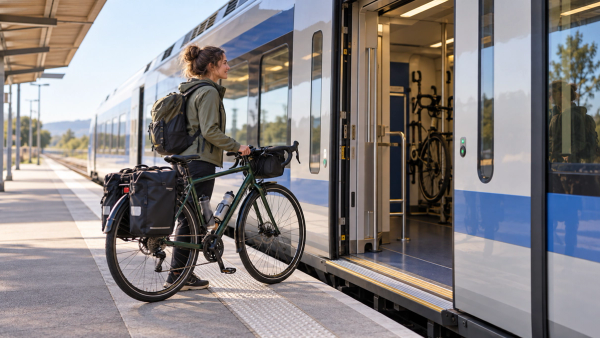

If you're planning a Europe trip from India and feeling weirdly stressed about mobile data... yeah, same. People talk so much about Schengen visas, forex cards, winter jackets, Eurail passes and all that, but almost nobody tells you the actual panic of landing in a new country and not having internet for Google Maps, Uber, hotel check-in messages, OTPs, and that one dramatic "haan maa, pahunch gaya" call home. I learnt this the slightly hard way on my own Europe trip. Not a disaster exactly, but enough to make me sit down and compare eSIM vs physical SIM vs international roaming properly. And honestly? For most Indian travellers now, eSIM is usually the easiest option. Usually. Not always. That's the important bit.
I did a multi-country trip covering Italy, Austria, Hungary and a bit of France, and because this was one of those classic Indian-style trips where itinerary looks chill on Excel but in real life you're running with luggage between trains, I needed internet all the time. Translation apps, maps, booking apps, museum tickets, WhatsApp location sharing, checking platform numbers, even looking up whether a restaurant had veg food. Europe is super travel-friendly in many ways, but don't assume free public Wi-Fi will save you. Sometimes it works, sometimes it asks for a local number, sometimes it's so slow you just stand there staring at your phone like an idiot.
The 3 options most Indians end up considering
#Broadly, you have three choices. One, activate international roaming from your Indian SIM like Jio, Airtel or Vi. Two, buy a physical SIM either before leaving India or after reaching Europe. Three, use an eSIM, which is basically a digital SIM profile you install on your phone. Sounds simple when written like that, but the experience is very different on the ground.
- International roaming = convenient before departure, but usually expensive and sometimes confusing with packs, validity and fair usage limits
- Physical SIM = can be cheaper in some cases, but buying it after landing can be annoying if shops are shut, airport counters are overpriced, or registration takes time
- eSIM = super convenient for compatible phones, quick setup, and great for multi-country Europe travel... but only if your phone supports eSIM and ideally is not carrier locked
What I used on my trip, and why I changed my mind halfway
#Before leaving India, I was actually leaning toward just using roaming on my regular number for peace of mind. Airtel and Jio both have international packs, and on paper it feels easy. Pay once, land, switch on data roaming, done. But then I started reading the fine print. Some packs looked okay for short trips, especially 1-3 days or for business travellers who mainly need OTPs and a bit of Google Maps. But for a 10-day to 2-week Europe trip, the cost starts climbing fast. And when you're already paying for flights, visa, insurance, internal trains, hostel or hotel, museum entries, Schengen-proof documents, every euro starts feeling personal yaar.
So I tried an eSIM instead. Best decision? Mostly yes. I installed it in India itself on airport Wi-Fi at home, tested whether the profile was visible, and then activated it on arrival. That one step saved me from the classic post-landing chaos. No searching for SIM kiosks, no fumbling with passport registration while half asleep, no removing my Indian SIM. I kept my Indian number active for WhatsApp and OTPs and used the eSIM for data. That dual setup felt kinda perfect, not gonna lie.
The biggest win with eSIM wasn't just price. It was that I landed in Europe and internet was already sorted. That feeling... very underrated.
So, which is the best eSIM for Europe from India?
#I'm not gonna pretend there is one magical eSIM that is best for every single person. Depends on your route, trip length, how much data you burn through, whether you need hotspot, and whether you're the sort who uploads 75 Instagram stories a day from Swiss trains. But in general, the best eSIM for Europe trip from India is the one that gives broad Europe coverage across multiple countries, easy activation before departure, decent speeds on local partner networks, transparent validity, and no drama with top-ups.
For Indian travellers, the most useful type is a regional Europe eSIM rather than a single-country one. Why? Because once you're moving inside the Schengen area or hopping between major tourist countries, you do not want to keep changing plans. Regional Europe eSIMs usually work across most major destinations like France, Italy, Spain, Germany, Netherlands, Austria, Czech Republic, Hungary, Portugal and more. Some also cover the UK and Switzerland, but not always, so check that properly. Seriously check. A lot of people assume all Europe plans include everything. Nope.
What I think matters more than brand names
#People get too hung up on the brand. I was also like that for a bit. But after actually travelling, here's what mattered way more in real life:
- Coverage in all the countries on your itinerary, not just "Europe" in big letters on the website
- Whether activation starts at installation or only when you connect in destination - this changes everything if you're buying early
- Daily data cap vs total data pool. Daily caps can be irritating if you're doing heavy map use, video calls, or hotspotting to a laptop
- Customer support that actually replies when things go wrong. A cheap eSIM with no support is not cheap anymore
- APN and setup simplicity. If you're not techy, you want one that just works without 11 manual steps
A lot of popular travel eSIM providers now offer Europe packs ranging from around 3GB for a short trip to unlimited or high-data plans for 15 to 30 days. Typical cost? Somewhere around ₹700 to ₹3000+, depending on data and validity. That's broad, I know, but realistic. Physical local SIMs can sometimes beat that on price, specially if you're staying in one country for longer. Roaming from India often costs more than both, unless your usage is very light or your operator has a promo pack.
eSIM vs physical SIM in Europe - the actual on-ground difference
#Physical SIM still makes sense in some situations, and I don't want to oversell eSIM like some shiny influencer ad. If you're going to just one country for 2-3 weeks, and you can buy a local SIM in the city center, you may get more data for less money. In places like Italy, Spain, France, Germany, local telecom shops and airport booths do sell tourist SIMs, though prices at airports are often inflated. You may also need passport verification. Sometimes staff is helpful, sometimes not. Sometimes the queue is moving nicely, sometimes one poor guy is registering 19 tourists while everyone waits. You get the picture.
But if your trip is multi-country, fast-moving, and you want internet from the first minute, eSIM wins on convenience by a long shot. No physical card, no chance of losing your Indian SIM, no need to open that tiny SIM tray with a pin while standing near baggage belt no. 7. Also, many newer iPhones, Samsung Galaxy flagships and Google Pixel models support eSIM well now. Even some mid-range phones do, though not all Indian variants support it, so check in settings before buying any plan. Search for SIM manager or mobile network settings. If eSIM option isn't there... bas, don't risk it.
When international roaming from India is still worth it
#Okay, now let me defend roaming a little, because people online act like it's always dumb. It's not. If you're doing a super short trip, say a 3-day business visit to Germany or a week where hotel Wi-Fi will handle most of your usage, roaming can be fine. Also useful if you absolutely need your Indian number active for calls or bank OTPs and don't want to juggle settings. Jio, Airtel and Vi all keep updating their international roaming options, and some plans bundle data, outgoing minutes and incoming call benefits. For families, older parents, or travelers who hate setting up new things, this simplicity has value.
But read the details. Some plans have limited high-speed data. Some countries are included, some not. Some are good for 24 hours, 10 days, or whatever weird duration the telco has decided. And if you go beyond included usage, the charges can get nasty. Not always, but enough that I'd never tell a budget-conscious Indian traveller to just switch on roaming blindly. That's how bill shock stories happen.
A quick practical comparison - because this is what I wish somebody sent me on WhatsApp
#| Option | Best for | Typical cost feel | Main headache | My honest take |
|---|---|---|---|---|
| eSIM | Multi-country Europe trips, flexible travellers, newer phones | Usually moderate | Phone compatibility and setup | Best all-round choice for most Indians now |
| Physical SIM | Longer stay in one country, heavy data users | Can be cheapest | Buying after arrival, registration, swapping SIMs | Good if you're staying put and don't mind effort |
| International roaming | Short trips, business travel, parents, people needing their Indian number active simply | Usually expensive to moderate | Confusing packs and overage risk | Okay for convenience, not my first pick for long leisure trips |
Stuff nobody tells you before buying an eSIM for Europe
#First, your Indian bank OTPs and app logins can still be a pain. Keeping your primary Indian SIM in the phone helps, but make sure international roaming for SMS or network access is enabled if needed. Even without a full data roaming pack, some people keep the Indian SIM active just for receiving OTPs. Check charges with your operator though. Second, battery drain can be a bit higher when your phone is managing dual SIMs and switching networks. Mine definitely drained faster on train days.
Third, not every so-called unlimited plan is truly unlimited. Some slow down after a fair-use threshold. That's not evil, it's just telecom language being telecom language. Fourth, hotspot support varies. If you need to work remotely from Europe for a few days, look for hotspot/tethering allowance before buying. Fifth, install the eSIM before flying if possible. Doing it when you're already abroad with flaky airport Wi-Fi is just unnecessary stress. I nearly did that, thank god I didn't.
How much data do you really need in Europe?
#This depends on your travel style more than destination. For a 7 to 10 day Europe trip, if you're mostly using Google Maps, WhatsApp, some Instagram, train apps, restaurant searches and email, around 5GB to 10GB is usually enough. If you're uploading lots of reels, video calling home every day, using hotspot for laptop work, or watching Netflix in hostels, you'll need more. I personally used more data on travel days than sightseeing days, because maps + translation + booking confirmations + random searching adds up quite fast.
- Light user: 3GB to 5GB for a short city trip with hotel Wi-Fi
- Normal traveller: 5GB to 10GB for around 10 to 14 days
- Heavy user/content creator/remote worker: 15GB+ or a good high-data plan
One thing that surprised me was how often I needed data in transit. European railway stations are great, but platform changes happen, apps log you out, and if you're connecting through places like Milan, Vienna or Paris, that live internet matters more than you think.
Travel updates, safety, and what feels relevant right now
#Europe remains one of the easiest long-haul regions for Indians to travel around once your visa and bookings are in place, but practical safety still matters. Petty theft and pickpocketing are the bigger issue in tourist-heavy areas, especially around major stations, crowded metros, nightlife zones and famous landmarks in cities like Paris, Rome, Barcelona, Milan and Prague. This is exactly why having working mobile data is part of safety too, not just convenience. You can track routes live, contact your stay host, book a cab if you're stranded late, and share live location with family.
Public transport apps are excellent across many cities, and cashless payments are common, though carrying a backup card and some cash still helps. Accommodation prices have stayed pretty dynamic post-peak travel boom. In many popular European cities, hostels often start around €25-€50 for a dorm bed in season, budget hotels may sit around €80-€150+, and central stays in top destinations can jump much higher. If you're travelling in summer or around Christmas markets, book early. Shoulder seasons like April-May and September-October are honestly the sweet spot for many Indians - better weather, less crowd than peak summer, and prices that are still painful but slightly less painful.
Best months for Europe if you're travelling from India and care about connectivity too
#Weird heading maybe, but hear me out. Season affects connectivity experience too. In peak summer, tourist crowds are huge, airport arrivals are messy, train stations are busier, and physical SIM counters can get crowded. Winter has shorter daylight and weather disruptions in some regions, so live maps and service updates become even more important. I personally think late spring and early autumn are the easiest months for first-time Indian travellers. Pleasant weather, longer days, less chaos, and you actually enjoy walking instead of melting or freezing.
If you're doing Christmas markets in Central Europe, eSIM becomes extra useful because you don't want to land in cold weather and then wander around looking for a telecom store. Trust me, after a long flight from India, all romance ends when fingers stop working.
Little tips for Indian travellers that made a big difference
#This section is random-ish, but these things mattered. Download offline Google Maps for your major cities even if you have an eSIM. Keep screenshots of hotel check-in instructions. Save train tickets in wallet apps and also as PDFs. Use WhatsApp calling over data instead of regular international calls. Carry a power bank because navigation drains battery. And if your family back home worries a lot, set up one shared location method before you leave. Less daily explaining, more peace.
- Check eSIM compatibility before purchasing. Not after. Before.
- Verify whether Switzerland, UK, Turkey or Eastern Europe countries are included if your route goes there
- Use your Indian SIM for OTPs and your eSIM for data if your phone supports dual SIM well
- Buy enough data for maps, cabs, bookings and emergencies - not just social media
- Don't rely only on airport Wi-Fi. It's okay till it suddenly isn't
My final verdict - eSIM vs SIM vs roaming for Europe from India
#If you want the shortest version of this whole blog, here it is. For most Indian tourists doing a Europe vacation across multiple countries, eSIM is the best balance of convenience, flexibility and value. Physical SIM is good when you're staying longer in one country and want max data for less. International roaming is the easiest but usually the least economical for leisure travel, unless your trip is super short or you really need the simplicity.
Would I use eSIM again for Europe? 100% yes. In fact, after this trip I kind of became that annoying person telling friends, "bhai just sort your internet before flying." Because once you're there, you want to think about croissants, trams, church towers, pasta, snow, museums, shopping, whatever your Europe dream is. Not network bars. Not recharge confusion. Not whether your cab app will open outside the airport.
Anyway, that's my very non-fancy but real take on the best eSIM for Europe trip from India. Do your phone compatibility check, compare plan validity carefully, don't get seduced by fake-unlimited wording, and match the option to your travel style. That's it, basically. And if you like travel posts written a bit more honestly and less brochure-like, have a look at AllBlogs.in too.