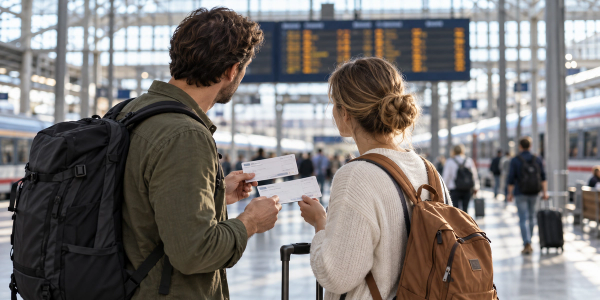
There are people who book trains for speed, and then there are weirdly sentimental food nerds like me who book overnight trains because dinner, chai, dawn light, station snacks, and the whole slightly chaotic theater of Indian Railways feels like a moving feast. I honestly think some of my best meals in India haven't happened inside fancy dining rooms at all, but on platforms at 11:40 pm, or from a steel tiffin opened by a co-passenger aunty who decides you've not eaten enough. If you love food and travel equally, overnight train trips in India are kinda unbeatable. You go to sleep in one food culture and wake up inside another. That's magic, yaar.
And 2026 has made this whole thing even more interesting. Rail travel in India is having a bit of a moment again, not just with the Vande Bharat conversation hogging attention in daytime sectors, but with overnight travel getting smarter in small practical ways. E-catering is way more normal now, especially through IRCTC-linked delivery at major stations, so you can pre-order proper regional meals instead of gambling on whatever appears. More travelers are picking "food routes" on purpose, building itineraries around local breakfasts, GI-tag sweets, station-famous snacks, and old city restaurants near arrival stations. Also, people are fussier now, in a good way, about hygienic packaging, millet-based options, regional thalis, filter coffee that doesn't taste sad, and vegetarian/vegan customization. Not every train nails it, obviously. Some pantry meals still feel like they were made out of regret. But overall, the food-travel scene on trains is definitley better than it was a few years ago.
Why overnight trains and food go together so ridiculously well
#I think it's because trains force you to slow down. Flights flatten everything. Airports make every city feel vaguely the same, all expensive sandwiches and bad coffee. But trains... trains let geography become flavor. Somewhere after Kota the air changes. Somewhere before Vijayawada the breakfast shifts. Somewhere after Nagpur the spice profile starts doing its own thing. You notice who boards with what. Poha in one section, lemon rice in another, guava with masala salt, cutlets wrapped in paper, banana chips, idlis packed for the whole family. Me and my friend once spent half a night on a lower berth ranking platform chai by strength and sweetness. Was this a useful use of time? No. Did it feel important? Absolutely.
My rule is simple: if a train route crosses culinary regions overnight, there's a good chance it's worth taking even if the train itself is a little late and the blanket smells faintly of history.
1) Mumbai to Goa on the Konkan route — fish curry dreams, station vada pav, and that rainforest-window feeling
#Okay, technically not every Mumbai-Goa train is a pure classic overnight depending on the service and timing, but several options still give you that evening departure, sleep-through-the-dark, wake-up-to-Konkan vibe. And wow, this route. If I had to convince a first-timer that trains can be scenic and delicious, I'd probably start here. You leave Mumbai with all its grab-and-go energy, maybe after stuffing a vada pav from Dadar or a box of snacks from a local bakery, and by morning you're in the lush, river-cut, red-earth world of the Konkan coast.
Food-wise, the smart move is to not depend only on onboard pantry stuff. In 2026, lots of regulars pre-order through station delivery apps or IRCTC e-catering at bigger stops, and it's worth it. I ordered a surprisingly decent thali once before Ratnagiri, but honestly the real reward is what happens after arrival. In Madgaon and nearby, I went straight for a proper Goan breakfast-lunch hybrid because I was too excited to be sensible. Pao, xacuti, prawn curry rice, cafreal, then later bebinca because self-control had left the chat. If you're non-veg, Goa just keeps giving. If you're veg, don't worry, there are beautiful mushroom xacuti versions, kokum curries, poi with local fillings, and more creative cafe menus now than people realize. Also, travelers in 2026 are chasing local-fermented drinks, small-batch cashew products, and hyper-regional Saraswat and Catholic home-kitchen experiences, not just beach shack clichés.
What I’d actually eat on this route
#- Before boarding in Mumbai: vada pav, khari biscuits, maybe a mawa cake if I'm feeling extra
- Late night on train: chai, always chai... and whatever homemade the family across from you is willing to share lol
- Arrival meal in Goa: fish curry rice or a veg thali with sol kadhi
- Dessert mission: bebinca, dodol, or serradura if you end up in a modern Goan cafe
2) Delhi to Amritsar — the butter, the smoke, the platform chai, the sheer excess of Punjab
#This one's not the longest overnight in the universe, but if you take the right evening service and roll in around the right hour, it absolutely works as a satisfying food route. Plus the payoff is immediate. Amritsar is one of those places where I become a bit irrational. I arrive with plans, and then the plans collapse under the weight of kulchas. The train itself is part warm-up, part appetite-building exercise. Out of Delhi, I'll usually board with something restrained and fail to remain restrained. Maybe a sandwich. Maybe roasted chana. Then somebody sells tea at a station and suddenly I'm in snack mode all over again.
By 2026, Amritsar's food tourism scene has gotten even more layered. Yes, everyone still talks about kulcha, lassi, tandoori everything, and the langar at the Golden Temple, which remains one of the most moving food experiences in the world, no hype. But there’s also renewed interest in heirloom Punjabi home cooking, partition-era recipes, artisanal pinni, and cleaner, better-curated street food walks around the old city. Kesar Da Dhaba still matters. So do old kulcha spots, though people will fight over which is best and they are all a little bit right and a little bit annoying about it. I remember getting off half-sleepy, taking an auto, and eating a blistered, ghee-soaked kulcha way too early in the day. No regrets. In fact I still think about the chole.
- Do the langar with respect, not as a content stop. Sit, eat, observe, help if you can.
- Leave room for kulcha after. I know this sounds impossible. Try anyway.
- If you're into sweets, ask for seasonal pinnis or phirni from trusted local shops, not just the first flashy place.
3) Howrah to New Jalpaiguri / Darjeeling gateway — cutlets at departure, momo weather by morning
#There's a particular romance to boarding in Kolkata at night. Maybe it's because Howrah station already feels cinematic, maybe because Bengalis know how to send you off fed, maybe because I can never resist station cutlets and a sweet tea in a bhad. This overnight run toward North Bengal is one of my favorites because it feels like a culinary hinge. You leave behind one set of cravings and wake up ready for another. As the train pushes north, breakfast thoughts become momo thoughts. Soup thoughts. Thukpa thoughts. Also maybe kachori if you're still in the plains and being chaotic about it.
New Jalpaiguri has become even more of a food launchpad now, with travelers heading onward to Darjeeling, Kalimpong, Kurseong, and even Sikkim circuits while intentionally stopping for local produce-driven cafes, tea tastings, and Nepali-Tibetan food experiences. In 2026, a lot of culinary travel coverage is focusing on tea tourism with more depth, less colonial cosplay, thank god. People want single-estate tea sessions, local cheese, millet baking, fermented greens, and family-run momo joints rather than just generic hill-station noodles. The train bit matters because it sets the tone. Last time I did this route, an elderly couple shared narkel naru with me after we complained together about the AC being too cold. Which is honestly peak train intimacy in India.
4) Chennai to Madurai or Tirunelveli — idli at night, temple-town breakfast, and the South just showing off
#South Indian overnight trains are my comfort zone, I can't lie. There is a rhythm to them I trust. Cleanly packed idlis. Lemon rice that survives travel beautifully. The smell of podi and curd rice in dabbas. Filter coffee opportunities multiplying by the hour. From Chennai heading south to Madurai, Tirunelveli, or even onward connections toward Nagercoil, you get one of the best examples of how train food and destination food can blend into one long edible storyline.
Madurai in particular is superb if you're arriving hungry. Jigarthanda, kari dosa, idiyappam, bun parotta, temple-side tiffin, all of it. Tirunelveli gives you halwa, sodhi kuzhambu territory, strong local breakfast culture, and a gateway into southern Tamil flavors that don't always get enough mainstream spotlight. In 2026, there's also more interest in traditional rice varieties, millet tiffin, cold-pressed oils, and lesser-known community cuisines across Tamil Nadu. Some station vendors and local chains have gotten smarter about eco-friendlier packaging too, which I love seeing, even if implementation is patchy. One thing though, don't over-romanticize every onboard meal. Sometimes the sambar rice is glorious, and sometimes it's just... there. That's life.
Tiny practical note from someone who learned the hard way
#If you're boarding from Chennai with plans to sleep early, don't tell yourself you'll skip platform snacks and eat after waking up. You won't. The medu vada will call you. The coffee will call you louder. Accept your fate.
5) Mumbai to Ahmedabad — not the longest sleeper story, but a killer western India snack-to-thali transition
#I almost didn't include this because some people are strict about what counts as a proper overnight, but a late-evening departure into an early Gujarat arrival is absolutely a food trip in my book. This route is ideal if you're the sort of person who wants a manageable train night and a huge breakfast payoff. Board in Mumbai with its savory chaos, wake up in Ahmedabad where fafda-jalebi, khaman, maska bun, sev khamani, and polished old-city thalis are waiting like they knew you were coming.
Ahmedabad's food scene in 2026 is not just old favorites, though old favorites are why I keep going back. There’s a stronger spotlight now on heritage pol food walks, seasonal Gujarati home dining, vegan adaptations that actually respect flavor, and modern restaurants revisiting Kathiawadi and Jain traditions in thoughtful ways. Also, millet has gone fully mainstream in upscale and casual Gujarati dining, which makes sense because the region already had deep grain traditions long before "smart carbs" became trendy wellness language. I had one breakfast there after a rough sleep on the train and somehow the first bite of hot fafda with raw papaya sambharo made me forgive everything, including the uncle who snored like an idling diesel engine.
6) Bengaluru to Kochi / Ernakulam — coffee first, then appam and stew, then maybe a nap because wow
#This route feels gentle to me. Maybe because Kerala arrivals always do. You board in Bengaluru, probably after overthinking your snacks because Bengaluru has way too many good bakeries and specialty coffee places now, and then overnight the landscape changes and by morning you're entering coconut, backwater, rain-washed territory. Ernakulam is a terrific arrival city for food. Appam and stew, puttu-kadala, idiappam, fish molee, banana chips that are still good because they haven't gone stale in some airport kiosk. You can go Syrian Christian, coastal Kerala, toddy-shop style if timing allows, or full modern cafe if you need a reset.
A lot of 2026 culinary travel writing around Kerala is centering hyperlocal seafood, indigenous ingredients, sustainable farm-to-table stays, and smaller-town bakery culture, which I'm very here for. Fort Kochi and Mattancherry still pull crowds, yes, but the more interesting thing lately is travelers venturing beyond obvious spots for community-run meals, spice farm experiences that aren't too performative, and breakfast trails. On the train, I usually carry fruit, nuts, and one indulgent thing, but somehow still end up buying cutlets. Why are train cutlets so persuasive? Science should study this.
7) Jaipur to Jaisalmer or Jodhpur side — desert-bound sleepers and the joy of waking up hungry in Rajasthan
#Rajasthan by overnight train just hits different. The stations feel dramatic, the mornings feel cinematic, and the food payoff can be huge if you know where to go. Jaipur to Jodhpur is easier and more common for many travelers, while further desert routes toward Jaisalmer give you that full overnight-to-thar mood. I love this route because Rajasthan understands breakfast as a serious matter. Pyaaz kachori, mirchi bada, mawa kachori, rabri, then somehow later a full thali with gatte, ker sangri, bajra roti, lehsun chutney. It's too much and still not enough.
Recent travel trends in 2026 are pushing travelers toward regional Rajasthani cuisines beyond the usual tourist-thali shorthand. Marwari home meals, desert foraging stories, camel milk products in niche spaces, heritage sweet shops, and restored haveli dining are all getting attention. Some of that can become over-curated nonsense, sure. But when it's done well, you really do get a better sense of how sharply food changes even within the same state. I once got off in Jodhpur after a not-great sleep and was so cranky I almost went straight to the hotel. Thank god I didn't. I had hot mirchi bada with chutneys from a local spot and my personality returned.
A few train-food rules I swear by, though I break them too
#- Carry one proper backup meal. Not just chips. Actual food.
- Use e-catering on longer routes when a major station stop lines up with mealtime. It's way less random now in 2026.
- Still buy platform chai even if you packed coffee sachets. Packed coffee sachets are a lie you tell yourself.
- If a local family offers homemade thepla, idli, poori-aloo, or lemon rice, and it feels comfortable and safe, say yes. That's half the joy of train travel.
- Don't get too snobby about station food. Be selective, sure. But some of the best bites are humble and fast and served in paper.
Also, a word on hygiene because every romantic train essay tends to float above this part. Be sensible. Pick busy vendors, sealed water, hot fresh food, and trusted delivery options at larger stations. Indian train food has improved, but not in some magical universal way. It's still uneven. Part of the fun is navigating that unevenness without being reckless about it.
So, which overnight food route is the best?
#Annoying answer, but it depends on your appetite personality. For scenery plus coastal cravings, Mumbai to Goa is hard to beat. For sheer emotional food impact, Delhi to Amritsar is massive. For a shift into hill food and tea country, Howrah to NJP is lovely. For comfort, consistency, and breakfast glory, Chennai southbound wins a lot of points with me. And if you want a shorter, easier edible adventure, Mumbai to Ahmedabad is sneaky-good. I don't think there is one perfect answer. Some trips are about the window. Some are about what waits outside the station. Some are about the aunty who hands you homemade laddoo and refuses to take no for an answer.
What I know for sure is this: India makes more sense to me by train, and food makes more sense to me in motion. You watch regions blur and sharpen, you taste migration and memory, you realize breakfast can tell you where you are before the station board does. That's maybe a dramatic thing to say, but I don't care, it's true. If you're planning a trip in 2026, try at least one overnight route where the eating is part of the itinerary, not an afterthought. Go with curiosity, a wet wipe packet, and an elastic waistband. You'll probably need all three. And if you want more rambling food-and-travel stuff like this, yeah, have a look at AllBlogs.in.