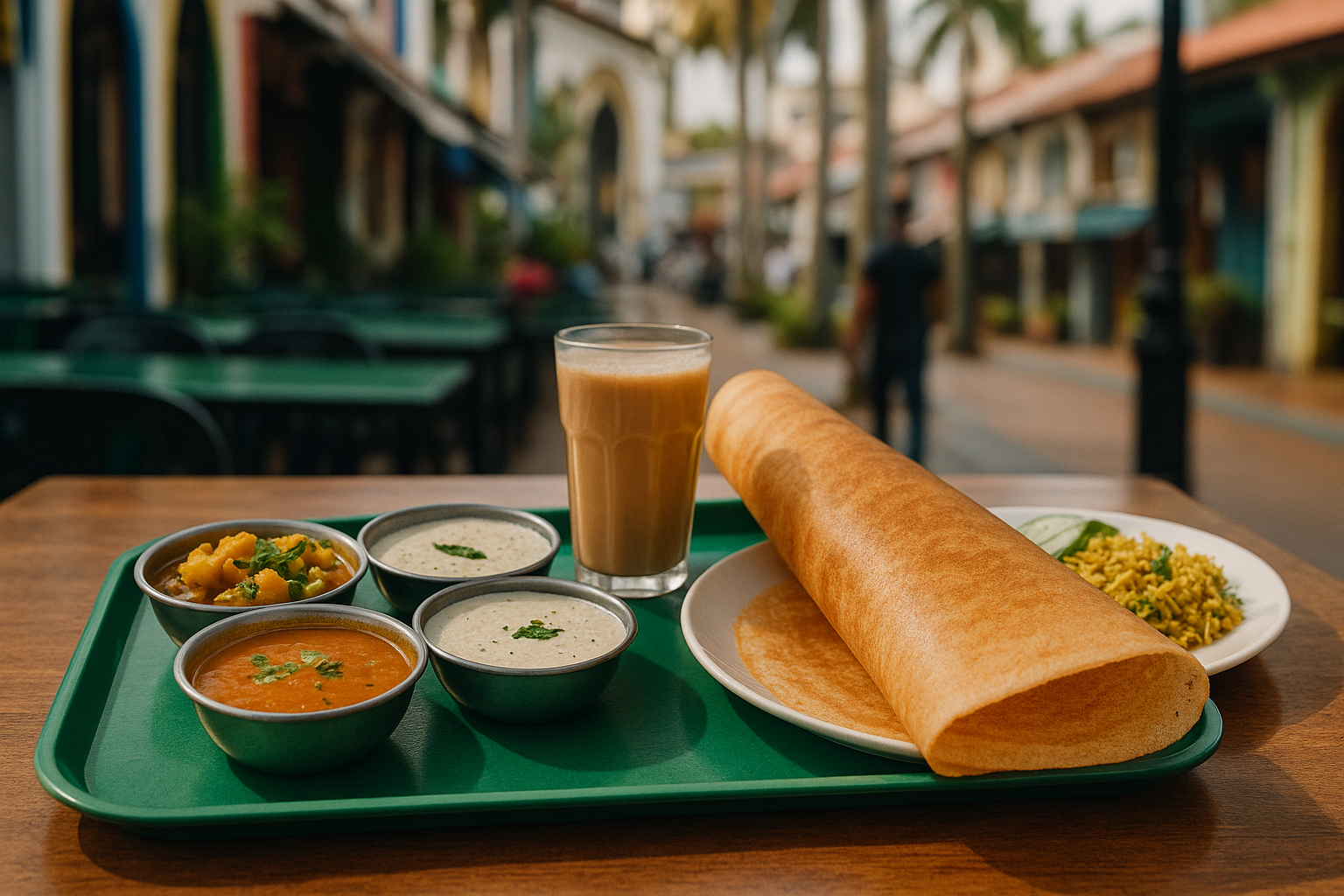
I used to think Singapore would be easy for Indian vegetarians. Like, obviously right? Huge Indian community, Little India, temples, dosa everywhere, sorted. And um... yes and no. It is easy compared to a lot of places, but it's not always straightforward once you leave the obvious zones. I learnt that on day one, standing in a shiny hawker centre with ten amazing-smelling stalls and exactly zero confidence about whether the noodles had oyster sauce, whether the soup had fish stock, or if "veg" meant actually vegetarian or just "has some vegetables in it". Still, this trip turned into one of my fav food journeys ever. Singapore is compact, crazy efficient, expensive in some annoying ways, but for vegetarian Indian travelers it can be so, so rewarding if you know where to look and what to ask.
This guide is basically the thing I wish I had before landing at Changi hungry and overexcited. It's part food diary, part practical survival note, part me rambling about meals I still think about at random times. I went around Little India, Chinatown, Katong/Joo Chiat side, Bugis, Marina Bay, and a bunch of hawker centres in between. Also, 2026 Singapore feels very food-forward in a way that's honestly fun to watch. Plant-based menus are not some fringe thing anymore. More places label alliums, vegan options, Jain-friendly requests, and allergens a bit better than before. Digital ordering kiosks are everywhere, contactless payment is basically default, and you even see upscale spots doing plant-based tasting menus or modern takes on heritage food. Not every trend is life-changing, but some of it genuinely makes travel easier.
First things first - can Indian vegetarians eat well in Singapore?
#Yes. Absolutely yes. But don't be lazy about it. If you're strict vegetarian, or eggless, or Jain, or don't do onion-garlic on certain days, you need to ask. Singapore food is deeply multicultural - Chinese, Malay, Indian, Peranakan, Eurasian influences all mixed together - and that means hidden ingredients pop up all over the place. Sambal may have belacan. Broths can be meat-based. Stir-fries might use oyster sauce even if no visible meat is there. Rice can be cooked in stock. A dish that looks harmless can be sneaky. I don't say that to scare you, just to keep expectations real.
- Words that helped me a lot: "vegetarian, no meat, no fish, no oyster sauce, no lard, no egg"
- If you're Jain, say it clearly and slowly. Some Indian restaurants understood right away, non-Indian stalls usually needed specifics
- At hawker centres, if the staff look unsure... just move on. Don't gamble with mystery gravy
- Little India is the easiest base if food is a major part of your trip. I stayed near Farrer Park once and wow, life became simpler
One thing I genuinely loved in 2026 was how many menus had at least some labeling. Not universal, not perfect, but way better than a few years back. Several newer cafes and food halls are leaning into plant-based eating because demand is up, especially among younger locals, wellness travelers, and people doing flexitarian stuff. I know "flexitarian" sounds a bit LinkedIn-y, but it matters. It means more vegetarian items everywhere, even places not built around vegetarians.
Little India - where I kinda overate every single day
#Let's just admit it, Little India is where many Indian travelers will feel immediate relief. The smell of curry leaves, jasmine garlands outside shops, old-school sweet stores, banana leaf meals, temple bells, uncles discussing politics too loudly... it has this lived-in energy that doesn't feel staged for tourists. I started one morning around Tekka Centre and ended up spending way too long there. Tekka is one of those places where market life and eating collide in the best way. Downstairs you've got produce, spices, flowers, meat sections, all of it buzzing, and then the cooked food stalls where breakfast becomes a serious event.
My breakfast at Tekka was a plain dosa, vada, and teh halia from one stall, followed by me stealing bites from my friend's pongal because his looked creamier. The dosa wasn't trying to be fancy, thank god. Just crisp edges, soft middle, proper chutneys. Later I had a thali in Little India Arcade area, and then, because apparently I don't believe in moderation, I got sweets from Moghul Sweet Shop. Their snack counter is dangerous if you have no self control, which I very much don't. On another day I went to Komala Vilas because honestly some classics are classics for a reason. Reliable, central, pure vegetarian, and perfect when your brain doesn't wanna negotiate ingredients anymore.
My most useful Singapore food rule was simple: eat regionally when you want comfort, and get adventurous when you've got time to ask questions.
The restaurants and food stops that worked really well for me
#Okay, this is the practical bit. Some names are famous, some are just places that saved me when I was starving. In Little India, Komala Vilas is the obvious one and still worth doing for South Indian vegetarian food. MTR has that no-nonsense old-school comfort thing I always trust. Saravanaa Bhavan is there too if you want familiarity, and yes, I know people love mocking chains, but when you're tired after walking 18,000 steps and just want a decent mini tiffin, chains suddenly become beautiful. Annalakshmi is one of those places people mention with affection, especially because the ethos matters as much as the meal. And if you're after North Indian, there are enough options around Race Course Road and Syed Alwi Road that you won't struggle.
Outside Little India, I had a surprisingly good time at vegetarian and vegan-friendly cafes in neighborhoods like Bugis, Tiong Bahru-ish side trips, and even around the CBD where lunch crowds push restaurants to offer more plant-based bowls, grain plates, mushroom baos, impossible meat dumplings, all that. Some of these are trendy in an eye-roll way, not gonna lie, but handy between hawker meals. The 2026 thing I'm seeing in Singapore is this split personality in the best sense: old hawker heritage is still deeply loved, while new-gen spots are doing mushroom char siu, house-fermented sambals without seafood, oat-milk kopi riffs, and pandan desserts with reduced sugar because everyone's suddenly wellness-minded. Sometimes it works, sometimes it's a bit too clever. But it does help vegetarians.
Hawker centres - exciting, confusing, and still the heart of the whole food story
#If you go to Singapore and only eat in Indian restaurants, I mean... you'll eat well, sure, but you'll miss the wider point of Singapore. The hawker centre is where the city really tastes like itself. Maxwell Food Centre, Lau Pa Sat, Old Airport Road, Chinatown Complex, Amoy Street Food Centre, Newton if you must though it's more touristy, these places aren't just cheap meal stops. They're social spaces. Office workers, aunties, tourists, delivery riders, students, everyone crammed around tables under fans, carrying trays like a competitive sport. I loved them.
But for vegetarians, hawkers require strategy. The easiest win is to seek out dedicated vegetarian stalls, often Buddhist-style, economic rice stalls, noodle stalls, mock meat stalls, or simple bee hoon places. Many are legit delicious and very affordable by Singapore standards. I had one plate of vegetarian economic rice - sambal tofu, braised cabbage, long beans, curry mock chicken, peanuts - that cost less than my fancy coffee later that afternoon, and honestly gave me more joy too. In some hawker centres, Indian stalls also rescue the situation with prata, thosai, briyani, chapati sets, or mee goreng made vegetarian on request. But not always. Ask first, always.
- Best hawker move: scan once for fully vegetarian stalls before getting emotionally attached to something risky
- Second best move: go a bit early, before lunch chaos, so staff can actually hear your ingredient questions
- Third thing: keep cashless ready, but carry some cash too. Most places are digital now, not every single one
And yes, hawker culture remains a huge draw in 2026. Travelers are more intentional now, less just hunting "the most famous" stall and more interested in sustainability, local sourcing, heritage stories, lower-waste dining, that sort of thing. I noticed food tours pushing this angle too - talking about UNESCO-recognized hawker culture, intergenerational recipes, and the pressure younger hawkers face. Sounds serious, but on the ground it just means you end up appreciating your cheap lunch a lot more.
What Singapore dishes can vegetarians actually try without feeling left out?
#Quite a lot, actually, if you're flexible and know the adapted versions. Roti prata with curry is the obvious gateway food and I had it more often than I should admit. Thosai, idli, vada, appam, putu mayam, mee goreng vegetarian versions, nasi lemak vegetarian versions, curry puffs from selective shops, kaya toast if you eat eggs and are okay checking the spread ingredients, thunder tea rice at certain places, popiah if you confirm no lard/meat bits, carrot cake only if made vegetarian which is less common, yong tau foo at veg stalls, chee cheong fun at veg stalls, and endless tofu-and-noodle combinations. There are also Chinese vegetarian restaurants doing mock roast meats that taste weirdly convincing. I personally like some of it, though sometimes mock prawn freaks me out a little, not gonna lie.
One of my favorite discoveries was vegetarian thunder tea rice. If you've never had it, imagine a bowl that feels like your body has attended a wellness retreat but your tastebuds are still having fun. Rice, chopped veg, peanuts, tofu, herbs, and a green tea-herb broth or paste situation that's earthy, bright, a little acquired-taste-ish maybe. I had a version after two days of heavier eating and suddenly felt like a functioning human again. Then that same evening I ate fried snacks and ice dessert, so balance was short-lived lol.
For Indian travelers specifically - comfort food vs local food, the eternal fight
#I always go through this battle on trips. Day one, I swear I'll be hyper local and brave. Day two, I spot proper curd rice or chole bhature and my principles collapse. Singapore is one of those destinations where you can do both without any drama. Breakfast can be South Indian. Lunch can be hawker-centre vegetarian noodles. Tea can be kaya toast-ish or kopi and cake. Dinner can be Punjabi, Chettinad veg, or a modern vegan tasting menu if you're feeling bougie. That flexibility is such a blessing for Indian families traveling together, especially with older parents or picky kids or fasting restrictions.
I remember taking my aunt there, and she was convinced she'd survive only on fruits and biscuits outside India. By the third day she was rating sambars, comparing temple prasad vibes, and asking if we could go back for another banana leaf meal because the pickle was "actually very decent" which from her is high praise. She still refused some hawker experiments, fair enough, but she did really well. So if you're traveling with family, don't stress too much. Base yourself smartly and mix familiar meals with one adventurous meal a day.
Neighborhoods I loved eating in, beyond just ticking tourist boxes
#Little India was my anchor, but Chinatown surprised me. Not because it's easy-easy for vegetarians, it's not always, but because once you identify the right stalls and restaurants, the area is brilliant for wandering, temple hopping, and snacking between stops. Buddha Tooth Relic Temple area, the lanes around Pagoda Street, all of that has this constant motion. Then Bugis felt practical, a bit younger, easier for cafes and quick meals. Katong/Joo Chiat I loved more for atmosphere - colorful shophouses, slower stroll energy, dessert breaks, and some modern cafes with stronger plant-based options than I expected. Marina Bay, meanwhile, is where your wallet goes to cry, but views and polished dining are there if you're celebrating something.
This is also where 2026 food travel trends show up very clearly. Travelers are doing more neighborhood-based eating instead of just destination dining. People want walkable food clusters, not just one famous reservation. They want bakeries, heritage coffee, local markets, one excellent lunch, then a dessert place, then maybe cocktails or mocktails somewhere using regional ingredients. Singapore is built for exactly this kind of food wandering. It's safe, transport is dead easy, and neighborhoods are close enough that you can stack multiple food stops in a day without losing your mind.
A few practical mistakes I made so you maybe don't have to
#I once assumed a "vegetable noodle" dish would obviously be vegetarian. It was not. Tiny bits of minced something turned up halfway through. Another time I forgot to say "no egg" while ordering fried rice for a friend. In one cafe, I got too comfortable seeing the word plant-based and didn't notice the dessert had gelatin. So yeah, read, ask, repeat. Also, don't expect every server to understand Indian vegetarian rules instantly. Some totally do. Some don't. Being polite helps more than sounding horrified. And avoid peak meal times if you need custom requests. A rushed hawker uncle with twenty people in queue is not about to discuss onion-garlic nuances with you, bless him.
- Download offline maps and pin your safe restaurants before heading out
- Save a few backup spots near attractions. Hunger makes people irrational, me especially
- If you're strict veg, consider carrying a translation note on your phone with all restrictions listed clearly
- Book nicer vegan or vegetarian restaurants ahead on weekends. The good ones do fill up
Oh, and Singapore weather. The humidity is no joke. I kept craving lighter meals by lunchtime, then heavier comfort food after sunset. Sugarcane juice, lime juice, fresh coconut where available, iced kopi, all became part of my route planning in a weird way. Food in hot weather hits different. Spicy rasam at lunch in AC? Great. Giant creamy curry at 2 pm after walking in direct heat? Maybe not your smartest choice. Learnt that the sweaty way.
Is Singapore expensive for vegetarian travelers?
#It can be, but it doesn't have to be. Hawker meals and simpler Indian eateries keep things manageable. Mid-range dining adds up fast. Fancy plant-based restaurants, rooftop spots, and hotel breakfasts are where budgets get punched in the face. The good news is vegetarian food doesn't automatically mean premium here, which happens in some cities and annoys me to no end. You can still eat very well on a moderate budget if you do breakfasts in Little India, hawker lunches, and just one or two splurge dinners.
| Type of meal | Typical spend in SGD | My honest take |
|---|---|---|
| Hawker vegetarian meal | 5-10 | Best value, most local, just ask ingredient questions |
| Casual Indian restaurant | 10-20 | Easy comfort zone, good for families |
| Cafe or modern plant-based lunch | 18-30 | Cute, useful, sometimes overhyped |
| Nicer vegetarian/vegan dinner | 30-60+ | Worth it for one special evening maybe |
| Hotel/rooftop dining | 60+ | You're paying for the view and vibes, obviously |
What I'd tell any Indian vegetarian going to Singapore in 2026
#Go hungry, but go informed. That's basically it. Singapore is one of the best cities in Asia for Indian vegetarian travelers if you balance comfort and curiosity. Use Little India as your safety net, but don't hide there the whole trip. Explore hawker centres with caution and enthusiasm in equal measure. Try local vegetarian adaptations. Ask questions without being shy. Notice how the city eats - fast, socially, proudly, constantly. And pay attention to the small stuff too: the clatter of trays, the smell of pandan and curry leaves in the same day, aunties packing takeaway, temple music in one lane and bar noise in the next. That's the texture of the place. That's why the food lands so hard in your memory.
I came back from Singapore with way too many snack packets, a phone full of food photos I still haven't sorted, and one very strong opinion: this city understands eaters. Maybe not every single meal will be perfect, and yeah you will have to navigate hidden ingredients now and then, but the overall experience is rich and generous and surprisingly personal. I miss the breakfasts most, weirdly enough. And the ease of finishing one excellent meal then hopping on the MRT to another neighborhood for dessert because why not. If you're planning your own food-first Singapore trip, do it. Really. Then come back and tell me where you ate, because I'm already making a list for next time. Also, if you're into this kind of messy, honest food-travel rambling, check out AllBlogs.in too.