Flying with a cake sounds simple until you actually have to do it.
Maybe you’re taking a birthday cake to family, bringing home something from a favorite bakery, traveling for a wedding, or trying to surprise someone with cupcakes. Then the practical questions start: Can you bring cake on a plane? Will airport security allow it? What about frosting? What if it has cream?
The short answer: yes, you can usually bring cake on a plane.
Most solid baked goods are allowed in both carry-on and checked baggage. The cake itself is rarely the problem. The trickier parts are frosting, custard, cream, mousse, jam, syrup, ice packs, airline carry-on limits, and customs rules if you’re flying internationally.
So yes, cake is usually allowed. But the type of cake, how it’s packed, and where you’re flying can make a big difference.
Quick answer: Can you bring cake on a plane?
#Yes, you can usually bring cake on a plane.
In general:
- Solid cakes, cupcakes, muffins, brownies, and cake slices are usually allowed in cabin baggage.
- Cake can usually go in checked baggage too, but it’s much more likely to get squashed.
- Frosted cakes are normally fine, especially when the frosting is already on the cake.
- Separate containers of frosting, cream, custard, mousse, jam, syrup, glaze, or gel-like fillings may count as liquids, gels, creams, or spreads in carry-on bags.
- Cream cakes and dairy-heavy cakes need extra care, because they may not be safe if left unrefrigerated for too long.
- International flights are more complicated, because customs and food import rules may apply.
The easiest option is usually to carry the cake with you in the cabin, pack it in a sturdy box or cake carrier, avoid separate liquid-like toppings or fillings, and check your airline, airport security, and customs rules before you travel.
Should cake go in cabin baggage or checked baggage?
#You may be allowed to pack cake in either cabin baggage or checked baggage. But the better question is not just “Is it allowed?” It’s “Will it still look like cake when I arrive?”
Bringing cake in cabin baggage
#For most cakes, cabin baggage is the safer choice.
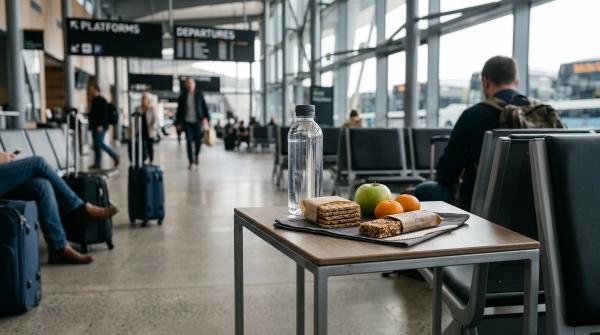
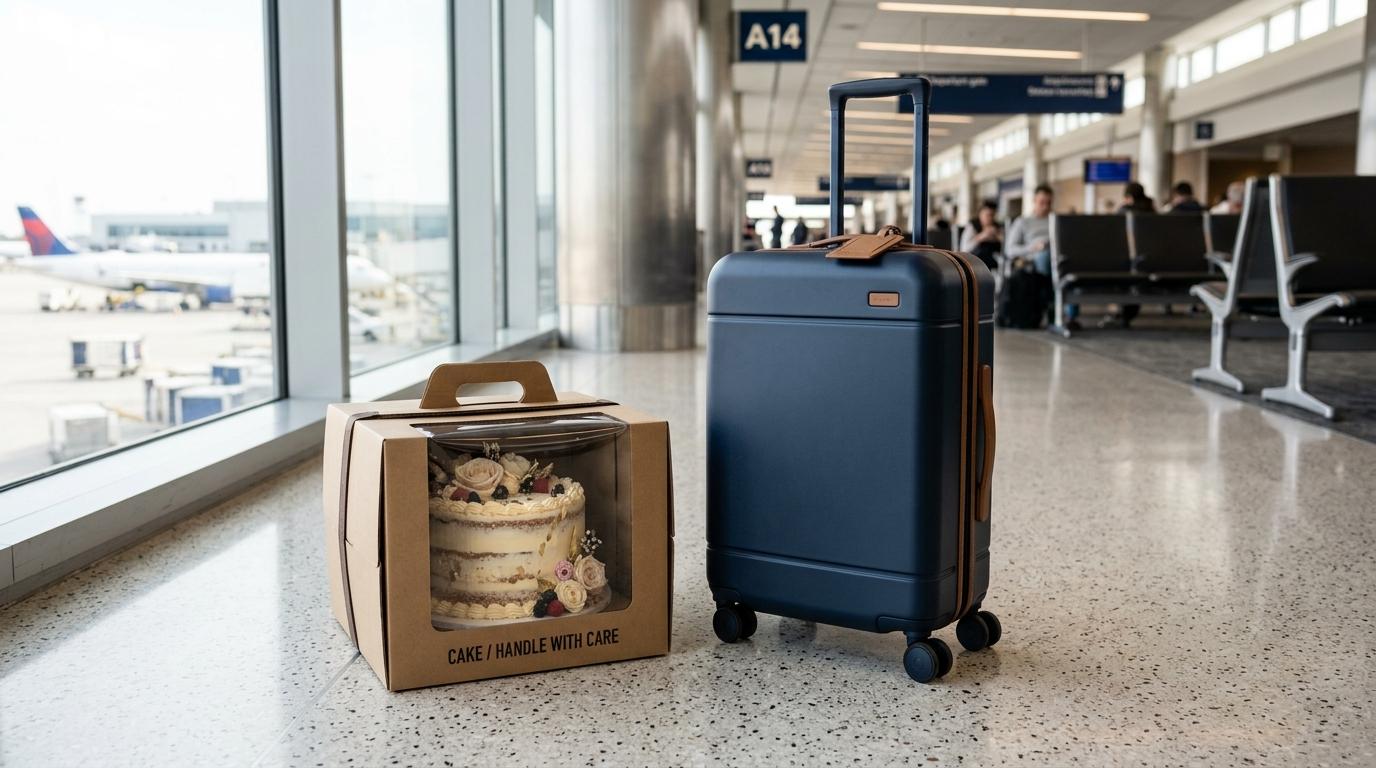
When the cake stays with you, you can keep it upright, protect it from being crushed, and handle it carefully through the airport. This matters if you’re traveling with a birthday cake, bakery cake, cupcakes with tall frosting, cream cake, or anything homemade and delicate.
The catch is that your cake box may count as one of your carry-on items or as your personal item, depending on the airline and the size of the box. Airport security may allow the cake through, but your airline can still stop you at boarding if the box is too large or you’ve exceeded your baggage allowance.
Before you go, check:
- Your airline’s carry-on size limits
- Whether your ticket includes a cabin bag
- Whether the cake box fits under the seat or in the overhead bin
- Whether you can carry the cake along with your other luggage
If the cake fits under the seat, that’s often safer than putting it in the overhead bin. Overhead bins are risky because other passengers may push bags into it or place something heavy on top of the box.
Putting cake in checked baggage
#You can usually put cake in checked baggage, but it’s not ideal for anything fragile.
Checked bags are handled by airport systems and baggage workers. They can be stacked, tilted, dropped, squeezed, or tossed. Nobody handling your suitcase knows there’s a buttercream rose emergency inside.
Checked baggage can work for sturdier baked goods, such as:
- Pound cake
- Fruitcake
- Dense loaf cake
- Unfrosted cake
- Brownies
- Wrapped cake slices
- Bakery items in rigid containers
But for frosted cakes, whipped cream cakes, mousse cakes, decorated cakes, or cupcakes, cabin baggage is usually the better choice.
The frosting question: What does airport security care about?
#This is where people get nervous.
A plain cake looks solid. But frosting can look like a spread. Custard can look like a gel. Mousse is soft. A syrup-soaked cake can seem a little too liquid-heavy.
Airport security is usually more concerned with liquids, gels, creams, pastes, and spreads than with solid baked goods.
Is frosting allowed on flights?
#Usually, yes. Frosting that is already on a cake or cupcake is normally fine.
A birthday cake with buttercream, a frosted cupcake, or a slice of cake with icing is generally treated as a food item, not as a separate liquid or gel.
The issue is more likely to come up when the frosting is packed separately.
For example:
- A cake with buttercream already spread on it is usually easier.
- A separate tub of frosting may be treated as a spread or gel.
- A piping bag full of frosting may be treated like a gel-like food.
- A jar of jam, syrup, glaze, caramel, or sauce may need to follow carry-on liquid rules.
If you’re bringing separate frosting or filling in your hand luggage, check the security rules for your airport. In many places, the usual 100 ml / 3.4 oz liquid rule applies to spreadable or gel-like foods. A big tub of frosting in your carry-on may not make it through security.
What about cream, custard, mousse, and gel fillings?
#Creamy cakes are a little more complicated.
A normal layer of filling inside a cake is often fine. But cakes that are very soft, wet, creamy, or full of gel-like filling may get more attention at security. Officers may want to inspect them, and they always have the final say.
Be more careful with:
- Whipped cream cakes
- Cream cheese frosting
- Custard-filled cakes
- Pudding-filled cakes
- Mousse cakes
- Jelly or gel-filled cakes
- Cakes with thick layers of jam
- Cakes soaked heavily in syrup or milk
- Tres leches-style cakes or other very wet cakes
That doesn’t mean these cakes are automatically banned. It just means they’re more likely to raise questions because parts of them can look like liquids, gels, creams, or pastes.
If you have a choice, pick a firmer cake with stable frosting. It will be easier to pack, easier to screen, and much less stressful to carry.
Tips for getting cake through airport security
#A little planning can make the security checkpoint much less awkward.
Before you reach security:
- Keep the cake easy to remove from your bag.
- Use a clear or easy-to-open container if possible.
- Don’t bury the cake under electronics, shoes, chargers, and random travel clutter.
- Keep separate frosting, cream, jam, syrup, or sauce within the liquid rules for your route.
- If you’re using ice packs, make sure they are fully frozen.
At the checkpoint, you may be asked to place food items separately for screening. Security officers may inspect the cake box or swab the outside of the container. That can feel odd, especially if it’s a special cake, but it’s normal.
Don’t seal the box so tightly that it can’t be opened. If security needs to inspect it, they need to be able to get inside.
And remember: the final decision always rests with airport security officers. Rules can vary by country, airport, route, and situation.
How to pack cake for a flight
#Good cake packing for flights comes down to three things:
- Stop it from being crushed.
- Stop it from sliding.
- Stop it from melting or spoiling.
Your cake needs a firm base, a strong box, enough space above the frosting, and a way to stay level from home or bakery to airport, through security, onto the plane, and then to your final destination.
Packing checklist for a whole cake
#If you’re traveling with a whole cake, especially a decorated one, use this checklist.
1. Use a sturdy cake box or carrier
#A thin bakery box might be fine for a short car ride, but air travel is rougher.
Good options include:
- A rigid cake carrier
- A strong bakery box
- A firm cardboard cake box placed inside a larger tote
- A container with a secure lid and enough height for decorations
Make sure the lid does not touch the frosting or decorations. It sounds obvious, but this is one of the easiest ways to ruin the top of a cake.
2. Use a proper cake board
#The cake should sit on a sturdy cake board that supports the whole base. If the board bends, the cake can crack.
The board should also fit snugly inside the box or carrier. If there’s too much empty space, the cake may slide every time you turn, stop, or lift the box.
3. Stop the cake from sliding
#Put a clean non-slip mat, shelf liner, or similar grip material under the cake board inside the box. This helps reduce side-to-side movement.
If there’s extra space in the box, fill the gaps carefully with clean parchment, paper towels, or food-safe support materials. Just don’t press anything into the frosting.
4. Keep decorations simple
#Tall toppers, delicate sugar flowers, candles, and thin picks can break during travel. If possible, pack decorations separately and add them when you arrive.
Also be careful with sharp decorations, metal skewers, long picks, or anything that could look like a security issue. If something looks sharp or weapon-like, check whether it needs to go in checked baggage instead.
5. Chill the cake before traveling
#A chilled cake is usually firmer and easier to move than a soft room-temperature cake. If the cake can safely be refrigerated, chilling it before travel may help the frosting and layers hold their shape.
Freezing can help some cakes travel better, but it doesn’t work for every cake. Some fillings, frostings, fruits, and decorations may weep, crack, or change texture after freezing. If the cake is from a bakery, ask them how it should be stored before the flight.
6. Keep the box level
#This is the simple part, and also the annoying part: keep the cake level the whole time.
Use a flat-bottomed tote or carry the box by hand. Avoid soft bags that sag in the middle.
If you place the cake under the seat, make sure it isn’t tilted against your backpack, shoes, or another bag.
Packing checklist for cake slices
#Cake slices are easier than whole cakes, but they still need protection.
Use this checklist:
- Put each slice in a firm container.
- Choose a container that won’t collapse inside your bag.
- Use parchment or wax paper to stop the slice from sticking.
- Fill empty space gently so the slice doesn’t tip over.
- Tape or secure the lid if needed.
- Keep cream-filled slices cold if they’re perishable.
Avoid wrapping frosted slices only in plastic wrap unless you truly don’t care what the frosting looks like when you land. Plastic wrap almost always sticks to icing.
Packing checklist for cupcakes
#Cupcakes seem easy because they’re small, but they can be surprisingly annoying to travel with. They tip over, flip, and smear quickly.
For cupcakes:
- Use a cupcake box with inserts.
- Make sure each cupcake sits in its own slot.
- Choose a box tall enough for the frosting.
- Keep the box flat at all times.
- Don’t stack cupcake boxes unless they’re designed for stacking.
- Pack mini cupcakes tightly enough that they don’t roll around.
- Keep whipped cream or cream cheese cupcakes cold.
If you’re bringing only one or two cupcakes, use a small rigid container. A paper bag is basically an invitation for disaster.
Cream cake travel: Don’t forget food safety
#For cream cake travel, the biggest concern is not just security. It’s food safety.
Some cakes can handle several hours at room temperature. Others really shouldn’t be left out for long.
Cakes that usually travel better
#Sturdier cakes are easier because they’re less dependent on refrigeration and less likely to collapse.
These may include:
- Plain sponge cake
- Pound cake
- Fruitcake
- Loaf cake
- Brownies
- Unfrosted cake
- Fondant-covered cake
- Some buttercream cakes, depending on the ingredients
Even with these, follow the bakery’s or recipe’s storage instructions.
Cakes that need more caution
#Be more careful with cakes containing:
- Whipped cream
- Fresh cream
- Cream cheese frosting
- Custard
- Mousse
- Pudding
- Fresh fruit layers
- Dairy-heavy fillings
Perishable dairy or cream-based foods are commonly considered risky if they sit at room temperature for more than about two hours. And two hours can disappear quickly once you count the drive to the airport, check-in, security, boarding, flight time, baggage claim, and the trip after landing.
If you’re traveling with a perishable cake, plan the timing carefully. If you can’t keep it cold for the full journey, it may not be the right cake to bring.
Can you use ice packs for cake on a plane?
#Yes, you may be able to use ice packs to keep a cake cold, but there’s one important carry-on rule to remember.
At airport security, ice packs are usually easier when they are completely frozen solid. If an ice pack is melted, slushy, or partly liquid, it may be treated as a liquid or gel and may need to follow the carry-on liquid limit.
To reduce problems:
- Freeze ice packs solid before leaving.
- Add them around the cake at the last practical moment.
- Use a small insulated bag if it fits your baggage allowance.
- Keep the cake easy to inspect.
- Check your departure airport’s rules before relying on ice packs.
Don’t assume the airline can refrigerate your cake onboard. Cabin crew may not have the space or permission to store passenger food in the galley. Plan as if the cake has to stay with you at your seat.
International flights: Customs rules can matter more than security
#For domestic flights, you’re mostly dealing with airport security and airline baggage rules. For international flights, you also have to think about customs, agriculture, and food import rules.
A cake may be allowed through departure security but still cause problems when you arrive in another country.
You may need to declare food items when entering your destination country. Rules vary widely, and some places are strict about fresh fruit, seeds, plants, meat, dairy, and agricultural products.
Be especially cautious with cakes that include:
- Fresh fruit toppings
- Fresh fruit fillings
- Uncooked fruit decorations
- Dairy-heavy cream fillings
- Unusual animal-based ingredients
- Homemade items without labels, depending on the country
Commercially packaged baked goods may be easier to explain than homemade food, but that doesn’t guarantee they’ll be allowed. Customs officers decide what can enter the country.
The safest plan is to check your destination country’s customs rules before flying, declare food when required, and be prepared for the possibility that the cake may not be allowed in.
What kind of cake is easiest to fly with?
#The easiest cakes to fly with are firm, stable, and not highly perishable.
Good travel-friendly choices include:
- Pound cake
- Bundt cake
- Fruitcake
- Brownies
- Loaf cake
- Simple sponge cake
- Fondant-covered cake
- Cupcakes with firm frosting
- Cake slices in rigid containers
More difficult choices include:
- Whipped cream cake
- Mousse cake
- Custard-filled cake
- Cream cheese frosted cake
- Tall tiered cake
- Cake with fragile decorations
- Very wet syrup-soaked cake
- Cake topped with fresh fruit, especially for international travel
If you’re ordering from a bakery, tell them you’re flying with the cake. Ask for stable frosting, a strong cake board, a box with enough height, and decorations packed separately if possible. Bakeries deal with travel requests more often than you might think.
A practical airport plan for flying with cake
#Here’s a simple plan that works for most cake travel situations.
- Choose the right cake. Pick a stable cake if you have options.
- Check the rules. Look at your airline’s baggage allowance, your departure airport’s security rules, and customs rules if flying internationally.
- Pack it properly. Use a strong box, cake board, non-slip base, and enough clearance above the frosting.
- Limit separate liquids and spreads. Avoid large containers of frosting, cream, syrup, jam, glaze, or sauce in cabin baggage unless they follow the liquid rules.
- Control the temperature. Chill perishable cakes and use fully frozen ice packs if allowed and needed.
- Arrive with extra time. Food items can take a little longer to screen.
- Carry it level. Treat the cake box like fragile luggage, because that’s exactly what it is.
- Store it carefully onboard. Under the seat is often safer than the overhead bin, if the box fits.
Final take
#So, can you bring cake on a plane? Most of the time, yes.
For the smoothest trip, carry the cake in the cabin, pack it in a sturdy container, avoid large separate tubs of frosting or cream, keep perishable cakes cold, and check the rules for your airline, airport security, and destination customs.
A plain sponge cake is easy. A tall whipped cream cake with fresh fruit on an international flight takes more planning. The cake may be allowed, but the details decide whether it arrives looking like a celebration or like something that lost a fight with your luggage.