Rain on the sand, chilli in the air, and that first paper cone of sundal
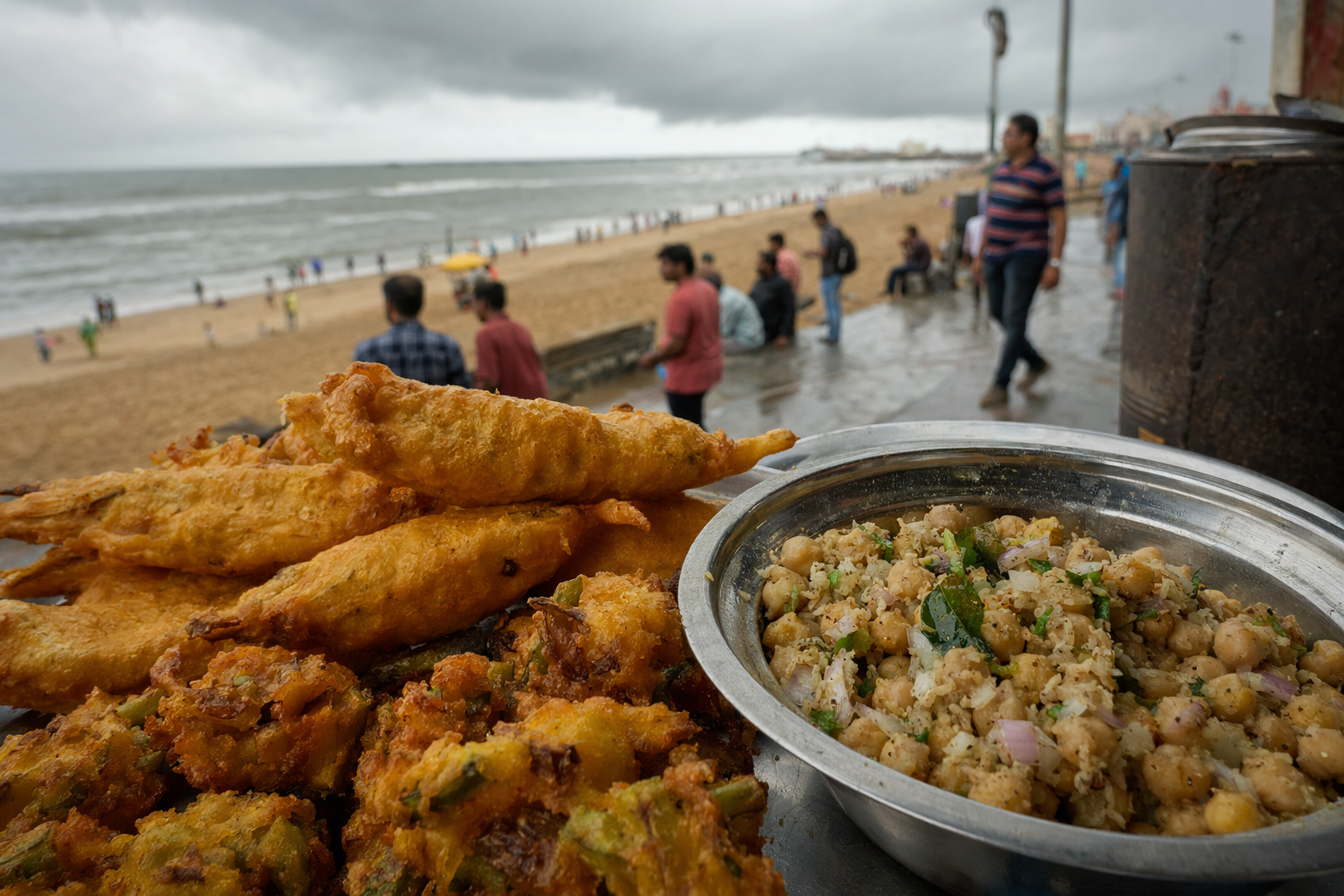
#The first time I properly understood Marina Beach in the rain, I was standing near the promenade with one slipper slowly sinking into wet sand, holding a paper cone of sundal that was turning soft at the edges. The sky was the colour of old steel. The Bay of Bengal was doing that moody Chennai thing where it looks beautiful and slightly angry at the same time. And some uncle, totally unbothered by the drizzle, was selling hot bajji from a pushcart like this was the most normal dining room in the world. Which, in Chennai, maybe it is.
I’ve eaten on beaches in Goa, Mumbai, Pondy, Kerala, even a few fancy seaside places where the menu had more adjectives than food. But Marina in monsoon has a different personality. It’s not neat. It’s not curated. It’s a little chaotic, sometimes muddy, sometimes too windy, occasionally frustrating when the rain comes sideways and your umbrella becomes useless. But when you get a hot milagai bajji in your hand, the chilli just soft enough, batter crisp on the corners, and that sea breeze hits your face... boss, nothing else matters for two full minutes.
This isn’t one of those “eat everything without thinking” beach food love letters, though. Monsoon food travel needs common sense. Chennai’s main rainy spell is usually during the northeast monsoon months, roughly October to December, though you can get rain and humidity outside that too. The sea can get rough, drains can overflow in parts of the city, and street stalls are dealing with wind, damp air, splashing water, and crowds. So yes, eat the sundal. Eat the bajji. Drink the tea if it’s properly boiled. But don’t switch off your brain just because the smell of hot oil is calling you like a temple bell.
Why Marina snacks taste better when the weather is being dramatic
#I have this probably unscientific theory that beach snacks need bad weather to reach their full emotional potential. On a bright summer evening, sundal is nice. Fine. Healthy-ish, if you ignore the salt and the fact that you’ll probably eat bajji after it. But in the monsoon, with the wind pushing tiny drops of rain into your face and your shirt sticking to your back, that same sundal feels like survival food and festival food at the same time.
Marina is not a tiny beach you “cover” in half an hour. It’s a long urban stretch, with memorials, statues, families, students, runners, tourists, vendors, police patrols, balloon sellers, kids chasing bubbles, and people like me pretending we came for a walk but actually came for fried snacks. Depending where you enter, the vibe shifts. Near the Light House side it can feel more food-and-family heavy in the evenings. Around the memorial stretch, it gets more touristy and busy. Closer to Triplicane, I always feel pulled into the old-city mood, like the beach is only one chapter and dinner is waiting in some narrow lane afterwards.
What I love most is how democratic the food feels. A paper cone, a steel ladle, a plastic stool if you’re lucky, maybe no stool at all. You stand and eat. A software guy in office shoes, a family from Madurai, college kids sharing one plate of onion bajji, grandparents bargaining with a vendor for extra mango in sundal. Nobody is performing. Nobody is explaining terroir. Just eating.
Marina in the rain is not polished travel. It’s wet feet, hot snacks, loud waves, and that very Chennai mix of patience and appetite.
Sundal: the beach snack that pretends to be simple
#Sundal sounds simple when someone explains it badly: boiled legumes, seasoning, coconut, mango, chilli. That’s like saying biryani is rice with stuff. A good beach sundal has balance. The chickpeas or peas should be cooked through but not mushy. The coconut should taste fresh, not tired. The raw mango should cut through everything with that sharp little slap. Curry leaves, mustard seeds, maybe a hint of asafoetida, chilli powder depending on the stall, and salt that somehow always feels a tiny bit too much until the sea wind makes it perfect.
My favourite Marina sundal memory is from one damp evening when I had come after visiting Mylapore, already full from filter coffee and a too-large tiffin that I said I’d “just taste.” Famous last words. Still, the moment I saw a sundal vendor shaking a tin container with chopped mango, I stopped. He scooped it into a cone made from printed paper, added extra manga because I asked nicely in my broken Tamil, and said something that I think meant “eat before rain comes properly.” He was right. Five minutes later, big drops started. I stood under a half-leaky tea stall tarp and ate the whole thing like it was medicine.
In monsoon, sundal is usually one of the safer bets compared with cold, creamy, or uncovered snacks, but only if you choose carefully. I look for a vendor with quick turnover, ingredients covered as much as possible, and a container that isn’t sitting directly where rainwater or sand can splash into it. If the coconut looks dry, grey-ish, or smells even slightly off, I skip. Fresh coconut is lovely but it can spoil faster in humid weather. Same with chopped raw mango and onion if they’ve been exposed too long.
- I prefer sundal that’s warm or at least recently mixed, not a sad cone from a batch that’s been sitting open forever.
- Extra mango is great, but only if the chopped pieces look fresh and are kept covered.
- If the vendor is handling money and then immediately grabbing food with bare wet hands, I usually move on. Sorry, appetite, but no.
Bajji in the drizzle: dangerous for your shirt, excellent for your soul
#Now bajji. Ah. Bajji is where my sensible traveller brain becomes weak. Chennai beach bajji is not trying to be delicate. It is gram flour batter, hot oil, vegetable or chilli, salt, spice, chutney if available, and that thrilling first bite where the steam almost burns your tongue but you keep going because you’re greedy. Me too, no judgement.
Milagai bajji is the classic beach drama queen. Long green chilli, slit sometimes, dipped in batter, fried till golden, eaten with chutney or just as it is. If you’re not used to heat, ask before you bravely bite into one and then start crying in front of strangers. Vazhakkai bajji, made with raw banana, is more forgiving and honestly my rainy-day favourite. Onion bajji is sweet and crisp when fresh. Potato bajji can be comforting but gets soggy quickly, especially in damp air.
The safety trick with bajji is easier than with many foods: watch the oil and the turnover. I don’t mean become a food inspector and ruin everybody’s evening. Just look. Is the oil hot enough that fresh batter sizzles properly? Are people buying constantly? Are the bajjis being fried in front of you rather than lying in a pile absorbing sea moisture and regret? Hot, freshly fried snacks are generally a better monsoon choice than cold items, though too much reused dark oil is its own problem. If the oil looks black, smells burnt, or the stall area is full of stagnant water, I walk away. Even if my heart says stay.
There’s a similar rainy-season judgement you make with roasted corn, bhutta, and other street snacks too, and I’ve found the same basic logic applies: hot food, fast turnover, careful masala handling, and know when to skip a tempting stall. I wrote more notes around that kind of decision-making in this Bhutta in Indian Monsoon: Street Corn Safety Guide, because honestly monsoon cravings and monsoon caution need to sit in the same auto-rickshaw.
My usual Marina monsoon snack walk, messy but reliable
#If I’m going to Marina during rain season, I don’t plan it like a military operation, but I do have a loose rhythm. Late afternoon is my sweet spot. Too early and the beach can feel harsh and empty. Too late during heavy rain, and getting back can become annoying with traffic, puddles, and cabs cancelling like they have a personal issue with you.
- I try to reach around 4:30 or 5 pm, depending on the clouds. If it looks like proper storm weather, I don’t go. Food is not worth lightning and rough-sea foolishness.
- I walk first. This is important because if I eat immediately, I become lazy and just hover near one stall like a moth.
- First snack is usually sundal. It feels light, and I can tell myself I’m being healthy. This lie gives me confidence.
- Then bajji, only from a stall frying fresh. I wait if I have to. Waiting is part of the flavour, actually.
- Tea after that, if the stall is busy and the milk is visibly boiling. If not, I skip and get coffee later in Triplicane or Mylapore.
One time a friend and I tried to be clever and combine beach snacks with a long walk towards the Light House. Rain started as romantic drizzle, then became horizontal attack. We ended up hiding near a closed kiosk, laughing like idiots, with two bajjis wrapped in paper going limp in my bag. Still ate them. Not proud. Not ashamed either. But I wouldn’t recommend soggy bag-bajji as a culinary technique.
Tea, coffee, and the monsoon problem of water
#Beach tea has its own charm. The tiny glass, the heat, the sweetness, the way it brings your hands back to life when the wind has made everything damp. In Chennai, you’ll also find coffee around the beach areas, though for proper filter coffee I personally prefer stepping into an established tiffin place in Triplicane or Mylapore after the beach. That combo, rainy Marina plus hot filter coffee later, is one of my small city rituals.
For tea at a stall, I look for active boiling. Not just warm milk sitting around looking philosophical. Boiled milk and freshly made tea are safer bets than lukewarm drinks, especially in wet weather when cleanliness gets harder. Cups matter too. Disposable cups aren’t automatically perfect, but a visibly clean serving setup is better than glasses being rinsed in one cloudy bucket of water. I know that sounds fussy, but one stomach upset on a trip and suddenly you become very spiritual about clean water.
If you’re visiting from outside India, or even if your stomach is just sensitive, be more careful with milk, water, and stall hygiene. This guide on Chai in India for Foreign Tourists: Safety Tips is a useful companion, especially because tea feels harmless until you remember it’s still milk, water, utensils, hands, and timing all coming together in one little glass.
What I skip at Marina when it’s raining, even if I want it badly
#Here is where I become the boring auntie, but only because I have made enough bad food decisions in my life to earn the title. In monsoon, I avoid cut fruit on the beach unless I really trust the setup. Watermelon, pineapple, cucumber, whatever else looks refreshing... if it’s been sitting exposed to rain, flies, sand, and mystery water, I’m out. Same with chutneys that look too watery or have been open for hours. I love chutney. I do not love gambling.
Ice gola, ice cream from questionable boxes, cold juices, and anything involving crushed ice are also on my careful list during wet weather. Not saying never, because I’m not the police of snacks and some vendors are clean and responsible. But ice and chilled foods depend heavily on storage, water quality, temperature control, and handling. On a humid rainy evening beside a beach, that’s a lot of trust to place in a plastic tub.
If you’re doing a wider Chennai food day with cafés, bakeries, cold coffee, or desserts after the beach, the same damp-weather caution follows you indoors too. I like this Indian Monsoon Cafe-Hopping Safety Tips for that exact reason, because monsoon food safety isn’t only a street-stall topic. A fancy-looking cold drink can also be a bad idea if storage and ice are careless.
- I skip snacks kept uncovered in wind and spray, even if they look tasty from far away.
- I avoid stalls standing in ankle-deep water. Not romantic, not rustic, just no.
- I don’t eat seafood from random beach carts in rainy weather. Chennai has great seafood, but I’d rather eat it at a trusted place with proper turnover and storage.
- I carry water, tissues, and sanitizer, but I don’t use sanitizer as a magic shield. Clean food handling still matters.
Sea safety, because Marina is beautiful but not gentle
#Food people sometimes forget the travel part, and beach travellers sometimes forget the sea is not a backdrop. Marina can be stunning in monsoon, but the water can also be rough, and swimming is not something to casually attempt. Follow local warnings, flags, police instructions, and common sense. If officials or lifeguards are telling people to stay back, stay back. No photo is worth being dragged by a current. Really, no photo.
I don’t go near the waterline when the waves are unpredictable. Wet sand can make you misjudge distance, and one strong wave can soak your bag, phone, and dignity. I’ve seen families step closer for selfies and then run back screaming when a wave comes in harder than expected. Funny until it isn’t. Keep kids close. Don’t turn your back on the sea for too long. And if there’s lightning, leave the open beach. The bajji will exist another day.
Also watch the city side of the trip. Heavy rain in Chennai can mean waterlogging in certain stretches, slower traffic, and sudden changes in plans. I usually check the weather forecast before heading out and keep an exit route in mind, whether that’s a cab point, an MRTS station like Light House depending on where I am, or simply a main road with better transport chances. If you’re travelling with older people or kids, don’t wing it too much. Marina is easy to love but tiring when everyone’s wet, hungry, and cranky.
Where to go before or after: turning beach snacks into a Chennai food trail
#The best thing about a Marina snack evening is that it can be the middle of a bigger Chennai food day. Start in Mylapore with idli, pongal, vadai, or filter coffee. Wander around the temple streets if the weather is kind. Move towards the beach later for sundal and bajji. Then, if your stomach is ambitious, head to Triplicane for old-school tiffin or a simple dinner. I’ve done versions of this too many times, and each time I say I’ll eat less. Lies again.
Triplicane has that old Chennai texture I really enjoy: narrow streets, small eateries, mess-style meals, tea shops, the smell of sambar and rainwater mixing in the air. Mylapore is more temple-town-meets-city, with famous tiffin spots and coffee counters that can cure many bad moods. I’m not listing exact “best” places here because timings, quality, and crowds change, and also locals will fight you if you declare one winner. Better to ask someone nearby, check what’s open, and follow the crowd a little. In Chennai, a busy tiffin place is often telling you something.
If you want a calmer plan, do Marina first, snack lightly, then sit down somewhere established for dinner. That way the beach food stays fun and you’re not depending on it as your whole meal. I love street food, but I also like having a clean restroom, a proper chair, and sambar that arrives in a bucket-like vessel. Balance, no?
How to order without looking totally lost
#You don’t need fluent Tamil to eat well at Marina, but a few words help and people usually appreciate the effort. “Konjam” means a little. “Romba” means very or too much. “Kaaram” is spicy. “Manga” is mango. If you point, smile, and ask politely, most vendors understand what you want. And if they laugh at your pronunciation, laugh with them. My Tamil has suffered many public accidents and still I was fed kindly.
For sundal, I usually ask for extra mango and medium spice. For bajji, I ask what’s fresh right now. That question matters. Don’t just pick from what’s lying there if a new batch is coming. Wait for the new batch. You came all this way to eat hot bajji by the sea, not room-temperature sadness. If there’s chutney, take a little first and see how it looks and tastes. Some beach chutneys are fantastic, some are watery green confusion.
Carry small cash even though many stalls may accept UPI. Network can get weird in crowds or rain, and nobody wants to stand there with a hot bajji cooling while your payment app spins like it’s meditating. Keep your phone dry, too. I use a cheap zip pouch during monsoon because I learnt the hard way after my screen started acting like it had its own ghost.
A rainy evening I still think about
#There was one evening, not even a special one, that stays in my head. I had gone alone after a workday that had been irritating in ten small ways. Nothing dramatic, just emails, traffic, some plan cancelled, the usual urban nonsense. The sky looked like it might rain, and I almost turned back. Then I thought, no, let me just see the sea.
At Marina, the wind was strong and the beach wasn’t too crowded yet. I bought sundal from a woman who was packing up slowly, maybe expecting rain. She added coconut, chilli, mango, and gave the cone a quick shake. I walked with it, eating slowly, watching the waves. Then the first drizzle came, and people started moving, but not panicking. A boy ran past holding two balloons. A bajji stall nearby suddenly got busy because rain makes everyone hungry, apparently. I joined the queue.
The bajji was too hot, the chutney was sharper than I expected, and I burnt my tongue because I have no patience. I stood under the vendor’s blue tarp with three strangers, all of us pretending we were only waiting for the rain to reduce, though everyone was clearly enjoying the excuse. For ten minutes, my stupid day dissolved. That’s what food travel does at its best. It doesn’t always give you a grand revelation. Sometimes it just gives you a hot snack and a place to stand.
My practical Marina monsoon checklist, from one snack-obsessed traveller to another
#If you’re planning your own Marina Beach snack walk in the rainy season, keep it flexible. Don’t chase a perfect Instagram evening. The real thing might be cloudy, crowded, windy, and slightly damp around the edges, and that’s the point. Wear footwear you can wash. Carry a light rain jacket or umbrella, but accept that umbrellas near the sea have their own comedy career. Keep a small towel or tissues. Bring drinking water. Don’t bring a huge fancy bag unless you enjoy worrying about it every three seconds.
Eat what’s hot, fresh, and moving fast. Be suspicious of cold, exposed, watery, or stale-looking things. Respect the sea. Respect your stomach. If something feels off, skip it without making a big moral issue. There will always be another snack in Chennai. That is one of the city’s greatest blessings.
And please don’t rush Marina. Walk a bit. Watch the families. Listen to the waves crashing louder than the traffic for once. Smell the bajji oil, the wet sand, the tea, the roasted peanuts, that strange beach mixture of salt and smoke and rain. Eat a cone of sundal before it gets soggy. Wait for fresh bajji even if your friends complain. Then maybe go find filter coffee somewhere dry and argue about which snack was best. For me it changes by mood, but on a rainy day? Vazhakkai bajji wins more often than not.
Chennai in the monsoon is not always easy travel, but it is memorable travel. Marina Beach snacks are not fine dining, and they don’t need to be. They’re place, weather, people, appetite, and a little bit of risk management wrapped in newspaper and served hot. If you go with curiosity and some basic caution, you’ll come back with stories. Maybe wet shoes too, but that’s part of the deal. For more food-travel rambling, local eats, and the kind of trips that revolve shamelessly around what to eat next, I’d keep an eye on AllBlogs.in.