When it’s blazing outside, lunch gets tricky.
A big hot meal can sound good at noon and feel like a mistake by 2 p.m. But a sad little salad? Also not the answer, especially if you need something that will actually keep you going through work, school, errands, travel, or one of those long summer days where nobody wants to turn on the stove.
That’s why cold noodle lunches for hot weather are so useful.
They’re cool, filling, easy to pack, and very forgiving. You can use whatever vegetables are in the fridge, add tofu or chicken or edamame if you have it, and toss everything with a sauce that makes the whole bowl feel intentional.
Think chilled soba with sesame dressing. Rice noodles with lime, herbs, and crunchy vegetables. A creamy peanut noodle bowl with cabbage, cucumbers, and crushed peanuts on top.
This guide is less of a strict recipe and more of a “build your own lunch” plan. Use it for noodle ideas, easy sauce formulas, protein options, packing tips, and simple variations you can make all summer without thinking too hard.
Quick answer
#The easiest way to make cold noodle lunches for hot weather is to follow this basic formula:
- Choose noodles that are good cold: soba, rice noodles, udon, ramen noodles, or even thin spaghetti.
- Rinse them well after cooking: this cools them down and washes off extra starch so they don’t clump.
- Use a bold sauce: cold food can taste muted, so go for salty, tangy, nutty, spicy, or herby flavors.
- Add crunch: cucumber, cabbage, carrots, bell peppers, snap peas, radishes, or scallions.
- Add protein: tofu, edamame, chicken, egg, shrimp, tempeh, or whatever you like.
- Pack it properly: keep sauce and crunchy toppings separate when you can, and keep perishable ingredients chilled.
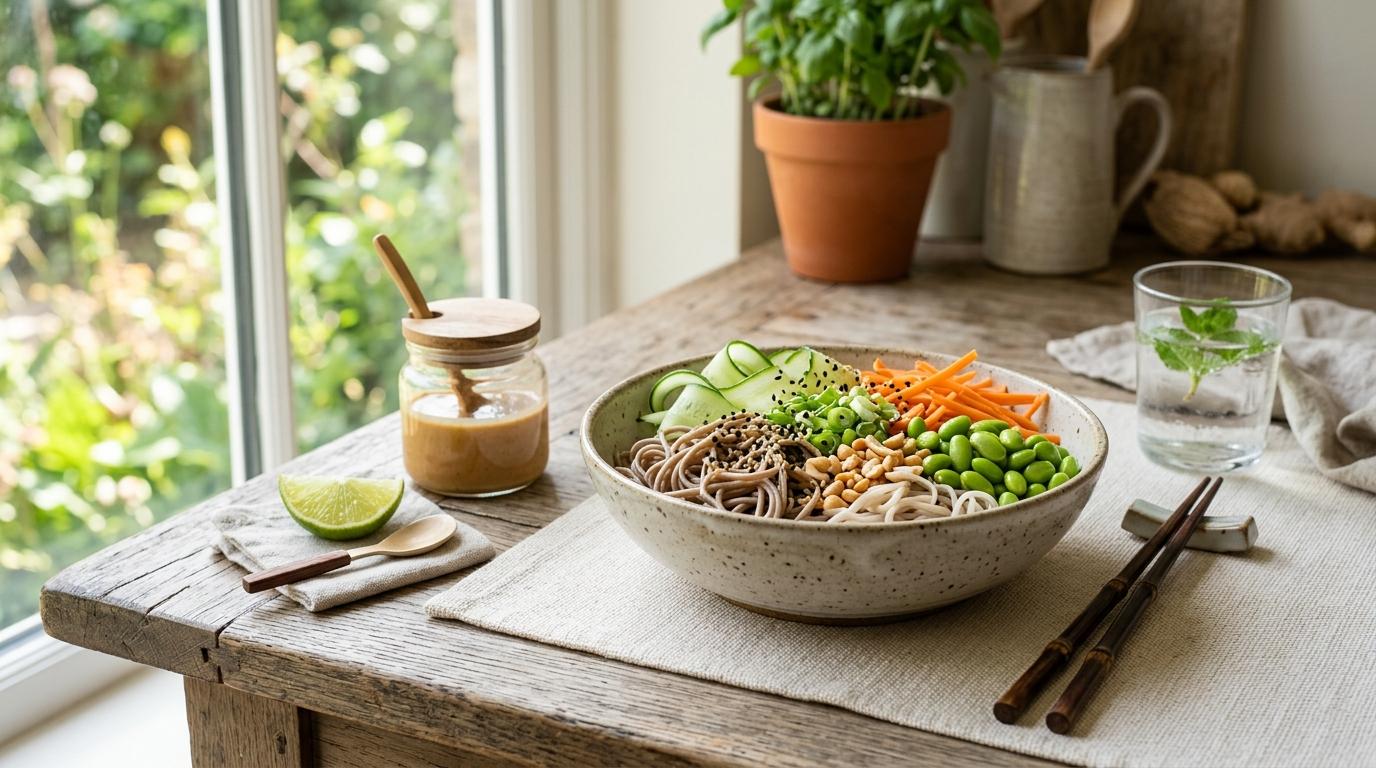
A very easy starter bowl: chilled soba noodles, shredded cucumber, carrots, edamame, scallions, sesame-soy dressing, and crushed peanuts or sesame seeds.
If you want another refreshing lunch idea, you might also like this guide to cooling Indian lunch recipes for summer.
Why cold noodles work so well in hot weather
#Cold noodles sit in that perfect middle space. They’re lighter than a hot rice bowl or a heavy pasta lunch, but they’re much more satisfying than a pile of greens with dressing.
They also make life easier.
You don’t need a microwave. You don’t need to reheat anything. You don’t have to stand in an office kitchen waiting for your turn while three other people warm up leftovers. You just open the container, add the sauce if you packed it separately, toss, and eat.
They’re also endlessly flexible.
Want something light and fresh? Use rice noodles, lime, herbs, cucumber, and cabbage.
Want something richer? Make a peanut noodle bowl with tofu or chicken.
Want a simple lunch that tastes good cold? Soba, sesame, soy sauce, cucumber, scallions, and edamame will get you there.
Cold noodles are also great for using up the random bits in your fridge: half a cucumber, one carrot, leftover chicken, a handful of herbs, a spoonful of peanut butter, a little cabbage from another recipe. Once noodles and sauce are involved, those odds and ends become lunch.
A good cold noodle bowl usually has:
- A noodle base with some bounce
- A sauce with enough flavor
- Fresh or crunchy vegetables
- Protein or fat so it actually fills you up
- A topping for texture, like nuts, seeds, herbs, or scallions
You don’t need every single piece every time. But when most of them are there, the bowl feels complete instead of like plain noodles in a container.
Best noodles for cold lunches
#Not every noodle loves being chilled. Some stay springy and separate. Some turn into a sticky block. Some absorb every drop of sauce and taste dry by lunchtime.
These are the best options for cold noodle lunch bowls.
Soba noodles
#Soba noodles are made with buckwheat, though many brands also include wheat flour. They have a nutty, earthy flavor that works beautifully with sesame oil, soy sauce, ginger, rice vinegar, cucumber, scallions, edamame, and tofu.
A cold soba lunch is one of the easiest options because soba already tastes good chilled. It doesn’t need a thick sauce to be satisfying. A simple sesame-soy dressing is often enough.
Good with:
- Sesame oil
- Soy sauce or tamari
- Rice vinegar
- Ginger
- Scallions
- Edamame
- Cucumber
- Radish
- Tofu
Tip: soba can go from tender to overcooked quickly, so keep an eye on it. After draining, rinse it very well under cold water so the noodles don’t get sticky or gluey.
Rice noodles
#Rice noodles are perfect for a rice noodle salad lunch. They’re light, slippery, refreshing, and especially good with lime juice, herbs, chili, peanut sauce, sesame dressing, or soy-based dressings.
They come in different sizes. Thin rice vermicelli feels light and salad-like, while wider rice noodles make the bowl feel more filling.
Good with:
- Lime juice
- Rice vinegar
- Peanut sauce
- Chili crisp or chili garlic sauce
- Mint, cilantro, or basil
- Cucumber
- Carrots
- Cabbage
- Tofu, shrimp, chicken, or edamame
Tip: some rice noodles need soaking, while others need a quick boil. Follow the package directions, then rinse with cool water and drain well.
Udon noodles
#Udon noodles are thick, chewy, and more substantial. They’re a good choice when you want a cold lunch that still feels hearty.
Good with:
- Sesame dressing
- Soy-ginger sauce
- Chili oil
- Cabbage
- Snap peas
- Mushrooms
- Tofu
- Chicken
Tip: udon can get soft depending on the kind you buy, so don’t overcook it. Toss gently, since the noodles can break if handled too roughly.
Ramen noodles
#Ramen noodles can be surprisingly good cold, especially if you like a bouncy texture. You can skip the seasoning packet and make your own sauce instead, which usually tastes fresher anyway.
Good with:
- Peanut sauce
- Sesame-soy dressing
- Chili oil
- Scallions
- Cucumbers
- Carrots
- Jammy egg, tofu, or chicken
Tip: rinse cooked ramen under cold water and drain thoroughly before packing.
Thin spaghetti or angel hair
#No soba? No rice noodles? No problem. Thin spaghetti or angel hair can still work.
It may not be traditional for every noodle bowl, but it holds up well with peanut sauce, sesame dressing, or a sharp vinegar-based sauce.
Good with:
- Peanut butter sauce
- Soy sauce
- Lime juice or vinegar
- Shredded vegetables
- Roasted peanuts
- Scallions
- Chicken or tofu
Tip: cook until just tender, rinse, drain well, and toss with a tiny bit of oil if you’re storing the noodles separately.
Easy sauce formulas
#Cold noodles need more flavor than you might expect. Once food is chilled, flavors can taste a little quieter, so your sauce should be bold.
You don’t need a complicated recipe. You just need balance: salty, sour, nutty, spicy, sweet, or fresh. Start with one of these formulas, taste, and adjust.
Classic peanut sauce
#This is the sauce that makes a peanut noodle bowl feel rich, creamy, and satisfying. It works with almost any noodle and plenty of vegetables.
Use:
- 3 parts creamy peanut butter
- 2 parts soy sauce or tamari
- 1 part rice vinegar or lime juice
- 1 part honey or maple syrup
- A small splash of toasted sesame oil
- Grated ginger or garlic, if you like
- Chili garlic sauce or chili crisp, if you want heat
- Warm water to thin it out
Whisk everything together until smooth. Add warm water slowly until the sauce is pourable.
Best with:
- Rice noodles
- Soba
- Ramen
- Thin spaghetti
- Cucumber
- Carrot
- Cabbage
- Tofu
- Chicken
- Edamame
Packing tip: peanut sauce thickens in the fridge. If you’re eating later, pack a little extra lime juice or water to loosen it up.
Sesame-soy vinaigrette
#This one is lighter than peanut sauce and especially good with soba.
Use:
- Soy sauce or tamari
- Rice vinegar
- Toasted sesame oil
- Grated ginger
- A little sugar, honey, or maple syrup
- Optional garlic
- Optional chili oil
Whisk and taste. It should be salty, tangy, and fragrant.
Best with:
- Soba
- Udon
- Ramen
- Edamame
- Cucumber
- Radish
- Scallions
- Sesame seeds
Lime-chili dressing
#This dressing is bright, sharp, and exactly the kind of thing you want when the weather is hot.
Use:
- Lime juice
- Soy sauce or tamari
- A little sweetener
- Chili garlic sauce, chili crisp, or sliced fresh chili
- A small amount of sesame oil or neutral oil
- Optional grated garlic or ginger
Best with:
- Rice noodles
- Cabbage
- Cucumber
- Carrots
- Fresh herbs
- Tofu
- Chicken
- Shrimp, if packed safely and kept cold
Ginger-soy dressing
#This is the “I have noodles and no real plan” dressing. It works with almost everything.
Use:
- Soy sauce or tamari
- Rice vinegar
- Grated ginger
- A little sesame oil
- A little sweetener
- Optional garlic
- Optional chili
Best with:
- Soba
- Udon
- Ramen
- Thin spaghetti
- Leftover cooked vegetables
- Tofu
- Chicken
- Edamame
Protein and toppings
#Noodles and sauce are a good start, but protein and toppings are what turn the bowl into a real lunch.
Choose based on your day. If you have access to a fridge or an insulated lunch bag with an ice pack, you’ll have more options. If you’ll be outside in the heat, keep things simpler and be more careful.
Protein ideas
#- Baked or pan-seared tofu: firm tofu holds up well and soaks up sauce nicely.
- Edamame: easy, colorful, and especially good with soba or rice noodles.
- Shredded chicken: perfect if you already have cooked chicken in the fridge.
- Sliced steak: great with sesame, soy, or ginger-based sauces.
- Boiled egg: delicious with ramen or soba, but it needs to stay chilled.
- Shrimp or seafood: great with rice noodles and lime dressing, but only if you can keep it properly cold.
- Tempeh: works well with peanut sauce or chili-soy dressing.
- Chickpeas: not traditional in every noodle bowl, but practical, filling, and easy.
For more packable protein ideas, see 12 no-cook high-protein lunch boxes for busy office days.
Crunchy vegetables
#Use vegetables that can sit in a lunchbox for a while without turning limp.
Good choices:
- Shredded cabbage
- Carrots
- Cucumbers
- Bell peppers
- Snap peas
- Radishes
- Scallions
- Bean sprouts, if very fresh and kept cold
- Lettuce or greens, if packed separately
Cabbage is especially useful. It stays crisp longer than delicate greens, adds volume, and makes the bowl feel more filling without making it heavy.
Finishers
#Finishers are small, but they make a big difference. They add crunch, freshness, heat, or brightness right at the end.
Try:
- Crushed peanuts
- Toasted sesame seeds
- Scallions
- Cilantro
- Mint
- Basil
- Lime wedges
- Chili crisp
- Fried shallots
- Nori strips
If you want crunchy toppings to stay crunchy, pack them separately and add them right before eating.
Food safety and packing tips
#Cold noodle lunches are easy, but hot weather means you do need to think about food safety. Anything with meat, eggs, tofu, seafood, or dairy-style toppings should be kept cold.
A simple rule: keep perishable noodle bowls chilled, don’t let them sit warm for hours, and toss anything that smells off or has changed texture.
A few practical tips:
- Use an insulated lunch bag if you won’t have a fridge.
- Add an ice pack, especially for bowls with meat, egg, seafood, tofu, or dairy-style toppings.
- Keep your container out of direct sun.
- Don’t leave perishable toppings in a hot car, backpack, desk drawer, or classroom for hours.
- Pack sauce separately if the noodles will sit for a long time.
- Keep herbs, nuts, and seeds separate until lunch.
- If something smells sour in a bad way, feels slimy, or looks unusually soft, don’t risk it.
If you’re traveling and can’t count on refrigeration, save cold noodle bowls for days when you can keep them chilled. For general travel food awareness, you can also review this food court hygiene checklist for travelers.
Make-ahead plan
#Cold noodles are great for meal prep, but they need a little care. The goal is to avoid clumpy noodles, soggy vegetables, and bland sauce.
Step 1: Cook the noodles carefully
#Cook the noodles according to the package directions. Try not to overcook them, because they’ll soften a little more as they sit.
For soba, ramen, udon, or spaghetti, drain them as soon as they’re tender. For rice noodles, follow the package instructions for soaking or boiling.
Step 2: Rinse under cold water
#Rinse the cooked noodles under cold running water. This cools them quickly and removes extra surface starch, which is one of the main reasons noodles stick together.
Use your hands or tongs to gently loosen them while rinsing.
Step 3: Drain very well
#Watery noodles make sauce taste weak. Let the noodles drain thoroughly before packing.
If they still seem wet, spread them in a shallow bowl or on a tray for a few minutes so the extra water can run off.
Step 4: Toss lightly with oil
#A little toasted sesame oil or neutral oil can help noodles stay separate. Use just enough to lightly coat them.
Don’t overdo it, though. Too much oil can make the whole bowl feel greasy.
Step 5: Store components separately when possible
#For the best texture, store:
- Noodles in one container
- Sauce in a small jar or cup
- Crunchy vegetables in another container or lunchbox section
- Herbs and nuts separately
- Protein chilled and covered
If you’re using one container, layer it in a way that helps everything hold up.
A good order:
- Sauce on the bottom
- Hardy vegetables, like cabbage or carrots
- Protein
- Noodles
- Herbs and crunchy toppings on top, or packed separately
Shake or toss everything when you’re ready to eat.
Step 6: Plan your timing
#Cold noodle components are usually best within a few days when stored in airtight containers in the fridge. If your bowl has meat, seafood, eggs, or dairy-style toppings, be extra careful about keeping everything chilled.
When in doubt, make smaller batches more often. It’s much better than discovering a sad container of noodles in the fridge later.
Cold noodle lunch variations
#Once you know the basic formula, you can make plenty of cold noodle lunch ideas without following a full recipe every time.
1. Cold soba lunch with sesame and edamame
#Use:
- Chilled soba noodles
- Edamame
- Cucumber
- Radishes
- Scallions
- Sesame-soy vinaigrette
- Toasted sesame seeds
Why it works: it’s light, nutty, refreshing, and has enough protein from the edamame to feel like a proper lunch.
2. Rice noodle salad lunch with herbs and lime
#Use:
- Rice vermicelli or flat rice noodles
- Cucumber
- Carrot
- Cabbage
- Mint, cilantro, or basil
- Lime-chili dressing
- Tofu, chicken, or shrimp if safely chilled
- Crushed peanuts on top
Why it works: the herbs and lime keep it bright, while the rice noodles make it cool and easy to eat.
3. Creamy peanut noodle bowl
#Use:
- Rice noodles, ramen, soba, or thin spaghetti
- Peanut sauce
- Shredded cabbage
- Carrots
- Bell peppers
- Tofu, chicken, or edamame
- Crushed peanuts
- Lime wedge
Why it works: peanut sauce adds richness, but the crunchy vegetables keep the bowl from feeling too heavy.
4. Ginger-soy clean-out-the-fridge bowl
#Use:
- Any cooked and chilled noodles
- Any crisp vegetables you have
- Leftover cooked protein or tofu
- Ginger-soy dressing
- Scallions or sesame seeds
Why it works: it’s flexible, forgiving, and perfect for those days when you have a few random ingredients but no energy for a real cooking project.
5. Spicy sesame ramen-style bowl
#Use:
- Chilled ramen noodles
- Cucumber
- Carrots
- Scallions
- Sesame-soy dressing
- Chili crisp
- Egg, tofu, or chicken if kept chilled
- Sesame seeds
Why it works: it has the comfort of ramen, but in a cooler, lunchbox-friendly form.
6. Udon with cabbage and peanut-lime sauce
#Use:
- Chilled udon
- Shredded cabbage
- Snap peas
- Bell peppers
- Peanut sauce thinned with lime juice
- Tofu or chicken
- Crushed peanuts
Why it works: thick udon gives you chew, cabbage gives you crunch, and the peanut-lime sauce ties everything together.
If you’re working with very limited kitchen access, you may also find ideas in this guide to no-fridge hostel breakfast, especially for thinking through simple meals with very little equipment.