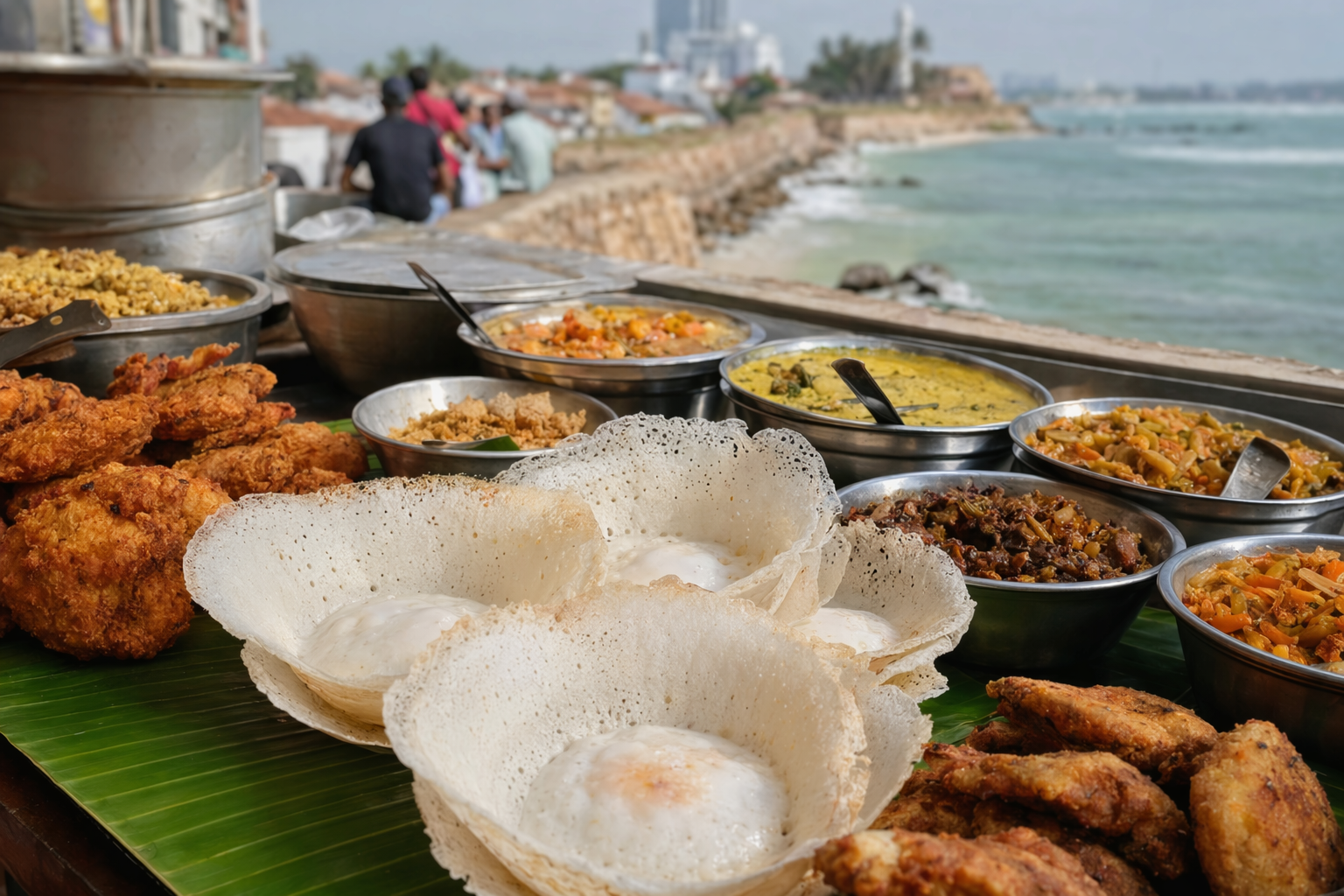
I’ll say this straight away: Sri Lanka is dangerously easy for Indian travelers to love. Not because it tastes exactly like home, because it really doesn’t, but because it feels familiar enough that you relax... and then suddenly the food surprises you. One minute you’re thinking, okay, rice and curry, I know this life. Next minute someone puts pol sambol, jackfruit curry, dhal with coconut milk, and a fiery little lunu miris on your plate and your brain goes, wait, what just happened? I went expecting beaches, trains, tea estates, that whole postcard thing. I came back with opinions about hoppers. Strong opinions. The kind where I now judge every appam in India a little unfairly, which is probably not nice of me, but what to do.
For Indian travelers, Sri Lanka is also practical in a lovely way. Short flight, no brutal time zone drama, plenty of vegetarian food if you know where to look, and spice levels that don’t insult your childhood. But it’s not all smooth. Menus can be confusing, some curries have dried fish or Maldive fish hidden inside, and restaurant timings are sometimes more relaxed than your hunger will appreciate. So this is not a polished “top 10 places” list. This is my actual food trail, mixed with what’s popular right now in food travel going into 2026: local breakfast tours, cooking classes, railway snacking, lagoon seafood, plant-based Sri Lankan meals, and those small family-run places that don’t photograph perfectly but feed you like you’re somebody’s lost cousin.
Colombo First: Don’t Rush Out of the Capital
#A lot of Indians land in Colombo and immediately run away to the beaches or the hills. I get it, because traffic can be annoying and the sea is calling and all that. But Colombo is where I had some of my best first bites. Start around Pettah if you like markets that are loud, messy, colorful, and completely alive. There are carts selling isso vadai, which are little prawn fritters with the prawn sitting on top like it paid rent. If you eat seafood, get one hot, with chutney, standing right there. It’s salty, spicy, crunchy, oily in that happy street-food way. If you’re vegetarian, look for parippu vadai, ulundu vadai, roast paan, and short eats stuffed with potato or onion, but ask properly because fish flakes sneak into things.
For a sit-down Sri Lankan meal in Colombo, I still like Upali’s by Nawaloka for a proper rice-and-curry spread. It’s not a secret place anymore, everyone knows it, but it does the classics well. Nuga Gama at Cinnamon Grand is more polished, almost like eating in a village set inside a hotel, and yeah it’s touristy, but the hoppers and sambols are good and it’s a nice gentle intro if your family wants clean toilets and no guesswork. The Gallery Café is more stylish, great if you want lunch that feels like a Colombo afternoon rather than just a meal. And if you’re curious about the famous side of things, Ministry of Crab in the Dutch Hospital precinct is still the big name for crab, especially for people who travel with a food bucket list. Book ahead, don’t just swagger in hungry like I did once.
The Hopper Breakfast Situation, Which I Took Very Seriously
#If you do nothing else in Sri Lanka, please eat hoppers for breakfast. Plain hoppers, egg hoppers, string hoppers, all of it. For Indians, the closest reference is appam, but Sri Lankan hoppers are their own thing, thinner at the edges, bowl-shaped, lightly sour, and perfect with coconut sambol and kiri hodi, that gentle coconut milk gravy. My first proper egg hopper was in Colombo, early morning, when I was still half asleep and the cook cracked the egg into the center with such casual confidence that I felt underqualified just watching. The edges shattered, the yolk was soft, the sambol was sharp, and I remember thinking: this is why hotel buffet toast is a crime.
- Ask if the sambol has Maldive fish if you’re vegetarian, because many traditional versions do.
- String hoppers with dhal and pol sambol make a brilliant light breakfast before a train ride.
- Egg hoppers are usually made fresh, so be patient. Good hoppers don’t rush for anybody.
- If you eat Jain food, call ahead at hotels or Indian restaurants. Pure Jain Sri Lankan meals are possible, but not always available on the spot.
Galle Face Green, Kottu Nights, and the Joy of Eating Too Late
#Colombo at night smells like the sea, diesel, fried snacks, and kottu being chopped on a hot griddle. That clack-clack-clack sound is basically Sri Lanka’s dinner bell. Kottu is roti chopped with vegetables, egg, chicken, cheese, or whatever version you order, tossed with curry gravy and spices. Indian travelers usually compare it to a parotta stir-fry, and yes, that’s fair, but Sri Lankan kottu has its own street-night energy. Hotel De Pilawoos and the many Pilawoos-style late-night spots are famous for cheese kottu. Is it elegant? No. Is it the thing you want after walking around hungry at 10:45 pm? Absolutely.
Galle Face Green is another classic evening stop, though the exact vendor lineup can shift and the area has changed over the years, so go with flexible expectations. The fun is in strolling, eating hot isso vadai, drinking lime soda, watching families, couples, office people, kids flying kites, everyone just being outside. I liked it more than I expected. Not because every bite was perfect, but because travel food is sometimes about the place wrapping itself around the snack. Also, carry cash. Cards work in many proper restaurants, and since the India-Sri Lanka digital payment linkages started expanding, some merchants may accept UPI-linked QR payments, but please don’t depend on it for street food. Your vadai uncle may not care about fintech.
Negombo: Fish Market Mornings and Lagoon Food
#Negombo is close to the airport, so lots of people use it as a first or last stop. I did too, honestly because I didn’t want to battle Colombo traffic after landing. The fish market, especially the Lellama area, is not a cute sanitized attraction. It smells. It’s wet. It’s intense. Fish are being unloaded, sorted, shouted over, carried, dried in the sun. If you’re squeamish, maybe don’t wear your best shoes. But if you care about food systems, it’s fascinating. You see the whole seafood story before it becomes a curry on your plate.
Negombo’s food is all about the lagoon and the coast: prawns, crab, cuttlefish, seer fish, and curries with coconut, chilli, and that deep briny flavor. Many beachside restaurants do grilled seafood platters, but ask about prices before ordering by weight. I had one prawn curry near the beach that looked plain, almost boring, then completely demolished my attention. The curry was creamy but not sweet, spicy but not macho, with curry leaves and pandan giving that lovely Sri Lankan perfume. Indian travelers from Kerala or coastal Tamil Nadu may find echoes here, but still, the cinnamon and coconut balance is different. Sri Lanka uses spices with a kind of warm roundness, not just heat.
Galle Fort: Pretty Streets, Real Hunger, and Cinnamon Everything
#Galle Fort is beautiful in that dangerous way where you forget lunch because every lane looks like a photograph. Dutch-era walls, little cafés, boutiques, sea wind, frangipani, and suddenly it’s 3 pm and you are angry at your own poor planning. Food here can be pricier than other parts of Sri Lanka, but there are some lovely stops. Poonie’s Kitchen has been popular for fresh bowls and colorful café food, good when you need something lighter after curry overload. The Fort Printers and Church Street Social are more polished choices if you want a proper sit-down meal in a heritage setting. I also liked just wandering into smaller cafés for passion fruit juice and cake, because yes, cake counts as travel research.
The south coast around Galle is also where cinnamon starts showing up in your imagination. Sri Lanka’s Ceylon cinnamon is famous for a reason, softer and sweeter than the cassia many of us use back home. One of the current food-travel trends I keep seeing, and personally love, is spice-focused experiences: cinnamon estate visits, spice garden lunches, cooking demos where you actually learn why curry powder is roasted for some dishes and left unroasted for others. If you’re the kind of Indian traveler who buys masala from every trip, leave suitcase space. I came back with cinnamon, roasted curry powder, and a packet of chilli flakes that scared my mother.
Mirissa, Weligama, and the New Beach Food Mood
#The south coast has changed a lot. Mirissa, Weligama, Hiriketiya, Ahangama... these places are full of surfers, smoothie bowls, yoga people, digital nomads, seafood grills, and cafés selling things your grandfather would call “not breakfast.” But don’t dismiss it. The 2026-ish food travel mood here is very much local-meets-global: Sri Lankan curry nights at boutique hotels, vegan jackfruit tacos, coconut milk smoothie bowls, sourdough with pol sambol, arrack cocktails with lime and ginger, and cooking classes where tourists learn to scrape coconut and then act like they discovered agriculture.
I had mixed feelings at first, because sometimes beach cafés can feel like they are designed more for Instagram than appetite. But then I had a really good ambul thiyal, the sour fish curry from the south, and shut up immediately. It’s made with goraka, a sour fruit that gives the fish this dark, tangy, almost smoky punch. Eat it with red rice, dhal, mallung, and maybe a mild pumpkin curry. If you’re vegetarian, look for polos curry, made from young jackfruit. It’s meaty in texture without pretending to be fake meat, which I appreciate. Sri Lankan plant-based food is not a trend invented for tourists. It has always been there, sitting quietly with coconut and spices, waiting for everyone to catch up.
Ella: Train Snacks, Tea Country, and One Very Good Rice & Curry
#The Kandy-to-Ella train is famous for views, but can we talk about the snacks? Because the snacks matter. Vendors hop on and off with cutlets, vadai, roasted peanuts, mango with chilli, and sometimes tea in tiny cups. Book reserved seats if you can, especially in busy seasons, but also keep small cash for food. There’s something about eating a warm lentil vadai while mist rolls over tea fields that makes you annoyingly sentimental. I tried to take a poetic video and dropped chutney on my bag, so there’s that.
Ella itself is touristy now, no point pretending otherwise. Café Chill is the big popular stop with backpackers and families alike, and Matey Hut is loved for Sri Lankan rice and curry and cooking classes. I had one of my favorite meals in Ella: rice with beetroot curry, dhal, potato tempered with mustard seeds, coconut sambol, green beans, papad, and a little pickle that woke everything up. The plate looked simple, but it had balance. That’s what Sri Lankan rice and curry does well when it’s good. It gives you heat, fat, crunch, sourness, sweetness, and comfort all at once. Indian thalis do this too, of course, but the coconut-heavy profile makes the Sri Lankan version feel softer around the edges.
Kandy: Temple Town, Short Eats, and Tea That Actually Tastes Like Tea
#Kandy can be a little overwhelming around the Temple of the Sacred Tooth Relic, with buses, crowds, lake traffic, and everyone trying to fit culture into one afternoon. But stay long enough to eat properly. Devon Restaurant and The Empire Café are easy central stops. Balaji Dosai is useful for Indian vegetarian travelers who want familiar South Indian food, especially if you’re traveling with parents who have reached their experimental limit. I know people romanticize eating local every single meal, but sometimes your auntie needs curd rice energy, and peace in the group is also important.
Around Kandy and the hill country, tea experiences have become more food-focused in recent years. It’s not just factory tours anymore. You’ll find tea pairing menus, estate bungalow lunches, and tastings that compare low-grown, mid-grown, and high-grown Ceylon teas. If you’ve only had supermarket tea bags, this is a nice little education. I loved pairing strong black tea with butter cake, but also with spicy short eats. There’s a reason railway stations and bakeries are full of patties, rolls, buns, and cutlets. Sri Lankan short eats are dangerous because you think, okay one snack, then suddenly you’ve eaten four and dinner is ruined but you’re not even sorry.
Jaffna: The Stop Indian Travelers Should Not Skip
#If you have time, go north. Jaffna was the part of the trip that stayed with me most. It feels different from the south and central Sri Lanka, more Tamil, more dry heat, more palmyra, more intense flavors in a way Indian travelers from Tamil Nadu may recognize but still find distinct. The food is bold: Jaffna crab curry, mutton curry, odiyal kool, dosai, idiyappam, sambols, and sweets made with palmyra jaggery. Malayan Café is famous for simple vegetarian meals and dosai, Rio Ice Cream is practically a ritual, and Mangos is a known vegetarian stop. Ask locals too, because Jaffna recommendations change depending on who you ask and what their family swears by.
Jaffna crab curry is not polite food. It stains your fingers, fights back, and demands attention. If you’re seafood-loving Indian, don’t miss it. If you’re vegetarian, you still won’t suffer. Jaffna has excellent dosai, vadai, idiyappam, vegetable curries, and chutneys. What I liked most was the use of palmyra and the slightly different spice personality. There’s less of that lush wet-zone coconut softness and more dry heat, roasted spice, and sharpness. Also, please travel with sensitivity here. The north has lived through a lot. Don’t treat it like just another food checklist. Talk to people gently, listen more than you perform, and eat with gratitude. Sounds preachy, I know, but it matters.
A Quick Food Route I’d Suggest for Indian Travelers
#| Stop | What to eat | Why it works for Indian travelers |
|---|---|---|
| Colombo | Hoppers, kottu, lamprais, crab, short eats | Easy landing point, big restaurant variety, good intro to Sri Lankan flavors |
| Negombo | Prawn curry, grilled seafood, fish market snacks | Close to airport, great for seafood lovers, less rushed than Colombo |
| Galle and south coast | Ambul thiyal, cinnamon, café food, jackfruit curry | Pretty travel days with strong local food and modern cafés |
| Ella and hill country | Rice and curry, tea, train snacks, cooking classes | Scenic, relaxed, great for vegetarians and slow travel |
| Kandy | Short eats, tea tastings, dosai, bakery snacks | Good mix of comfort food and cultural sightseeing |
| Jaffna | Crab curry, idiyappam, dosai, palmyra sweets | Deep regional flavor, especially meaningful for Tamil food lovers |
Vegetarian, Vegan, Jain, Halal: What I Learned the Practical Way
#Sri Lanka is good for vegetarians, but you need to ask questions. Many vegetable dishes are genuinely veg, but sambols, mallung, and even some curries may contain Maldive fish, dried fish, fish sauce, or stock. Say “no fish, no dried fish, no Maldive fish” clearly. Vegan travelers can eat very well because coconut milk replaces dairy in lots of dishes, but ghee, egg, and curd appear too. Jain food is trickier outside Colombo, Kandy, and larger hotels, mainly because onion, garlic, and root vegetables are common. Call ahead, use Indian restaurants when needed, and don’t feel guilty. Travel is not a purity exam.
For halal food, Colombo, Kandy, Galle, and many towns have Muslim-owned eateries, biryani places, and halal-friendly options, but still confirm. Sri Lankan biryani is not exactly Hyderabadi or Lucknowi, so don’t start comparing like a food judge unless you want to annoy yourself. It’s its own thing. Also, if you don’t eat beef or pork, check before ordering rolls, patties, lamprais, and mixed curries. Lamprais, by the way, is a Dutch Burgher-influenced rice packet baked in banana leaf with rice, meat curries, sambol, and frikkadels. It’s delicious, but usually not vegetarian unless specially made.
Food Trends I Noticed Heading Into 2026
#Food travel in Sri Lanka is moving beyond “eat curry, drink tea, go beach.” The best experiences now are more immersive. Cooking classes in Ella, Galle, and Colombo are popular, especially ones that start with a market walk. Farm-to-table meals are showing up around spice gardens, tea estates, and boutique stays. Wellness hotels are doing lighter Sri Lankan menus with red rice, gotukola, herbal drinks, and plant-forward curries. Arrack is getting the cocktail treatment in stylish bars, with ginger, lime, passion fruit, cinnamon, and even tea infusions. And Indian travelers are increasingly looking for short, high-value food trips rather than long backpacker routes: four nights, five meals to remember, one scenic train, one beach sunset, done.
Another trend I really like is the rise of community and women-led food stops. Hela Bojun Hala outlets, run with support for local women entrepreneurs in different parts of Sri Lanka, are fantastic for affordable traditional snacks like kola kanda, roti, pittu, herbal drinks, sweets, and rice-based bites. These places are not fancy, and that is the point. You eat what locals actually eat, pay fair prices, and support small producers. If you pass one, stop. I mean it. Some of my best little snacks came from places that looked too simple to be “blog-worthy,” which is usually where the real food is hiding.
Tiny Tips I Wish Someone Had Told Me Before
#- Carry cash in small notes for markets, trains, tuk-tuks, and street snacks. Digital payments are growing, but food cravings are immediate and networks are moody.
- Don’t say “less spicy” unless you really need to. Sri Lankan cooks may make it bland, and then you’ll complain. Ask for sambol on the side instead.
- Breakfast is the best meal to explore. Hoppers, string hoppers, kiribath, coconut sambol, dhal, and tea beat a sad buffet croissant any day.
- If you’re taking the train, buy snacks before boarding but also keep space for platform vendors. The food rhythm is part of the journey.
- Check restaurant opening hours and bookings, especially for famous Colombo places like Ministry of Crab. Sri Lanka is relaxed, but popular tables are not.
The Dishes I Still Think About Back Home
#I’ve tried recreating pol sambol at home, and it’s decent, but not the same. Maybe my coconut is wrong, maybe my lime is sulking, maybe travel memories add extra masala. I miss egg hoppers with crisp edges. I miss beetroot curry, which I did not expect to love so much. I miss buffalo curd with kithul treacle, especially after a spicy meal. It’s like mishti doi’s quieter Sri Lankan cousin, earthy and sweet and cooling. I miss wood apple juice, even though the first sip made me suspicious. I miss king coconut on hot afternoons. And weirdly, I miss the bakery rolls from random roadside stops, the ones wrapped in paper and eaten in moving vehicles.
What surprised me most was how Sri Lankan food made me rethink Indian food too. We share ingredients, histories, coastlines, trade routes, migrations, colonial leftovers, temple foods, Muslim food traditions, Tamil flavors, Portuguese and Dutch influences, so many tangled things. But the result is not copy-paste. Sri Lankan food is more coconut-forward in many regions, often sharper with sambols, deeply attached to rice, and brilliant at making a plate feel abundant without twenty dishes. Indian travelers sometimes arrive with confidence, like we already understand spice. Sri Lanka gently laughs and says, cute, now try this.
My favorite meals in Sri Lanka were not always the famous ones. They were the meals where someone served five curries, one sambol, too much rice, and said, “eat, eat,” like hunger was a personal insult.
Final Thoughts: Go Hungry, Stay Curious
#If you’re an Indian traveler planning Sri Lanka, build your route around food at least a little. Don’t just squeeze meals between sightseeing. Let breakfast decide your morning. Let a fish market shape your day. Take the slower train because the snacks and views make sense together. Book one fancy meal if you want, but also eat from a Hela Bojun stall, a bakery, a beach shack, a family guesthouse, a Jaffna vegetarian place, a Colombo kottu counter at night. That mix is where Sri Lanka really opens up.
And be flexible. Sometimes the famous café is just okay. Sometimes the random rice packet from a roadside place is the best lunch of the trip. Sometimes you’ll order too spicy and pretend you’re fine while your eyes water. It happens. That’s the whole fun of food travel, no? Sri Lanka fed me beautifully, confused me occasionally, and made me promise myself I’d return for the north and east properly next time. If you’re collecting more food-trip ideas and practical travel stories, have a lazy scroll through AllBlogs.in too. There’s always another plate somewhere waiting.