For many travelers, hotel breakfast is more than a nice perk. It can be the thing that makes a stay feel easier, cheaper, and more convenient.
A good breakfast can save you from hunting for a café first thing in the morning. It can help families get fed without drama, give road-trippers a decent start, and make early tours or check-out days feel a little less rushed.
But then you walk into the breakfast room.
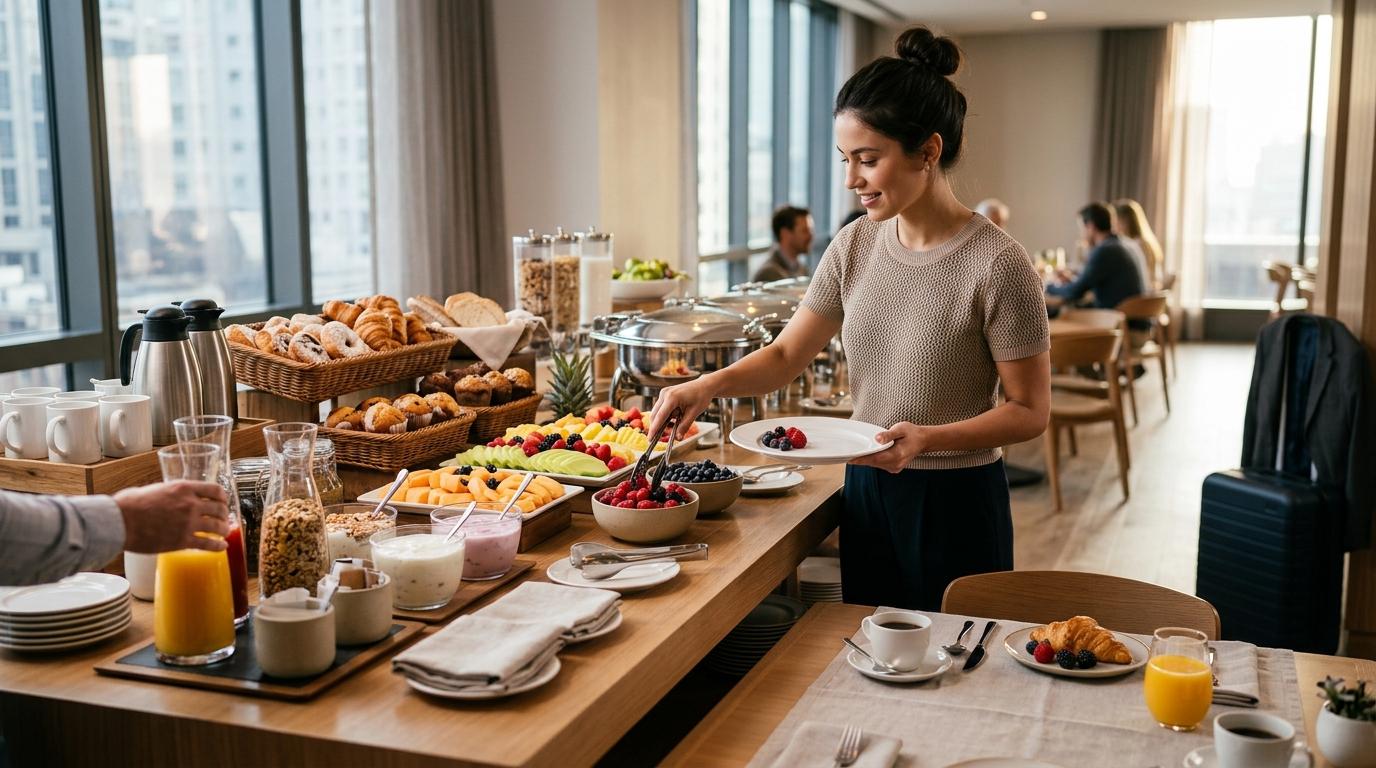
There are pastries along one wall, eggs and sausages sitting in hot trays, a waffle maker with a small line, someone waiting behind you at the toaster, and a staff member asking for your room number before you have even had coffee.
Suddenly, something as simple as breakfast starts to feel oddly complicated.
Can you go back for seconds? Is it okay to take a banana for later? Can you fill your travel mug? What if your child eats two bites of cereal and then decides they want three mini muffins instead?
That is where hotel breakfast buffet etiquette helps. It is not about being fancy or following stiff dining rules. It is mostly about being fair, clean, and considerate in a shared space.
Here is a practical guide to timing your visit, understanding hotel breakfast rules, knowing what to eat at hotel breakfast, handling takeaway food, and building a smarter plate before you start your day.
Quick Answer Summary
#If you are heading down to breakfast soon, here is the short version.
- A small takeaway item is usually fine. A banana, apple, muffin, or coffee to go is normally considered reasonable.
- Packing lunch is different. Making sandwiches, filling containers, or loading pastries into a bag is usually poor etiquette and may break hotel policy.
- Use a fresh plate every time you go back. Do not bring a used plate back to the buffet.
- Try not to arrive at the last minute. The final part of breakfast is often crowded, and staff may already be cleaning up.
- Look for signs and clues. Some hotels clearly offer grab-and-go items. Others expect food to stay in the breakfast room.
- Use the serving utensils. Tongs, spoons, and ladles are there for everyone’s hygiene.
- Take what you will actually eat. You can usually go back, so there is no need to overload one plate.
What Hotel Breakfast Buffet Etiquette Really Means
#Good hotel breakfast buffet etiquette is basically shared-space manners.
A breakfast buffet is not your personal kitchen. It is a dining area that many people are trying to use in a short window of time. Everyone is there for the same basic reasons: food, coffee, a table, and a calm start to the day.
So the etiquette is simple:
- Take reasonable portions.
- Keep the line moving.
- Use the utensils provided.
- Do not leave a mess behind.
- Respect the hotel’s breakfast rules.
- Be patient with staff and other guests.
The buffet may feel “unlimited,” but that does not mean anything goes. In most hotels, breakfast is meant to be eaten during breakfast service. Going back for more eggs or another slice of toast is normal. Taking one piece of fruit on your way out is often fine. Turning the buffet into a packed lunch station is where things start to cross the line.
This is especially worth remembering if you are traveling on a budget. Wanting to get value from a hotel breakfast is completely understandable. Families, backpackers, road-trippers, and business travelers all know how useful a filling breakfast can be.
The point is not to eat less than you need. The point is to avoid waste, awkward moments, and behavior that makes the buffet worse for everyone else.
Check the Rules Before You Pile Your Plate
#Before you decide what to eat at hotel breakfast, take a minute to understand what is included.
Hotel breakfasts do not all work the same way. Some are free for every guest. Some are included only with certain room rates, packages, or loyalty status. Some hotels offer a basic continental breakfast but charge extra for hot food, specialty coffee, or made-to-order items. Others run breakfast like a paid restaurant buffet.
Before loading up your plate, check a few basics:
- Is breakfast included with your booking?
- Do you need to give your room number?
- Do you need a voucher, coupon, or wristband?
- Are all buffet items included, or only certain sections?
- Are there takeaway bags or grab-and-go items?
- Are there signs saying food should stay in the dining area?
This is one of the easiest ways to avoid an uncomfortable moment.
If a hotel has paper bags, wrapped muffins, whole fruit near the exit, or takeaway coffee cups, that is usually a clear sign that taking something small with you is allowed.
If the setup feels more formal, with ceramic plates, metal cutlery, and no takeaway containers, the expectation is usually that you eat in the breakfast room.
When in doubt, just ask. It does not have to be awkward.
You can say:
“Is it okay if I take a coffee and a piece of fruit with me?”
Or:
“Are any of these items meant for takeaway?”
That quick question is much better than sneaking out with a napkin-wrapped sandwich and hoping nobody notices.
The Best Time to Go to Hotel Breakfast
#Timing can make hotel breakfast feel relaxed or completely chaotic.
The busiest time is often the final stretch before breakfast ends. If breakfast closes at 10:00 and you arrive at 9:35, you may run into the check-out crowd, long toaster lines, fewer clean tables, and hot trays that are not being refilled as quickly. You will probably still get food, but it may feel rushed and picked over.
A better plan is to go during the first third of the breakfast window, if you can. If breakfast runs from 6:30 to 10:00, arriving around 7:15 or 7:30 often means a calmer room, fresher food, and more open tables.
For families, earlier is usually easier too. Kids tend to do better when there are fewer lines, less pressure from people waiting behind them, and more space to sit. If you are heading out sightseeing, an earlier breakfast also gives you time to actually enjoy the meal instead of grabbing random things while watching the clock.
Of course, not everyone wants to wake up early on vacation. That is fair.
But try not to arrive at the very last minute. Staff are usually trying to close service on time, clean the area, and reset everything. Walking in two minutes before closing and expecting every tray to be full is not realistic.
A simple rule works well: arrive with enough time to choose your food, sit down, eat, and leave without making yourself or the staff feel rushed.
Build a Smarter Breakfast Plate
#Hotel breakfast does something strange to people.
You see eggs, toast, cereal, yogurt, fruit, potatoes, waffles, pastries, juice, and coffee, and suddenly your plate turns into a balancing act.
The smarter move is to build your breakfast in rounds.
Start with a small first plate. Maybe fruit, yogurt, cereal, or a pastry. Sit down, eat that, and see how hungry you still are. Then, if you want hot food, go back with a clean plate.
This helps more than you might think. Your eggs do not get cold while you slowly eat melon and yogurt. You waste less food. And you are less likely to carry an overloaded plate that sends a tomato, croissant, or sausage rolling onto the floor halfway back to your table.
If you are wondering what to eat at hotel breakfast before a long day out, think practical rather than “as much as possible.” A breakfast with some protein, fruit, and something filling will usually serve you better than a huge pile of sweet pastries that leaves you hungry again an hour later.
That might mean eggs with toast and fruit, yogurt with cereal, oatmeal with nuts, or whatever combination the hotel offers that you actually like.
The key is not to sample every single thing just because it is there.
A few smart plate habits:
- Take small portions first, then go back if you want more.
- Keep wet and crispy foods separate when you can.
- Do not stack food so high that it spills.
- Use a new plate every time you return to the buffet.
- Put serving spoons and tongs back where others can reach them.
- Skip anything you know you probably will not finish.
The fresh plate rule matters. Do not bring a used plate back to the buffet line. Even if it looks clean, it has already been at your table. Just take a new one. Hotels expect this, and it is better for hygiene.
Hotel Breakfast Takeaway Rules
#This is the question many travelers care about most: what are the real hotel breakfast takeaway rules?
The honest answer is that small, reasonable takeaway items are usually accepted. Packing a full meal for later is usually not.
Taking a banana, an apple, a muffin, or a coffee as you leave is generally seen as normal. Plenty of travelers do it, and many hotels quietly expect it. If there is a grab-and-go station, individually wrapped food, or takeaway cups, the hotel is making it even clearer.
But there is a big difference between taking one item and using the buffet as your lunch-prep station.
Usually not okay:
- Making sandwiches to wrap up for later.
- Filling your own containers.
- Loading a bag with pastries.
- Taking several yogurts, fruits, or packaged items for the day.
- Clearing out popular items for your group.
- Preparing food at your table specifically to eat hours later.
The issue is not only cost. It is also fairness, waste, and hotel policy. Breakfast is usually meant for guests to eat during breakfast hours. If lots of people start packing meals for later, hotels may tighten the rules, remove easy takeaway options, or become less generous overall.
A useful guideline is the “one small item” rule.
If you can carry it casually in one hand as you leave, like a piece of fruit or a coffee, it is probably fine. If you need containers, extra napkins, a tote bag, or a plan, you are probably crossing the line.
Food safety matters too. Buffet food is held for breakfast service, not for sitting for hours in a backpack, stroller, or warm car. Taking eggs, meat, dairy-heavy items, or made-up sandwiches to eat later can be risky if they are not stored properly.
If you need lunch later, plan for that separately. And if you have an early flight, tour, or long transfer, ask the front desk the night before whether they offer a packed breakfast or grab-and-go option. Many hotels do, especially if breakfast is included in your rate.
That is much better than improvising at the buffet and hoping it is okay.
Family and Group Etiquette
#Hotel breakfast can be a lifesaver for families. Everyone can choose something different, picky eaters can usually find at least one thing they like, and you do not have to search for a café before the day has even started.
But families and groups also take up space quickly, so a little planning helps.
If you are traveling with young children, it is usually best for an adult to help them at the buffet. Kids may struggle with heavy lids, hot trays, shared tongs, cereal dispensers, and juice machines. They may also touch food and then change their mind, which is awkward for everyone.
A good approach is to walk the buffet together first and decide what they want before picking up plates. That avoids the slow stop-at-every-station shuffle while a line builds behind you.
For groups, try not to send everyone to the buffet at once if the room is busy. One or two people can go first, then others can take turns. It keeps the line moving and stops your table from becoming a traffic jam.
A few helpful family and group habits:
- Keep children from running between tables.
- Help kids use tongs and serving spoons.
- Start with small portions for children.
- Do not let kids handle shared food with their hands.
- Keep strollers, bags, and suitcases out of narrow walkways when possible.
- Move away from the buffet once you have served yourself.
Be realistic with kids’ portions too. It is tempting to take one of everything “just in case,” but that usually leads to waste. Start small. If they want more, you can go back.
For large groups, seating can also be tricky. If the breakfast room is crowded, splitting into two nearby tables may be more considerate than dragging chairs around or blocking a walkway. If staff suggest a seating arrangement, it is usually best to follow their lead.
Food Safety and Buffet Hygiene
#Good buffet manners and food safety go together. The way one person handles plates, tongs, and shared food affects everyone else.
The basic rule is simple: touch only what you are going to eat, and use the tools provided.
Use tongs for bread, pastries, fruit, bacon, and other shared items. Use spoons and ladles for hot dishes. Do not reach into bowls or trays with your hands, even if it seems harmless. Other guests do not know where your hands have been, and they should not have to wonder.
A few important buffet hygiene rules:
- Use a clean plate for every trip. Never return to the buffet with a used plate.
- Do not eat while standing over the buffet. Wait until you are back at your table.
- Do not lean under sneeze guards. They are there for a reason.
- Put serving utensils back properly. Leave handles where the next person can grab them.
- Do not mix utensils between dishes. If a spoon belongs to one tray, keep it there.
- Tell staff if something spills or drops. Do not just walk away from the mess.
- If you touch food by mistake, take it. Do not put it back.
It is also polite to be patient around popular stations. Toasting bread, making waffles, and using coffee machines can take time. If you are waiting, give people space. If you are using the station, move aside when you are done.
At hot food stations, close lids when appropriate so the food stays warmer and cleaner for the next guest. At drink stations, fill your cup and then step aside so others can reach the machine.
None of this has to be perfect. People are tired, kids spill things, coffee machines can be confusing, and breakfast rooms get crowded. It happens.
The main thing is to remember that the buffet is shared by many people in a short window of time.
Hotel breakfast should make travel easier, not more stressful. With decent timing, a clean-plate habit, reasonable takeaway choices, and basic respect for the people around you, you can enjoy the buffet without feeling rude or wasteful.
That is really the heart of hotel breakfast buffet etiquette: eat well, take only what is fair, keep the line moving, and leave the breakfast room a little better than you found it.