The bottle of whisky that taught me airport rules better than any website
#Duty-free liquids on connecting flights look like a very simple thing until you are standing at transit security with one uncle behind you sighing loudly, one security officer pointing at your sealed bag, and your boarding gate closing in 25 minutes. That is when the whole “arre duty-free hai, allowed hoga na?” confidence goes out of the window. I learnt this the slightly sweaty way while flying from India to Europe with a connection in the Middle East. Like most Indians travelling international, I had done the usual airport routine: reach too early because parents trained us like that, roam around duty-free, compare perfume prices with Nykaa screenshots, buy one bottle for a cousin, and feel very smart. Then came the connection. And suddenly the bottle became a problem, or at least it felt like one.
So this post is not some boring airport-rule lecture. It’s more like what I wish someone had told me before I proudly carried duty-free perfume, alcohol and fancy face mist through multiple airports. The short answer is: duty-free liquids can be allowed on connecting flights, but only if the airport, airline, route, seal, receipt, and re-screening situation all line up properly. Sounds dramatic, I know. But trust me, one small mistake and your ₹6,000 perfume can become a donation to airport security.
First, the basic liquid rule most of us already know… but half-remember wrongly
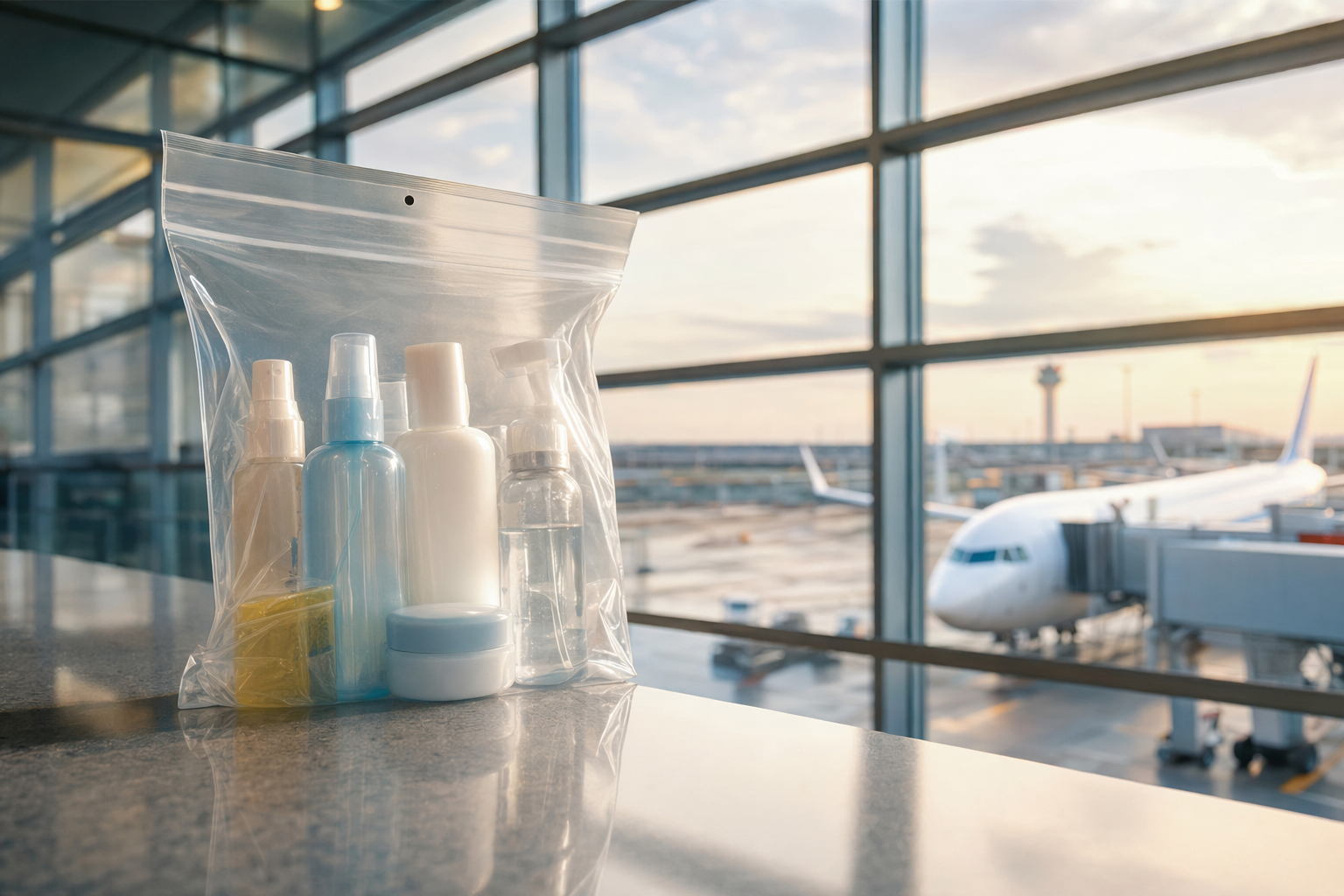
#For cabin baggage, the normal rule at most international airports is that liquids, aerosols and gels must be in containers of 100 ml or less, and they usually need to fit into a clear resealable plastic bag of around 1 litre. This includes water, shampoo, lotion, gel, sunscreen, toothpaste, perfume, ghee-like food items, chutneys, even some makeup. Indian airports follow this broad international style of screening too, especially for international departures. Domestic screening in India can feel slightly different from airport to airport, but please don’t assume a 200 ml bottle will be waved through just because “last time they allowed”. Airport security is not like Indian railway platform logic, boss.
Now duty-free is the exception everyone gets excited about. If you buy liquid items after security at an airport duty-free shop, those items may be more than 100 ml. Alcohol bottles, perfume sets, skincare, olive oil, fancy honey, all that. But the exception is not unlimited freedom. The item must usually be packed in a sealed Security Tamper-Evident Bag, often called a STEB. It is that transparent bag with a red border or special seal, with the receipt visible inside. Don’t open it. Don’t even “just check once”. Once opened, it becomes just another liquid item, and at the next security point, they can reject it.
What is a STEB bag and why Indians should stop tearing it open immediately
#A STEB bag is basically airport security’s way of saying, “Okay, this was bought from a controlled shop after screening, and nobody has messed with it.” It normally has a tamper-proof seal, some airport or shop marking, and your purchase receipt inside or attached in a visible way. The receipt matters because many airports want proof that the liquid was bought recently, commonly within a short transit window. Some places refer to a 48-hour window for acceptance, though the exact handling depends on the country and airport screening rules.
This is where we Indians get into trouble because we love repacking. We will buy perfume, remove outer carton to save space, put bottle in backpack side pocket, keep receipt in passport cover, and then argue at security like Supreme Court lawyer. Please don’t do this. Keep the duty-free liquid in the sealed bag exactly as the shop gave it. If the staff asks where your next connection is, tell them clearly. A good duty-free shop at airports like Delhi, Mumbai, Doha, Dubai, Singapore or Bangkok usually knows transit packing rules, but they are not responsible for every country’s final decision. Their job is to pack it properly. Your job is to not spoil it.
My very simple rule now: if it is liquid and more than 100 ml, I either keep it sealed in the duty-free bag till the final airport, or I put it in checked luggage at the first safe chance. No jugaad.
The real problem is not the first flight, it is the connection
#On your first international flight from India, duty-free liquids are usually not the headache because you buy them after security. The drama starts when you land at the connecting airport. Some connections keep you fully airside, meaning you just follow “Transfer” signs and maybe go through a quick security check. Some airports make almost everyone pass through transit security again. Some routes make you clear immigration, collect baggage, change terminal, re-check bags, and then go through security like a fresh passenger. Each of these situations changes the risk for duty-free liquids.
For example, if you fly Bengaluru to Doha to London on one ticket and stay airside, your sealed duty-free bag generally has a better chance of being accepted at transit security. If you fly Delhi to Bangkok, then self-transfer to a low-cost flight from another terminal, you may have to enter Thailand immigration, collect bags, and check in again. At that point, your 1 litre whisky bottle in hand baggage can become a problem at security unless it is accepted as sealed duty-free under local rules. And if you opened it? Finished. Not literally finished, but you know what I mean.
Connection time also matters a lot. If your layover is short, you don’t have time to negotiate, repack, or run to check-in counters. I’ve written before about whether a short transit is actually safe, and this is exactly the kind of small issue people forget while booking. If your route includes terminal change, immigration or re-screening, read this alongside Is a 90-Minute Layover Enough? Connection Checklist, because duty-free liquids are one more reason a “cheap and tight” connection can become stressful.
My Doha connection lesson, and why the receipt saved me
#On one trip from Mumbai, I bought two perfumes and one bottle of alcohol for family. Very normal NRI-style shopping list, although I’m not NRI, just carrying things like one. The shop packed it in a sealed bag and put the receipt inside. At the connecting airport, transit security pulled the bag aside. For a few seconds my heart did that typical Indian passenger thing: “Bas ab gaya.” The officer checked the seal, looked at the receipt, scanned the bottle separately and then allowed it. Smooth. But those 3 minutes felt longer than my entire flight meal service.
Another time, a friend flying via Europe was not so lucky. He had opened the duty-free bag because he wanted to separate perfume boxes and make space in his backpack. At transit security, the larger bottle was not accepted in cabin baggage. He tried explaining that it was bought at duty-free. No use. No sealed bag, no clear proof of secure chain, no allowance. He had two options: surrender it or go back out and check it in, which was impossible because he was in transit and the flight was soon. He surrendered it. Till today he remembers the exact price, poor fellow.
Rules change by airport, but these common patterns are worth knowing
#There is no single magic sentence like “all duty-free liquids are always allowed on connecting flights.” I wish it was that easy. The general global pattern is that liquids over 100 ml bought at duty-free may be allowed through transfer security if they are in a sealed tamper-evident bag with proof of purchase, and if the security screening system at that airport accepts them. But “may be allowed” is doing a lot of work here. Security officers can still reject something if the bag looks damaged, receipt is missing, item cannot be screened clearly, or local rules don’t permit it on that route.
- If you bought the liquid before your first security check, it is not duty-free for cabin purposes. Your homemade achar in a 500 ml jar will not become allowed because you say it is special.
- If you bought it at duty-free but opened the sealed bag before the final destination, you are taking a risk at the next security checkpoint.
- If your connection involves entering the country and checking in again, treat it like a new flight. The normal 100 ml cabin liquid rule may apply again.
- If the airport uses advanced CT scanners, rules can sometimes feel more relaxed, but don’t assume. Many airports still enforce standard liquid limits.
- If you are unsure, ask the duty-free staff before paying: “I have a connecting flight via this airport, will this be packed for transfer security?” Simple question, saves headache.
India-specific angle: coming back home with duty-free liquids
#For Indian travellers returning home, the biggest confusion is usually this: “Can I buy alcohol abroad and carry it on my domestic connection after landing in India?” Let’s say you fly London to Delhi, then Delhi to Lucknow or Chennai or Guwahati. On arrival in Delhi, you normally clear immigration, collect checked baggage, pass customs, and then move towards your domestic connection. That means you will go through domestic security again. If you are carrying a large liquid bottle in hand baggage, there is a real chance it may not be allowed through security unless handled under accepted sealed duty-free procedures, and even then don’t treat it as guaranteed.
The safer move, if you have time and your bags are with you, is to put the sealed duty-free alcohol or perfume into your checked baggage after customs and before re-checking the bag for the domestic sector. Wrap it well. I usually carry one cloth shopping bag or bubble wrap sheet for this exact reason, because Indian suitcases get treated like WWE props sometimes. Also remember that India has customs allowances for alcohol, commonly up to 2 litres of alcoholic liquor or wine for eligible passengers, but allowances and duty rules can change, and state-level alcohol rules are a separate mess. Dry states or restricted states are not places to play smart with bottles.
A small note on alcohol limits in baggage
#Airlines usually have safety rules for alcohol in checked baggage, especially based on alcohol percentage. Many carriers follow the broad aviation standard that alcoholic beverages between 24% and 70% alcohol by volume may be carried in limited quantity, often up to 5 litres per passenger, in retail packaging. Above 70% is generally not allowed. But customs allowance is not the same as airline carriage allowance. This is where people get confused. Airline may allow carriage, customs may charge duty, and local law may still create issues. So if you are carrying more than one or two bottles, please check your airline and arrival airport rules before becoming family’s full-time alcohol courier.
Self-transfer is where duty-free liquids go to die, honestly
#Self-transfer means you booked separate tickets. Maybe Air India to Singapore, then Scoot to Bali. Or IndiGo to Dubai, then another airline onwards. Price looked good on the booking app, but the airport process can be painful. You may need to clear immigration, collect bags, exit, go to another terminal, check in again, and pass security again. In that case, duty-free liquids are more risky because your journey is no longer treated as one protected airside transfer. The sealed bag can help, but it is not a guarantee.
I am not saying never buy duty-free on self-transfer. I am saying buy it at the last airport before your final destination whenever possible. If you are flying Kochi to Kuala Lumpur to Tokyo on separate bookings, don’t buy the big bottle in Kochi unless you are very sure about transfer rules in Kuala Lumpur. Better buy at Kuala Lumpur after you clear the messy part, or buy at Tokyo arrival duty-free if available and legal for your allowance. Same for perfume. Same for expensive skincare. We Indians love “deal mil gaya”, but sometimes the cheaper bottle costs more in stress.
Terminal change, immigration, and security re-check: the three danger words
#Whenever I look at a connecting flight now, I don’t just see layover hours. I see process. Will I remain in the same terminal? Do I need to clear immigration? Do I have checked baggage tagged till final destination? Is there transit security? Is the next flight domestic or international? These questions matter more than whether the duty-free shop has a Diwali discount. A 4-hour layover can be easy if everything is airside. A 2-hour layover can become comedy show if you have to change terminals by bus, stand in immigration, and then argue about liquid rules.
Some airports are very transit-friendly. Doha, Dubai and Singapore are usually smooth for international transfers, though security checks still happen depending on gate and route. European hubs can be strict with screening, especially if you are entering Schengen or changing zones. US connections are a different animal because most international arrivals require immigration and customs at first point of entry, then baggage re-check and security again. If you bought duty-free before reaching the US and have an onward domestic flight, the sealed bag and recent receipt become very important, and even then TSA screening must clear it.
What about water bottles, baby food, medicines and Indian snacks?
#Not all liquids are duty-free shopping items. Water is the simplest: don’t carry a full bottle through security. Carry an empty bottle and refill after security. Many Indian airports now have water refill stations, though sometimes you have to hunt for them near washrooms or food courts. Baby milk, baby food and necessary medicines often get special consideration at security, but you should declare them and carry prescription or supporting documents when relevant. Don’t hide things. Security people dislike surprises.
Indian food is where things get funny. Dry thepla, mathri, khakhra, banana chips, laddoo, all usually easier. But pickles, chutneys, rasam powder mixed in oil, ghee, coconut oil, liquid sweets syrup, curd rice with too much curd, these can be treated as liquids or gels. I once saw someone trying to explain mango pickle to a non-Indian security officer, and honestly it was both tragic and hilarious. If it can spill, spread, pour, spray or gel, think liquid rule. Pack it in checked baggage properly, double wrapped, unless it is under 100 ml and allowed by destination food rules.
When should you actually buy duty-free liquids?
#My personal order is simple now. If I have a direct international flight, I buy at departure duty-free without much stress. If I have one clean airside connection on the same ticket, I may buy, but only if the shop seals it properly and I keep the receipt inside. If I have a self-transfer, immigration, terminal change, or domestic connection after international arrival, I avoid buying liquids until the last possible airport. It sounds boring, but boring is good when your boarding gate is far away and your backpack already weighs like a cement bag.
- Best case: buy duty-free liquids at the airport just before your final flight, especially if the final flight has no further security re-check.
- Okay case: buy before a same-ticket international transfer, sealed in STEB, receipt visible, bag unopened.
- Risky case: buy before a self-transfer, low-cost carrier connection, terminal change, or airport where you must clear immigration and re-enter security.
- Worst case: open the duty-free bag during transit, throw receipt, then try to convince security with emotional story. It won’t work, mostly.
Airport timing, because duty-free shopping eats time quietly
#Another Indian habit: we reach airport early, then somehow still run at the end. Duty-free shopping is a sneaky time-eater. First you compare prices. Then you ask if the offer is on two bottles or three. Then card machine fails. Then passport scanning takes time. Then the staff seals the bag. Then your gate is 18 minutes away by airport walking speed, which is basically gym cardio. For international flights from India, especially if you plan to shop, keep extra buffer. Web check-in does not mean you can reach late and do a full perfume trial session.
If you are travelling with parents, kids, elderly relatives, or first-time flyers, add even more time. International departure from Delhi T3, Mumbai T2, Bengaluru T2, Hyderabad, Chennai, Kochi, all can feel smooth on some days and crowded on others. Festival periods, school holidays, long weekends, student travel season, Umrah or holiday rush, these can make check-in and security slower. If you want a proper airport timing breakdown from an India point of view, this guide on How Early Should You Arrive at the Airport? A Realistic Timing Guide for Domestic and International Flights AllBlogs category. Travel & Adventure Region scope: India-specific. Why this scope was chosen. Airport arrival timing depends on Indian domestic and international check-in workflows, baggage rules, terminal access, and travel habits. Search intent. Informational checklist. Primary keyword. how early should I arrive at airport Natural search queries people may use. How early should I reach the airport for a domestic flight? How early should I arrive for an international flight? Is 2 hours enough before a flight? When should I leave for the airport? Long-tail keywords. airport arrival time domestic flight India how early to reach airport with checked baggage airport timing checklist for international flights how early to arrive if web checked in SEO meta title. How Early Should You Arrive at the Airport? India Timing Guide SEO meta description. Know when to reach the airport for domestic and international flights from India, with realistic buffers for baggage, web check-in, security, and delays. Suggested URL slug. how-early-arrive-airport-india-domestic-international Short description. A simple timing framework for domestic and international flyers, including first-time travellers, checked-bag passengers, early-morning flights, and travellers with elderly parents or children. Why this topic today. Existing content performs around airport processes, luggage, check-in failures, and flight readiness, but there is no central arrival-timing answer. GSC signal or adjacent GSC signal. Search Console shows sustained visibility for airport check-in, baggage, power-bank rules, DigiYatra, and Indian flight-preparation queries. Why this fits AllBlogs. It is a practical evergreen travel guide with broad reader usefulness and strong AEO potential. Why this is not duplicate or cannibalizing. Existing pages cover specific failure modes and packing rules, not the core timing decision before leaving home. Adjacent expansion reason. Solves the upstream planning problem behind multiple airport-preparation search clusters. Novelty score: High. Cannibalization risk: Low. AI SEO / AEO / GEO angle. Build a “Domestic / International / With checked bag / With children” timing table plus a concise “leave home by” calculation. CTR hook. Web check-in does not always mean you can arrive late. Demand signal. High-intent airport-preparation demand is already visible across the site’s travel query and page clusters. is useful, even if the title is a mouthful.
Long layover? Lounges, airport hotels and the duty-free temptation
#Since many connecting flights from India go through Gulf or Southeast Asian hubs at odd hours, people often spend 5 to 10 hours inside airports. This is when duty-free temptation becomes dangerous because you are bored. You walk. You sample chocolates. You smell five perfumes. Suddenly you are buying a giant skincare toner because the sales person said “special airport price”. If you have a long layover and still another security check ahead, pause for 2 minutes before buying liquids.
For comfort, lounges are usually more useful than random shopping. Many Indian credit and debit cards offer domestic or international lounge access, though crowding has become common and rules keep changing. Walk-in lounge prices vary a lot by airport, but think in the rough range of a decent meal to a budget hotel night, depending on city and facilities. Transit hotels inside airports like Singapore, Doha, Dubai and some big hubs can be convenient for overnight halts, but they are not cheap. Capsule-style options or sleep pods exist in some airports. If your layover is very long and visa rules allow exit, nearby airport hotels can work, but then remember: exiting and re-entering means security again, and your duty-free liquids must survive that process.
Seasonal shopping: Diwali, Christmas, Eid and those shiny airport offers
#Duty-free shops know exactly when Indians are travelling with empty suitcase space and emotional gifting pressure. Around Diwali, Christmas-New Year, Eid travel periods, summer holidays and wedding season, you’ll see bundle offers on liquor, chocolates, perfumes and cosmetics. Some are genuinely good. Some are just packaged to look good. Always compare with Indian retail prices if data is available, and remember that duty-free is not always cheapest anymore. Online sales in India sometimes beat airport prices, especially for cosmetics and perfumes.
Also, check destination rules before buying food or liquid gifts. Australia, New Zealand, Singapore and some other places can be strict about food, plant and animal products. Even if airport security allows the item, customs at destination may not. A sealed duty-free bag is not a customs immunity shield. If you are carrying alcohol into another country, there may be age rules, quantity limits and duty thresholds. Same story when returning to India. Buy with your route in mind, not just your cousin’s WhatsApp shopping list.
My practical packing method for duty-free liquids
#After a few messy trips, I now follow a very boring but effective system. Passport, boarding passes and duty-free receipts stay together. Sealed duty-free bags go upright in the cabin bag, not crushed under shoes or laptop chargers. I don’t remove packaging during transit. If I know I’ll collect checked baggage during a connection, I keep one soft cloth bag, tape or zip pouch inside my suitcase so I can wrap bottles before re-checking. For perfume, I prefer smaller bottles if price difference is not huge, because 50 ml is easier to manage than 150 ml if something goes wrong.
One more small thing: don’t buy more liquids than you can physically manage. Indian travellers often carry cabin suitcase, laptop bag, duty-free bag, food packet, neck pillow, and then wonder why boarding feels like shifting house. Some airlines count duty-free bags separately, some are relaxed, some low-cost carriers are strict about cabin baggage pieces and weight. If your next airline is budget, especially in Southeast Asia or Europe, check cabin bag rules before adding three shiny shopping bags. Duty-free does not always mean baggage weight magically disappears.
Quick route examples, because this is how it makes sense
#Delhi to Dubai direct: buying duty-free at Delhi after security is usually straightforward if Dubai is your final stop, subject to UAE customs allowance. Mumbai to Doha to Paris on one ticket: sealed duty-free from Mumbai may pass transit security if packed correctly, but keep receipt and don’t open it. Bengaluru to Singapore, then separate low-cost ticket to Bali: risky to buy large liquids in Bengaluru because you may need immigration and re-check. Better buy in Singapore after you are safely airside for Bali, if rules allow. London to Delhi to Jaipur: if you buy in London and collect bags in Delhi, put bottles in checked baggage before domestic re-check if possible.
US example: Hyderabad to Doha to New York to Dallas. When you enter the US at New York, you generally clear immigration and customs, then re-check bags and go through security for Dallas. Duty-free liquids bought before reaching the US need to be in a proper sealed tamper-evident bag with receipt, and they still must clear screening. If you can move them into checked baggage after customs, that can be safer. But don’t pack fragile bottles casually. US baggage belts have no emotions.
What to do if security says no
#First, don’t fight. I know it hurts, especially when the bottle cost half your hotel budget, but arguing loudly rarely helps and can delay you more. Ask politely if there is any option to check the item in, return to airline counter, or transfer it to checked baggage. Sometimes there is no practical option because you are already airside or boarding soon. If the seal is broken or receipt missing, accept that the mistake is yours. Painful, but true.
If you feel the item was properly sealed and still rejected, you can ask for clarification, but security rules are applied by the airport authority, not by the duty-free shop salesperson who promised “no problem sir”. Keep purchase bills because some airport shops may have customer service channels, but refunds after security confiscation are not something to rely on. Better prevention than sad email writing later.
Final thoughts from one slightly overcautious Indian flyer
#Duty-free liquids on connecting flights are not impossible, not scary, and not something you must avoid completely. You just need to respect the chain: buy after security, keep it sealed, keep the receipt visible, understand your connection, and don’t open the bag till the final destination. If your journey includes self-transfer, immigration, terminal change or domestic connection after international arrival, be extra careful. Honestly, the rules are less about the liquid and more about whether security can trust where that liquid has been.
These days I still buy duty-free, but I buy less and smarter. Perfume only when the route is simple. Alcohol mostly when I can pack it into checked baggage before the next flight. Chocolates anytime, because chocolates don’t create this much drama, unless they melt in your bag, which is another tragedy. Anyway, hope this saves you from standing at transit security with a helpless face and an expensive bottle. For more such practical travel stuff from an Indian traveller’s lens, I keep finding and sharing useful reads on AllBlogs.in, so do check it out casually before your next airport run.