Quick Take
#- Kola kanda is a traditional Sri Lankan herbal rice porridge made with rice, leafy greens, coconut milk, and water.
- It is usually served hot in the morning, often with a small piece of jaggery on the side.
- The basic version is usually vegetarian and plant-based, but strict vegetarians should still ask about fish, Maldive fish, and shared utensils.
- If you are trying it for the first time, take a small portion and make sure it is fresh and hot.
- If your stomach is already unsettled, save it for another day and choose something plainer like toast, banana, or plain string hoppers.
For Indian travelers, breakfast in Sri Lanka can feel comfortingly familiar and quietly different at the same time.
You will see rice, coconut, dhal, sambols, hoppers, string hoppers, and curries that may remind you of Kerala, Tamil Nadu, coastal Karnataka, or other parts of South India. And then, one morning at a hotel buffet or a small local café, you may spot something warm, green, and porridge-like being served in cups or bowls.
That is kola kanda, one of Sri Lanka’s most traditional morning foods.
It is not a green smoothie. It is not a curry. It is not sweet like kheer. Kola kanda is a warm herbal rice porridge, simple, earthy, and filling. Many Sri Lankans think of it as a nourishing breakfast, and it is often associated with wellness, digestion, and a calm start to the day.
For Indian visitors, it is definitely worth trying once. But like any local food, it helps to know what goes into it, where to eat it, and when your stomach may prefer something simpler.
What Is Kola Kanda?
#Kola kanda, also written as kola kenda, is a traditional Sri Lankan herbal porridge.
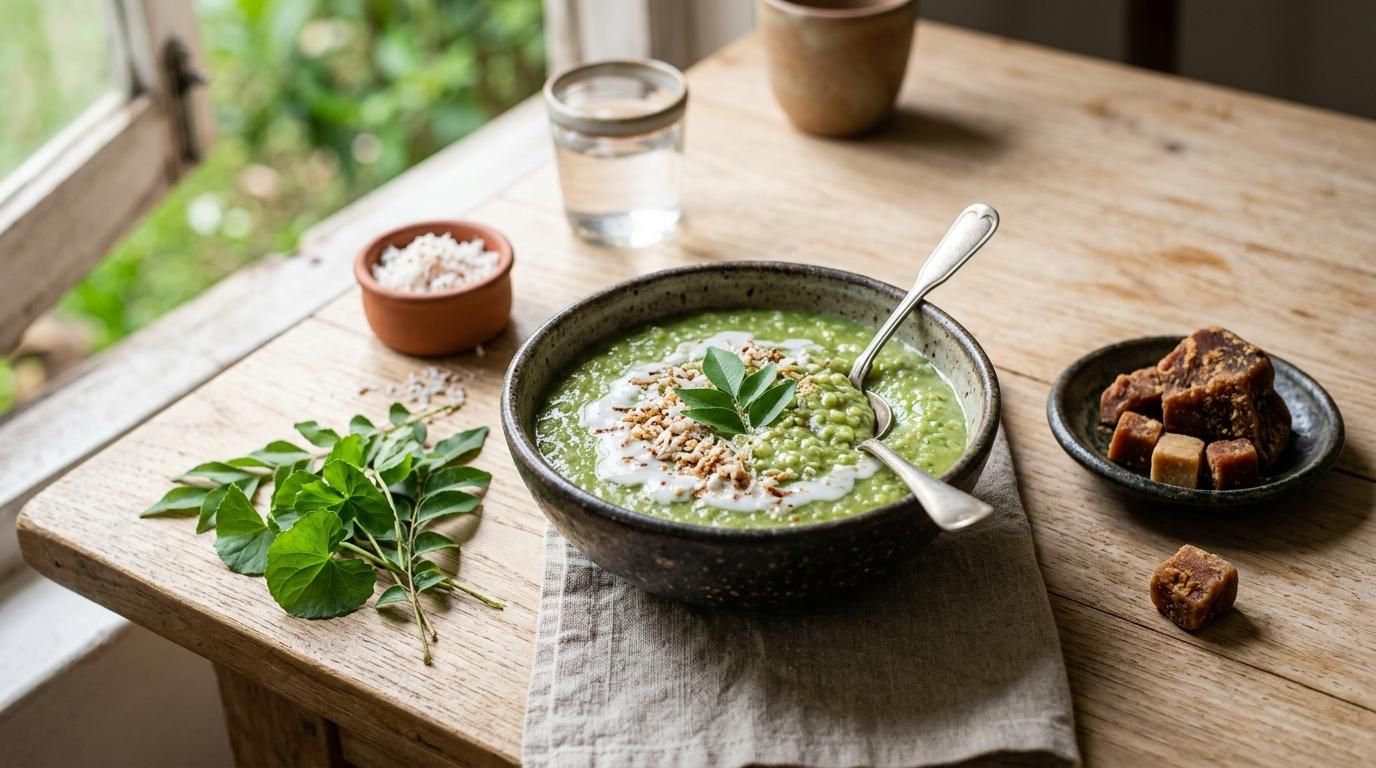
The name is often understood as “leaf porridge” in Sinhala. It is usually made with cooked rice, coconut milk, water, and the juice or extract of green leaves. The result is a warm, mildly thick, green porridge.
It has been part of Sri Lankan food culture for a long time and is also connected with traditional and Buddhist monastic food practices. Today, many people still drink or eat it in the morning, especially when they want something light but satisfying.
The taste may surprise you at first.
If you are expecting upma, kanji, dalia, or kheer, this is quite different. Kola kanda is usually not sweet by itself. It is not spicy either. It tastes green, herbal, slightly grassy, coconut-rich, and sometimes a little bitter depending on the leaves used.
That is why it is commonly served with jaggery.
You take a small bite of jaggery and then sip the porridge. The sweetness balances the herbal flavour and makes the whole thing much easier to enjoy.
What Is Kola Kanda Made Of?
#The basic ingredients are usually simple:
- Rice, cooked until soft
- Coconut milk
- Water
- Leafy green juice or extract
- A little salt, in some versions
- Jaggery, usually served separately
The greens can vary from place to place. Some common ones include:
- Gotukola or pennywort
- Karapincha or curry leaves
- Mukunuwenna
- Hathawariya
You do not need to memorise these names before your trip. Just know that the flavour depends heavily on the greens used. One cup may taste mild and fresh. Another may taste stronger, more herbal, or slightly medicinal.
If it is your first time, do not start with a large bowl. Ask for a small serving or take just a few spoonfuls from the buffet. You will know quite quickly whether you like that particular version.
Is Kola Kanda Vegetarian?
#In most cases, yes.
Traditional kola kanda is usually made with rice, greens, coconut milk, water, and jaggery. It does not need meat, fish, egg, or dairy. So for many Indian vegetarians and vegans, it can be a good breakfast option in Sri Lanka.
That said, strict vegetarians should still ask.
Sri Lankan food is very vegetarian-friendly in some ways, but there is one common surprise for Indian travelers: Maldive fish. It is a dried fish ingredient used in some sambols, relishes, and vegetable dishes. Kola kanda is usually safer than many mixed curry items, but it is always better to confirm.
Questions Indian Vegetarians Can Ask
#At a hotel, café, or breakfast counter, keep your questions simple:
- “Is this vegetarian?”
- “No fish?”
- “No meat?”
- “Any Maldive fish?”
- “Is it made with coconut milk?”
- “Is jaggery served separately?”
- “Is the same ladle used for non-veg food?”
In hotels and tourist-friendly cafés, staff usually understand English. In smaller local places, use short, clear phrases like “vegetarian,” “no fish,” and “no meat.”
If you are Jain, vegan, or very strict about cross-contact, ask more directly. Confirm that nothing apart from rice, greens, coconut milk, water, salt, and jaggery has been added.
Where Can You Find Kola Kanda in Sri Lanka?
#Kola kanda is mainly a morning food. You are much more likely to find it at breakfast than later in the day.
1. Hotel Breakfast Buffets
#For most Indian travelers, a hotel buffet is the easiest place to try kola kanda.
Many mid-range and higher-end hotels in Sri Lanka serve local breakfast dishes along with toast, fruit, eggs, cereal, hoppers, and curries. Kola kanda may be kept in the Sri Lankan breakfast section, usually in a pot or warmer, with jaggery nearby.
This is a comfortable place to try it because:
- You can ask the staff about ingredients.
- The food is usually kept in a more controlled setting.
- You can take a very small portion first.
- You can pair it with familiar items like toast, fruit, or tea.
If you are unsure, do not fill a full bowl. Take a small cup or just a few spoonfuls and see how it feels.
2. Local Tea Shops and Breakfast Cafés
#In Colombo and other towns, you may also find kola kanda at small cafés, tea shops, or morning food stalls. These places often serve locals on their way to work or people looking for a quick, simple breakfast.
This can be a lovely way to try it in a more local setting. But use your judgement.
Choose places where:
- The porridge is served hot.
- There is a steady morning crowd.
- The pot is clean and covered.
- The counter is not exposed to flies, dust, or rainwater.
- The staff can answer basic questions about ingredients.
If the porridge is lukewarm, uncovered, or the place does not look clean, skip it. Sri Lanka has plenty of other good breakfast options.
3. Sri Lankan Breakfast Restaurants
#Some cafés and restaurants focus on traditional breakfast foods like hoppers, string hoppers, coconut sambol, dhal, and herbal porridge. These are good places to ask for kola kanda because the staff may be used to explaining local dishes to visitors.
If you are planning a morning food walk, an early train ride, or a day of sightseeing, this can be a nice dish to include — as long as you keep the portion sensible.
Best Time to Try Kola Kanda
#Think of kola kanda as an early breakfast food.
In local cafés, it may sell out after the morning rush. At hotel buffets, it may remain available throughout breakfast hours, but it is usually freshest earlier in the morning.
A simple plan:
- Before sightseeing: Try a small cup with fruit, toast, or another light item.
- Before a road trip: Keep the portion small, especially if you get motion sickness.
- Before a train journey: Do not experiment too much if your stomach is sensitive.
- After a heavy dinner: Go easy, because coconut milk can feel rich.
If you wake up late, do not build your whole morning around finding kola kanda. By then, many small local places may have finished serving it.
How Do You Eat Kola Kanda?
#There is no special technique.
Kola kanda is usually served hot in a cup, mug, or bowl. A small piece of jaggery is served on the side. You take a little bite of jaggery, then sip or spoon the porridge.
The jaggery is not just decoration. It really helps. It softens the bitterness of the greens and makes the flavour more rounded.
If you do not like too much sweetness, use only a tiny bit. If the porridge tastes too herbal or bitter, take a little more jaggery with it.
Indian travelers who enjoy kanji, herbal drinks, curry leaf flavours, coconut-based breakfasts, or simple rice porridges may warm up to kola kanda quickly. If you prefer crisp, spicy, or strongly savoury breakfasts, the texture and taste may take a little getting used to.
Stomach-Comfort Tips for Indian Travelers
#Locally, kola kanda is often seen as a gentle, soothing morning food. But travel digestion is different for everyone.
A dish that feels light to someone who grew up eating it may feel unusual to a visitor. With kola kanda, the two things to keep in mind are coconut milk and herbal greens.
Coconut milk can feel heavy if your stomach is tired. Herbal leaf extracts may also feel unfamiliar if you are not used to them. So even though kola kanda is not oily or spicy, it may not be the best choice on a bad stomach day.
If You Are Trying It for the First Time
#Be gentle with your stomach:
- Start with a small serving.
- Make sure it is hot and fresh.
- Avoid mixing it with too many rich dishes.
- Do not try it for the first time right before a long journey.
- See how your body feels before having a bigger portion another day.
This is practical travel food advice, not medical advice. If you have allergies, digestive issues, or strict dietary rules, follow your usual precautions and avoid anything uncertain.
Monsoon and Hygiene Cautions
#Sri Lanka’s rainy months can make food hygiene more important, especially for travelers.
Wet weather, humidity, and open counters are not ideal for foods that contain coconut milk. During the monsoon or after heavy rain, be a little more careful about where you eat.
Avoid kola kanda if:
- It is not hot.
- It has been sitting uncovered.
- The serving area looks wet or muddy.
- The ladle or bowls do not look clean.
- You cannot confirm what is inside.
- Your stomach is already unsettled.
When possible, choose a hotel buffet, a clean enclosed café, or a busy local place where the food moves quickly.
The simple rule is: hot, fresh, clean, and a small portion first.
When to Skip Kola Kanda
#Kola kanda is worth trying, but you do not need to test your stomach just to have a local experience.
Choose something lighter if you have:
- Travel fatigue
- Nausea or loose motions
- A heavy dinner sitting in your stomach
- A long bus, car, or train journey ahead
- Sensitivity to coconut milk
- Doubts about the hygiene of the place
Gentler breakfast options may include:
- Plain toast
- Banana
- Simple fruit from a reliable place
- Plain string hoppers
- Mild dhal, if it suits you
- Plain rice-based dishes
- Tea with a simple bakery item from a clean shop
For Indian travelers in Sri Lanka, the safest approach is not to avoid local food completely. It is to try new dishes slowly. One new item at a time, moderate portions, and no major experiments before long travel days.
A Note on Sri Lankan Breakfast for Indians
#Sri Lankan food can feel close to Indian food, but the details are different.
Coconut appears often. Rice is central. Sambols can be fiery. Curries may look familiar but taste sharper, smokier, or more coconut-heavy than expected. Vegetarian food is available, but strict vegetarians should ask about Maldive fish, seafood stock, and shared utensils.
In this context, kola kanda is a useful dish to know. It is local, usually vegetarian, not spicy, and commonly served in the morning when you may want something warm but not too heavy.
It also shows a quieter side of Sri Lankan breakfast culture. Not every morning meal is hoppers, sambol, and curry. Some mornings begin with a warm cup of green herbal porridge and a small piece of jaggery.
That is the charm of it.
Try it once if you can. Just try it wisely.
Quick Checklist Before You Order Kola Kanda
#Before you say yes, ask yourself:
- Is it served hot?
- Does the place look clean?
- Is it vegetarian?
- Any fish, meat, or Maldive fish?
- Is it made with coconut milk?
- Is jaggery served separately?
- Can you start with a small portion?
- Is your stomach feeling okay today?
If the answers feel reassuring, go ahead. If not, choose another breakfast and try kola kanda another morning.