If you travel in India even a little bit, you learn one thing very fast: water bottle is not a small item. It becomes that one thing you keep checking before phone charger also. Train journey from Delhi to Jaipur? Bottle. Sunrise trek in Hampi? Bottle. Waiting in airport security at 5 am with half-sleepy face? Bottle again. And honestly, I have carried all three types over the years — filter bottles, insulated bottles, and those soft collapsible bottles that fold like some gym pouch. Each one has saved me at some point, and each one has irritated me also, badly.
This is not one of those clean “best travel bottle” guides where everything sounds perfect. I’ve had warm water in Ladakh when I desperately wanted hot chai-like comfort, I’ve had a filter bottle that made tap water taste like plastic sadness, and I’ve had a collapsible bottle leak inside my daypack near Alleppey. So yeah, opinions are there. But I’ll also keep it practical because if you’re planning trips in India or abroad, you don’t want emotional drama only, you want to know what to buy and what not to buy.
Why Your Travel Bottle Choice Matters More Than You Think
#For many Indian travellers, especially budget travellers, the bottle question starts with money. Buying packaged water every time feels cheap in the moment — ₹20 here, ₹30 there, ₹60 at touristy cafes — but after a week it adds up. Plus, in places like Himachal, Goa, Sikkim, Kerala, Rajasthan, and even many airport lounges now, refill stations are becoming more common. Some hostels and boutique stays keep RO water in the common area. Quite a few cafes in trekking towns will refill if you ask nicely, though sometimes they make that face like you asked for property papers.
There’s also the plastic thing. I’m not pretending I’m some zero-waste saint, because I still mess up and buy Bisleri at railway stations sometimes when I’m unsure. But single-use plastic bottles pile up like crazy in hill stations, beaches, and pilgrimage routes. Many tourist areas have been trying stricter plastic rules, especially around eco-sensitive zones. Carrying your own bottle isn’t just aesthetic Instagram traveller behavior anymore, it’s actually useful.
And then health. This is the big one. Indian tap water quality changes from city to city and sometimes from lane to lane. In some hotels, RO water is safe, in some budget lodges you don’t know if the dispenser was cleaned before IPL started. During monsoon, stomach infections become more common in many regions because water contamination risk goes up. In peak summer, dehydration is a real thing, especially in Rajasthan, Delhi, Gujarat, coastal humidity zones, and while travelling in non-AC buses. So your bottle is not just gear, it’s basically your travel insurance’s younger cousin.
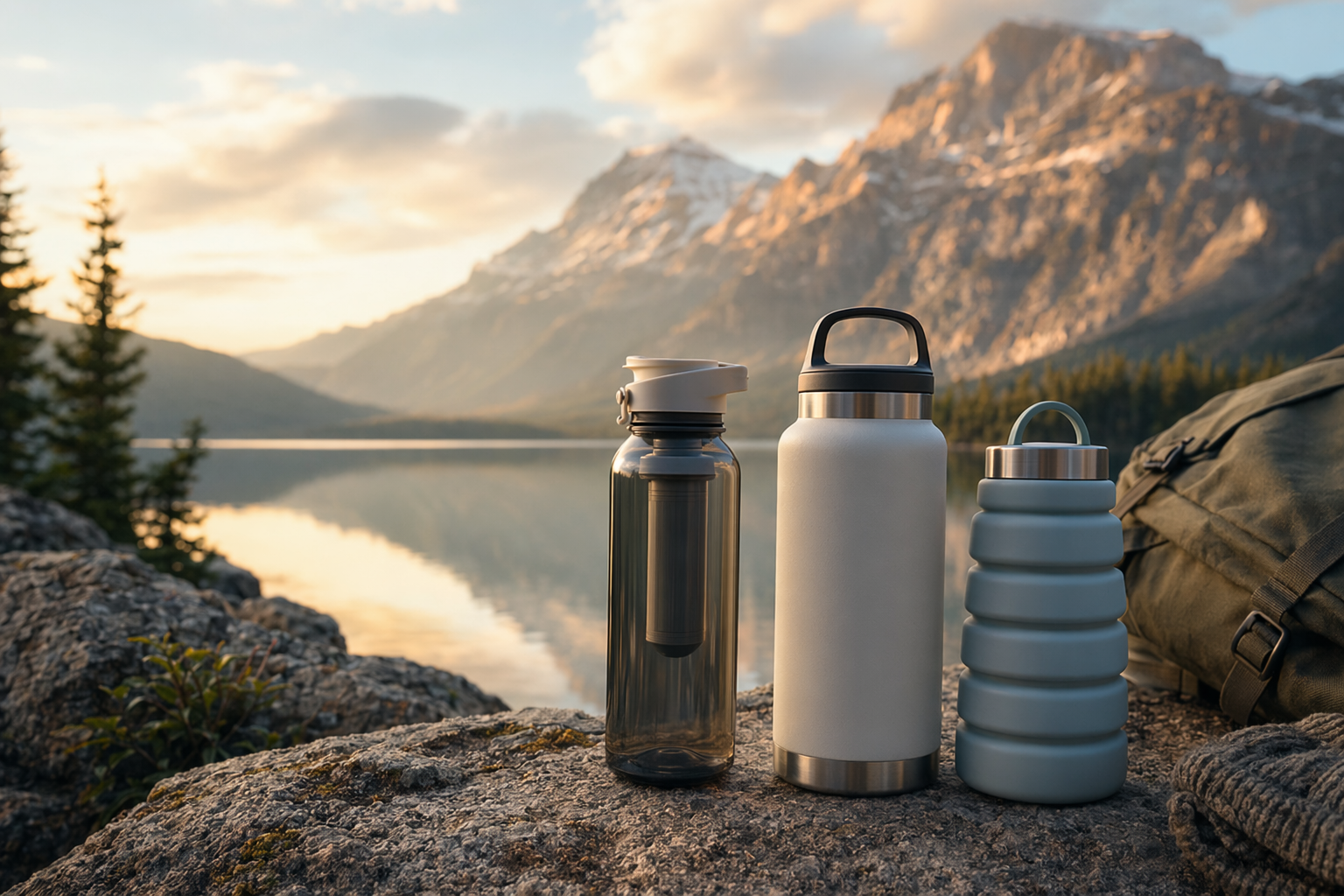
Quick Comparison: Filter, Insulated, and Collapsible Bottles
#| Bottle type | Best for | Not great for | Typical price in India | My honest feeling |
|---|---|---|---|---|
| Filter bottle | Places where water source is doubtful, trekking, international budget trips | Hot drinks, freezing temperatures, super fast drinking | ₹900 to ₹4,000 plus filter replacements | Useful, but only if you maintain it properly |
| Insulated bottle | Hot summers, cold regions, long train rides, road trips | Light packing, airport liquid restrictions if filled | ₹600 to ₹3,500 depending brand and steel quality | Most reliable for Indian travel, little heavy though |
| Collapsible bottle | Flights, day hikes, festivals, ultralight packing | Rough use, hot liquids, long-term durability | ₹300 to ₹1,800 | Convenient but choose carefully, cheap ones can leak |
Filter Bottles: Great Idea, But Don’t Treat Them Like Magic
#My first filter bottle came before a Northeast trip. I was going through Assam and Meghalaya, staying in a mix of homestays and budget hotels, and I thought okay boss, this bottle will solve everything. It had that fancy carbon filter and the packaging had mountains and rivers and all that adventure vibe. First few days it worked nicely. The water tasted better, and I felt very sorted. Then I realised the filter was slow. Like, when you’re thirsty after climbing stairs in Cherrapunji, you don’t want to sip water like you’re doing a wine tasting.
Filter bottles are good when you know what they can and cannot do. Most travel filter bottles improve taste and reduce certain bacteria, protozoa, chlorine, and sediments depending on the filter technology. Some higher-end bottles and purifiers claim to handle viruses too, but you need to read the product details properly. Don’t just see “filter” and assume it can make any random drain water drinkable. That is how stomach becomes protest march.
For India, I find filter bottles useful in specific situations: remote homestays, treks, rural bus stops, places where you are not fully sure about water source, and long backpacking trips where buying sealed water daily is annoying. But in most cities, if you have access to RO or boiled water, a normal bottle is enough. Filter bottles also need replacement cartridges, and this is where many people forget. If the filter life is 150 litres or 300 litres, it doesn’t mean lifetime. After that, performance drops. Some filters also clog faster if water has too much sediment.
- Best places I’d carry a filter bottle: Meghalaya village stays, Spiti road trips, trekking routes in Uttarakhand, some beach shacks during long Goa stays, and budget backpacking in Southeast Asia.
- Avoid using it blindly for: visibly dirty water, chemical contamination, salty water, or hotel bathroom tap water when you have better options. Just because you can filter doesn’t mean you should.
The Maintenance Part Nobody Talks About
#Filter bottles need cleaning. Sounds obvious, but on the road, who does it properly? You come back tired, dump bag, eat thali, sleep. Next day same bottle. After a few days, the mouthpiece starts smelling weird. I learnt this in Rishikesh when my bottle had that damp smell and I was like, arre yaar, this is worse than buying water.
If you buy a filter bottle, check if the filter is easily available in India. This is important. Some imported brands look amazing but replacement filters cost half the bottle price or take weeks to deliver. Also check if it fits in backpack side pockets and car cup holders. Many travel bottles fail this basic test. Don’t laugh, it matters when you’re in a tempo traveller and the bottle keeps rolling under someone’s seat.
Insulated Bottles: The Most Practical Choice for Most Indian Travellers
#If someone asks me, “bhai, I want one bottle for most trips,” I usually say get a good insulated stainless steel bottle. Not always the lightest, not always cute, but dependable. In Indian weather, insulation is not luxury. It’s survival sometimes. I have used insulated bottles in Rajasthan in May, Mumbai locals in humid October, and during a winter trip to Manali when warm water felt like blessing from above.
A decent insulated bottle keeps water cool for many hours, sometimes 12 to 24 hours depending on bottle quality, outside temperature, and how many times you open it. Hot water also stays warm enough for long train rides or chilly mornings. On overnight buses, I’ve carried warm water mixed with a little ginger and honey, very uncle type behavior, but trust me it helps when the AC vent is attacking your face.
For accommodation style also, insulated bottles are super convenient. If you stay in hostels, where dorm beds in popular places like Rishikesh, Manali, Goa, Jaipur, and Kochi can usually range from around ₹400 to ₹1,200 per night depending season, you can refill from common RO and keep cool water with you. Budget hotels around tourist areas may be ₹1,000 to ₹2,500 for basic rooms, and not all give unlimited bottled water. Mid-range stays, say ₹3,000 to ₹7,000, usually have better refill options or electric kettle. Still, having your own insulated bottle means you don’t depend on those tiny 500 ml complimentary bottles.
Where Insulated Bottles Really Shine
#Summer travel, full stop. If you’re doing Jaipur, Jodhpur, Kutch, Hampi, Hyderabad, Delhi sightseeing, or even walking around Fort Kochi in humid heat, cold water can change your mood. I know people say don’t drink too cold water in heat, and maybe they’re right, but when you’re standing outside Mehrangarh Fort with sun hitting your skull, cold water feels emotional.
It also works beautifully for road trips. On highways, you don’t always want to stop at random shops for water. Fill up at home or hotel, add ice if available, and you’re sorted for half the day. Families travelling with kids also prefer insulated bottles because children keep asking water every 12 minutes, usually after you just closed the bag.
- Choose 750 ml to 1 litre if you’re travelling in hot places or doing full-day sightseeing.
- Choose 500 ml if you are mostly city-hopping, flying often, or carrying a smaller sling bag.
- Wide-mouth bottles are easier to clean and add ice, but narrow-mouth bottles are nicer for drinking in buses and trains where everything is shaking.
Downside? Weight. A solid steel insulated bottle can feel like a dumbbell after 8 hours. Also, you can’t carry filled bottles through airport security in most places. You’ll need to empty it before security and refill after. Indian airports increasingly have water refill points, though sometimes they are hidden in corners near washrooms or gates. Ask staff if you don’t spot one. In 2026 and beyond, I hope airports make this more obvious because right now it’s like treasure hunt only.
Collapsible Bottles: Smart, Light, and Slightly Annoying
#Collapsible bottles are those flexible bottles made of silicone or soft plastic that flatten when empty. I bought one before a trip to Singapore and later used it for domestic flights, treks, and music festivals. At first I loved it. Empty bottle takes almost no space, which is great if you’re travelling with cabin luggage only. You can roll it, clip it, shove it into a shoe compartment, whatever.
But here is the thing: collapsible bottles are not always comfortable. When full, some become wobbly and weird to hold. Cheap ones have caps that leak if pressed inside a bag. Some have that silicone smell which never fully goes away, no matter how many times you wash with lemon, baking soda, prayers, everything. And most are not good for hot water unless clearly rated for it.
Still, I carry one as a backup. Especially on flights. Empty it before security, refill after, drink, then flatten it when not needed. For short city walks, it’s fine. For hikes where every gram counts, also fine. For a 12-hour Indian train journey in sleeper class? Hmm, I’d rather take steel or a sturdy plastic bottle. Collapsible bottles don’t feel rugged enough when bags are thrown around, people are climbing berths, and someone’s tiffin is leaking sambhar nearby.
Seasonal Travel Tips: Which Bottle Works When
#India’s seasons are not gentle. Summer travel from April to June can be brutal in North and West India. Heatwaves have become a serious safety issue in many cities, so carry more water than you think you’ll need. For summer, insulated bottle wins for me. Keep ORS sachets also, especially if you’re walking a lot, doing forts, markets, temple queues, or outdoor events. Don’t wait till you feel dizzy.
Monsoon, roughly June to September depending region, is when filter bottles become more useful but also tricky. Water contamination risk can go up, landslides may affect hill routes, and travel delays happen. In places like Goa, Konkan, Kerala, Meghalaya, and Himachal, carry a bottle you can clean easily. If your bottle has too many rubber parts and hidden corners, fungus can happen. Not cute.
Winter is insulated bottle season again, but for hot water. In Ladakh, Spiti, Kashmir, Sikkim, Uttarakhand, Himachal, even Rajasthan nights, warm water helps a lot. One small thing: in very cold places, don’t leave bottles outside overnight. Water can become painfully cold, and some caps stiffen. If you’re trekking, keep bottle inside your room or sleeping area.
Transport Reality: Trains, Buses, Flights, and Local Travel
#Indian transport decides bottle choice more than people realise. On trains, especially long-distance ones, I like insulated steel or a tough BPA-free bottle. You can refill at major stations, though I prefer sealed water or known refill points if I’m unsure. Railways and stations have improved in many cities, but cleanliness varies. Don’t fill from random taps unless you are confident it’s drinking water.
On buses, avoid huge bottles unless you have seat space. Volvo and sleeper buses usually have bottle holders, but local buses? Good luck. A 750 ml bottle is manageable. For flights, collapsible bottles are king because they save space when empty. Insulated bottles are also fine if you don’t mind weight. Just empty before security. I have forgotten once at Bengaluru airport and had to chug water like a camel before the security tray. Very elegant scene.
For scooters in Goa, Gokarna, Pondicherry, Hampi, and small hill towns, I prefer a leak-proof bottle with a loop or clip. Don’t keep a cheap collapsible bottle in the scooter boot with camera gear or clothes. It may survive, but why take tension? Also in beach areas, rinse bottle caps often because sand gets into everything, even your soul.
Food, Culture, and the Very Indian Bottle Behaviour
#There’s something very Indian about carrying water from home. Our parents have been doing it forever. Steel bottle, old Milton flask, fridge water filled before leaving, sometimes with nimbu pani, sometimes with jeera water. Now we call it sustainable travel, but mummy was already doing it in 2003.
Food also affects what bottle I carry. If I’m eating spicy street food in Indore, chaat in Delhi, misal in Pune, momos in Sikkim, or fish curry in Kerala, I want clean water nearby. Restaurants usually give filtered water, but if you have a sensitive stomach, use your own. In smaller eateries, I sometimes ask, “RO hai kya?” and most people answer honestly. If they say no or look confused, I buy sealed water or use my filter bottle if it’s suitable.
Lesser-known spots are where bottle planning matters most. Like village walks near Majuli, hidden waterfalls in Meghalaya, backroads around Coorg, small desert villages near Jaisalmer, or temple towns where shops close in afternoon heat. These places are beautiful, but you can’t assume water is available every 500 metres like a mall.
So Which Bottle Should You Buy? My Practical Recommendation
#If you want only one bottle, buy an insulated stainless steel bottle, 750 ml, from a reliable brand with good reviews and spare gasket availability. It covers 70 percent of travel situations in India. It keeps water cold, handles hot water, lasts years, and doesn’t make you worry too much. Yes, it’s heavier. But it’s dependable, and dependable matters when you are tired, sweaty, and your hotel check-in is still two hours away.
If you do treks, rural travel, or international backpacking on budget, add a filter bottle. But please understand filter type before buying. Look for what it removes, filter lifespan, replacement cost, flow speed, and whether it needs pre-cleaning. Also check if the brand sells replacement filters easily in India. Otherwise it becomes expensive showpiece.
If you fly often or pack very light, keep a collapsible bottle as secondary. I wouldn’t make it my main bottle for rough Indian travel, but as backup it’s brilliant. Buy food-grade silicone or a reputable flexible bottle. Avoid no-name bottles that smell strongly of chemicals. If it smells too much after washing, don’t use it. Life is short, but not that short.
Things to Check Before Buying Any Travel Bottle
#- Leak-proof cap: Fill it, close it, turn it upside down, shake it over the sink. Do this before your trip, not inside your backpack.
- Easy cleaning: Wide mouth is better. If you can’t clean it properly, it’ll start smelling in humid places.
- Size and weight: 1 litre sounds great until you carry it all day in Old Delhi lanes or on a fort climb.
- Material: Stainless steel for durability, BPA-free plastic for lightness, silicone for collapsible bottles, but check heat ratings.
- Mouthpiece hygiene: Straws and bite valves are convenient, but they collect dirt. Not ideal if you’re travelling dusty routes.
- Spare parts: Gaskets, lids, filters. Tiny parts decide whether your expensive bottle stays useful or becomes cupboard item.
My Current Bottle Setup, If You’re Curious
#For most Indian trips now, I carry one 750 ml insulated steel bottle. If I’m going to the mountains or a place with uncertain drinking water, I add a filter bottle or purification tablets as backup. For flights and short work trips, I carry a collapsible bottle because I hate paying airport prices for water after security. Sometimes I overpack and carry two bottles, then regret it. Then next trip I underpack and regret that also. Balance is a myth, basically.
For family trips, especially with parents, I suggest two insulated bottles rather than one huge bottle. Easier to share, easier to carry. For solo backpacking, one good bottle plus one soft backup works nicely. For bike trips, use a bottle that can handle vibration and dust. For beach trips, avoid complicated lids because sand will find those corners and make you question all life decisions.
Final Verdict: Filter vs Insulated vs Collapsible
#Filter bottles are for safety and uncertain water. Insulated bottles are for comfort and daily reliability. Collapsible bottles are for space-saving and backup use. There’s no perfect bottle, only the right bottle for the trip. I know that sounds like travel gyaan, but it’s true. A Ladakh winter trip and a Goa hostel weekend don’t need the same thing. A Jaipur summer walking tour and a Singapore airport layover also don’t need same bottle.
If I had to rank them for Indian travellers, insulated comes first, filter second for adventure or remote travel, collapsible third as a smart extra. But your style matters. If you’re a light packer, you may love collapsible more than me. If your stomach is sensitive, filter bottle may become your best friend. If you are like my dad, you’ll say nothing beats old steel Milton and honestly, he’s not fully wrong.
A good travel bottle is boring in the best way. It doesn’t make your trip glamorous, it just quietly saves money, reduces plastic, keeps you hydrated, and prevents those “where will I get water now?” panic moments.
So next time you’re packing for a train ride, hill trip, beach break, or that random weekend plan that starts in WhatsApp group and somehow actually happens, think about the bottle properly. It’s a small thing, but on the road small things become big. And if you like these kind of practical, slightly real-world travel notes, I keep finding and sharing more such ideas through AllBlogs.in, so do check it out sometime.