I have this soft spot for road trips where the food plan is not a neat spreadsheet. You know, the kind where breakfast depends on whether the tea stall has opened, lunch is whatever the aunty at the homestay felt like cooking, and dinner is eaten with cold fingers while someone is telling you that tomorrow the road may or may not be open. That was Anini for me. Remote, moody, green in a way that almost looks unreal, and full of small food moments that stayed in my head longer than the big viewpoints did.
Anini sits in Dibang Valley in Arunachal Pradesh, way up in the northeast of India, close enough to feel like you have driven to the edge of the map. Most travellers start from Dibrugarh in Assam, cross towards Roing, then climb through Hunli and Mayodia before reaching Anini. It is not a quick weekend drive unless you enjoy punishing your spine. It is a proper slow road trip. And honestly, in 2026, that slow-food, homestay-led, local-everything style of travel is exactly what more people are chasing. Not just bucket-list photos, but meals cooked by someone’s grandmother, tea in steel cups, and snacks eaten beside landslide delays. Glamorous? Not always. Delicious? Often, yes.
The Route: Dibrugarh to Roing to Hunli to Anini, With Tea in Between
#My food journey to Anini really started before Arunachal, in Assam. If you fly or train into Dibrugarh, you are landing in tea country. Like, actual tea country. Estates, workers on bicycles, little shops with kettles blackened by years of boiling milk tea, and that smell of damp earth and leaves after a short rain. I had my first road-trip chai at a tiny stall outside Dibrugarh, with two pieces of warm pitha that tasted faintly smoky and sweet. Nothing fancy. But the tea was strong enough to wake up my ancestors.
From Dibrugarh the road crosses the mighty Brahmaputra over the Bhupen Hazarika Setu, also called the Dhola-Sadiya Bridge, and moves toward Roing. This stretch is where you should eat properly because after Roing the choices thin out. Roing has more guesthouses, small eateries, momos, chowmein, rice meals, and shops where you can stock biscuits, fruits, instant noodles, dry snacks, ORS, and all those boring but necessary things. I say boring, but when you are stuck for two hours behind a road repair crew near Mayodia, a packet of roasted peanuts becomes five-star cuisine.
What Food Travel Looks Like Here in 2026: Less Restaurant Hopping, More Kitchen Sitting
#One thing I noticed, and I have been noticing this across hill trips lately, is that food travel has changed. In 2026, people are not only searching for famous restaurants anymore. They want local kitchens, foraging walks, indigenous food stories, tea tastings, fermented things, low-waste meals, and stays where dinner is part of the experience. Anini fits that trend almost accidentally, because there just is not a big restaurant scene to begin with. The best meals happen in homestays, roadside kitchens, or small dining rooms where the menu is basically whatever is available that day.
This is not the place to demand ten options and oat milk. I mean, you can ask, but you may get a gentle smile and boiled rice. Food here follows the landscape. Rice, potatoes, leafy greens, bamboo shoot, smoked meat, eggs, local herbs, dal sometimes, pickles, and endless tea. The Idu Mishmi community has deep food traditions, and while visitors usually experience a simplified homestay version, you still get glimpses of that beautiful relationship with forest produce, smoking, drying, boiling, fermenting, and using food as warmth, not performance.
Road Trip Snack Packing: The Unsexy Stuff That Saves You
#Before leaving Roing for Anini, I became the person I usually make fun of. I bought snacks like a nervous parent. Bananas, oranges, roasted chana, peanut chikki, glucose biscuits, Wai Wai, boiled eggs wrapped in newspaper, a packet of local-looking namkeen, and dark chocolate which melted anyway because I kept it near the window like an idiot. Also, carry water, but do not keep buying plastic bottles if you can avoid it. The newer food-travel trend is very much refill flasks, less waste, and not treating remote mountain regions like dustbins. Good trend. We needed it.
- Roasted peanuts and chana are better than chips because they actually keep you full on bad-road stretches.
- Carry ginger candy or something sour if you get motion sick near Mayodia and Hunli. Those bends are not playing around.
- Boiled eggs are underrated road food. Salt, pepper, done. Not romantic, but reliable.
- Instant noodles are emergency food, not a personality. Still, I carried two packets and felt smug about it.
- Buy fruit in Dibrugarh or Roing. Once you climb higher, fresh options become limited and pricier.
Roing: The Last Comfortable Food Stop Before the Wild Road
#Roing deserves more than a fuel stop. It is a good place to slow down, get your Inner Line Permit checked if needed, eat a proper meal, and ask locals about the road condition ahead. I had a plate of rice, dal, fried fish, and a sharp bamboo shoot pickle that made my eyes water in the best way. There were momos steaming nearby, and someone at the next table had chowmein with enough green chilli to look dangerous. Northeast hill-town food has this practical soul to it. It feeds you fast, warm, and without fuss.
If you are vegetarian, Roing is also where you should communicate clearly and maybe stock up. Vegetarian food exists all along the route, but in homestays you need to say it in advance. Not five minutes before dinner. Rice, dal, potato curry, greens, eggs if you eat them, and bamboo shoot preparations are common enough, but kitchens in remote areas plan around what they have. I have seen travellers get annoyed about this, and honestly, that annoys me. You are not in a metro food court. Adjust a little.
Mayodia: Tea, Fog, and the Snack That Tastes Better Because You Are Cold
#The climb toward Mayodia is where the trip starts feeling properly Himalayan, even though technically you are in the Mishmi Hills. Forests thicken, fog drifts across the road, and suddenly every cup of tea becomes important. I remember stopping near Mayodia Pass, hands freezing slightly, and drinking tea that was mostly milk, sugar, and comfort. There was no artisanal tasting note. No single-origin explanation. Just a small glass, hot enough to burn my tongue, and I swear it tasted better than half the boutique cafe drinks I have paid silly money for.
Roadside stalls on this route are seasonal and unpredictable. Some days you may find tea, Maggi, omelette, biscuits, and maybe paratha. Some days shutters are down because weather, supply, family work, who knows. This is where Anini teaches you patience. The food culture is not built around your itinerary. The mountain decides first, then the road, then the cook, then you. Sounds dramatic, but anyone who has waited for a landslide clearance with a half-empty biscuit packet will understand.
The best meal on the Anini road is not always the most elaborate one. Sometimes it is tea in fog, eaten with a biscuit that has gone slightly soft, while everyone pretends they are not worried about the road ahead.
Hunli: Where You Should Eat Even If You Are Not Hungry
#Hunli is one of those places you may be tempted to pass through because Anini feels close on the map. Do not do that. Eat. Stretch. Ask again about road conditions. The road from Hunli to Anini can be beautiful and exhausting, sometimes both in the same fifteen minutes. I had a simple meal here, rice with vegetables and an omelette, and it felt like fuel in the truest sense. No plating, no garnish, no nonsense. Just warm food before a cold road.
A driver I met told me that people underestimate this route because they see photos and think it is only scenic. But food and timing matter here. Leave early, carry snacks, and do not assume dinner will be waiting if you roll into a homestay late without warning. Mobile network can be patchy, electricity can be moody, and kitchens close when the household is done for the night. This is why food planning in Anini is not about being fancy. It is about being respectful and realistic.
Homestay Dinners in Anini: The Real Reason I Want to Go Back
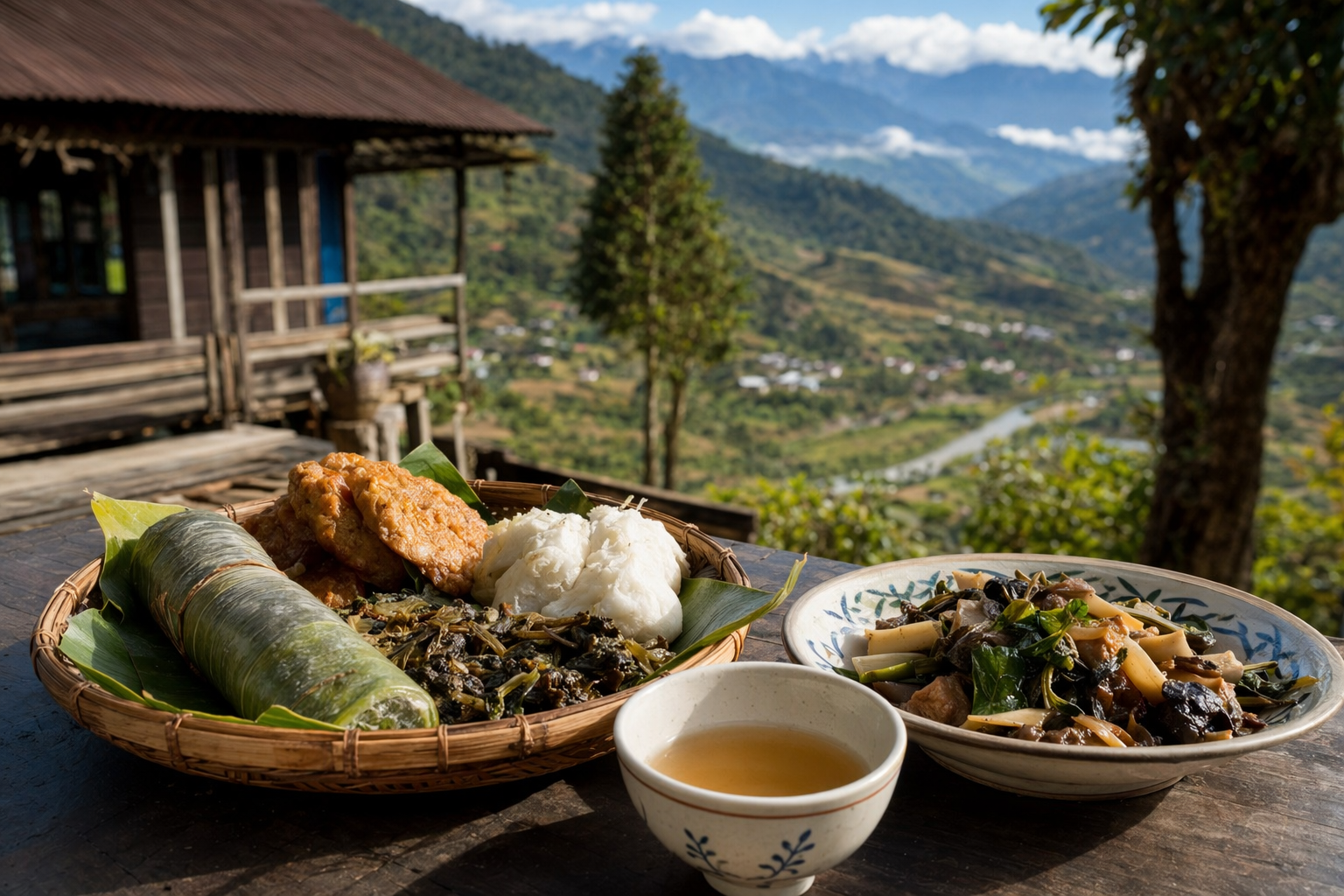
#By the time I reached Anini, I was tired in that deep road-trip way where your bones feel like they have been individually shaken. The homestay room was simple, the air was cold, and dinner smelled like smoke and rice. That first Anini meal was not huge, but it was perfect. Steamed rice, a light broth, boiled greens, potatoes, smoked pork cooked with bamboo shoot, and a chilli condiment that looked innocent and absolutely was not. I ate too fast, then slowed down because the food deserved better manners.
Smoked meat is one of the flavours I associate most with this part of Arunachal. It is not smoky like restaurant barbecue, where the smoke is polished and sweet. It is deeper, earthier, sometimes a little wild, and it makes sense in a cold place where preservation matters. Bamboo shoot adds sourness and funk, which I personally love, though I know some people need a few tries. The greens are usually simple, boiled or lightly cooked, but they taste clean in a way supermarket greens rarely do. Maybe it is the place. Maybe hunger. Maybe both.
The Idu Mishmi Food Lens: Simple Does Not Mean Basic
#I am always careful when talking about indigenous food because I am an outsider and I do not want to turn someone’s everyday meal into a cute travel aesthetic. But what I loved around Anini was the sense that food has memory. Drying, smoking, using forest herbs, eating what the season gives, making meals that warm the body, sharing tea with guests before asking too many questions. These are not trends here. These are older ways of living that the rest of the travel world is suddenly rediscovering under words like hyperlocal and regenerative.
If your host offers to explain ingredients, listen. If they do not, do not interrogate them like you are filming a documentary. I learned this the slightly awkward way. I asked too many questions about one leafy dish and my host laughed, then said something like, it is just greens, eat before it gets cold. Fair enough. Sometimes travellers, me included, try to turn every bite into content. But some meals are just meals. And that is beautiful too.
Tea Is the Thread That Holds the Whole Trip Together
#Tea on the Anini road is not just a drink. It is a pause button. In Assam it begins as strong garden-country chai, thick with milk and sugar, surrounded by tea estates and morning traffic. In Roing it becomes the thing you sip while checking permits and road news. Near Mayodia it becomes survival. In Anini it becomes hospitality, handed to you when you enter a home, when you come back from a walk, when rain starts, when rain stops, when there is nothing else to say.
Tea tourism in 2026 has become very polished in many places, with estate stays, guided tastings, tea cocktails, and even wellness retreats built around tea rituals. That is nice, and Assam has some beautiful tea experiences if you add a day around Dibrugarh or Tinsukia. But on this trip my favourite tea was still the rough roadside kind. Overboiled, sweet, maybe poured from a dented kettle, and somehow exactly right. If you want a more curated tea stop, plan it before or after Anini in Assam. Once you are on the mountain road, take what comes and be grateful.
Breakfasts: Rice, Eggs, Parathas, and the Joy of Not Having a Menu
#Breakfast in and around Anini can be wonderfully plain. I had paratha one morning, rice and leftover greens another, boiled eggs with tea on a day we needed to start early, and once a bowl of soupy noodles that tasted like every childhood sick-day comfort food at once. A lot of homestay breakfasts are functional because everyone has work to do. This is not brunch. There are no pancakes stacked like architecture. And honestly, thank god.
One morning I sat outside with tea while the mist moved across the valley and someone in the kitchen was chopping vegetables with that steady thak-thak-thak sound. Travel writing makes these moments sound peaceful, and it was, but also I was wearing every layer I owned and my socks were still damp from the previous day. That is the honest version. Beautiful, cold, slightly uncomfortable, and then the tea arrives and suddenly you forgive everything.
Local Snacks and Small Bites You Should Say Yes To
#The snack scene is not a formal list of must-try items. It is more like a chain of small surprises. In the lower Assam stretch, try pitha if you find it, especially during winter or festival time. Til pitha, ghila pitha, coconut-stuffed versions, all those rice-based snacks are excellent with tea. In Roing and along the Arunachal side, momos and chowmein pop up in small eateries, partly because they are practical mountain foods and partly because everyone loves them. If there are fresh pakoras at a stall in cold weather, do not act sophisticated. Eat them.
I also became weirdly attached to simple boiled potatoes with salt and chilli. Maybe because potatoes in hill regions often taste better, or maybe because I was hungry every three hours. Pickles are another thing to watch for. Bamboo shoot pickle, chilli pickle, fermented flavours that can be sharp and intense. Start small if your stomach is delicate. Food in the northeast can be gentle one minute and then suddenly your mouth is on fire, and I say this as someone who overestimates my chilli tolerance constantly.
A Practical Food Itinerary for the Anini Road Trip
#If I was planning this again, I would not rush. Day one, arrive in Dibrugarh, drink Assam tea, eat a local thali or fish curry, sleep properly. Day two, drive to Roing, stop for snacks after crossing the bridge, have momos or a rice meal in Roing, buy supplies. Day three, Roing to Hunli or Anini depending on road condition, with tea stops and emergency snacks. If you can break at Hunli, do it. Day four onward, stay in Anini, eat at your homestay, walk around slowly, and stop expecting restaurant variety.
- Tell your homestay your food preference before you arrive, especially vegetarian, vegan, no pork, no beef, no eggs, low spice, or allergies.
- Carry cash. Digital payments are spreading everywhere, but remote connectivity can still fail exactly when you need it.
- Do not waste food. Supplies travel far on difficult roads, and that plate of rice has more effort behind it than you think.
- Ask before photographing kitchens, people, or meals. Being invited to eat is not the same as being invited to document everything.
- Keep one full snack bag in the vehicle, not buried under luggage. You will thank yourself later.
Permits, Roads, and Food Timing Matter More Than You Think
#For Indian travellers, Arunachal Pradesh requires an Inner Line Permit. Foreign travellers generally need a Protected Area Permit. Rules and application processes can change, so check official Arunachal tourism or government sources before you go. I know this is a food guide, but permits affect food because delays affect where you eat. Same with road conditions. Landslides, rain, snow near Mayodia in winter, construction, and vehicle trouble can turn a planned lunch into a packet-biscuit lunch very quickly.
The best months are usually outside the worst monsoon period, though weather in this region has its own personality. Winter brings cold and sometimes snow around Mayodia, which is magical but can disrupt travel. Monsoon is lush and dramatic, but landslides are a real concern. Food supplies can also be affected by blocked roads. So if a homestay serves you a simpler dinner than expected, do not complain. The road may have swallowed the vegetable truck, basically.
What I Would Eat Again Without Thinking Twice
#I would go back for that smoked pork with bamboo shoot. No hesitation. I would go back for the tea near Mayodia, even if it was objectively average, because place changes taste. I would go back for rice with boiled greens after a long drive, for chilli pickle that made me sit up straight, for homestay soup that tasted like someone cared whether I was warm enough. That is the thing about Anini. It is not a checklist food destination. It is a feeling-food destination.
And maybe that is why it fits modern culinary travel so well. People are tired of eating the same pretty cafe food in different cities. They want context. They want the road, the host, the weather, the ingredient, the awkward conversation, the second cup of tea. Anini gives you all of that, but it does not package it neatly. You have to meet it halfway. Carry snacks, keep patience, eat what is offered, and let the place be itself.
Final Thoughts: Go Hungry, Go Slow, Go Kindly
#Anini is not the easiest culinary trip I have done, and that is exactly why I keep thinking about it. The food is tied to distance, weather, community, and hospitality. Some meals are simple. Some are unforgettable. Some are just there to keep you going until the next bend in the road. But together they become the story of the trip. Snacks in the car, homestay dinners by a warm kitchen, tea in the fog, and that quiet feeling that you have travelled very far from your usual life.
If you are planning the Anini road trip, do not build your food expectations around restaurants. Build them around people and pauses. Book homestays early, pack smart, respect local food habits, and say yes to tea more often than you normally would. That is my biggest advice. And if you like these slightly messy, hungry, road-worn travel stories, I keep finding nice reads and ideas on AllBlogs.in, so maybe wander there next with a cup of chai.