I used to think eating satvik food while traveling in India would be, honestly, a bit restrictive. Like I’d be sitting sadly with plain curd rice while everyone else attacked chaat, thalis, dosas, and those dangerous-looking fried things at railway stations. But after years of traveling through temple towns, hill retreats, chaotic cities, and long train routes where breakfast somehow becomes lunch and lunch becomes “let’s just eat bananas,” I’ve changed my mind completely. Satvik food is not boring. Not even close. It can be creamy, crunchy, sweet, sour, ridiculously comforting, and sometimes so good that you forget it doesn’t have onion, garlic, eggs, meat, or anything too fiery going on.
In 2026, satvik travel is having a proper moment. You see it everywhere now, wellness retreats in Rishikesh, temple food trails in Mathura and Udupi, millet-based thalis in boutique hotels, Ayurvedic resorts offering “digital detox plus satvik meals,” and even railway and airport food counters getting better about Jain and no-onion-no-garlic requests. Some of it is trendy, some of it is ancient, and some of it is just practical. Because when you’re traveling in India, especially in summer or during pilgrimage routes, your stomach needs a little kindness. Mine definately does.
First, What Counts as Satvik Food When You’re on the Road?
#Satvik food comes from the idea of eating in a way that keeps the body light and the mind calm. In regular travel language, that usually means vegetarian food without onion and garlic. Often no mushrooms, no eggs, no alcohol, no very stale food, and not too much chilli. Some people also avoid tea, coffee, packaged snacks, or fermented items depending on their tradition, but while traveling, most people I meet are a little flexible. Basically: fresh, simple, clean, balanced food. Dal, rice, roti, sabzi, kheer, khichdi, fruits, curd, ghee, coconut, nuts, millets, paneer sometimes, and temple prasadam that tastes like someone’s grandmother personally blessed the pot.
The tricky part is not the food itself. It’s communication. In many places, if you say “satvik,” people understand. In other places, they’ll nod and then bring you something with ginger-garlic paste because, you know, “thoda sa hi hai.” So I usually say it clearly: “No onion, no garlic, no egg, pure veg, please.” If I’m in Gujarat or Rajasthan, I say “Jain food” and that works very well, though Jain food may also avoid root vegetables like potato, carrot, beetroot and radish. If you’re okay with potatoes but not onion-garlic, say that too. Sounds fussy, but it saves the meal.
My Vrindavan Lesson: The Best Meals Don’t Always Come From Restaurants
#My real satvik food conversion happened in Vrindavan. I had gone there in winter, thinking I’d do a calm two-day trip, visit Banke Bihari, walk around the ghats, maybe drink lassi. Lol. Vrindavan is not calm, at least not the Vrindavan I met. It was bells, monkeys stealing glasses, flower sellers, bhajan from every direction, and narrow lanes that smelled of incense, milk, ghee, dust, and hot pooris. I remember eating a simple meal near the temple area: aloo sabzi without onion-garlic, pooris, boondi raita, and a small bowl of halwa. Nothing fancy. No plating. No microgreens, thank god. But it hit differently.
In Mathura and Vrindavan, order kachori with aloo sabzi if you’re sure it is no onion-garlic, peda from trusted sweet shops, lassi, rabri, khichdi at ashrams, and temple-style thalis. Around ISKCON temples, Govinda’s restaurants are usually a safe bet for satvik-style vegetarian food, especially if you’re new to the city and don’t want to play ingredient detective. I’ve eaten at ISKCON-linked Govinda’s in different cities, and while each one has its own vibe, the relief of seeing clearly vegetarian, devotional food is very real when you’ve been walking for hours.
What to Order in North India: Safe, Filling, and Actually Delicious
#North India is easier than people expect, especially if you know the right words. In Delhi, Haridwar, Rishikesh, Jaipur, Varanasi, Amritsar, and the temple belts of Uttar Pradesh, you’ll find plenty of vegetarian food, but onion-garlic is common in restaurant gravies. So don’t assume. Ask. For breakfast, I go for poha, plain paratha with curd, fruit bowls, upma if available, or aloo puri from places that confirm no onion-garlic. In Haridwar and Rishikesh, many eateries already avoid onion and garlic because of the pilgrimage crowd. The old-school thali places near ghats are not always glamorous, but a hot dal, rice, seasonal sabzi and roti after a Ganga walk is honestly five-star food to me.
- In Rishikesh: order satvik thali, plain khichdi, curd rice, fruit bowls, herbal teas, millet rotis if you spot them, and simple paneer dishes made without onion-garlic.
- In Varanasi: try kachori-sabzi in the morning only after asking, tamatar chaat can sometimes be made without onion, malaiyyo in winter, lassi, rabri, and temple prasadam.
- In Jaipur: ask for Jain dal baati churma, gatte ki sabzi without onion-garlic, ker sangri, bajra roti, and fresh chaas. Some thali places are very accomodating.
- In Amritsar: langar at the Golden Temple is one of the most moving food experiences in India. Simple dal, roti, sabzi, kheer sometimes, and the feeling of eating with thousands of strangers. I still get goosebumps thinking about it.
Temple Food Is Not a Backup Plan. It’s the Main Event.
#If you’re chasing satvik food in India, build your route around temple kitchens at least once. Not in a checklist way, but because it changes how you understand food. The Jagannath Temple mahaprasad culture in Puri, the langar at Amritsar, the prasadam at Udupi Sri Krishna Matha, the meals around Tirupati, the banana-leaf temple food in Tamil Nadu, these are not just “places to eat.” They’re living food systems. Some have been feeding people for centuries. And the taste is different because the intention is different, or maybe I’m being dramatic, but I don’t think so.
In Udupi, I had one of my favorite travel meals: rice, rasam, sambar, a mild vegetable palya, curd, pickle, and payasam served with that quiet efficiency coastal Karnataka does so well. Udupi cuisine is a gift for satvik travelers because its temple tradition is deeply vegetarian and often onion-garlic-free. Outside the temple, many restaurants serve Udupi-style breakfasts too. Order idli, dosa, neer dosa, upma, kesari bath, curd rice, bisi bele bath if they can confirm ingredients, and filter coffee if your version of satvik allows it. I know some people skip coffee. I try. I fail often.
South India Is a Satvik Traveler’s Cheat Code
#When I’m tired of asking too many questions, I go south. Not because everything is automatically satvik, no, that’s a myth. Sambar may have onion. Chutney may have garlic. But the number of naturally simple vegetarian options is huge. Tamil Nadu, Karnataka, Kerala, Andhra, Telangana, all have breakfast foods and rice meals that can be made clean and light. In Chennai, Bengaluru, Mysuru, Coimbatore, Madurai, and Kochi, you can survive beautifully on idli, plain dosa, pongal, curd rice, lemon rice, coconut rice, appam with veg stew, and banana-leaf meals. Just keep saying no onion, no garlic.
Bengaluru also has a more modern satvik scene now, partly because of yoga communities, startup folks pretending they’re wellness people after three cold brews, and families who’ve always eaten this way. Sattvam in Bengaluru is well-known for sattvic vegetarian dining, especially if you want a restaurant experience rather than a temple canteen vibe. I like places like this when traveling with mixed groups because one friend wants “proper restaurant,” another wants no onion-garlic, someone else wants dessert, and someone is always late. A satvik buffet solves many emotional problems.
The 2026 Food Travel Trend I Actually Like: Millets Are Back on the Plate
#One trend that doesn’t feel fake is the millet comeback. After the big International Year of Millets in 2023, hotels, homestays and restaurants kept experimenting, and by 2026 it feels normal to see ragi dosa, bajra khichdi, jowar roti, kodo millet upma, barnyard millet pongal, and little millet payasam on travel menus. This is great news for satvik travelers. Millets are filling without making you feel like you swallowed a brick, they work beautifully with ghee and curd, and they’re common in Rajasthan, Karnataka, Maharashtra, Uttarakhand, Himachal and tribal food traditions.
In the hills, especially around Uttarakhand and Himachal wellness stays, I’ve seen more menus offering mandua roti, local rajma, pahadi dal, seasonal greens, and simple rice bowls. Some retreats in Rishikesh, Narendra Nagar, Dharamshala and around the Kumaon region now design full satvik meal plans around yoga, Ayurveda and sleep. Is some of it expensive? Yes, painfully. But the good version is lovely: early dinner, warm khichdi, tulsi tea, no heavy masala, and waking up without feeling like your stomach fought a war overnight.
What to Order on Trains, Highways, and Airports Without Regretting Your Life
#Travel food is where satvik eating gets messy. Railway platforms tempt you with everything, and not all of it is kind. These days, with e-catering options on Indian trains, app-based delivery to stations, QR menus at airports, and more visible “Jain meal” tags, it’s easier than it used to be. Still, I keep a backup kit: bananas, roasted makhana, dry fruits, thepla without garlic, khakhra, dates, homemade chivda, and sometimes those tiny sachets of jeera or ajwain because my mother has successfully scared me for life.
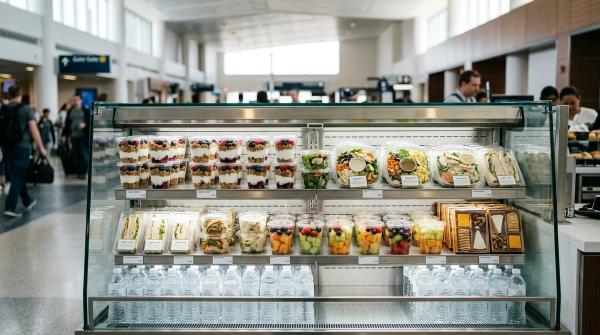
On trains, order curd rice, plain rice and dal, veg thali with no onion-garlic if available, idli, poha, upma, or Jain meals from reliable vendors. Avoid heavy paneer gravies unless you know the kitchen. At airports, I usually pick South Indian counters, fruit bowls, plain yogurt, millet salads if they don’t have onion, or a simple veg sandwich without onion-garlic chutney. Highway dhabas are a gamble. Ask for tawa roti, plain dal tadka without onion-garlic, jeera rice, curd, and aloo jeera. Some cooks will make it fresh if you ask nicely and don’t act like a royal inspector.
Gujarat and Rajasthan: Say “Jain” and Watch Doors Open
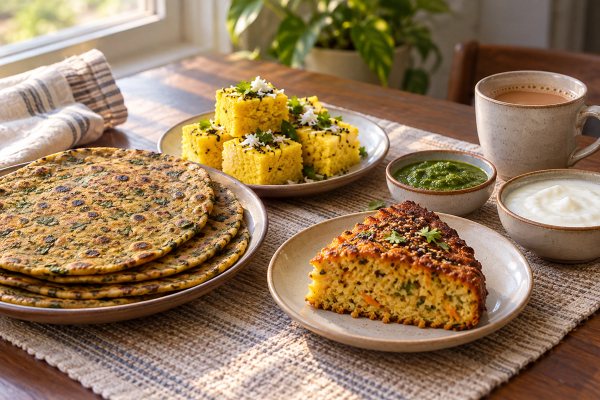
#Gujarat is one of the easiest states for satvik-ish travel because Jain food is widely understood. In Ahmedabad, Vadodara, Rajkot, Surat and pilgrimage routes like Palitana, you can ask for Jain versions of many dishes. Order Gujarati thali, dal, kadhi, rotli, bhakhri, khichdi, handvo if suitable, dhokla, khandvi, shrikhand, aamras in season, and farsan after checking ingredients. Gujarati food can be sweet, and I love it, but after three meals your mouth may start asking for plain curd. Listen to it.
Rajasthan is similar in many tourist-heavy places, especially Jaipur, Jodhpur, Udaipur and Pushkar. Pushkar, being a sacred town, is mostly vegetarian, and many places avoid eggs and meat entirely, though onion-garlic still appears in some cafes. My comfort order there is dal baati churma, but Jain-style, plus chaas. In Jodhpur, I once had bajra roti with ghee, ker sangri, plain curd and jaggery in a tiny place where the owner kept insisting I eat more. I did. Then I walked around Mehrangarh Fort like a stuffed camel, but happy.
East India: Softer Flavors, Sweet Endings, and a Few Questions to Ask
#East India needs more attention from vegetarian and satvik travelers. Everyone talks about fish in Bengal, which, fair, but Kolkata also has incredible vegetarian food if you know where to look. Order luchi with aloo dum after checking for onion-garlic, cholar dal, mishti doi, sandesh, rosogolla, khichuri during puja season, and simple veg thalis in Marwari or Gujarati restaurants around the city. In Odisha, Puri is a must if food and faith interest you. The mahaprasad at Jagannath Temple is legendary, cooked in earthen pots, and the whole experience is unlike restaurant eating. It’s crowded, intense, and beautiful.
In Assam and the Northeast, satvik food takes more planning because many local cuisines include fish, meat, fermented ingredients, or strong aromatics. But you can still eat well: rice, dal, boiled vegetables, black sesame chutney without garlic if possible, bamboo shoot-free vegetable dishes if you prefer, local greens, fruit, and simple thalis at vegetarian restaurants in Guwahati or near spiritual centers. I wouldn’t go there expecting every village kitchen to understand satvik rules immediately. Explain gently. People are usually kind when you are not demanding.
My Quick “What to Order” List by Situation
#| Travel situation | Best satvik orders | Tiny warning from my own mistakes |
|---|---|---|
| Early morning temple visit | Poha, upma, idli, fruit, milk, peda, light khichdi | Don’t eat too many sweets before walking in crowds. Trust me. |
| Long train ride | Curd rice, Jain thali, idli, thepla, makhana, bananas | Pre-order if you can, station food quality changes a lot. |
| Highway dhaba | Roti, plain dal, jeera rice, curd, aloo jeera, chaas | Say no onion-garlic twice. Then smile and say it again. |
| South Indian city | Pongal, dosa, idli, lemon rice, curd rice, veg meals | Ask about sambar and chutney, garlic sneaks in. |
| Rajasthan or Gujarat | Jain thali, kadhi, khichdi, bajra roti, dal baati | Jain may mean no potato too, so clarify. |
| Wellness retreat | Millet khichdi, seasonal sabzi, herbal tea, fruit, light dal | Some retreats make food too bland, carry roasted cumin or pickle if allowed. |
Homestays, Farm Meals, and the New Satvik Luxury
#One big change in food travel recently is that people don’t only want restaurants. They want kitchens. Homestays in India have become such a good way to eat satvik because you can actually talk to the cook before the meal. In Kumaon, I stayed at a small family-run place where dinner was mandua roti, gahat dal, pumpkin sabzi, rice, ghee and chutney. No drama. No “concept.” Just food grown nearby, cooked slowly. In Kerala, an Ayurvedic homestay served red rice kanji, vegetable stew, banana, and warm cumin water. I thought I’d be hungry later. I wasn’t.
Luxury hotels are catching on too. In 2026, many high-end Indian hotels and wellness resorts are offering plant-forward menus, Ayurvedic consultations, sattvic tasting menus, millet breakfasts, gut-friendly drinks, and chef-led local food walks. Some of it is marketing, yes, but some of it is genuinely useful for travelers with dietary needs. The best places don’t make you feel awkward. They ask your restrictions, note them properly, and don’t send a poor waiter back three times because the kitchen forgot. That, to me, is luxury.
How I Ask for Satvik Food Without Making Everyone Nervous
#I’ve learned to be very clear but not dramatic. Restaurant staff in India handle a thousand preferences daily, but vague words create confusion. So instead of saying “light food” or “pure food,” I say: “No onion, no garlic, no egg, no meat. Fresh veg food. Can you make dal and sabzi like that?” If I’m avoiding root vegetables too, I add “Jain, no potato also.” If I’m in a tourist place, I sometimes type it in Hindi on my phone: “बिना प्याज लहसुन का शुद्ध शाकाहारी खाना चाहिए.” It helps. In Tamil Nadu or Karnataka, English usually works in cities, but in smaller towns I show the phrase or ask my hotel person to write it down.
The golden rule of satvik travel in India: don’t wait until you’re starving to ask questions. Hungry-you is not a patient person. I know because hungry-me has made some very poor snack choices.
The Foods I Keep Coming Back To
#If I had to build my perfect satvik travel day in India, it would start with soft idlis and coconut chutney in Mysuru, move into a Gujarati khichdi-kadhi lunch, pause for Mathura peda with chai I probably shouldn’t have, and end with Udupi rasam-rice and payasam. On another day, I’d pick Rishikesh fruit breakfast, Jaipur bajra roti lunch, and Vrindavan aloo-puri dinner. This is the fun part: satvik food isn’t one cuisine. It shifts with the soil, language, weather, temple tradition, and family habits of each region.
My most ordered dishes are khichdi with ghee, curd rice, lemon rice, plain dal, aloo jeera, lauki sabzi, pumpkin sabzi, Jain pav bhaji when I can find it, dosa, pongal, kheer, shrikhand, and seasonal fruit. Sounds simple written like that, but the taste changes everywhere. A bowl of khichdi in a Rishikesh ashram is not the same as bajra khichdi in Rajasthan or moong dal khichdi at a Gujarati thali place. Same idea, different soul.
A Few Mistakes I’ve Made So You Don’t Have To
#- Assuming “vegetarian” means no onion-garlic. It doesn’t. Most restaurant vegetarian gravies use both.
- Ordering “Jain” without understanding that it may remove potatoes and other root vegetables. If you want aloo but no onion-garlic, say that clearly.
- Trusting buffet labels too much. Ask the staff, especially for chutneys, dals, soups and sauces.
- Eating too much fried food because it is technically satvik. Puri, kachori and pakora are lovely, but your travel day may become a nap itinerary.
- Not carrying backup snacks. Even in India, land of endless food, you can end up hungry at odd hours in the wrong bus stand.
Final Thoughts: Satvik Travel Is Less About Restriction, More About Rhythm
#The longer I travel in India, the more I appreciate food that supports the journey instead of hijacking it. Satvik food gives you that rhythm. You can wake up early for temples, walk through old bazaars, sit in trains for seven hours, climb fort steps, attend evening aarti, and still feel like your body is with you. Not always, obviously. Sometimes you eat three bowls of kheer and need to rethink your choices. But mostly, satvik eating makes travel feel softer and more attentive.
So if you’re traveling through India and wondering what to order, start simple: khichdi, curd rice, dal-roti, idli, pongal, Jain thali, millet roti, seasonal sabzi, prasadam, fruit, chaas. Then follow the region. Ask questions. Eat at temples when you can. Try homestays. Don’t be shy about your food needs, but don’t be rude either. India will feed you, usually generously, sometimes confusingly, and often in ways you’ll remember years later. And if you want more food-travel ramblings and destination ideas, I’d casually point you toward AllBlogs.in, because that’s exactly the kind of rabbit hole I fall into before planning my next hungry little adventure.