If you’re a foreign tourist planning train travel in India, first thing... breathe. Seriously. Indian Railways is amazing, chaotic, cheap, useful, confusing, emotional, all of it together. I’m Indian, I’ve been taking trains since childhood, and even now I still double-check dates, station codes, coach positions, and whether I booked for the right month or not. So if you feel overwhelmed by IRCTC, that’s not because you’re bad at planning. It’s because the system is, well, very Indian. It works, but sometimes only after it confuses you a little.
And yet, trust me on this, train travel is one of the best ways to see India. You don’t just move from Delhi to Varanasi or Mumbai to Goa. You actually watch the country change outside the window. Fields, chai stalls, temple spires, random goats near level crossings, people sharing snacks with strangers, kids waving at the train... that whole movie-like feeling is real. I’ve met backpackers who came to India worried about trains and then ended up saying the overnight journey was their favrite part of the trip.
Why foreign tourists should still choose trains in India
#Flights save time, sure. Buses go to smaller places, yes. But trains hit that sweet spot between budget and experience. They’re usually cheaper than flights, more comfortable than many long-distance buses, and they connect almost every major tourist route you can think of. Delhi, Agra, Jaipur, Varanasi, Rishikesh side routes, Kolkata, Mumbai, Goa, Kochi, Chennai, Jodhpur, Udaipur... the rail network is massive. It’s one of the biggest in the world, and while that sounds like a fun fact, in practice it means you can build an entire India trip around trains and save a lot of money.
- Good for classic routes like Delhi–Agra–Jaipur
- Night trains save one hotel night, which matters if you’re travelling on a budget
- AC classes are usually comfortable enough for most tourists
- Station food, pantry meals, and app-based food delivery on trains are better than people expect... sometimes surprisingly decent actually
- Window-seat India is just different. Hard to explain till you do it
The main thing foreigners need to understand about IRCTC
#IRCTC is basically the main online booking platform connected to Indian Railways. If you want to book most train tickets online, this is the system you’ll run into, either directly or through authorized partner apps and websites. The problem is not that it’s impossible. The problem is that it has layers. Account creation, mobile verification, foreign cards maybe working maybe not, quotas, waiting lists, class codes, booking windows, tatkal, station names that all sound kind of similar when you’re jetlagged... yeah, it can become a mess fast.
For foreign tourists, there are usually two practical routes. One, create an IRCTC account and book directly. Two, use a reliable authorized booking partner if direct signup feels like too much headache. I’ve seen both work. A German couple I met on the way to Jaisalmer booked everything through IRCTC after one painful evening of setup. A solo traveller from Spain I met in Kochi used a reputed booking platform because her card kept failing on the official route. Both reached where they needed to go. That’s the point.
How to create an IRCTC account without losing your mind
#The signup process has improved over time, but it can still be a bit annoying. Foreign tourists generally need passport details and a working email and mobile number. Sometimes international mobile verification creates delays, so don’t leave this for the night before travel. Do it well in advance, ideally a few weeks before your India trip. If the system asks for identity details, enter them exactly as they appear on the passport. Don’t get creative. Even one mismatch can become that weird issue you only discover later at booking time.
- Go to the official IRCTC website or app and register as a new user
- Fill in your name exactly as per passport. Seriously, exact means exact
- Use an email you actually check because confirmations come there
- Complete mobile and email verification if prompted
- Keep passport details handy for profile and booking-related checks
- Test login before you need to urgently buy tickets
One small thing people forget. Indian train bookings open in advance, and the good trains on famous tourist routes can sell out earlier than you’d think, especially in holiday seasons, long weekends, school vacations, festivals, and around December-January. So don’t assume you can casually book premium routes at the last minute and everything will be fine. Sometimes it is fine. Sometimes it’s absolutely not.
Classes explained in plain English, not railway code language
#This part confuses a lot of visitors, and honestly, fair enough. The codes look like exam abbreviations. Here’s the simple version. If you want comfort and air-conditioning, look at 1A, 2A, 3A, and CC or EC for day trains. Sleeper class is cheap and iconic, but for most foreign tourists doing their first India rail trip, I usually say book AC if your budget allows. Not because sleeper is bad exactly, but because AC classes are easier, calmer, and more predictable, especially on overnight rides.
| Class | Best for | What it feels like | Typical vibe |
|---|---|---|---|
| 1A | High comfort overnight travel | Lockable cabins, most privacy | Expensive but nice |
| 2A | Comfortable overnight trips | Curtains or private-ish berths, spacious | Good balance for longer journeys |
| 3A | Most popular tourist pick | AC sleeper, 6 berths per bay | Practical and budget-friendly |
| SL | Budget travelers | Non-AC open sleeper coach | Can be crowded, very local experience |
| CC | Day trains | AC chair car seats | Good for routes like Delhi to Agra |
| EC | Premium day train | More spacious chair car | Found on select faster trains |
My honest take? For overnight travel, 2A and 3A are the sweet spot for most foreign visitors. 1A is lovely if you’re splurging, but not necessary unless privacy matters a lot. For short day routes like Delhi to Agra, Chair Car is perfectly fine. Sleeper class can be memorable in a raw, very Indian way, but if you’ve never done train travel here before and you’re carrying passport, camera gear, and that nervous first-trip energy, 3A is a softer landing into the system.
What RAC and waitlist actually mean, because this freaks people out
#Ah yes, the famous WL. Every tourist eventually stares at this and wonders if they have a ticket or just a dream. If your ticket is confirmed, great, done. If it says RAC, that usually means you can board and you’ll get a seat, and sometimes a full berth may get allocated later. If it says Waitlist or WL, that means you do not have a guaranteed seat/berth yet. It may confirm later, or it may not. And this is where people get burned.
Personally, I don’t recommend foreign tourists rely on high waitlist numbers for important routes. If you absolutely must be in Jaipur on a certain date because your hotel and local tour are booked, don’t gamble too much. Either book earlier, choose another train, switch class, try a nearby boarding station if sensible, or even take a flight if timing matters more than romance. I know that sounds boring, but I’ve seen travellers lose half a day just trying to “see if it confirms.” India rewards flexibility. It also punishes overconfidence a little.
The biggest IRCTC lesson is this: confirmed ticket good, RAC manageable, long waitlist risky. Don’t let optimism become your transport plan.
Foreign Tourist Quota, does it help or is it overhyped?
#There is a Foreign Tourist Quota on select trains and routes, and yes, it can be useful, especially on popular sectors. But people imagine it like some magical backup door where unlimited seats exist. Not really. It’s limited, route-specific, and not available on every train. In some major stations or booking offices, foreign tourists with passport and visa details may be able to access this quota subject to availability. It can be handy if regular seats are gone, but I wouldn’t build my whole itinerary assuming FTQ will rescue me every time.
If you’re doing the classic Golden Triangle or heading to Varanasi, Goa, Kerala, Rajasthan, check if your chosen train has quota options. Also, if online systems frustrate you, major city stations sometimes still have international tourist bureaus or reservation counters where staff can guide you, though service quality can vary from excellent to “come after lunch.” That’s just the truth, yaar.
Best routes for first-time foreign travellers in India
#Not all train journeys are equally beginner-friendly. Some are smooth and almost too easy. Others are the sort where platform changes happen last minute, signage is messy, and you’re dragging a suitcase through seven families and three tea sellers. If you’re new, start with routes that are popular, frequent, and well-served. Delhi to Agra by fast day train is one of the easiest intros. Delhi to Jaipur is also manageable. Mumbai to Goa is gorgeous in the right season, especially after monsoon when everything turns absurdly green. Kochi to Trivandrum side journeys are easygoing too.
- Delhi to Agra for Taj Mahal trips, very common and straightforward
- Delhi to Jaipur, solid route with many options
- Mumbai to Goa, scenic and kind of legendary
- Varanasi connections if you want the spiritual-crazy-beautiful side of India
- Kerala routes for relaxed travel, greenery, and less stress overall
A route I personally love, though it needs planning, is Jaipur or Jodhpur side trains in winter. Cool weather, desert light, station chai in the morning, wool shawls, the whole thing feels cinematic. Summer though? Phew. Unless you’re used to dry heat, AC class is non-negotiable.
When to book, best season to travel, and why weather matters more than people think
#For train travel in India, weather changes everything. October to March is generally the easiest period for most foreign tourists. North India is cooler, Rajasthan is far more comfortable, and sightseeing after arrival is way nicer. This is also peak travel season, which means train tickets disappear faster. In April to June, many regions get brutally hot, especially day travel in non-AC sections. Monsoon, roughly June to September depending on region, can be beautiful and dramatic, especially in the Western Ghats and Konkan route, but delays can happen more often in some areas due to weather conditions.
So here’s the balance. Best comfort months? Usually late autumn to winter and early spring. Best scenery for certain train routes? Monsoon and just after monsoon, especially west coast stretches. Best prices on stays in some places? Shoulder season can be better. But if you’re booking trains during festive periods like Diwali, Holi, Christmas-New Year, or long local holiday weekends, do it as early as possible. That demand spike is very real.
What tickets cost, and where to stay near stations without regretting it
#Ticket prices vary a lot by route, class, and train type, but broadly speaking, Indian trains still offer very good value. A short AC chair car trip might feel cheaper than airport transfer in some countries. Overnight 3A and 2A tickets on medium to long routes are often affordable compared to flights plus baggage plus city-airport transfers. For foreign travellers trying to keep budget under control, trains make a lot of sense.
As for accommodation, if you’re arriving late or leaving early, staying near the station can be practical, but choose carefully. Around major stations in Delhi, Mumbai, Varanasi, Kolkata, Chennai, etc, there are budget hotels from around ₹1,200 to ₹2,500, mid-range stays from roughly ₹3,000 to ₹6,500, and nicer boutique or business hotels above that. Near stations, the cheapest places can be hit or miss... sometimes fine, sometimes absolutely not what the photos promised. I usually tell people to stay one step away from the station chaos if possible. Close enough for a quick auto ride, not so close that you hear horns all night.
Safety, luggage, food, and the stuff nobody explains properly
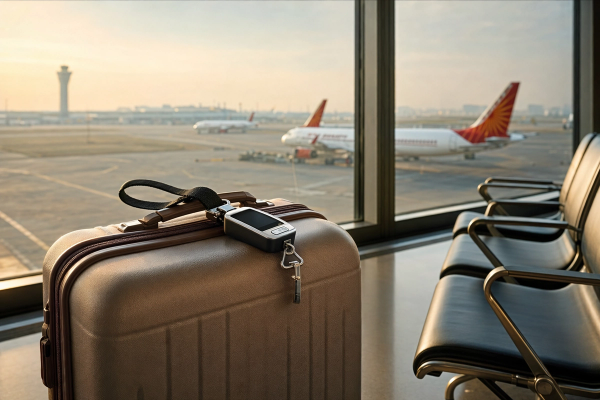
#Let’s talk practical reality. Indian trains are generally safe for tourists if you use normal common sense. Keep passport, wallet, phone, and main cash on your person, not in an outer backpack pocket. Use a small cable lock for larger bags on overnight trips. In AC classes, I sleep pretty okay, but I still secure luggage. Don’t flash expensive electronics too much, especially on crowded platforms. And please, please reach the station early enough that you are not making panicked decisions with all your bags at once.
Food has improved a lot on many routes. Pantry cars exist on several long-distance trains, and app-based meal delivery to your seat at selected stations has become pretty common on many major routes, which honestly is a game changer. Still, carry backup snacks, tissues, hand sanitiser, a bottle of sealed water, and maybe oral rehydration salts if you’re not used to the climate. Chai on stations is almost mandatory though. Tiny paper cup, too sweet, too hot, perfect.
- Use only official porters, prepaid transport where available, and verified booking apps
- Coach position displays are useful, but still ask someone if confused. No shame in that
- Platform changes happen. Keep checking screens and announcements
- Women solo travellers often prefer AC classes and upper berths for more comfort
- Keep a screenshot of your ticket because internet can vanish at the worst time
A few mistakes I see foreign tourists make all the time
#One, underestimating station size. New Delhi Railway Station is not a cute little platform setup. It can be intense. Two, mixing up station names. Cities often have multiple stations like Delhi, Old Delhi, Hazrat Nizamuddin, Anand Vihar, Mumbai Central, Dadar, Lokmanya Tilak Terminus and so on. Book the wrong station and your day gets ugly fast. Three, thinking every train runs exactly on time. Many do, some don’t. Build some buffer, especially if you’re connecting to a flight.
And four, this one is classic, booking solely by cheapest fare without checking journey time, arrival hour, and class. That 4:10 am arrival in an unfamiliar city sounded smart at booking stage, but when you’re standing outside with luggage and sleepy eyes, maybe not so smart yaar. Sometimes paying a bit more for a better-timed train is worth every rupee.
So, should foreign tourists use IRCTC directly or not?
#My honest answer is... yes, if you can set it up calmly in advance and you’re okay with a little friction. It gives you direct access, proper availability views, and usually the best control over your plans. But if the process turns into a nightmare and you’re wasting hours over failed payment attempts, use a trustworthy authorized platform and move on with your life. Travel energy is precious. Don’t spend all of it fighting a login screen.
India by train is not just transport. It’s part of the trip, maybe the best part if you let it be. You’ll overhear five languages before breakfast, share charging points with strangers, learn to identify your coach in ten seconds flat, and maybe get offered homemade thepla or aloo paratha by the family across from you. That kind of thing happens all the time here. A bit messy, a bit magical. Very India.
Final thoughts before you book that first ticket
#If you’re a foreign tourist and IRCTC feels intimidating, that’s normal. Start with one easy route. Pick AC class. Book early. Double-check station codes, dates, and passenger details. Keep expectations flexible, not fearful. Once you do one successful trip, the whole system starts making more sense, or at least enough sense. And after that, you stop seeing trains as a booking problem and start seeing them as a doorway into the country itself.
Honestly, some of my best travel memories in India aren’t from the destination but from the train just before it. The station samosa, the uncle giving route advice I didn’t ask for, the chai at sunrise, that weird but lovely feeling of waking up in a totally new state. If that sounds like your kind of travel, you’ll probably end up loving it too. For more grounded, actually-useful travel reads, have a look at AllBlogs.in.