Rain, red ants, and that first muddy road into Bastar
#The first thing I remember about Bastar in the monsoon is not a monument or a waterfall, weirdly. It’s the smell. Wet sal leaves, smoke from a tea stall, diesel from a shared jeep that had seen better decades, and somewhere in the middle of all that, a sharp chutney smell that made my nose wake up before the rest of me did. I had come into Jagdalpur with a half-planned food list and a very overconfident stomach. Classic mistake. Bastar, in southern Chhattisgarh, isn’t the sort of place where you just tick dishes off like a menu challenge. Food here is tied to haats, forest produce, rice fields, mahua trees, festivals, family kitchens, and honestly, the weather. In the rains, everything feels more alive, but also more slippery, more delicate, more likely to upset your stomach if you act like a hero.
I went chasing three things, mainly: chapda, mahua, and those tiny roadside food stops that appear when you’re wet, hungry, and slightly regretting your travel choices. Chapda, if you haven’t heard of it, is the famous red ant chutney associated with Bastar’s tribal food traditions. Mahua is the sweet, fragrant flower used in food and also in traditional fermented or distilled drinks, depending on the community and local rules. And hygiene tips? Yeah, not glamorous, but after one rainy afternoon near Chitrakote where I almost trusted a suspicious glass of “filtered” water, I became very interested in hygiene. Very, very interested.
Jagdalpur as a base, because your stomach needs a home too
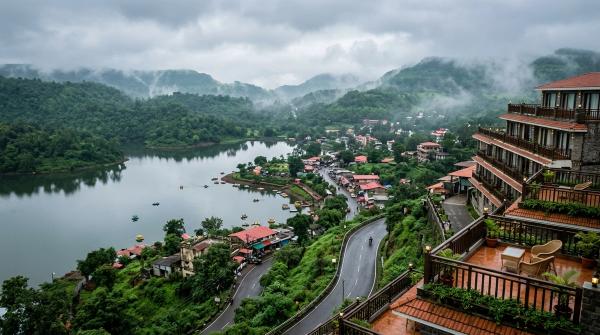
#I used Jagdalpur as my base, which I’d recommend if you’re coming for food plus waterfalls. It’s the big practical stop before you run off to Chitrakote Falls, Tirathgarh, Kanger Valley side, or the weekly markets around the district. The monsoon makes the whole region cinematic, like somebody turned the green saturation up too high, but it also slows you down. Roads can get messy. Timings stretch. A 40-minute plan becomes a 2-hour damp adventure where everyone in the vehicle pretends they are fine.
Jagdalpur has regular restaurants, small eateries, sweet shops, tea stalls, and market lanes where you can start gently before heading deeper into villages and haats. That matters. I know food travelers, me included, love the romantic idea of eating only in the most “authentic” places, whatever that means, but your gut sometimes prefers a warm plate from a busy town eatery before being introduced to crushed red ants at a market. No shame. I had my first proper Bastar-style meal with rice, dal, greens, a dry sabzi, and a tiny amount of chutney on the side. Nothing dramatic. It was exactly what I needed after the bus ride, and I still think simple rice meals tell you more about a place than one viral dish does.
Chapda chutney: sour, fiery, and not just a dare food
#Let’s talk chapda properly, because people outside Bastar often describe it like some shock-value travel-food thing. “They eat red ants!” and then everyone makes a face. But that’s such a lazy way to look at it. Chapda, also called chaprah in some conversations, is generally made with red ants and their eggs, ground with ingredients like chilli, salt, garlic, sometimes ginger or herbs depending on who is making it. The ants bring this bright sourness because of formic acid. It hits fast. Sour, hot, earthy, almost citrusy if you let your brain stop panicking.
My first real taste was in a haat, on a rainy day when the ground had turned into that special monsoon paste that attaches itself to your sandals forever. A vendor had little portions set out, not fancy at all, and a local guy I’d been chatting with said, “Try small, not full.” Thank god for him. I took chapda with a bit of rice and some roasted something, I think it was a tuber but don’t quote me, and my mouth lit up. Not “oh cute, spicy” lit up. More like, “why are my ears awake?” lit up. But then the sourness came and I wanted another bite. That’s the trap. You cough, you laugh, you go back in.
Chapda is not a party trick. It’s a serious local flavour, and if you treat it with respect, it rewards you. If you treat it like a dare, well… enjoy your hiccups.
Where I’d try chapda, and where I probably wouldn’t
#In monsoon, I’d be choosy. Chapda is often freshly ground, and freshness is good, but wet markets also mean more flies, more muddy hands, and more water sitting around. I’m not saying avoid it, because then what are we even doing here? I’m saying watch for the boring stuff. Is the vendor busy? Are people actually buying and eating from there? Is the chutney covered? Are they using clean spoons or just fingers going in and out? Is it served with hot rice, roasted snacks, or something cooked, rather than lying next to sad wet pakoras that look like they gave up at sunrise?
- Start with a pea-sized amount of chapda, especially if you’re not used to very sour and spicy chutneys.
- Ask before photographing. Some vendors are fine, some are not, and honestly it’s their food, their stall, their day.
- If you have allergies or a sensitive stomach, don’t act brave for content. I know, boring advice, but necessary.
- Pair it with plain rice or a mild roti. Eating it straight is possible, but also slightly unhinged.
Mahua: the flower that follows you around Bastar
#Mahua is one of those ingredients that feels bigger than food. The mahua tree is culturally and economically important in many Adivasi communities across central India, and in Bastar you hear about it again and again. The flowers are collected, dried, stored, sold, cooked, and in some places fermented or distilled into a traditional drink. Before travelling, I knew mahua mostly as “that local liquor” people talk about in a whispery travel way. After being there, I realised that’s such a narrow view. The dried flowers can be sweet, raisin-like, a little funky, and they show up in home foods, sweets, and seasonal preparations. They have this deep forest sweetness that doesn’t taste like sugar exactly.
I had mahua in a small sweet at a roadside stop, not polished, not plated for Instagram, just a brownish little piece handed over with tea. It was chewy and smoky-sweet. The tea was too sweet, the rain was coming in sideways, and a chicken kept walking under our bench like it owned the place. Perfect meal? Maybe not. Perfect memory? Absolutely. Later, I was offered a sip of a local mahua drink by someone’s cousin’s friend, which sounds like the beginning of a bad decision, and sometimes it is. I only tasted a little. If you do drink, ask what it is, where it came from, and whether it’s legal and appropriate in that setting. And please don’t drink before doing waterfall roads. Those curves are no joke.
The monsoon haat feeling: half market, half food classroom
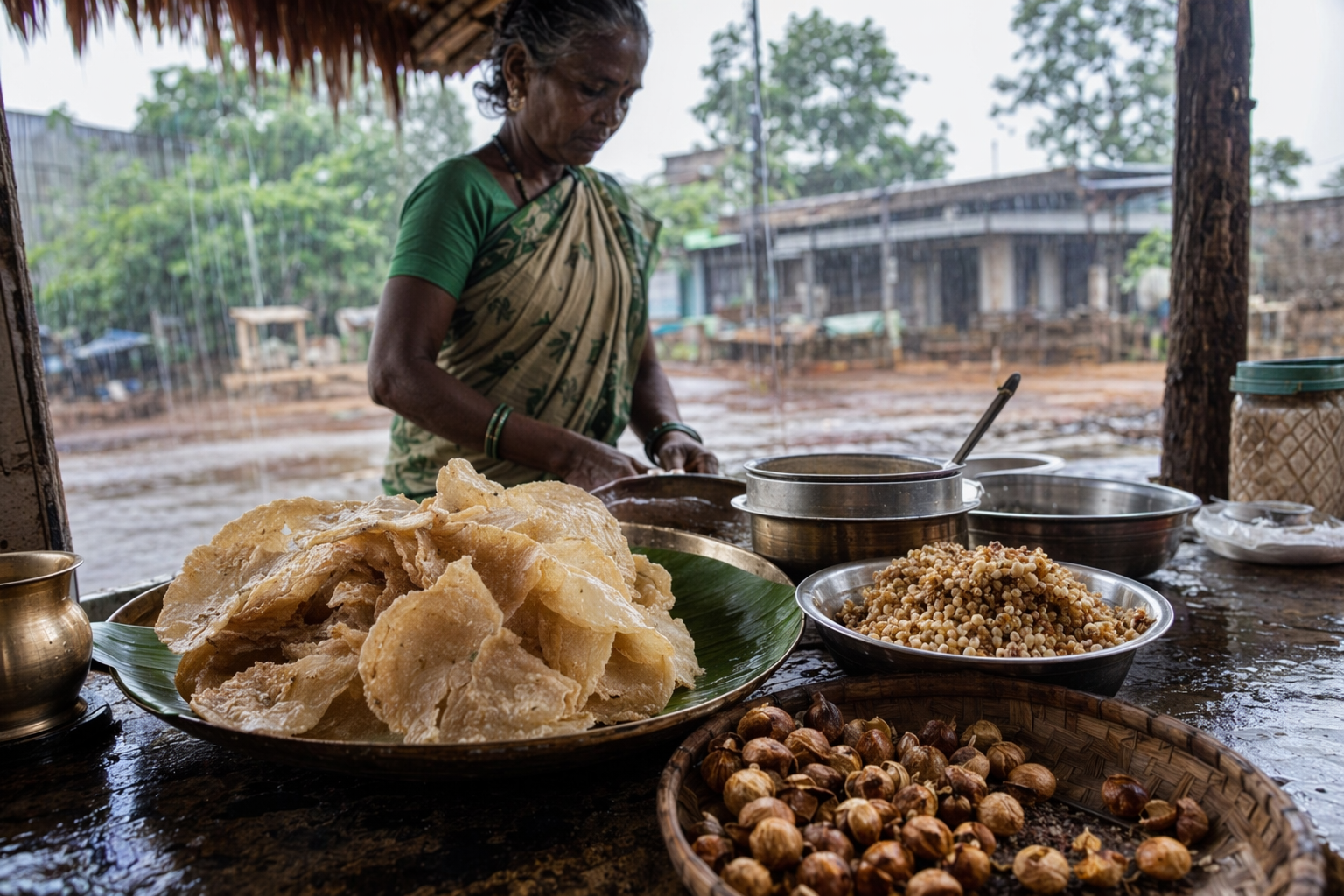
#Weekly haats are where Bastar food starts making sense. You see leafy greens, mushrooms when the season is right, tubers, small fish, country chicken, rice, dried mahua, tamarind, forest produce, spices, handmade baskets, and snacks frying in oil that you should inspect with the eyes of a suspicious auntie. I went to one market not far from Jagdalpur and spent the first 20 minutes just standing under a plastic sheet, watching the rain bounce off blue tarpaulin roofs. Nobody was performing food culture for visitors. People were buying dinner. That’s the best kind of food travel for me.
There were rice-based snacks, hot tea, roasted corn, fried items, and little leaf bowls holding chutneys. I saw people eating quickly, standing, bargaining between bites. A woman selling greens explained something to me in a mix of Hindi and gestures, and I nodded like I understood more than I did. Travel is humbling like that. You think you’re researching cuisine and then suddenly you’re being educated by someone who has been cooking seasonal greens since childhood while you don’t even know the local name. I bought a bundle anyway and later asked the guesthouse cook to make it. She laughed at my pronunciation. Fair enough.
Rice, pej, and the comfort food nobody posts enough
#If chapda is the headline, rice is the actual story. Bastar meals lean heavily on rice in many homes, and in the rainy season that makes total sense. Rice with dal, rice with greens, rice with chutney, rice gruel like pej, rice preparations that fill you up without making you feel like you swallowed a brick. Pej, a simple fermented or cooked rice-water style drink or gruel depending on the household, is the kind of thing travelers overlook because it sounds plain. But on a wet day, after walking around with damp socks, plain can feel luxurious.
I had a bowl that reminded me of kanji and leftover-rice comfort foods from other parts of India. Slightly sour, cooling, not showy. Would I fly across the country only for pej? Probably not, let’s be honest. But would I choose it over a random packaged snack when my stomach is tired? Every time. It also helps balance the aggressive joy of chapda. One bite fire, one spoon calm. That rhythm is basically Bastar monsoon eating.
Waterfall food stops: Chitrakote and Tirathgarh days
#Chitrakote Falls in monsoon is thunderous. I’d seen photos, but photos don’t tell you how the air feels near it, like the waterfall is breathing on your face. Food around big visitor spots can be hit or miss, obviously. You’ll find tea, pakoras, corn, basic meals, bottled drinks, and sometimes local snacks depending on timing. My rule was simple: hot and busy beats pretty and empty. I had pakoras that were not life-changing but were hot enough to fog my glasses, and that counts. I skipped a chutney that looked like it had been sitting out too long, which broke my heart a little.
Tirathgarh side felt quieter when I went, and after the falls I wanted lunch badly. We stopped at a small place where the rice was steaming, dal was bubbling, and the plates were being washed in a way I could actually see. I don’t need luxury. I need visible heat and some sign that the same bucket of grey water isn’t doing every job. If you’re doing a broader rainy-road food crawl in India, the hygiene checklist is similar to what I wrote about in Monsoon Dhaba Stops With Kids: Safe Food Guide, even if you’re not travelling with kids. Kids just make you notice risk faster because they touch everything, including things no adult would ever touch voluntarily.
My personal monsoon hygiene rules, learned the damp way
#I’m not a paranoid eater. I’ve eaten from carts, bus stands, ferry ghats, train platforms, and one unforgettable shack where the menu was whatever the uncle felt like cooking. But monsoon changes the math. Water contamination risk goes up, cut fruit gets dodgy faster, fried snacks can sit around getting soggy, and your hands are never as clean as you think they are. In Bastar, especially if you’re moving between markets, waterfalls, and village roads, you need a small food-safety brain running in the background.
- Drink sealed bottled water or properly boiled water. Check the bottle cap, not in a dramatic spy way, just actually check it.
- Carry ORS, hand sanitiser, tissues, and a small soap strip. Sanitiser is fine, but soap wins when your hands are muddy.
- Choose hot food cooked in front of you. Steaming rice, fresh dal, fresh pakoras, fresh tea. Boring? Maybe. Safe? Usually safer.
- Avoid raw salads, cut fruit, watery chutneys, and ice unless you really trust the place. I know that sounds fussy. Be fussy.
- Don’t overload on new foods in one day. Chapda, mahua drink, market mushrooms, and mystery meat in 6 hours is not adventure, it is paperwork for your intestines.
About mushrooms, fish, and the things I didn’t eat
#Monsoon brings mushrooms in many forested parts of India, and Bastar is no exception in local food conversations, but I’m careful with wild mushrooms. Unless they’re cooked by someone who knows exactly what they are, I don’t experiment. Same with small fish from unknown water sources in heavy rain. Local families know what to buy, when to buy it, and who sells the good stuff. I, an enthusiastic outsider with wet shoes, do not. There’s a difference.
I did eat a small fish curry at a home-style place in Jagdalpur, and it was lovely: mustardy, spicy, thin gravy, perfect with rice. But I skipped fish at a roadside stall where the pieces looked tired. Maybe it was fine. Maybe I missed something amazing. Travel eating is full of these tiny regrets. Still, I’d rather regret missing a dish than spend the night studying bathroom tiles. If you’re interested in how other northeastern and central-eastern monsoon food cultures handle fermented, spicy, unfamiliar flavours, the Manipuri Food for Travelers: Monsoon Eating Guide has a similar “taste with respect, but don’t be silly” vibe.
How to ask for local food without sounding like a walking documentary
#This is a thing I keep learning. People in places like Bastar are not museum exhibits, and their food isn’t there to entertain us. If you want chapda, mahua, pej, local greens, or a proper home-style meal, ask simply. “Yahan ka local khana kya milega?” works better than dramatic questions about “tribal cuisine.” Some people will open up and tell you stories. Some will just point at rice and dal. Both are fine. Not every meal has to come with a cultural lecture.
A driver in Jagdalpur gave me the best advice. He said, roughly, “Eat what people are eating today, not what you read yesterday.” That stuck. If the market has fresh greens, eat greens. If the rain is too heavy and only tea is sensible, drink tea. If someone says chapda isn’t good at that stall, believe them. Local food is seasonal and practical. Travel bloggers, me included, sometimes make it sound like every dish is waiting politely for you. It isn’t. The good stuff appears when it appears.
A loose Bastar monsoon food route I’d do again
#If I were planning it again, I’d start in Jagdalpur for a soft landing. Day one: simple rice meal, market walk, tea, maybe ask around for chapda but don’t force it. Day two: Chitrakote Falls with breakfast before leaving, then hot snacks only if the stalls look busy and clean. Back in town for dinner. Day three: Tirathgarh or Kanger Valley side, carrying water and a backup snack because rain laughs at schedules. Day four: haat visit with a local guide or driver who knows the market day, then taste chapda, buy dried mahua if available from a trustworthy seller, and eat whatever cooked seasonal food looks freshest.
I’d also keep one flexible day. Bastar rewards the unplanned hour. A road gets blocked, rain traps you at a tea stall, somebody tells you about a better market, or you discover that the best thing you ate all day was not chapda or mahua but a plate of hot rice with green chutney served in a steel thali with no fuss. That happened to me, and I was almost annoyed because I’d built up the famous foods in my head. Then lunch quietly won.
What to pack if you’re going mainly to eat
#Food travelers pack differently, I swear. My bag had rain gear, sure, but also steel spoon, handwash, ORS, a small box for leftovers, and digestive tablets because I am romantic but not foolish. Wear sandals or shoes that can handle mud. Carry cash in small notes for haats. Don’t expect every stall to have digital payment, and don’t wave big notes at someone selling a tiny portion of chutney. Also keep a waterproof pouch for your phone, because you will absolutely try to take a photo while holding tea and that is when the sky will attack.
- A light rain jacket that dries fast, not one of those plastic saunas.
- A reusable bottle, filled only from safe sources. Refill smartly, don’t just trust random taps.
- A small towel or gamcha. You’ll use it for hands, seats, surprise rain, everything.
- Plain biscuits or roasted chana for road gaps. Not exciting, but heroic at 4 pm.
- Basic Hindi phrases, plus patience. Lots of patience. Monsoon time has its own clock.
Respecting mahua, especially the drink part
#I want to come back to mahua because travelers can get weird about alcohol. In many communities, mahua drink has social and ritual importance, but it’s also regulated differently depending on state rules and local situations. Don’t pressure anyone to serve it. Don’t buy random unlabelled liquor just because somebody says it’s “original.” Don’t make faces if the taste is strong. And don’t treat it like a wild travel badge. I liked tasting it, but honestly I was more moved by dried mahua as an ingredient. The flower has this patient sweetness, like it has been holding summer inside itself for the rainy season.
If you find mahua sweets or cooked preparations, try those first. They’re gentler, and you’ll understand the flavour without the alcohol complication. Ask whether it’s made with dried flowers, jaggery, rice flour, or whatever the local version uses. Recipes shift from home to home. That’s the fun. It’s like how monsoon foods in Saputara or the Western Ghats have their own rainy logic, and if you enjoy that kind of destination-specific eating, Saputara Monsoon Food Guide: Eat Safely makes a nice companion read before another wet-weather trip.
The taste that stayed with me
#People ask what Bastar tastes like, and I never know how to answer without sounding annoying. It tastes like sour red ant chutney and smoke. Like wet rice fields and tea boiled too long. Like mahua sweetness hiding under earthier flavours. Like chilli that doesn’t politely ask permission. Like simple dal after a hard rain. It also tastes like caution, to be honest, because every beautiful monsoon food stop comes with that little question: is this safe to eat right now?
And that’s not a bad thing. Caution makes you pay attention. You notice who is cooking fresh, who is washing plates properly, where locals are eating, what smells clean, what looks tired. You stop treating food as just “content” and start reading the room. Bastar taught me that. I went there wanting the famous chapda moment, and I got it, but I also got quieter lessons from rice, greens, mahua flowers, and women in markets who knew more about seasonal eating than any fancy food festival panel ever could.
Would I go back in the rains?
#Yes. With better shoes. And more stomach discipline. Bastar in the monsoon is not the easiest food trip, but easy is overrated sometimes. Go slow, eat hot, ask kindly, don’t romanticise discomfort, and don’t be the traveler who demands “authentic” food while ignoring basic respect. Try chapda in a small amount. Taste mahua in a thoughtful way. Eat the rice meals. Drink safe water. Sit at the tea stall a little longer than planned, because that’s usually when the good conversations happen.
I came back with muddy clothes, a few blurry waterfall photos, and a craving for that sharp chapda sourness that I still haven’t managed to recreate at home. Maybe it only works there, with rain hammering on tarpaulin and someone laughing because you took too big a bite. If you’re planning your own food trip through Bastar, keep your curiosity high and your hygiene standards higher. And if you like these slightly messy, very hungry travel notes, wander through AllBlogs.in sometime. I keep finding more food trails there that make me want to pack a bag before checking the weather, which is probably not wise, but well… that’s how most good trips start.