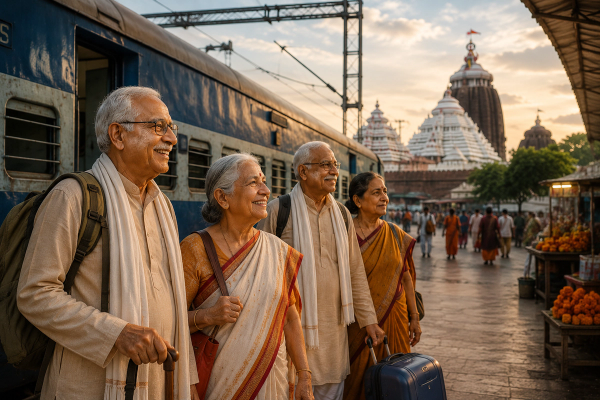

If you travel by Indian Railways even a few times in a year, you already know this scene. Train is running late, platform is crowded, aunty next to you is guarding four bags like border security, and suddenly you realise your water bottle is finished. You rush to the stall, ask for Rail Neer, and the vendor casually says, “₹20.” Now the printed MRP says ₹15, or whatever is printed on that bottle, and for a second you think, arre maybe price changed? Then that small angry voice inside says, no boss, this is not right. This exact thing happened with me on a long train journey, and honestly, it spoiled my mood more than the extra five rupees itself. Not because I can’t pay ₹5 extra, but because if one vendor does it to 200 passengers in a day, that’s a proper loot only.
So this post is not some fancy travel destination guide with mountain views and sunset photos. It is a very practical Indian train travel guide about Rail Neer overcharging complaint steps for passengers, written from actual platform-side frustration. I’ll also mix in the usual train travel stuff like food, safety, accommodation near stations, seasonal tips, and how to handle things without creating unnecessary drama. Because in India, complaint karna bhi ek skill hai. You need proof, patience, and sometimes a fully charged phone.
First, What Exactly Is Rail Neer and Why It Matters So Much
#Rail Neer is the packaged drinking water brand supplied by IRCTC for railway passengers. On many platforms and trains, especially in pantry car trains and authorised stalls, Rail Neer is supposed to be sold at the MRP printed on the bottle. Usually people talk about the 1 litre bottle being around ₹15, but don’t blindly go by what I’m saying because pack sizes and printed prices can vary. The simplest rule is this: check the MRP printed on your bottle. That printed price is the price you should pay. Not “cooling charge”, not “platform charge”, not “train charge”, not “night charge”. These are just creative excuses, trust me.
The reason Rail Neer is important is very basic. Water is not a luxury during train travel. In summer months like April, May and June, or during crowded festival travel around Diwali, Chhath, Durga Puja, Christmas and New Year, you can’t keep arguing for every small thing. You just want safe water and a seat where nobody is half sitting on your thigh. But that’s exactly when overcharging happens most, because demand is high and passengers are rushed. I’ve seen vendors say “₹20 fixed hai” with such confidence that even educated people quietly pay and walk away.
My Own Overcharging Scene, Nothing Dramatic but Very Annoying
#My incident happened during a night journey when my train had already been delayed by more than an hour. I won’t name the station because the point is not to shame one place, this happens in many stations from north to south, east to west. I got down to buy water and a packet of chips. The stall guy handed me Rail Neer and asked for ₹20. I looked at the bottle, MRP was ₹15. I said, “Bhaiya MRP toh 15 hai.” He shrugged and said, “Yahi rate hai platform pe.” That line made me laugh a little, like platform is some foreign country with seperate tax system.
Earlier I might have just paid and moved on, especially if train was about to leave. But that day I had 10 minutes and some extra irritation stored from the delay. I took a photo of the bottle, photo of the stall board, and asked for a bill. Suddenly his tone changed. He said, “Theek hai 15 de do.” That’s when I realised half the battle is just showing that you know your rights. Not shouting. Not fighting. Just calmly asking for bill and taking proof. It works more times than you’d expect.
Quick Rule: Pay Only the Printed MRP on Rail Neer
#Let’s keep this part very clear. If a Rail Neer bottle has MRP printed as ₹15, you should not be forced to pay ₹20. If the bottle shows another printed MRP for a different size, pay that. Sometimes 500 ml bottles, 1 litre bottles, or other packaged water brands may have different rates. Also, some trains may sell other approved brands if Rail Neer supply is not available, but again, MRP is the key. Always check seal, manufacturing date, expiry or best-before details, and whether bottle looks tampered. I know it sounds like too much checking for one bottle, but once you make it habit, it takes five seconds.
- Don’t accept “cooling charge” on packaged water. MRP already includes normal sale price.
- If vendor refuses to sell at MRP, don’t start a big fight first. Take proof quietly.
- Ask for a printed bill or receipt. Many overcharging cases suddenly disappear at this line.
- If you are inside the train, note coach number, seat number, train number, date, time, and vendor details if visible.
Rail Neer Overcharging Complaint Steps That Actually Work
#Okay, now the main thing. If you are overcharged for Rail Neer, there are proper complaint channels. The most useful one for passengers is RailMadad, which is Indian Railways’ official complaint and assistance system. You can use the RailMadad app or website, and you can also call 139, the railway helpline. 139 is useful when your internet is acting like it’s from 2008, which happens a lot when train crosses random patches between stations. For catering related issues, including overcharging by authorised vendors, complaints usually get routed to the concerned railway or IRCTC team.
- Step 1: Check the printed MRP on the Rail Neer bottle before paying, or immediately after buying.
- Step 2: If the vendor asks more than MRP, politely say the printed price and ask them to charge only that.
- Step 3: If they still insist, ask for a bill. Don’t be rude, just firm.
- Step 4: Take photos if possible, including bottle MRP, stall name or number, platform number, vendor badge if visible, and your payment proof if you paid by UPI.
- Step 5: File complaint on RailMadad app or website, or call 139. Mention train number, PNR if you have it, station, platform, stall details, amount charged, and MRP.
- Step 6: Keep complaint reference number. If someone calls for follow-up, explain simply. No need for long emotional speech, though inside you may be fully boiling.
What Details Should You Mention in the Complaint
#The better your complaint details, the better chance of action. Just writing “vendor cheated me” may not help much because railway teams need to identify who did it. I usually type it like this: “Rail Neer 1L bottle MRP ₹15 was sold for ₹20 at Platform 3, near coach position B5, station name, time around 8:40 pm. Vendor refused bill.” If inside the train, mention train name and number, coach, berth, whether pantry staff or platform vendor sold it. Add photo if the app allows. If you paid through UPI, screenshot helps, but hide sensitive details if you’re sharing anywhere public.
One small thing, don’t throw the bottle immediately if you are serious about complaint. Keep it till you file, because the batch details and MRP photo are useful. I learnt this after making a complaint once with only a vague memory and no proof. The reply came, but nothing much happened. Fair enough, what can they investigate if I myself don’t know the stall number? Since then I’ve become that slightly annoying person who photographs everything. My friends tease me, but when they need complaint format, they come to me only.
RailMadad, 139, Station Manager: Which One Should You Use?
#For most passengers, RailMadad is the easiest because you get a complaint ID and can track it. The app is not perfect, sometimes it logs out or takes time, but it is still better than shouting on the platform and then forgetting everything. Calling 139 is good when you want immediate guidance, especially during journey. You can also approach the station manager, deputy station superintendent, commercial inspector, or railway staff present at bigger stations. At smaller stations, finding the right person can feel like a treasure hunt, but there is usually some official office near the main platform or booking area.
| Complaint option | Best for | What to keep ready |
|---|---|---|
| RailMadad app or website | Documented complaint with tracking | PNR, train number, station, photo proof, amount charged |
| 139 helpline | Quick help during journey | Train number, coach, location, simple complaint details |
| Station manager or railway office | When you are still at station and want local action | Bottle, bill or no-bill detail, stall number, platform |
| IRCTC catering complaint channels | Pantry car or onboard catering issue | PNR, vendor info, coach and berth, payment proof |
What If the Vendor Says Rail Neer Is Not Available?
#This also happens. You ask for Rail Neer, and the vendor pushes some random brand at ₹20 or ₹25. Now, not every stall will have Rail Neer all the time, especially during supply issues or peak rush. But if they are selling any packaged water, it still has to be sold at printed MRP. Also check whether the brand looks genuine and sealed. I personally avoid bottles kept in dirty ice boxes where the cap looks loose. Maybe I’m paranoid, but stomach infection during train journey is not a joke. You can recover money, but you cannot recover dignity after running to train toilet every 15 minutes. Sorry, but true.
On premium trains and long routes, pantry staff may bring bottles to your seat. Same rule. Ask the price before opening. Once the seal is broken, argument becomes messy. If you’re travelling with kids or elderly parents, carry at least one bottle from home and refill only at safe points. Many big stations now have water vending machines and filtered water points, though maintenance differs a lot. Some are excellent, some look like they last worked properly during my school days.
Current Train Travel Reality: UPI, Delays, Safety and Crowds
#Train travel in India has changed a lot in the last few years. UPI is everywhere now, even small tea stalls on platforms have QR codes hanging with tape. Vande Bharat routes have improved comfort for many travellers, station redevelopment work is happening in several cities, and safety discussions around systems like Kavach come up often in news. But old problems also continue. Overcharging, crowding, last-minute platform changes, dirty waiting rooms at some stations, and vendors behaving like rules are optional. So you travel with both optimism and jugaad. That’s Indian Railways in one line.
Safety-wise, I find railway travel generally okay if you stay alert. Keep your phone charged, don’t leave bags unattended, chain your luggage in sleeper and AC coaches, and avoid buying cut fruit or open food from random moving vendors. For women travelling solo, I’d suggest choosing AC coaches where possible for overnight trips, keeping family updated with live location, and not hesitating to speak to TTE or RPF if someone is troubling you. The helpline 139 can guide, and RPF presence is better at major stations now, though response can vary by location.
Seasonal Tips: When Overcharging Gets Worse
#From my experience, Rail Neer overcharging becomes more common during summer, festival seasons, and late-night halts. Summer is obvious because everyone is thirsty. Festival season means crowd pressure. Late night means passengers are sleepy and don’t want to argue. Also, when trains are delayed and halt at a station for just 2-3 minutes, vendors know people will pay fast without checking. That’s why I now buy water before boarding if I can. During April to June, carry ORS sachets also, especially if travelling in sleeper class. In monsoon, check bottle seal extra carefully because platforms can get messy and water contamination risk feels higher.
Best months for comfortable train travel, if you have choice, are usually October to March. Weather is easier, food lasts better, and you don’t feel roasted near the window. But winter fog in North India can delay trains badly, especially around December and January. If you have a flight connection after train travel, keep a big buffer. Don’t do that heroic plan of train reaching at 7 am and flight at 10 am. Me and my cousin tried something similar once and spent the whole night calculating delay minutes like stock market traders. Never again.
Food, Chai and Platform Culture: The Good Side of the Same Journey
#Now I don’t want this whole blog to sound like Indian railway travel is only complaints. It’s not. Some of my favourite travel memories are from stations. Hot poha at Bhopal side, vada pav near Mumbai routes, idli-vada on South Indian stations, samosa and kulhad chai in North India, litti chokha if you’re lucky on Bihar routes, and that universal bread omelette which somehow tastes better at 6 am on a platform. Local food culture is honestly one of the joys of train travel, but yes, choose busy stalls with proper turnover. If the oil looks older than the station building, skip it.
E-catering has also become more popular. You can order food to your seat at selected stations using approved services, and many passengers prefer it over pantry food. Prices vary, but a decent meal can be ₹150 to ₹350 depending on city and restaurant. Still, for water, I don’t like depending fully on onboard vendors. Keep one bottle backup. And if you are buying Rail Neer, again, MRP. Itna simple hai.
Accommodation Near Stations: If Your Train Is Late or Cancelled
#This part matters because overcharging and travel stress usually happen when plans are already going wrong. If your train is cancelled, missed, or delayed overnight, don’t panic and book the first shady lodge someone offers outside the station. Many major stations have retiring rooms or dormitories bookable through Indian Railways or IRCTC channels, subject to availability and valid ticket conditions. Prices vary a lot by station and room type, but dorm beds can be quite budget-friendly, sometimes a few hundred rupees, while AC rooms may go from around ₹800 to ₹2000 or more. Availability is the real issue, not price.
Outside big stations, budget hotels usually start around ₹800 to ₹1500 for very basic rooms, and cleaner family-friendly options are often ₹1800 to ₹3500. In metros like Delhi, Mumbai, Bengaluru, Chennai, Hyderabad, Kolkata or Pune, expect higher rates near main railway stations, especially during events, exams, weddings and festival rush. I always check recent reviews, not just ratings. If reviews mention “good for few hours” or “near station but not safe for family”, take that seriously. For solo travellers, especially arriving after midnight, pre-booking is better than bargaining with random agents outside.
Lesser-Known Practical Tips That Saved Me Money and Headache
#One trick I use now is keeping small change, even though UPI is everywhere. If you give ₹100 note for a ₹15 bottle, some vendors act like change is a national emergency and then push extra items. With UPI, always confirm amount before paying. I’ve seen one passenger type ₹20 himself because vendor said “twenty”, then later saw MRP ₹15 and felt cheated, but technically he paid willingly without checking. Also, if a stall has a rate chart displayed, take a quick look. Many authorised stalls have boards showing approved rates for tea, coffee, meals, water and snacks. Not always updated nicely, but useful.
Another thing: don’t block the stall and start a public courtroom if your train is leaving. Your safety and journey matter more than proving a point in that moment. Take photo, pay if you must, board safely, then complain. I know some people will say “why pay extra at all?” Correct in theory. But in real life, with luggage, kids, elderly parents, and train whistle in background, you make practical decisions. Complaint can still be made if you have proof. Even if refund doesn’t come, action against repeated overcharging can happen when multiple passengers report.
What Response Can You Expect After Complaint?
#In my case, the RailMadad complaint got acknowledged and later marked resolved after some communication. Did I get a grand apology and garland? Obviously not. But I did get a call asking for details, and that itself felt better than silently accepting it. Sometimes staff may say the vendor was warned, sometimes penalty may be imposed depending on investigation, and sometimes the complaint may close with a generic response. It is not always satisfying. But if nobody complains, the system assumes everything is fine. That’s the bigger problem.
Be honest in your complaint. Don’t exaggerate ₹5 into ₹50 just to make it look serious. Don’t accuse without basic details. And please don’t abuse railway staff on call, because the person calling may not be the one who overcharged you. Calm complaints get taken more seriously. I’ve learnt this the hard way in life generally, not just railways. Anger feels powerful for two minutes, documentation works better.
A Simple Complaint Message You Can Copy
#Here’s a basic format you can use and edit: “I purchased Rail Neer packaged drinking water at [station name], platform [number], near [stall/coach position] on [date] at around [time]. The printed MRP on bottle was ₹[MRP], but vendor charged ₹[charged amount] and refused to provide bill. Train number [number], PNR [if any]. Photo proof available.” That’s enough. If you paid by UPI, add “payment made via UPI to [merchant name visible]”. Keep it short and clean.
If you are complaining from inside the train, write: “Onboard vendor/pantry staff sold Rail Neer above printed MRP in coach [coach], berth [seat], train [number/name]. Bottle MRP ₹[MRP], charged ₹[amount]. Kindly take action.” You don’t need fancy English. Hindi, English, Hinglish, whatever you are comfortable with, just make sure details are clear. Railway systems are used by all types of passengers, not only corporate email experts.
Final Thoughts: Don’t Feel Cheap for Questioning ₹5
#This is the part I feel strongly about. Many passengers don’t complain because they think, “Chhodo yaar, it’s only five rupees.” But it’s not only five rupees. It is about basic fairness. Indian Railways carries lakhs and lakhs of people daily. Small overcharging becomes big money when repeated. Also, when we ignore small cheating, it becomes normal. Asking for MRP is not being kanjoos. It is being aware.
At the same time, don’t let one bad vendor ruin your love for train journeys. There is still something beautiful about railway travel in India. The chai calls, the window seat fights, strangers sharing thepla, someone’s phone playing old Kumar Sanu songs, kids counting tunnels, and that feeling when your train finally enters your hometown station. Just travel a little smarter. Check MRP, keep proof, use RailMadad or 139, and don’t be scared to ask for bill. Btw, if you like practical Indian travel stories like this, I keep finding and sharing more such helpful stuff on AllBlogs.in, so do check it out when you’re planning your next journey.