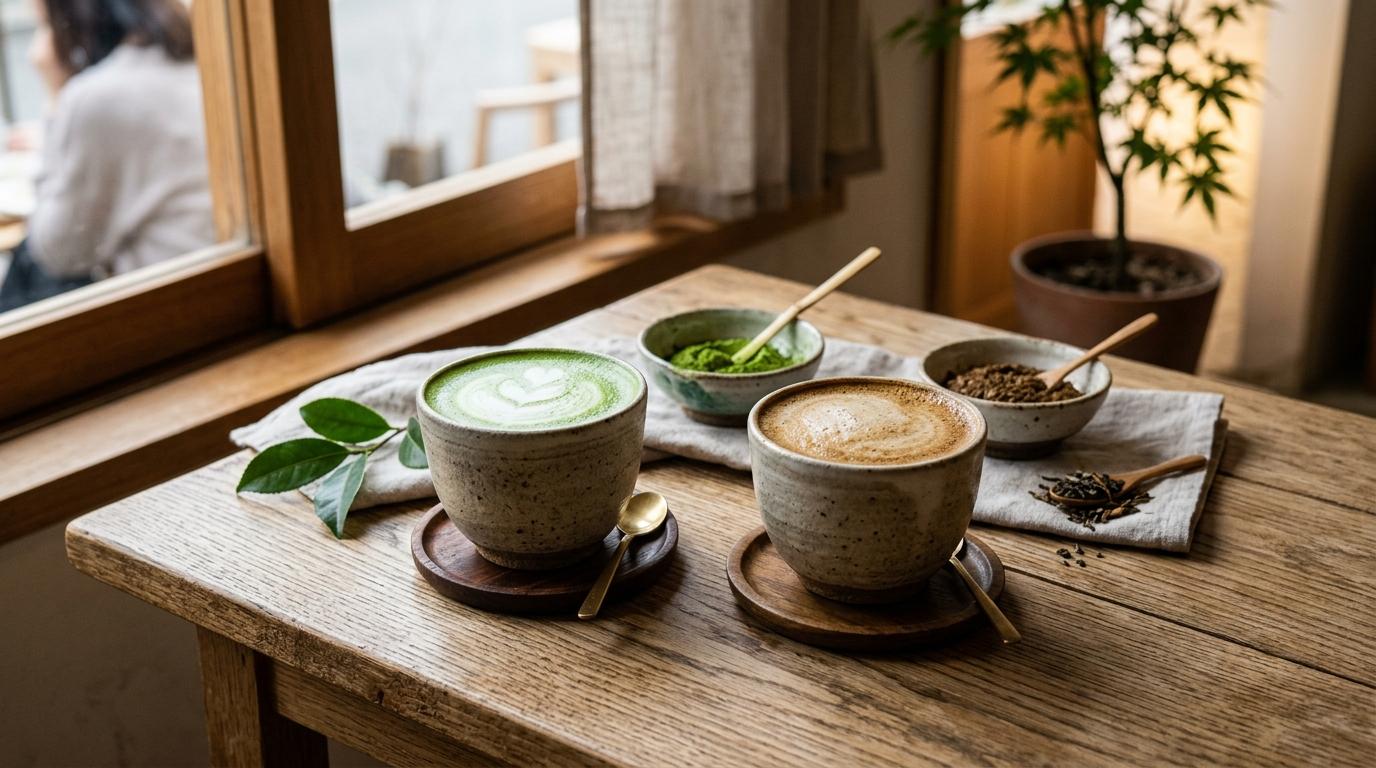
If you’ve ever stood at a café counter debating a hojicha latte vs matcha latte, you are not alone. They both sound good. They both come from Japanese green tea. They both make beautiful hot or iced lattes.
But they are very different drinks.
A matcha latte is bright green, grassy, and a little energizing. A hojicha latte is roasted, nutty, cozy, and usually much lower in caffeine. One feels like a fresh start to the day. The other feels like something you want to sip slowly in the afternoon.
So if you are trying to figure out which one to order, make, or keep in your kitchen, here is the easy breakdown.
The quick answer
#Choose a matcha latte if you want a brighter, greener drink with more caffeine and a fresh, earthy flavor. It is usually best in the morning or early afternoon.
Choose a hojicha latte if you want something roasted, smooth, mellow, and lower in caffeine. It is a great choice later in the day, or anytime you want a cozy tea latte that does not feel too intense.
In short: Matcha is fresh, green, and energizing. Hojicha is roasted, gentle, and comforting.
Hojicha vs matcha at a glance
#Matcha tastes grassy, earthy, savory and umami-rich, with moderate caffeine and a brighter morning-friendly feel. Hojicha tastes toasty, roasted, nutty, smooth and lightly caramel-like, with much lower caffeine and a more relaxed afternoon or evening feel.
Matcha pairs well with dairy milk, light oat milk, macadamia milk and mild plant milks. Hojicha pairs well with barista oat milk, whole milk, soy milk and richer plant milks. Matcha often benefits from a little sweetener, while hojicha usually needs less because the roasted aroma already feels naturally sweet.
What does a hojicha latte taste like?
#A hojicha latte tastes warm and cozy in the best way.
It is roasted, smooth, a little nutty, and sometimes has notes that remind people of caramel, cocoa, toasted grains, or even a very mild coffee. If matcha tastes green and fresh, hojicha tastes golden-brown and toasty.
Hojicha is made by roasting green tea leaves, and sometimes stems too. That roasting step changes the flavor completely. It softens the grassy green tea taste and brings out deeper, warmer flavors.
In a latte, hojicha works beautifully. Milk makes it creamy and round, and the roasted flavor gives it an almost dessert-like feeling, even without much sugar.
If you like nutty coffee drinks, mochas, toasted flavors, or lattes that feel soothing rather than sharp, a hojicha latte is probably going to be your kind of drink.
It is also very forgiving at home. Hojicha powder blends nicely with milk, handles sweetener well, and does not get fussy quite as quickly as matcha can. If you are new to making tea lattes, hojicha is an easy one to love.
What does a matcha latte taste like?
#Matcha is brighter, greener, and more intense.
A good matcha latte tastes grassy, earthy, creamy, and a little savory. It has that classic green tea flavor, plus a natural umami quality that makes it feel rich even before you add milk.
Matcha is made from shade-grown green tea leaves. After harvest, the stems and veins are removed, and the leaf portion is ground into a very fine powder. Because of that, you are drinking the whole tea leaf rather than steeping leaves and removing them.
That is part of why matcha has such a strong personality. It has a vivid green color and a fresh, vegetal flavor that some people love immediately. Other people prefer it with milk and a little sweetness, which is completely normal.
Matcha quality matters a lot. A smoother matcha will taste creamy, balanced, and almost sweet in a latte. A lower-quality matcha can taste bitter or chalky, especially if it is made with water that is too hot.
That is why many cafés add vanilla, honey, simple syrup, or another sweetener to matcha lattes. A little sweetness can soften the grassy edge and make the drink feel more rounded.
Caffeine: matcha latte vs hojicha latte
#Caffeine is one of the biggest differences between these two drinks.
A matcha latte usually has a moderate amount of caffeine. The exact amount depends on how much matcha powder is used. A small homemade latte might use 1 teaspoon. A café drink might use more, especially if it is large or extra strong.
Matcha also contains L-theanine, an amino acid naturally found in tea. Many people say matcha gives them a calmer, steadier lift than coffee. Of course, caffeine affects everyone differently, so if you are sensitive to it, matcha can still feel strong.
A hojicha latte is usually much lower in caffeine. Hojicha is roasted green tea, and the roasting process lowers the caffeine content. Hojicha is not always completely caffeine-free, but compared with matcha, it is typically much gentler.
So the simple rule is:
- Want more of a boost? Choose matcha.
- Want something calmer and lower in caffeine? Choose hojicha.
When to choose matcha
#Choose a matcha latte when you want a morning or early afternoon pick-me-up, a bright green tea flavor, a drink that feels more energizing, a coffee alternative, or a creamy latte with grassy, earthy, umami notes.
Matcha makes the most sense when you want to feel awake and focused. It is especially nice in the morning, after breakfast, or as an early afternoon drink when coffee feels like too much.
When to choose hojicha
#Choose a hojicha latte when you want a lower-caffeine tea latte, something warm and roasted, an afternoon or evening drink, nutty caramel-like flavor, or a gentler alternative to coffee.
Hojicha is the one to pick when you want the comfort of a latte without the bedtime regret feeling. It is still flavorful, but it feels softer and more relaxed.
Best milk for matcha lattes
#Milk can completely change a matcha latte.
For matcha, you usually want milk that is creamy but not too heavy. If the milk is too rich or too sweet, it can cover up the tea. If it is too thin, the drink can taste watery.
Good milk options for matcha include dairy milk, light oat milk, macadamia milk, almond milk if you like a lighter latte, and mild, neutral plant milks.
Oat milk is popular with matcha, but very sweet or very thick oat milk can sometimes take over. If your matcha latte tastes flat or muted, the milk might be the reason.
Best milk for hojicha lattes
#Hojicha can handle richer milk because its roasted flavor is deeper and stronger.
Good milk options for hojicha include barista oat milk, whole dairy milk, soy milk, cashew milk and richer plant-based milks.
Barista oat milk is especially good with hojicha because it plays up the toasted, nutty flavor. Whole milk makes it taste creamy and rounded. Soy milk works well too, especially if you like a fuller, slightly earthy latte.
If your hojicha latte tastes a little thin, try using a creamier milk next time.
How much sweetener do they need?
#Matcha and hojicha do not need the same amount of sweetness.
A matcha latte often tastes better with a little sweetener, especially if it is iced or made with unsweetened milk. Matcha can have a slight bitterness, and a small amount of sweetness helps smooth it out.
Good sweeteners for matcha include honey, maple syrup, simple syrup, vanilla syrup and brown sugar syrup.
A hojicha latte usually needs less sweetener. The roasted aroma naturally gives it a caramel-like feeling, even when there is very little sugar in the drink.
If you like less sweet lattes, hojicha is usually easier to enjoy plain or lightly sweetened.
At a café, ask for either drink “lightly sweetened” if you are not sure. That way, you can still taste the tea instead of only tasting syrup.
How to order at a café
#If you are ordering a matcha latte, ask whether it is sweetened by default. Some cafés use unsweetened matcha and add syrup separately. Others use a pre-sweetened matcha mix.
If you want a stronger tea flavor, ask for less sweetener or an extra scoop of matcha, depending on how the café makes it.
If you are ordering a hojicha latte, you can ask whether they use hojicha powder or brewed hojicha.
Hojicha powder makes a stronger, creamier, more latte-like drink. Brewed hojicha tastes lighter and more like tea with milk.
Both can be delicious. Powder is usually closer to the café-style hojicha latte most people expect.
If you like coffee-style flavors but want tea, try hojicha. If you love green tea and want more energy, go with matcha.
Easy hot or iced latte method
#This is not a full recipe, just the basic method. Once you make either drink a couple of times, it becomes very easy.
For one latte, start with 1 to 2 teaspoons matcha powder or hojicha powder, 2 tablespoons hot water, 1 cup milk of choice, and sweetener to taste if needed.
Use hot water, but not boiling water. Around 175°F / 80°C is a good guide. If the water is too hot, green tea powders can taste harsh or bitter.
Whisk the tea powder with the hot water until smooth. A bamboo whisk is lovely, but a small electric frother works really well too.
For a hot latte
#Whisk the matcha or hojicha powder with hot water until smooth. Warm and froth your milk, then pour it over the tea concentrate. Add sweetener if you like.
A hot matcha latte will be creamy and green. A hot hojicha latte will be tan to brown with a warm, roasted aroma.
For an iced latte
#Whisk the tea powder with hot water first. This helps prevent clumps.
Fill a glass with ice, add cold milk, then pour the tea concentrate over the top. Stir before drinking.
This is also how you get those pretty café-style layers. Matcha creates a green swirl, while hojicha makes a soft roasted-brown layer.
Which one is better to make at home?
#Matcha is great to make at home if you like fresh green tea flavor and want something with a little energy. It is especially good iced, with vanilla, honey, or just a tiny bit of sweetener.
Hojicha is great to make at home if you want something easier, cozier, and lower in caffeine. The roasted flavor is less delicate than matcha, so it works with more kinds of milk and does not need as much sugar.
If you have room for both, keep both.
Matcha is for bright mornings. Hojicha is for slow afternoons.
Final choice: hojicha latte vs matcha latte
#If you want energy, color, and fresh grassy green tea flavor, choose matcha.
If you want roasted comfort, lower caffeine, and something smooth and mellow, choose hojicha.
The nice thing is that hojicha latte vs matcha latte is not really a competition. They are two different moods in a cup. Matcha is bright and focused. Hojicha is warm and relaxed.
Once you know the difference, it becomes much easier to pick the one that fits your day.