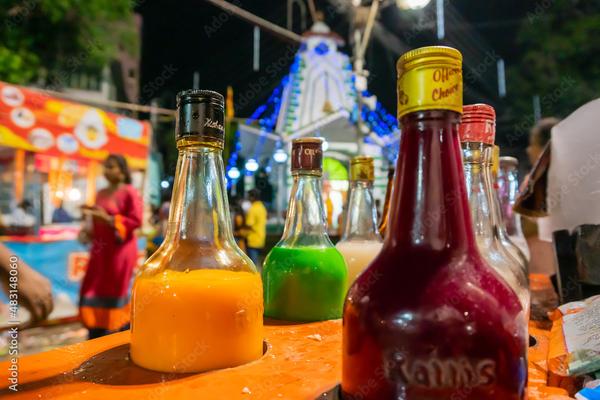
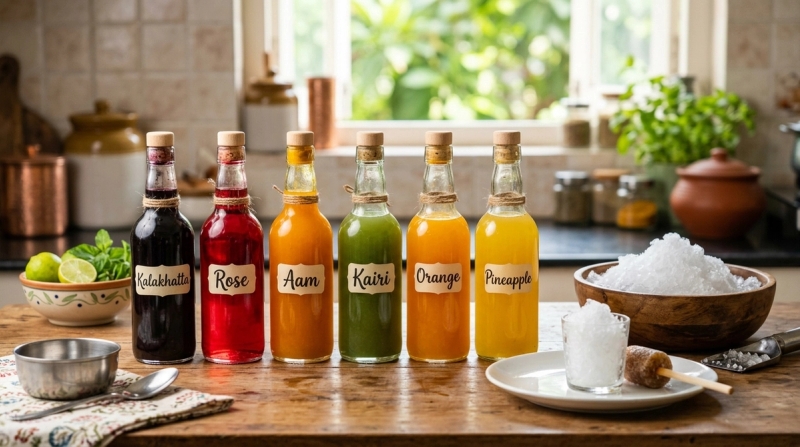
A bottle of homemade gola syrup in the fridge can honestly save a summer evening.
Crush some ice, pour rose syrup, kala khatta, orange, lemon, jamun, mint, or whatever flavour everyone loves, and suddenly baraf ka gola, chuski, mocktails, and cold drinks are ready in minutes.
But homemade syrup also needs a little respect.
Unlike many store-bought syrups, homemade ice gola syrup usually has no industrial preservatives, no factory-sealed packing, and no controlled processing. And once fresh fruit, herbs, lemon juice, spices, or even a wet spoon enters the bottle, the syrup can spoil faster than expected, especially in hot Indian weather.
This is not a recipe guide. This is a practical storage guide for homemade ice gola syrup: how long it can last in the fridge, when to freeze it, how to keep bottles clean, what spoilage looks like, and which small serving habits can shorten the syrup’s life.
And one simple rule before we begin:
If you are not sure the syrup is safe, throw it out. No gola is worth a bad stomach.
Quick Answer: How Long Does Homemade Gola Syrup Last?
#There is no perfect shelf-life guarantee for homemade syrup. It depends on the sugar ratio, ingredients, bottle hygiene, fridge temperature, and how carefully the syrup is handled after making.
Still, for syrup stored in a clean, airtight container in the fridge, these are reasonable general timelines:
Important safety rule: If the syrup has mold, new cloudiness, fizz, bubbles, pressure, a sour smell, a fermented smell, or anything that feels unusual, discard it.
Do not taste suspicious syrup “just to check”. If it looks or smells wrong, that is enough reason to throw it away.
Why Homemade Ice Gola Syrup Spoils
#Sugar helps preserve syrup, but it does not make syrup immortal.
The main problem is water. Bacteria, yeast, and mold need available water to grow. Sugar ties up some of that water, which is why thicker, sweeter syrups usually last longer than thin syrups.
That is also why a rich 2:1 syrup, made with more sugar and less water, generally keeps better than a lighter 1:1 syrup.
But the moment you add fresh ingredients, the situation changes.
Fresh jamun, lemon juice, mint, ginger, orange, rose petals, herbs, spices, and fruit pulp all bring extra moisture and organic matter. They make the syrup taste fresh and delicious, but they also make it more perishable.
So even if a fruit syrup smells perfect on day one, treat it as a short-life syrup.
For flavour ideas and basic syrup recipes, you can also read: Homemade Baraf ka Gola / Chuski Recipe + Simple Syrups.
Fridge or Freezer: Where Should You Store Gola Syrup?
#Fridge Storage: Best for Regular Use
#If you plan to use the syrup within the next few days or weeks, the fridge is the easiest and best option.
Use a clean, airtight glass bottle or jar if possible. Let the syrup cool completely before closing the lid and putting it in the fridge. If you seal hot syrup immediately, steam can collect inside the bottle. That extra moisture near the lid can encourage spoilage.
For better storage:
- Keep syrup in the main fridge area, not the fridge door.
- Close the cap tightly after every use.
- Use smaller bottles instead of one big bottle.
- Label each bottle with the date it was made.
- Use fruit and herb syrups sooner than plain sugar syrup.
- Do not leave bottles sitting outside between servings.
The fridge door may feel convenient, but it warms up every time someone opens the fridge. The middle or back shelf usually stays colder and more stable.
Freezer Storage: Best for Extra Syrup
#If you made a large batch and know you will not finish it in time, freeze the extra syrup.
Plain syrup can usually be frozen for about 3 to 6 months. Fruit and herb syrups are better used within about 3 months because their flavour and quality can change over time.
A few freezer tips:
- Use freezer-safe containers.
- Leave space at the top because liquids expand when frozen.
- Freeze syrup in small portions, not one large bottle.
- Ice cube trays work well for gola syrup.
- Once frozen, move the cubes to a clean airtight freezer bag or container.
- Thaw only what you need.
Rich 2:1 syrup may not freeze into a hard block because it has a lot of sugar. It may become thick, slushy, or gel-like. That is normal.
For gola, you can thaw syrup cubes in the fridge or let them soften for a short time before serving. Avoid thawing and refreezing the same syrup again and again.
Simple Syrup vs Fruit Syrup: Why Timing Changes
#Not all homemade chuski syrups last the same amount of time. The ingredients matter.
Plain 1:1 Simple Syrup
#A 1:1 simple syrup means equal parts sugar and water.
This is common for drinks, mocktails, and lighter gola syrups. In the fridge, it usually lasts around 2 to 4 weeks if stored in a clean, airtight bottle.
But this assumes everything was handled properly. If the bottle was not fully clean, the syrup was touched with a wet spoon, or it sat outside in the heat, it can spoil much sooner.
Rich 2:1 Simple Syrup
#A 2:1 syrup has two parts sugar to one part water.
Because it has less available water, it generally lasts longer. In the fridge, it can last around 1 to 3 months under clean storage conditions.
That does not mean you can forget about it. It can still spoil if it gets contaminated. Always check for cloudiness, mold, fizz, pressure, or a strange smell before using it.
Fruit, Herb, Citrus, and Spice Syrups
#These are the most delicate syrups.
Examples include:
- Fresh jamun syrup
- Kala khatta style syrup with fruit
- Mint syrup
- Ginger syrup
- Lemon syrup
- Orange syrup
- Syrups with fruit pulp
- Syrups with fresh herbs or spices
Use these within 1 to 2 weeks in the fridge.
Even if they contain plenty of sugar, fresh ingredients reduce shelf life. If you are making syrup for children, older family members, or anyone with a sensitive stomach, make smaller batches and be extra careful.
Clean Bottles and Dry Ladles Make a Big Difference
#Many homemade syrups do not spoil because the recipe was wrong. They spoil because of handling.
This usually happens during serving.
Someone wants extra syrup. Someone dips a spoon. Someone leaves the bottle near melting ice. Someone pours over a bowl and the bottle mouth touches the wet ice. It all feels harmless in the moment, but that is how contamination starts.
Start with Clean Bottles
#Before filling bottles or jars:
- Wash them properly with hot, soapy water.
- Rinse well.
- Let them dry completely.
- Use glass bottles if possible.
- If boiling glass bottles, make sure they are heat-safe.
Avoid pouring fresh syrup into a bottle that was only quickly rinsed. Old soda bottles, reused plastic bottles, and sticky syrup bottles often hold residue around the cap and neck.
A clean bottle gives your syrup a much better chance of lasting safely.
Use a Clean Ladle or Pouring Spout
#If you use a spoon or ladle, keep it only for the syrup.
Do not let it touch:
- Shaved ice
- Used bowls
- Hands
- Countertops
- Wet plates
- Other syrups
And definitely do not put that same ladle back into the main bottle or jar after it touches something else.
This matters even more when serving gola to a group. Cross-contamination can add water, ice particles, saliva traces, food bits, or microbes to the syrup. Once that happens, the syrup’s shelf life can drop quickly.
For more on hygiene around ice and syrup, read: Street Baraf ka Gola Safety: Ice, Syrup and Hygiene.
Spoilage Signs: When to Throw Syrup Away
#Do not rely only on the date on the bottle. Always check the syrup before using it.
Here are the main warning signs.
1. Mold
#Mold may look fuzzy, powdery, floating, green, white, black, or grey. It often appears on the surface, near the bottle neck, around the cap, or on dried syrup stuck to the rim.
Do not scoop off the mold and use the rest.
If you see mold anywhere in or around the syrup, discard the whole batch.
2. New Cloudiness
#Some fruit syrups are naturally cloudy from the beginning. That is normal.
The warning sign is new cloudiness in a syrup that was previously clear or evenly coloured. If plain syrup or a light syrup suddenly turns hazy, milky, or opaque, it may be spoiled.
When in doubt, throw it out.
3. Fizz, Bubbles, or Pressure
#If the bottle hisses when opened, looks bubbly without shaking, or feels pressurized, fermentation may be happening.
Wild yeast can feed on sugar and produce gas. That gas creates fizz, bubbles, pressure, and sometimes a fermented smell.
Do not use fizzy homemade gola syrup unless it was intentionally fermented under safe conditions, which regular gola syrup is not.
4. Sour, Vinegary, or Funky Smell
#Fresh syrup should smell sweet, clean, and like the flavour you added.
Spoiled syrup may smell:
- Sour
- Alcohol-like
- Fermented
- Vinegary
- Musty
- Rotten
- Funky
If the smell makes you pause, discard it.
5. Strange Texture or Slime
#If the syrup becomes stringy, slimy, unusually thick in patches, or develops floating bits that were not there before, do not use it.
Fruit pulp can settle naturally. That is different. Slime or strange growth is not normal.
Common Summer Serving Mistakes to Avoid
#Homemade gola syrup is often most at risk while serving, not while it is quietly sitting in the fridge.
Here are the habits to avoid.
Leaving Syrup Out for Too Long
#On a hot afternoon, it is tempting to keep all the syrup bottles on the counter while everyone makes gola.
Try not to do that.
Take out the bottle, pour what you need, and put it back in the fridge. Heat speeds up spoilage, especially in fruit and herb syrups.
Pouring from the Main Bottle Too Close to Wet Ice
#If the bottle mouth touches shaved ice, bowls, glasses, or hands, contamination can enter the syrup.
Pour from a little height, or transfer a small amount into a separate clean serving bottle for immediate use.
Mixing Old Syrup with New Syrup
#Do not top up an old bottle with a fresh batch.
The old syrup may already have microbes in it, even if you cannot see or smell anything yet. Wash, dry, and refill the bottle properly before adding fresh syrup.
Using Wet Spoons
#Water dilutes syrup and can create small areas where microbes grow more easily.
Use only clean, dry spoons or ladles.
Making One Huge Batch
#Large batches feel convenient, but the bottle gets opened again and again. Every opening increases exposure.
For home use, smaller bottles are better. Keep one bottle for current use and freeze the rest in portions.
Ignoring the Cap and Rim
#The cap and rim often collect sticky syrup. That sticky layer can attract mold and microbes.
Wipe the outside of the bottle if needed, but do not wipe the inside rim with a used cloth. If the cap looks dirty or smells bad, clean the bottle properly or discard the syrup.
A Practical Storage Plan for Families
#If you make homemade ice gola syrup regularly in summer, this simple plan works well:
- Make small batches of fruit syrup.
- Use fruit and herb syrups within 1 to 2 weeks.
- Keep plain 1:1 syrup for about 2 to 4 weeks in the fridge.
- Keep rich 2:1 syrup for about 1 to 3 months only if handled cleanly.
- Freeze extra syrup in small portions.
- Label every bottle with the making date.
- Use clean, dry ladles.
- Keep syrup refrigerated between servings.
- Throw away anything suspicious.
So, how long does gola syrup last?
The honest answer is: it depends. It depends on the ingredients, sugar ratio, bottle hygiene, fridge temperature, and how the syrup is handled. The calendar gives you a rough guide, but your eyes and nose still matter.
Final Safety Note
#Homemade ice gola syrup storage is simple, but it needs consistency.
Keep it cold. Keep it clean. Use fruit syrups quickly. Freeze extra syrup. Do not double-dip ladles. Do not leave bottles out in summer heat. And do not trust fake shelf-life promises.
If the syrup looks wrong, smells wrong, fizzes, turns cloudy, grows mold, or simply makes you unsure, throw it out.
A fresh, safe gola is always better than a risky one.