The first thing I learnt in Almaty: vegetarian is possible, but don’t be lazy about it
#I landed in Almaty with two things in my backpack that made me feel ridiculously Indian: a tiny dabba of homemade thecha my mom forced into my hand, and a packet of ready poha that I never actually cooked. Typical. Before going, everyone had warned me like Kazakhstan is just endless meat, horse meat, beef broth, lamb, and nothing for vegetarians except sad cucumbers. And yes, Kazakh food culture is very meat-forward. Like, very. Beshbarmak, plov, shashlik, manti, samsa... most of the famous local dishes are not exactly sitting there waiting for a paneer-loving Indian vegetarian. But Almaty surprised me. Not in a dreamy Instagram way, more in a practical, hungry-traveller way. If you plan a little, save the right words in Russian, and don’t assume every “vegetable” dish is meat-free, you can eat properly. Actually, you can eat quite well.
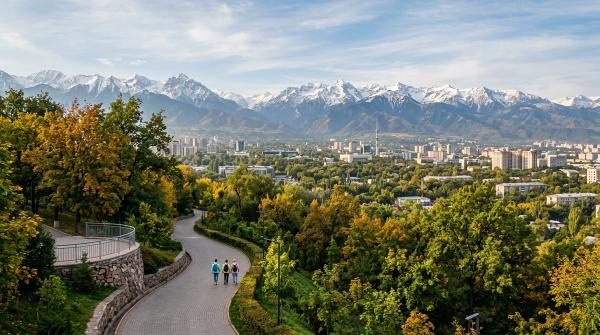
Almaty itself helps. It’s not a tiny remote town where you’re stuck with one cafe and a packet of chips. It’s Kazakhstan’s biggest city, set under these insane snow-topped mountains, with leafy streets, malls, coffee shops, supermarkets, Georgian restaurants, Indian places, Korean food, Uzbek cafes, and the very dangerous habit of serving hot tea everywhere. I stayed near Panfilov Park for a few days, then moved closer to Dostyk Avenue, and honestly both areas were workable for food. The trick is not to wander around starving and then panic-order fries. I’ve done that. Not my proudest moment.
Before food, sort your maps and taxi apps or you’ll get hangry in Cyrillic
#This sounds boring but listen, it matters. Almaty is easy-ish to move around, but when you are hungry and trying to explain “no meat, no broth, no fish also please” through hand gestures, your patience becomes very small. I set up mobile data, saved a few vegetarian-friendly places on maps, and used taxi apps when a cafe was a bit far. If you’re still figuring that part, this Almaty eSIM & Taxi App Setup for Indian Travelers is genuinely useful before you start chasing khachapuri and dal across town.
Also, Almaty is spread out in a sneaky way. On the map something looks close, but then there is a wide road, a cold wind, a confusing underpass, and suddenly your “quick lunch walk” becomes a small pilgrimage. I loved walking there, especially around Abay Avenue and the older streets with those Soviet apartment blocks and poplar trees, but food planning saved me multiple times. I would mark one proper lunch option, one backup cafe, and one supermarket nearby. Sounds over-planned? Maybe. But if you are vegetarian in a meat-heavy country, backup plans are not drama, they are survival.
Kazakh food is beautiful, but vegetarians need to ask what’s hiding inside
#I don’t want to write one of those annoying guides that says “just eat local” without telling you the truth. Traditional Kazakh cuisine grew around nomadic life, cold weather, livestock, fermented dairy, and meat preservation. That history is fascinating, and when you sit in a Kazakh restaurant and smell the broth and fresh bread, you can feel how deep the food culture is. But for Indian vegetarians, especially pure veg or Jain travellers, it gets complicated. A dish that looks like noodles may be cooked in meat stock. Rice may have lamb fat. Soup may have tiny pieces of meat hiding like they are playing hide and seek. Even salads can come with sausage, fish, or mayonnaise with egg.
The local bread was my safe happy place. Lepeshka, that round Central Asian bread, became my emotional support carbohydrate. I ate it with cheese, jam, salads, dips, and sometimes just plain when I was too tired to make decisions. Baursak, the fried dough pieces, are also common, but ask about ingredients if you avoid eggs or dairy. Dairy is everywhere: sour cream, kefir, tvorog, cheese, butter. If you’re lacto-vegetarian, you’ll manage much easier. If you’re vegan, you can still do it, but you’ll need more supermarkets, Georgian bean dishes, and very careful ordering.
The Russian phrases that saved my lunch more than once
#Most younger people in cafes understand some English, but not always enough for dietary restrictions. Russian is widely used in Almaty, and even a few phrases make people take you more seriously. I kept them in my phone notes, because my pronunciation was honestly tragic.
| What you want to say | Useful phrase | My messy note |
|---|---|---|
| I am vegetarian | Ya vegetarianets or Ya vegetarianka | Use vegetarianets if male, vegetarianka if female |
| No meat | Bez myasa | Say this first, loudly but politely |
| No chicken | Bez kuritsy | Some people don’t count chicken as meat, same as everywhere |
| No fish | Bez ryby | Important for soups and salads |
| No meat broth | Bez myasnogo bulona | This one is gold |
| No egg | Bez yayts | For eggless Indians and Jain travellers |
| Only vegetables | Tolko ovoshchi | Not perfect, but helpful |
| Do you have vegetarian food? | U vas yest vegetarianskaya yeda? | I butchered it, still worked |
One funny thing happened at a small cafe near the Green Bazaar. I said “bez myasa” with full confidence, and the lady nodded, smiled, and offered me chicken. Not because she was being rude, just because in many places “meat” casually means red meat. So now I say the whole boring list: no beef, no lamb, no chicken, no fish, no broth. The waiter once laughed and said, “Just bread?” Fair enough, uncle. Fair enough.
Green Bazaar: my favourite food stop, even when I wasn’t buying much
#Green Bazaar, or Zelyony Bazaar, is one of those places where you go for food and accidentally spend two hours staring at everything. It’s near Panfilov Park and the Ascension Cathedral area, so it fits nicely into a first-day walk. The market has fruits, nuts, dried fruits, pickles, spices, honey, cheese, bread, Korean salads, and many meat sections too, which I walked past quickly because, well, no thanks. But the vegetarian-friendly parts are lovely. Kazakhstan has this strong fruit culture, and Almaty is famously linked with apples, even the name is often associated with apple abundance. I bought apples there because obviously I had to, and they were crisp, slightly tart, not the polished supermarket type. Real apples. The kind that make you remember fruit has a personality.
For Indian travellers, the bazaar is not just sightseeing, it’s a snack strategy. I picked up walnuts, dried apricots, raisins, fresh bread, cucumber, tomatoes, and some local cheese. If you have an apartment stay, even better. Make a lazy dinner with bread, cheese, fruit, and tea, and suddenly you don’t care that the restaurant menu outside is full of lamb. There are also Korean-style salads, like carrot salad, beetroot, cabbage, but please ask about fish sauce or meat additives if you are strict. I’m vegetarian but not Jain, and still I asked. Sometimes they looked confused, but they answered.
My Green Bazaar mini meal that felt weirdly perfect
#I sat outside after wandering through the stalls, eating warm bread with salty cheese and dried apricots from a paper bag. It wasn’t a restaurant meal. No plating, no fancy anything. But the air was cold, the mountains were visible in pieces between buildings, and some older men were arguing near a tea stall with full dramatic energy. That snack tasted better than many proper lunches I’ve had. Travel does that, na? It makes simple food feel like a scene from your own little movie.
Where I actually ate vegetarian meals in Almaty
#Restaurant names and timings change, so don’t treat any place as a forever guarantee. Before going, I checked recent map listings, menus, and traveller reviews, then called or messaged when I could. That said, Almaty has a few reliable patterns for Indian vegetarians. Indian restaurants are the easiest emotional comfort. Georgian restaurants are surprisingly useful because they have cheese bread, beans, eggplant, walnut sauces, mushroom dishes, and salads. International cafes can do pasta, avocado toast, soups, and bowls. Supermarkets fill the gaps. And yes, sometimes you will eat pizza. It’s allowed. We are travellers, not saints.
Indian food in Almaty, aka when your soul needs dal
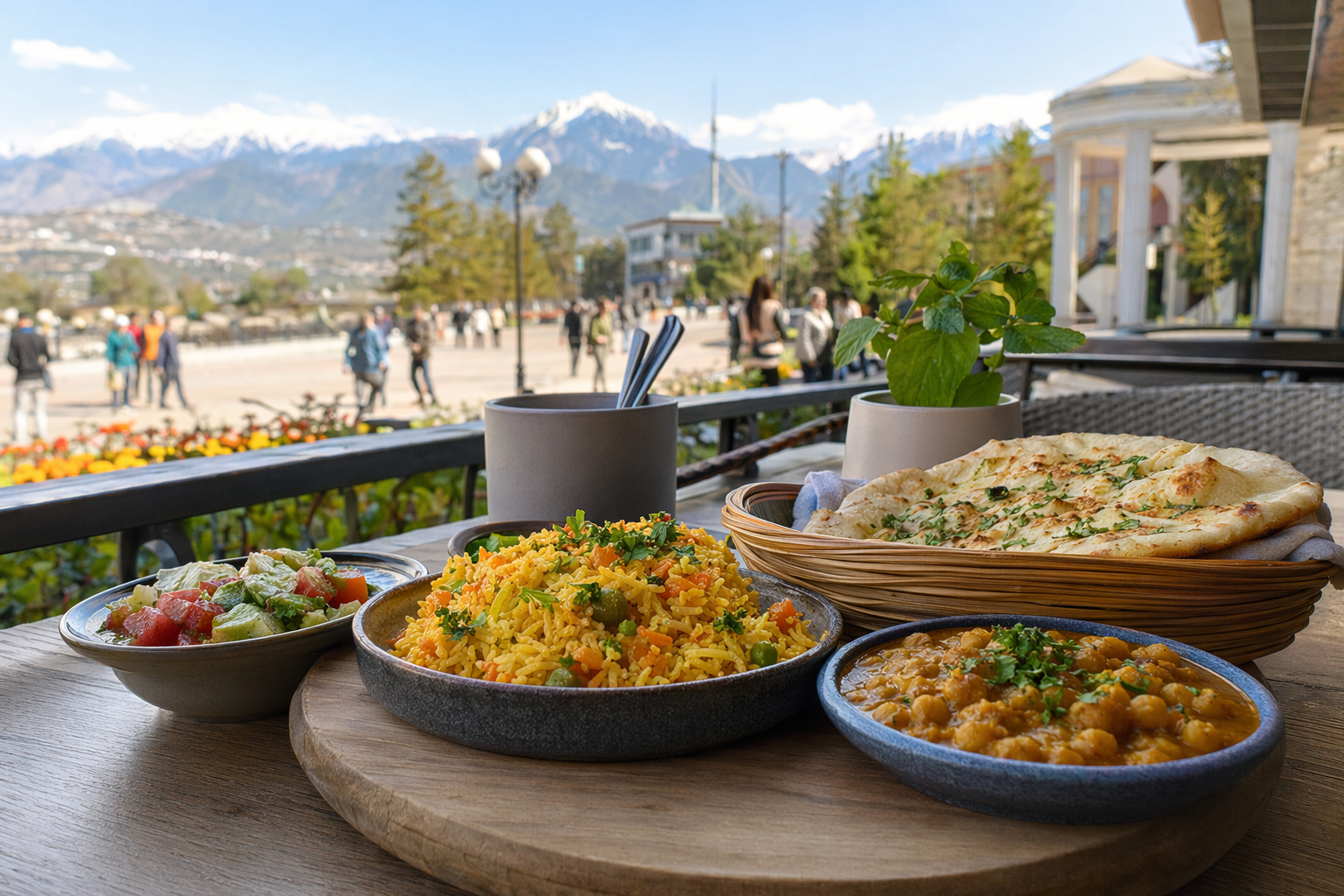
#After two days of bread, cheese, and cautious ordering, I needed something that tasted like home. Indian restaurants in Almaty usually understand vegetarian much better than general restaurants, though still confirm if ghee, egg, or stock matters to you. I had a simple dal, rice, and roti meal one evening and nearly became emotional. It wasn’t the best dal of my life. Let’s not lie. But after a cold walk near the cathedral and too much black tea, it felt like someone had put a shawl around my stomach. Many Indian places in Central Asia serve North Indian restaurant classics: paneer, dal makhani, chana masala, aloo gobi, biryani, naan. Ask about egg in naan if needed. Ask about shared cooking if you are strict Jain or pure veg.
I also met two Indian students at an Indian restaurant, and they gave me the most practical advice: don’t waste money ordering “spicy” and expecting India-level spicy. Carry your own chilli flakes or pickle. They were right. Kazakh spice tolerance, in general, is not like Hyderabad or Delhi. Food can be flavourful, but not always hot. My mom’s thecha finally got used with plain rice in my room, and I felt slightly guilty for laughing at her while packing it.
Georgian restaurants became my vegetarian cheat code
#If you eat dairy, Georgian food in Almaty is a gift. I’m not exaggerating. Khachapuri, that cheese-filled bread situation, is heavy but wonderful. There are different types, and some versions include egg on top, so ask if you avoid egg. Lobio, a bean stew or bean dish, can be vegetarian and filling. Ajapsandali, a vegetable stew with eggplant, peppers, tomatoes, and herbs, was one of my favourite meals in the city. Badrijani, eggplant rolls with walnut paste, are rich and slightly addictive. Mushroom khinkali may be available in some places, but always check whether the dough or broth has anything non-veg.
One rainy afternoon I ducked into a Georgian place after visiting the Central State Museum side of town. I ordered lobio, bread, and a salad. Very basic. But the beans were smoky, warm, and comforting in that dal-adjacent way Indians understand immediately. Not dal, but like a distant cousin who studied abroad. The staff were patient with my vegetarian questions, which I appreciated because I was asking like an anxious aunty at a wedding buffet.
Vegetarian-friendly local-ish dishes and what to watch out for
#- Lagman can look vegetarian because it has noodles and vegetables, but it often comes with beef or lamb, and the sauce may be meat-based. Ask clearly for no meat and no broth. Some places will not be able to make it fully veg, don’t fight them.
- Plov is usually meat-based, even if you can’t see big pieces. The rice may be cooked in animal fat or meat stock. I avoided it unless a place specifically said vegetarian plov.
- Manti are dumplings and mostly meat-filled. Pumpkin manti exists in parts of Central Asia, and I saw it on some menus, but confirm ingredients. Also check if served with meat sauce, because surprises happen.
- Samsa is usually meat, but potato or pumpkin versions sometimes appear in bakeries. I found one potato samsa that was decent, flaky and warm, but I still asked twice because the trays were all mixed together.
- Salads can be safe, but Olivier-style salads may contain sausage, fish, or egg mayo. Korean carrot salad can be good, though strict vegetarians should ask about fish sauce or meat flavouring.
The main thing is this: don’t assume vegetable equals vegetarian. In India we use “veg” like a whole category with rules. In Almaty, and honestly in many countries, vegetables can be a side dish next to meat, cooked in meat fat, or served with broth. Nobody is trying to ruin your trip. It’s just a different food language. Once I accepted that, I became calmer.
Supermarkets are not boring, they are your quiet best friend
#I love foreign supermarkets. I know that sounds like peak uncle behaviour, but give me a supermarket in a new country and I’m entertained for an hour. In Almaty, chains like Magnum and Small are useful for travellers, and bigger stores often have bread, fruit, yogurt, cheese, instant noodles, grains, biscuits, nuts, chocolate, juices, and sometimes hummus or ready salads. Galmart and mall supermarkets can be pricier but nicer for imported things. I bought buckwheat, bananas, kefir, cheese, tomatoes, and a suspiciously good chocolate bar that I still think about. If you’re vegan, look for plant milk in bigger supermarkets, but don’t expect every small shop to have it.
For Indian vegetarians staying more than three or four days, I strongly recommend an apartment with a tiny kitchen. Not because you should cook every meal, that’s not a holiday, but because breakfast becomes easy. Tea, toast, fruit, yogurt if you eat dairy, maybe instant upma from India if you are that person. I am that person, apparently. A kitchen also helps Jain travellers, families with kids, and anyone who gets tired of explaining dietary rules every single meal. After a day trip to Medeu or Shymbulak, cooking simple noodles in your room can feel like luxury.
Pack these from India, thank me later
#- A small masala or pickle sachet. Not a huge jar, please, unless you enjoy oil leaking into your socks.
- Ready poha, upma, thepla, khakhra, or roasted chana for emergency meals. Especially if you land late.
- A printed or phone note dietary card in Russian. Very helpful for parents or anyone who gets nervous ordering.
- Tea bags if you are fussy about chai. Almaty has tea everywhere, but masala chai is not the default Indian style.
Coffee shops, breakfast, and the very serious matter of cake
#Almaty has a proper cafe culture. Like, people sit with laptops, dates happen, friends gossip, cakes sit in glass counters looking dramatic. For vegetarians, cafes are useful for breakfast and light meals. You’ll find porridge, pancakes, croissants, omelettes if you eat egg, toast, salads, pasta, fries, desserts, and coffee. If you’re eggless, desserts become a question mark, so ask. Some cakes may have gelatin too. I am not usually a dessert-for-lunch person, but one afternoon near Dostyk Plaza I had coffee and a honey cake slice because the weather was gloomy and I had walked too much. Was it nutritionally responsible? Absolutely not. Was I happy? Fully.
One thing Indian travellers may notice: service can feel slower or more reserved than back home. Not rude, just different. People don’t always hover around your table. I liked it actually. You sit, sip tea, stare out at the mountains, and nobody is rushing you to leave. In winter or early spring, these cafes become warm little caves. In summer, outdoor seating is lovely, with trees and big pavements and that Almaty light that makes everything look softer than it is.
A food day I’d recommend for first-time Indian vegetarians
#Start near Panfilov Park. Visit the Ascension Cathedral, walk slowly because the park is pretty, then head to Green Bazaar before lunch. Buy fruit, nuts, maybe bread. Don’t fill up completely though. For lunch, choose either a Georgian restaurant or an Indian place depending on your mood. If you want local-ish travel flavour, go Georgian and order lobio, ajapsandali, khachapuri without egg if needed, and salad. Then take a taxi or metro towards Kok Tobe cable car area later in the day. The views are touristy but honestly gorgeous, especially when the city starts glowing and the mountains sit there like they know they’re beautiful.
Dinner can be comfort food. Dal and rice, pasta, pizza, whatever keeps you sane. I don’t believe every meal while travelling has to be “authentic”. Sometimes authenticity is you being a tired Indian vegetarian who wants hot rice and no surprises. If you’re also planning other food-safe city trips, I found myself comparing Almaty with Southeast Asian cities, and this Kuala Lumpur Vegetarian Food Guide for Indian Travelers makes a nice contrast because KL is easier for Indian veg food, but Almaty feels more adventurous in a different way.
Day trips, mountains, and what to eat when restaurants disappear
#The mountains are the reason Almaty gets under your skin. Medeu, Shymbulak, Big Almaty Lake area when accessible, nearby trails, even just the foothills... you look up and suddenly the city feels like it’s leaning against a giant postcard. But mountain food options can be limited and more meat-heavy, so pack snacks. I carried nuts, fruit, bread, cheese, and one emergency khakhra packet that broke into dust but still did its job. At Shymbulak, cafes may have vegetarian-ish things like fries, salads, bakery items, coffee, maybe pizza, but don’t depend on it if you have strict rules.
Cold weather also changes hunger. I don’t know the science, but after walking in mountain air I become a bottomless pit. One day after Medeu, I returned to the city and ate mushroom pasta, bread, and half a supermarket chocolate bar. No regrets. Keep water too, because tea and coffee trick you into thinking you’re hydrated when you’re not. And if you are travelling with older parents, please don’t assume they’ll manage on random snacks. Plan proper meals. Indian parents can be brave for exactly four hours, then thepla diplomacy starts.
Jain, vegan, and strict pure veg travellers: a little extra honesty
#If you are Jain, Almaty is doable but not effortless. Onion and garlic are common, and many kitchens may not fully understand why “no onion, no garlic” matters if the dish is already vegetarian. Indian restaurants are your best bet, but message in advance and be specific. Carry ready-to-eat food from India for at least a few meals. For pure veg travellers who worry about shared utensils, you’ll need to choose carefully, because most non-Indian restaurants also handle meat. I don’t want to scare you, just be real.
Vegan travellers will probably rely on Georgian bean dishes, salads, vegetable stews, bread, supermarket food, and modern cafes. Watch dairy, butter, sour cream, cheese, and egg. Kazakhstan uses dairy generously. Even a vegetable soup might get sour cream on top. Say no dairy clearly. Some newer cafes in Almaty are more familiar with vegan requests, especially in central neighbourhoods, but always check recent menus. I found staff generally kind, though sometimes confused. Smiling helps. Google Translate helps more.
If Almaty is part of a bigger Central Asia trip
#A lot of Indian travellers use Almaty as the start of a Central Asia route, then go towards Uzbekistan for Tashkent, Samarkand, Bukhara, all that Silk Road magic. Food-wise, Uzbekistan has its own vegetarian challenges because plov, samsa, lagman, and shashlik are also very meat-focused, but big cities have options if you plan. If you’re deciding how to continue after Almaty, this Almaty to Tashkent: Train or Flight? A Practical Guide for Indian Travelers fits naturally into the same planning rabbit hole I fell into at midnight.
My personal suggestion? Don’t treat food as a side issue in Central Asia. It shapes your route. Book stays near supermarkets or vegetarian-friendly neighbourhoods, don’t arrive late at night without snacks, and don’t be shy about repeating your dietary restrictions. I used to feel embarrassed asking too many questions, but then I realised it’s better than eating something by mistake and feeling awful later. Also, local people often want to help. They may not fully understand Indian vegetarian rules, but many will try if you explain calmly.
What I’m still craving from Almaty
#Weirdly, the thing I miss most is not one fancy dish. It’s the combination: hot tea, round bread, salty cheese, apples from the bazaar, and cold air on my face. I miss the Georgian lobio too, and that one simple dal dinner that tasted better because I had earned it after a day of walking. Almaty is not the easiest vegetarian destination for Indian travellers, but that made the good meals feel more satisfying. You don’t just consume food there, you negotiate with it, search for it, celebrate it when it arrives correctly. There’s a small thrill in that.
My honest Almaty vegetarian rule: don’t expect India-level convenience, but don’t assume you’ll starve. The city rewards travellers who are curious, patient, and carrying at least one emergency snack.
So yes, go to Almaty. Go for the mountains, the bazaars, the wide avenues, the cafes, the Soviet-meets-modern city mood, and the strange joy of finding vegetarian food where people told you it would be impossible. Take your spice sachets, learn your “bez myasa”, save restaurants before leaving the hotel, and leave room for surprise. Some meals will be average, some will be confusing, and some will stay in your head long after you’re home. That’s food travel, no? A bit messy, a bit delicious, and never as simple as the guidebooks make it sound. For more such food-travel rambles and practical trip ideas, I keep finding nice reads on AllBlogs.in.