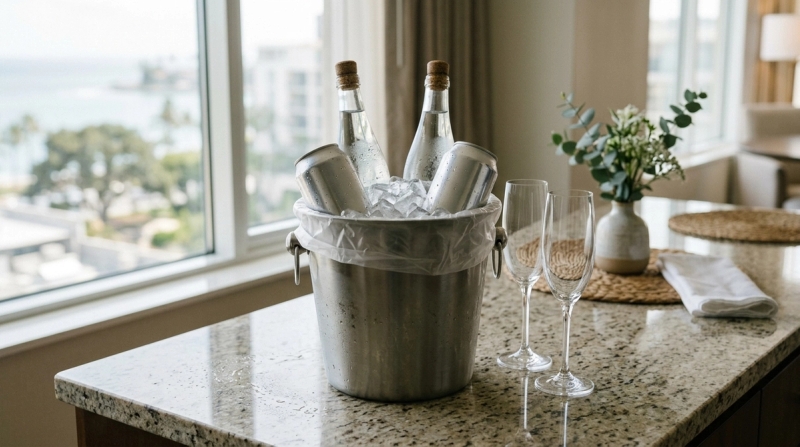
There’s something very satisfying about getting to your hotel room after a long day and finally making yourself a cold drink.
You drop your bags. Kick off your shoes. Spot the ice bucket on the counter.
Perfect.
But then there’s that tiny pause: Is this thing actually clean?
Fair question.
The short answer is: yes, you can use a hotel ice bucket — but it depends on what you’re using it for. If the ice is going into your drink, be more careful. If you’re just chilling sealed cans or bottles, you have more room to relax. And if the bucket smells strange, feels sticky, looks dirty, or gives you that “nope” feeling, trust it and skip the bucket.
This isn’t about being paranoid in hotel rooms. It’s just basic hotel ice bucket food safety: use a clean liner when the ice will touch your drink, use common sense with sealed beverages, and don’t treat the bucket like a mini-fridge.
Quick Answer Summary
#Can you use a hotel ice bucket? Yes, but use it the right way.
- If the ice is going into your drink: Use a clean, unused hotel ice bucket liner. Don’t put drink ice directly into an unlined hotel ice bucket.
- If you’re chilling sealed drinks: An unlined bucket can be okay for unopened cans or bottles, as long as the bucket looks clean. Wipe or rinse the can rim or bottle mouth before drinking.
- If the bucket looks or smells off: Skip it. Sticky, slimy, dusty, sour-smelling, or visibly dirty buckets are not worth it.
- If you’re storing leftovers: Don’t use the ice bucket as a refrigerator. Use a real fridge or toss perishable food if it has been sitting out too long.
- If tap water may not be safe: Be careful with ice too. In many travel situations, ice should be treated like water. If you wouldn’t drink the tap water, don’t assume the ice is safe.
Why Hotel Ice Buckets Deserve a Second Look
#A hotel ice bucket looks harmless. It’s usually sitting there with the cups, maybe with a plastic liner tucked inside, looking like part of the normal room setup.
And sometimes it’s perfectly fine.
The issue is that you don’t really know how it was cleaned before you arrived.
Sheets and towels usually follow a pretty standard housekeeping routine. Ice buckets can be less predictable. In a busy hotel, motel, hostel, vacation rental, or airport hotel, that bucket may have been properly washed and sanitized. Or it may have been quickly wiped out and put back on the tray.
From your side of the room, there’s no easy way to tell.
Then there’s the previous guest problem. People do not always use hotel ice buckets for ice. They may use them for trash, soaking clothes, holding random items, or worse. That doesn’t mean every ice bucket is disgusting, but it is a good reason not to let ice you plan to drink touch the inside of the bucket.
Moisture can also be a problem. A bucket that stays damp or isn’t cleaned well can develop residue, musty smells, or a slick film. If you notice any of that, you already have your answer: don’t use it.
Use a Liner vs. Skip It: A Simple Checklist
#If you’re standing in your room wondering, can you use a hotel ice bucket, here’s the easiest way to decide.
Use the bucket with a liner if:
#- You plan to put the ice into water, soda, juice, cocktails, or any other drink.
- You want to chill sealed drinks or packaged snacks.
- The liner is clean, dry, intact, and clearly unused.
- The bucket looks reasonably clean and does not smell bad.
A hotel ice bucket liner gives you a barrier between the ice and the bucket. That matters most when the ice is going into something you’ll drink.
If the liner is already open, wet, torn, crumpled, or questionable, ask the front desk for a fresh one. It’s a normal request.
Use the bucket without a liner only if:
#- You are chilling sealed cans or bottles.
- The drinks are unopened and tightly sealed.
- You are not using the melted ice water for anything.
- You wipe or rinse the part of the container your mouth will touch.
An unlined ice bucket for drinks is different from an unlined bucket for ice you’re going to consume. Sealed containers give you some protection, but the outside of the can or bottle may still sit in water that touched the bucket.
Before you drink from it, clean the rim of the can or the neck of the bottle.
Skip the bucket entirely if:
#- There is no liner and you need ice for drinks.
- The front desk can’t provide a clean liner.
- The bucket smells sour, musty, or just weird.
- It feels sticky, greasy, slimy, or gritty.
- You see dust, residue, stains, or visible grime.
- The lid, tray, or tongs look dirty.
- The ice machine looks neglected.
- The ice machine chute has grime, discoloration, residue, or mold-like buildup.
- You’re in a place where drinking water safety is uncertain.
When in doubt, skip it. A warm drink is annoying. Getting sick while traveling is much worse.
Ice Is Food: Basic Hotel Ice Safety
#Ice doesn’t always feel like food, but if it goes into your drink, you’re consuming it. So it deserves the same basic care as anything else going into your glass.
Here are a few simple hotel ice safety habits that make a difference.
Wash your hands first
#Before handling ice, cups, tongs, bottle tops, or snacks, wash your hands with soap and water.
Travel days are full of shared surfaces: airport bins, gas pumps, elevator buttons, rideshare doors, luggage handles, check-in counters. It adds up.
If you can’t wash your hands, use hand sanitizer and avoid touching the ice directly.
Don’t touch ice with bare hands
#Use the scoop, tongs, dispenser, or a clean bag. Your hands may be clean enough for your own comfort, but ice for drinks should be handled more carefully.
Don’t scoop ice with a drinking glass
#This is one of those things people do without thinking, but it’s not a great idea.
First, the outside of the glass may not be clean. Second, glass can chip or break if you push it into a bin of ice. Broken glass in an ice machine or ice bin is a serious problem because the shards can be hard to see.
Use the machine’s scoop if there is one, or dispense the ice directly into a clean liner or clean bag.
Take a quick look at the ice machine
#You don’t have to inspect it like a health department employee. Just pause for five seconds and look at it.
Check:
- The dispensing chute
- The drip tray
- The door or flap
- The floor and wall around the machine
- Any scoop or shared handle
If you see slime, dirty standing water, mold-like spots, grime, or anything that looks neglected, don’t use that machine.
Hotel ice machine safety depends on regular cleaning, and as a guest, you usually can’t verify when that last happened. A quick visual check is the best you can do.
Be cautious with hotel room glasses
#Hotel glasses may be clean. Many are.
But you usually don’t know how they were washed or handled. Wrapped disposable cups are often the easier choice. If you brought your own bottle, tumbler, or travel cup, even better.
If you use room glassware, wash it first with hot water and soap if you can.
Be extra careful where drinking water safety is uncertain
#This is especially important when traveling internationally.
CDC travel guidance generally treats ice like water. So if you’re somewhere you would avoid drinking the tap water, don’t automatically trust the ice either.
That includes ice from the hotel ice machine, ice in your room, and ice served in drinks.
What Not to Store in a Hotel Ice Bucket
#A hotel ice bucket is not a refrigerator.
Even with a liner, it does not keep food at a steady, safe temperature. The ice melts. The temperature changes. Food containers shift around. Melted water gets everywhere.
So don’t use a hotel ice bucket for foods that actually need refrigeration.
Raw meat or seafood
#Do not put raw meat, fish, shellfish, or market purchases in a hotel ice bucket to “keep them cold for later.”
The temperature will be uneven, leaks can happen, and the whole situation can get messy fast.
Loose or unwrapped foods
#Don’t put loose fruit, cheese, bread, pastries, or snacks directly in the bucket.
If something isn’t sealed or wrapped, it shouldn’t touch the bucket, liner, or melted ice water.
Leftover takeout
#Takeout containers are not always leakproof. They can soften, tip, or let water in. More importantly, an ice bucket will not reliably keep leftovers cold enough to be safe.
That leftover sushi, pasta, curry, seafood, burger, or creamy dessert needs a real fridge — not a bucket of melting ice.
Baby food, milk, or medically necessary perishables
#If something truly needs refrigeration, don’t gamble with an ice bucket.
Ask whether the room has a real refrigerator. If not, ask the hotel for help. Many hotels can provide a fridge for medication, baby supplies, or medical needs, but it’s better to ask directly than improvise.
Anything you wouldn’t want sitting in questionable water
#Once the ice melts, that water has touched the bucket, the liner, and whatever else was in there.
Don’t let utensils, food packaging, baby bottle nipples, loose snacks, or anything edible sit in that water.
Safer Alternatives: Sealed Ice Bag, Sink, or Mini Cooler
#If the bucket feels questionable, or you just like having more control, there are better options.
1. The sealed ice bag method
#This is one of the easiest hotel-room workarounds.
Pack a few sealable plastic bags before your trip. Fill one with ice from the machine, seal it tightly, and use that bag to chill sealed drinks.
You can put the sealed ice bag:
- Inside the ice bucket
- In the sink
- In a small cooler
- Next to your cans or bottles
The big advantage is simple: the ice doesn’t touch the bucket, and the melted water stays inside the bag.
This is especially handy in motels, airport hotels, hostels, older properties, and vacation rentals where cleaning routines may vary.
2. The clean sink method
#If you only need to chill sealed drinks, the sink can work.
Wash the sink with hot water and soap, rinse it well, plug it, then add ice and sealed cans or bottles.
This is only for sealed drinks. Don’t use the sink for loose food, and don’t use that ice in your drink.
Before drinking, wipe or rinse the can rim or bottle mouth.
3. A small travel cooler
#For road trips or longer stays, a soft-sided mini cooler gives you more control than a random hotel bucket.
It’s useful for sealed drinks, packaged snacks, and short-term cooling. Just remember that a cooler is not magic. If you’re storing perishable food, it still needs to stay properly cold.
Melted ice and lukewarm water are not a safe long-term plan.
4. The mini-fridge, if it is actually cold
#A room fridge is usually the best option for leftovers and perishables, but check it first.
Some hotel mini-fridges are more like beverage coolers. They may feel cool but not truly cold enough for safe food storage.
If the fridge doesn’t feel cold, don’t trust it with risky leftovers.
Hotel Room Leftover Rules
#Good hotel room food safety isn’t just about ice buckets. Leftovers are where travelers often get a little too casual.
It’s easy to bring food back late, set it on the desk, think you’ll deal with it in a minute, and then accidentally fall asleep.
Unfortunately, perishable food doesn’t care how tired you are.
Use the two-hour rule
#Perishable food should not sit at room temperature for more than two hours.
That includes:
- Meat
- Seafood
- Poultry
- Cooked rice
- Pasta
- Eggs
- Dairy-based dishes
- Cut fruit
- Cooked vegetables
- Many restaurant leftovers
If there’s no working fridge and the food has been out too long, it’s safer to toss it than try to rescue it with hotel ice.
Refrigerate leftovers quickly
#If your room has a working mini-fridge, put leftovers in it as soon as possible.
Don’t leave takeout on the desk while you shower, unpack, answer messages, watch TV, and then forget about it.
Don’t use an ice bucket as overnight refrigeration
#A takeout container sitting on ice is not the same thing as refrigeration.
The food may not stay evenly cold. The container can end up sitting in melted water. And some foods spoil quickly if they’re held at the wrong temperature.
Be especially careful with:
- Sushi
- Seafood
- Meat dishes
- Dairy sauces
- Eggs
- Rice
- Cooked vegetables
- Creamy desserts
Keep packaging clean and closed
#If you do refrigerate leftovers, keep them covered.
Don’t place open food directly on hotel surfaces. Use the original container, a clean bag, or a sealed food container if you have one.
Reheat carefully if you can
#If your room has a microwave, reheat leftovers until they are hot all the way through.
If you can’t reheat them properly, be more cautious with foods that spoil easily.
A Calm Way to Think About Hotel Ice Bucket Food Safety
#You don’t need to be scared of hotel ice buckets.
You just need to be realistic about them.
A hotel ice bucket is usually fine for chilling sealed drinks if it looks clean and you clean the can or bottle before drinking. It becomes more questionable when the ice itself is going into your glass.
For drink ice, use a fresh liner, handle the ice cleanly, and take a quick look at the machine.
If anything feels off, choose another option.
Here’s the simplest rule:
If the ice will go into your drink, it should only touch clean, food-safe surfaces. If you can’t make that happen, skip the ice.