The short answer, from one Indian traveller to another
#If you are flying to Tokyo from India and you get a choice between Narita and Haneda, pick Haneda if the ticket price is not crazy higher. Simple. Haneda is closer to Tokyo city, less tiring after a long flight, and honestly it feels like the airport Tokyo should have for first-time visitors. You land, clear immigration, take the train or taxi, and within half an hour-ish you can be in Shinagawa, Ginza, Tokyo Station side, or at least properly inside the city vibe.
But Narita is not bad. Not at all. I actually have a soft corner for Narita because my first Japan trip landed there and I still remember sitting in the Narita Express with my suitcase, trying not to look too excited like a total tourist. Narita is bigger in that international-airport way, has good connectivity, and sometimes flight fares from India are cheaper or the timings are better. The problem is distance. After flying from Delhi, Mumbai, Bengaluru or wherever, plus immigration, plus baggage, that extra 60 to 90 minutes into Tokyo can feel like someone added one more domestic flight to your day.
So my honest verdict: Haneda is best for convenience, families, senior parents, short trips, business travel, and late-night arrivals. Narita is fine if you save decent money, your hotel is near Ueno or Asakusa, you enjoy train rides, or you are connecting through another Asian city and Narita has the better fare. For Indians planning Japan first time, especially with kids or parents, I’d say don’t be heroic. Choose the easier airport if budget allows.
Why this airport choice matters more than we think
#When we Indians plan Japan, we spend so much time checking visa documents, cherry blossom dates, JR Pass confusion, vegetarian food, forex cards, and whether 7 kg cabin luggage is enough. Airport choice looks like a small thing. But Tokyo is not like landing in Goa where you just take a cab and reach. Tokyo has two major airports serving international travellers, and they sit in very different places.
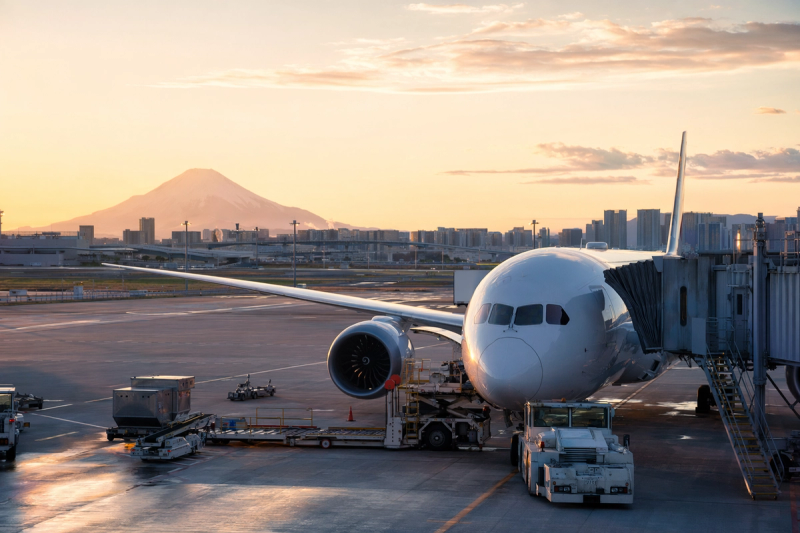
Haneda Airport is in Tokyo itself, down in the Ota area near Tokyo Bay. Narita Airport is in Chiba Prefecture, outside Tokyo, towards the east. Both are clean, safe, efficient, and very Japanese in that calm organised way where even the queue looks like it went to finishing school. But your body will know the difference. Trust me, after an overnight flight, your brain is half in Japan and half still in the Indigo snack cart mode.
For Indian travellers, this matters because many of our flights land at odd times, and we often travel with big luggage. One suitcase for clothes, one for snacks, and then someone has packed thepla, Maggi, Haldiram packets, medicines, a pressure cooker maybe if it is a student going. Tokyo trains are excellent, but hauling two suitcases through transfers at peak hour is not fun. It is manageable, yes, but not fun.
Haneda Airport: what it feels like after landing
#Haneda feels smooth. That is the word. It is not that Narita is chaotic, Japan airports are generally not chaotic, but Haneda has this city-airport energy. Immigration, baggage, customs, then you are quickly at the train signs. The English signage is good, and if you have Google Maps open, you’ll be fine even if you are a first-timer.
From Haneda, the two train options most Indian travellers will use are Keikyu Line and Tokyo Monorail. Keikyu is great if you are going towards Shinagawa, Asakusa, Ginza side through transfers, or connecting with JR lines. Tokyo Monorail goes to Hamamatsucho, and the ride itself is quite nice, with water and city views. It almost feels like a soft welcome to Japan. Travel time to central areas can be around 15 to 35 minutes depending on where you are going and how many transfers you do.
If you are carrying heavy luggage or arriving late, airport limousine buses are also useful. They go to major hotels and areas like Shinjuku, Tokyo Station side, Ikebukuro, Disney Resort area and more, depending on timing. Taxis are available too, but Japanese taxi prices can hurt Indian hearts. A taxi from Haneda to central Tokyo may cost roughly ¥7,000 to ¥12,000 or more based on exact location, traffic, tolls, and late-night charges. For a family of four with luggage, it may still make sense. For solo backpacker type, train hi le lo.
Best areas to stay if you land at Haneda
#If your flight lands at Haneda and you want an easy first night, Shinagawa is a solid choice. It has good train links, Shinkansen access, business hotels, and you won’t feel stranded. Hamamatsucho is also practical, especially if using the monorail. Ginza and Tokyo Station areas are nicer but pricier. Shinjuku is fun and busy, though getting there with luggage may involve transfers unless you take a bus or taxi.
Accommodation in Tokyo has become more expensive than the old blog posts make it sound. Budget hostels and capsules may start around ¥3,000 to ¥7,000 per person. Basic business hotels often fall around ¥8,000 to ¥18,000 for a small room, depending on season and location. Mid-range hotels can easily be ¥18,000 to ¥35,000 and up. During sakura season, autumn foliage time, and big holiday periods, rates jump. Rooms are compact, very compact actually, so don’t book a tiny semi-double if you and your spouse both have large suitcases and also want to breathe.
Narita Airport: not as convenient, but still very workable
#Narita is far, yes, but I don’t want to scare anyone. It is not some remote village airport. It is a major international airport with proper trains, buses, hotels, food, convenience stores, luggage services, and clear signs. I’ve landed at Narita tired and confused and still reached my hotel without drama. The only thing is, you need to plan your transfer before landing. Don’t stand there after customs and start researching, because then everyone in your group will ask you 14 questions and your roaming data will act smart.
The most popular train options from Narita are Narita Express, Keisei Skyliner, and cheaper Keisei or JR local options. Narita Express is comfortable, reserved-seat, and useful if you are going to Tokyo Station, Shibuya, Shinjuku or Yokohama. It usually takes around 60 minutes to Tokyo Station and longer to Shinjuku. Keisei Skyliner is faster for Ueno and Nippori, roughly 36 to 45 minutes depending on station and service, and from there you connect to JR or metro lines. If your hotel is in Ueno, Asakusa, Akihabara or even eastern Tokyo, Narita becomes less painful.
Buses are also good, especially if you don’t want to do train transfers with luggage. Some low-cost buses to Tokyo Station area can be quite reasonable, while limousine buses to hotels and major districts cost more but are easier. Taxi from Narita to Tokyo is where you should pause. It can easily go around ¥25,000 to ¥35,000 or more depending on destination, tolls and time. Unless company is paying, or you are four people splitting with lots of bags, I’d avoid it.
Where Narita actually wins
#Narita wins on flight options and sometimes price. Many international routes, especially connections via Southeast Asia, East Asia, or the Middle East, may land at Narita. If you are flying from India through Singapore, Bangkok, Kuala Lumpur, Seoul, Hong Kong, or other hubs, you might see Narita fares cheaper than Haneda. Sometimes by a little, sometimes enough to pay for two nights of hotel. Then Narita becomes attractive.
Narita also has a nice little bonus: Narita town. If you have a long layover or you are staying near the airport before an early flight, go to Naritasan Shinshoji Temple and the old street leading to it. It is peaceful, traditional, and not as overwhelming as Tokyo. I had unagi there once, though vegetarian friends may not be excited about that part, and the street had this old Japan charm that I honestly didn’t expect beside an airport.
Quick comparison for Indians choosing Tokyo airport
#| Factor | Haneda Airport | Narita Airport |
|---|---|---|
| Distance to Tokyo | Very close, often 15 to 35 minutes to many central areas | Farther, often 60 to 90 minutes depending on area |
| Best for | First-timers, families, business trips, short stays, late arrivals | Cheaper fares, Ueno or Asakusa stays, long layovers, some international connections |
| Train options | Keikyu Line, Tokyo Monorail, easy transfers | Narita Express, Keisei Skyliner, airport buses, local trains |
| Taxi cost feel | Expensive but sometimes manageable for families | Very expensive to central Tokyo, avoid unless needed |
| Late-night comfort | Better because city is closer | Needs more planning if trains are finished |
| Indian traveller vibe | Less stress after long flight | Good if budget saving is worth the extra travel |
Late-night arrivals: this is where Haneda really helps
#A lot of people only compare ticket price, but arrival time is just as important. If you land in the evening, both airports are fine. If you land late at night, Haneda is safer emotionally. I mean Japan is safe, but your patience is not always safe. Trains reduce late night, buses may be limited, and taxis become expensive. From Haneda, worst case you take a taxi to a nearby hotel or central area and recover. From Narita, late-night taxi to Tokyo can feel like a financial mistake you’ll remember during every meal after that.
If your flight lands late, book your first night smartly. Near Haneda, there are airport-connected and nearby hotels around Terminal 3, Haneda Airport Garden, and Ota area. Near Narita, there are airport hotels with shuttle buses, plus simple business hotels around Narita town. Prices can vary wildly, but airport hotels often sit somewhere around ¥10,000 to ¥30,000 depending on date, room type, and how early you book.
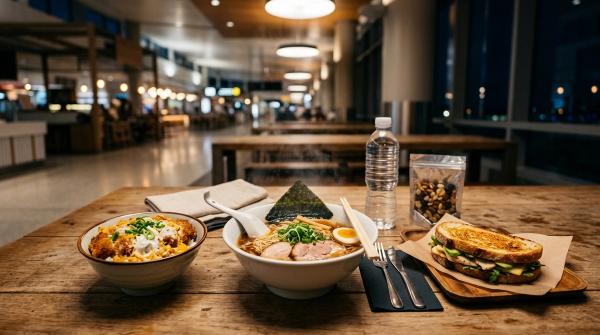
Food is another thing. After immigration, you may not want a full ramen dinner, but you’ll need something. Convenience stores are lifesavers, but check labels carefully if you are vegetarian or avoid pork, beef, alcohol-based sauces, or fish stock. If you are landing late and unsure what to eat, I’d keep this guide on Arrival-Night Meals After Long Flights handy, because first-night food can decide whether you sleep well or wake up at 3 am hungry and irritated.
Food at the airports and the Indian stomach situation
#Let’s be real, food anxiety is a thing for many Indian travellers in Japan. Not because Japan has bad food. Arre, Japanese food is beautiful. But if you are vegetarian, Jain, halal-conscious, or just someone whose stomach needs dal-chawal after two days, planning helps. At both Haneda and Narita, you’ll find restaurants, cafes, vending machines, convenience stores, and sometimes international food options. But late-night choices can become limited.
At convenience stores, egg sandwiches, rice balls, salads, yoghurt, bananas, bakery items, and bottled drinks are easy. But onigiri often contains fish, seaweed seasoning may have fish extract, soups may use dashi, and even snacks can surprise you. I usually carry a small emergency pouch from India: khakhra, trail mix, masala peanuts, ORS, and a couple of ready-to-eat things. Not a full ration shop, just enough for the first 24 hours. Japan has Indian restaurants in Tokyo, especially around Nishi-Kasai, Ueno, Ginza, Shinjuku, and many office areas, but the airport-to-hotel phase is where you need backup.
Also, airport vending machines are everywhere and they are not just for cold drinks. You’ll see hot coffee cans, tea, soups, sometimes ice cream, and random things that make you wonder who thought of this. During delays, they can be useful, but don’t assume every item is meal-worthy. This small read on Airport Vending Machine Meals: What to Buy or Skip is actually useful if you are the type who gets hungry exactly when restaurants close.
Season-wise airport advice: yes, it changes a bit
#Tokyo is amazing almost any time, but airport experience changes with season. March to April is sakura season, lovely but expensive and crowded. October to November is my personal favourite, cooler weather, autumn colours, easier walking. December to February is cold but manageable, and winter skies can be clear. June is rainy season-ish, July and August are hot and humid, like Mumbai humidity went to Japan and became more disciplined. Typhoon disruptions can happen in late summer and early autumn, so keep buffer if you have domestic connections or non-refundable plans.
During peak travel times like cherry blossom season, autumn foliage, year-end holidays, and Japan’s big domestic holiday periods, airport trains and hotels can fill faster. If landing at Narita during peak dates, I’d pre-book Narita Express or Skyliner once plans are fixed, or at least know the schedule. If landing at Haneda, still don’t be casual. Tokyo is efficient, but it is not empty. A delayed flight plus last train anxiety is not the cultural experience anyone needs.
Visa, immigration, safety and those practical Indian questions
#For Indian passport holders, Japan usually requires a visa before travel. The exact process, documents, and whether you apply through VFS, an embassy route, or an online option can change, so please check the official Japan visa instructions for your location before booking non-refundable flights. Generally, they look for itinerary, hotel bookings, income proof, bank statements, employment proof or business papers, and return tickets. Don’t submit fake bookings or jugaad documents. Japan is not the place to test that nonsense.
Immigration at both airports is usually polite and organised. Keep your passport, visa, arrival details, hotel address, and return ticket accessible. Customs may ask about food items, medicines, or goods. Carry prescriptions for important medicines, especially if you have strong painkillers, psychiatric medicines, or anything that may be controlled in Japan. Common Indian medicines are not automatically okay everywhere. Better to check rules in advance than explain your whole medical history at the counter while your family watches.
Safety-wise, Tokyo is one of the safest big cities I’ve visited. I’ve walked around stations late evening and felt more relaxed than in many places back home. Still, use basic sense. Keep passport safe, don’t leave bags unattended, watch your wallet in crowded tourist areas, and follow earthquake or typhoon instructions if alerts come. Japanese airports and trains are very good with announcements, including English in most tourist-heavy routes.
SIM, Suica, cash and luggage: tiny things that save your mood
#Before leaving the airport, sort out internet. eSIMs are convenient if your phone supports them. Physical SIM counters and Wi-Fi rentals are also available at both airports, though prices can be higher than pre-booked options. Free airport Wi-Fi works for basic things, but don’t depend on it for your full transfer. Google Maps, translation, train platforms, hotel address, all need data.
For transport, IC cards like Suica or Pasmo make life easy for trains, buses, convenience stores and vending machines. Availability of physical cards has had restrictions at times due to chip shortages, so check what tourist IC cards or mobile wallet options are available when you travel. If you use iPhone, mobile Suica can be super convenient. Some Indian cards work fine in Japan, some act moody, so carry a little yen cash. Japan is card-friendly now compared to earlier, but cash still helps at small places, temples, lockers, and local eateries.
Luggage forwarding is one of Japan’s best things. You can send big bags from airport to hotel or hotel to hotel using takkyubin services. If you are doing Tokyo plus Kyoto plus Osaka, this can save your back. At the airport, ask at luggage delivery counters. It costs money, but dragging a 23 kg suitcase through Shinjuku Station at rush hour will make you question your life choices.
If you are staying in Tokyo, match the airport to your neighbourhood
#This is the part many people miss. Don’t ask only Narita vs Haneda. Ask: where is my hotel? If you stay in Shinagawa, Ginza, Tokyo Station, Roppongi, Hamamatsucho, or Odaiba side, Haneda is clearly convenient. If you stay in Ueno, Asakusa, Akihabara, Nippori, or eastern Tokyo, Narita becomes more acceptable because Keisei routes are strong.
For first-time Indians, I usually suggest staying near a good station, not necessarily the most famous area. Ueno is practical and slightly cheaper than Shinjuku or Ginza, with food, parks, museums, and easy Narita access. Asakusa has old Tokyo charm and Senso-ji nearby. Shinjuku has nightlife and connections but can overwhelm first-timers. Ginza is polished and expensive. Shinagawa is less romantic but extremely useful for transport. Nishi-Kasai has a big Indian community and Indian food, but it is not the most central for sightseeing, so choose based on your comfort.
Culture shock moments at Tokyo airports
#The first thing that hit me was silence. Indian airports have energy. Announcements, families shouting across rows, someone opening foil-wrapped paratha, kids running, phone calls on speaker. Tokyo airports are calmer. People queue properly. Staff bow. Even baggage carts move like they have manners. It is lovely, but also you suddenly become aware of your own volume. Me and my friend were discussing train tickets and then realised we sounded like a full cricket commentary team.
Another thing: bins are not everywhere. Japan is clean, but public trash bins can be limited. Keep a small plastic bag for wrappers till you find a bin. Toilets are fantastic, clean and high-tech, but don’t press random buttons with confidence unless you know what they do. I learnt this with a surprise water jet situation. Humbling.
Staff at both airports are helpful, but English comfort varies. Speak slowly, show the address on your phone, and don’t be shy to ask. Japanese people may not always chat casually like Indians do, but they are often very sincere in helping. Also, don’t block escalators, don’t talk loudly in trains, and stand in the marked queue lines. Small things, big difference.
So which airport should Indians choose?
#Choose Haneda if this is your first Japan trip, if you are landing late, if you are travelling with parents or kids, if your Tokyo stay is short, or if the fare difference is small. Even if Haneda costs ₹5,000 to ₹8,000 more per person, I would calculate the saved time, lower taxi risk, and less stress. Sometimes convenience is worth real money, especially when you have only 6 or 7 days in Japan.
Choose Narita if the flight is much cheaper, if the timing is better, if you are staying near Ueno or Asakusa, or if you don’t mind a longer airport transfer. Also choose Narita if you want to spend your first or last night near the airport and explore Narita town quietly. It is not a bad choice. It is just not the easiest Tokyo arrival.
My personal ranking is: Haneda for arrival, Narita is okay for departure. Departure from Narita feels less annoying because you are mentally ready to travel, and you can leave early. Arrival at Narita after a long flight feels heavier because all you want is shower, food, and bed. Btw if you reach your hotel late and plan to order food, please use some common sense with delivery apps, addresses, and hotel rules. This guide on Food Delivery Safety While Traveling Abroad explains the stuff we usually learn after one awkward lobby incident.
My final take, no drama
#Narita vs Haneda is not a competition where one is useless and the other is perfect. Both work. Japan has made both airports efficient enough that you won’t suffer if you plan properly. But for Indian travellers, especially those doing Japan for the first time, Haneda is simply easier. It reduces the number of moving parts on day one, and that matters when you are jet-lagged, hungry, carrying luggage, and trying to understand why Tokyo has so many train lines.
If your budget says Narita, don’t feel bad. Book a sensible hotel location, choose Skyliner or Narita Express based on your area, keep snacks, get data before you leave the terminal, and avoid late-night taxi surprises. If your budget allows Haneda, take it and enjoy a softer landing into Tokyo. Either way, once you are out of the airport and that first clean Tokyo train arrives exactly on time, you’ll understand why so many of us come back from Japan slightly obsessed.
And haan, don’t overplan every minute. Leave some space for vending machine coffee, random station bakeries, a quiet temple lane, or just standing outside your hotel in the cold thinking, “boss, I’m actually in Japan.” For more travel notes like this, I keep finding helpful reads on AllBlogs.in, so you can browse there too while planning your Tokyo trip.