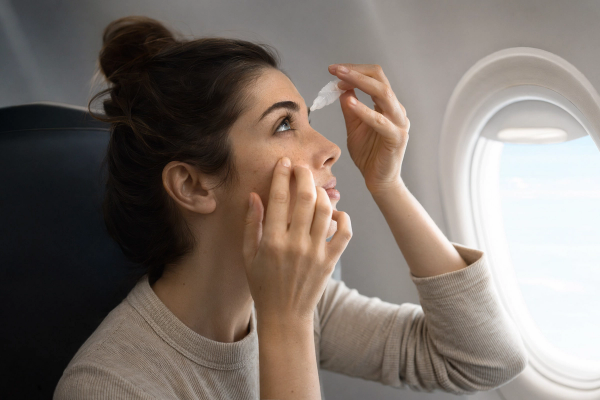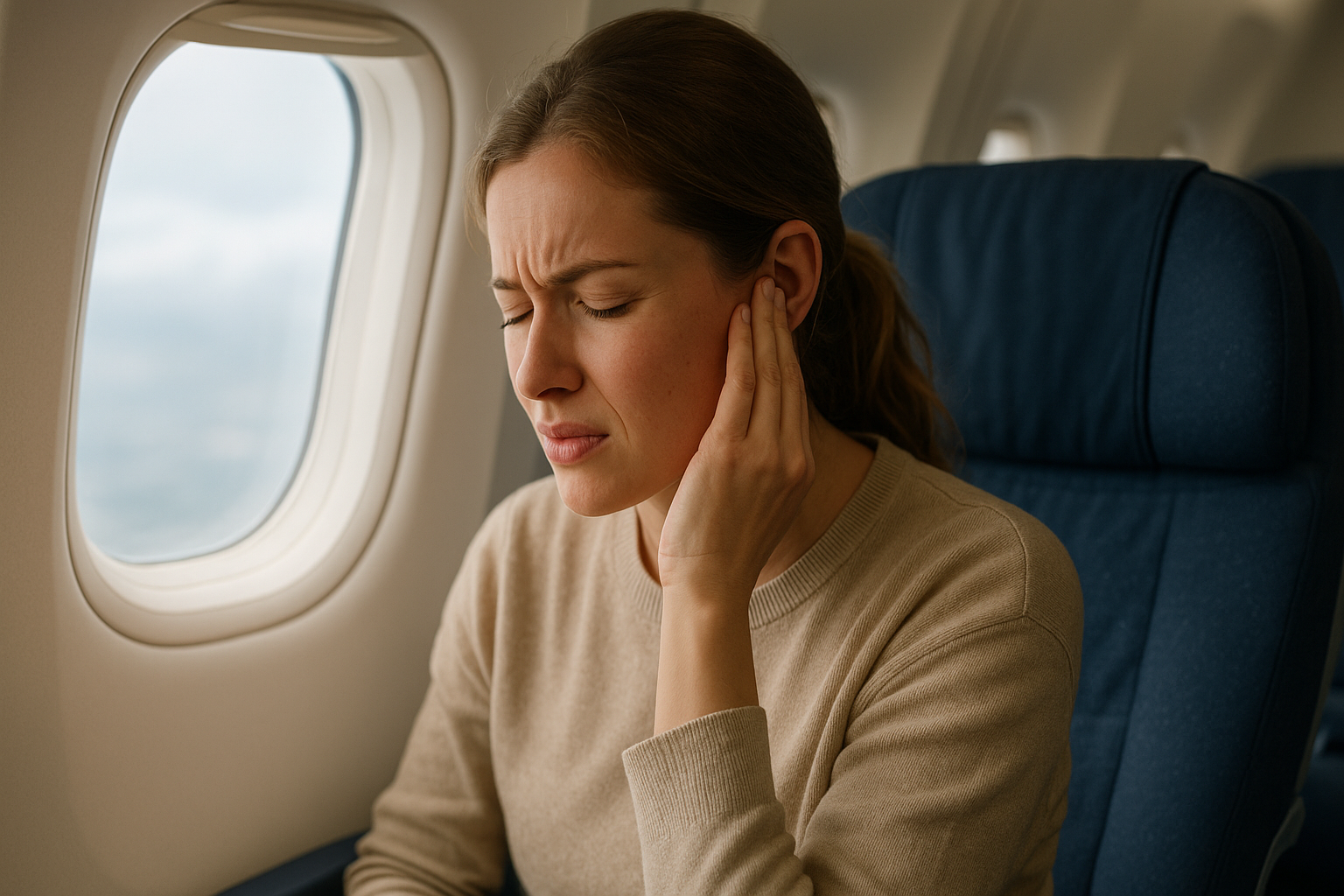
I used to think people were being a little dramatic about airplane ear. Like, chew some gum and move on, right? Then I took a winter flight with a mildly stuffy nose and wow... I got humbled fast. On descent it felt like somebody was pushing knitting needles through my ears. My hearing went muffled for hours after landing, and I remember standing in the airport bathroom swallowing over and over like an idiot, hoping it would pop. So yeah, if you get ear pain on flights, I really do get it. This post is basically the stuff I've learned from doctors' advice, public health guidance, and a lot of trial and error on my own body.
Quick thing first though: ear pain on planes usually happens because of rapid pressure changes, especially during takeoff and, even more, during landing. Your middle ear has to equalize pressure through the eustachian tube, which is this tiny passage connecting the middle ear to the back of the nose and throat. If that tube is swollen, blocked, or just slow to open, pressure gets trapped. That's when you get fullness, popping, pain, reduced hearing, and in more intense cases dizziness or a lot of discomfort. Kids get it a lot. Adults too, especially if they've got allergies, a cold, sinus congestion, reflux irritation, or just unlucky anatomy.
The biggest thing I wish I'd known: prevention starts before you even leave for the airport
#For me, the game changer was realizing you can't wait until your ears already hurt. Once that pressure-pain spiral gets going, it's way harder to fix. The best tricks happen before takeoff and before descent. If I'm flying now, I sort of do a mini routine. Nothing fancy, not some influencer wellness morning stack or whatever. Just practical stuff that helps my nose and eustachian tubes stay open.
- If I'm sick with a bad cold, sinus infection, or ear infection, I seriously reconsider flying if I can
- I hydrate the day before and the day of travel because dry cabin air makes everything feel more irritated
- I keep my allergies under control in the days leading up to the flight, not just at the gate
- I pack gum, water, and if my doctor said it's okay for me, the right nasal spray or decongestant
That first point matters more than people want it to. Most medical guidance still says flying with an active upper respiratory infection or significant congestion raises the risk of airplane ear quite a bit. I know, sometimes you have to travel anyway. Life doesn't exactly pause because your sinuses are a mess. But if you do have a choice, rescheduling can save you a ton of pain.
What actually works during the flight, at least in my experiance
#The simple old-school stuff works because it's based on anatomy, not hype. Swallowing, yawning, and chewing help activate the muscles that open the eustachian tubes. I used to roll my eyes at that advice, and now I'm the annoying person on descent chewing gum like it's my job.
- Chew gum or suck on hard candy during takeoff and especially 30 to 45 minutes before landing. Descent is the rough part for me.
- Sip water often. Little swallows, repeatedly, help more than chugging one bottle all at once.
- Yawn on purpose. Fake yawns count, weirdly enough.
- Stay awake during descent if ear pain is an issue for you. If you're sleeping, you swallow less and may miss the gradual pressure changes.
That last one surprised me when I first heard it, but it makes total sense. Some ENT specialists have been saying this forever, and it still comes up in current patient guidance in 2026. If your ears are sensitive, don't be deeply asleep right when the plane starts dropping. Set an alarm if you need to. Me and my husband learned this the hard way on a red-eye and, no joke, I was more wrecked from my ears than from the lack of sleep.
The Valsalva trick... useful, but do it gently
#You've probably heard of the Valsalva maneuver even if you didn't know the name. You pinch your nose, close your mouth, and gently blow as if you're trying to blow your nose. Gently is the key word. Not like you're trying to inflate a truck tire. When I do it too hard, it just feels wrong. Done softly, it can help open the eustachian tubes and equalize pressure.
My personal rule: if I have to force it, I stop. Pressure equalization should feel like a small pop or release, not a violent head-explosion moment.
There are a few related techniques too, like swallowing while pinching your nose, or doing repeated jaw movements. Some people have better luck with one than another. The evidence isn't glamorous, but these pressure-equalizing maneuvers remain standard advice because, honestly, they often work. Just don't keep straining hard if nothing is happening. And don't do it aggressively if you've been told not to because of an ear condition, recent surgery, or infection.
Nasal sprays and decongestants: helpful for some people, not for everybody
#Okay, this is where wellness internet gets messy. There are useful meds for flight ear pain prevention, but they aren't magic and they aren't right for every single person. Current clinical advice still generally supports using a decongestant or a nasal decongestant spray before flying if congestion is the reason your ears won't equalize, assuming it's safe for you. Timing matters. A nasal decongestant spray is often used about 30 minutes before takeoff and again before descent if needed, while an oral decongestant is usually taken earlier because it takes longer to kick in.
But. Big but. These can be a bad idea for some folks, including people with certain heart conditions, uncontrolled high blood pressure, some rhythm issues, glaucoma, prostate enlargement, pregnancy considerations, medication interactions, and a few other things. So don't just copy what some random travel reel said. Ask your pharmacist or clinician. Also, decongestant nasal sprays can cause rebound congestion if you use them too many days in a row. That's not usually a problem for one travel day, but it's worth knowing. Intranasal steroid sprays, on the other hand, are more for regular allergy control and they work best when started consistently ahead of time, not as a last-minute gate-side fix.
EarPlanes and pressure-regulating earplugs: kinda dorky, kinda great
#I resisted these because I thought they were gimmicky. Then I tried pressure-regulating earplugs on a flight while recovering from seasonal allergies and, annoyingly, they helped. Not in a miracle way, more like they slowed the pressure change enough that my ears had a fighting chance to keep up. There are a few brands, and the basic idea is the same: a filter moderates pressure shifts entering the ear canal.
Research on them isn't huge or perfect, but travel medicine and ENT discussions still mention them as a low-risk option that may reduce symptoms for some passengers. That's pretty much my view too. They don't replace swallowing, yawning, or treating congestion. They're an extra tool. If you're prone to ear pain, especially on descent, I think they're worth tossing in your carry-on. They look a bit silly maybe, but so does me massaging my jaw and fake-yawning like a stressed python, so whatever.
If you fly with kids or babies, the timing thing is everything
#Parents already know air travel can be chaos, so I won't pretend this is easy. But babies and little kids are more likely to struggle because they can't always intentionally pop their ears. Pediatric advice is still pretty consistent in 2026: encourage swallowing during takeoff and landing. For babies that can mean breastfeeding, bottle-feeding, or a pacifier during those pressure-change windows. For older kids, drinks, chewy snacks if age-appropriate, or gum for children old enough to safely use it.
I remember sitting near a mom once who was trying every trick in the book while her toddler screamed on descent, and nobody around her was judging, at least I hope not. Airplane ear in kids is real. If your child has an ear infection, significant cold symptoms, or has had recent ear surgery, it's smart to check with their pediatrician before flying. Sometimes the answer is still fly, sometimes it's not, depends on the situation.
Allergies, inflammation, and the whole 2026 wellness angle
#One thing that's gotten more attention lately in wellness and mainstream medicine alike is chronic low-grade airway inflammation, especially from allergies and pollution exposure. Not in a trendy vague 'inflammation is everything' way, I mean specifically nasal and upper-airway inflammation that can affect eustachian tube function. If your airplane ear happens every single trip, there may be an underlying pattern there. Seasonal allergies, dust mite allergies, chronic rhinitis, reflux, even repeated viral infections can all keep the tissues around the tube irritated.
This is where the newer health trend actually overlaps with old boring medicine: consistency. People love biohacking gadgets in 2026, but the less sexy stuff still matters more. If you know pollen wrecks you every spring, using your prescribed allergy plan regularly before travel is smarter than panic-buying three 'immune support' shots at the airport. Saline nasal irrigation can help some people with nasal symptoms too, as long as it's done safely with sterile, distilled, or properly boiled then cooled water. I do this when my allergies are bad, and while it's not specifically a flight cure, it sometimes helps me start the trip less congested.
What not to do... because I've done some dumb stuff
#I have absolutely made mistakes here. I once flew while congested, forgot water, had two coffees, fell asleep before descent, and then wondered why my ears were furious. Another time I kept trying to force a hard pressure pop over and over, which just made everything more irritated. So, uh, learn from me maybe.
- Don't fly with severe congestion if you can avoid it
- Don't keep straining hard to pop your ears if it's painful or not working
- Don't overuse decongestant sprays for days and days
- Don't ignore severe pain, bleeding from the ear, vertigo, or hearing loss after landing
Most airplane ear clears pretty fast, sometimes within minutes, sometimes several hours. But if symptoms last more than a day or two, or they're intense, get checked. Rarely, pressure changes can contribute to barotrauma, middle ear fluid, or even a ruptured eardrum. That's not common, thankfully, but it happens. Ongoing muffled hearing, drainage, ringing, or major dizziness deserve actual medical attention, not just internet reassurance.
A few less-obvious tricks that made a difference for me
#These are smaller things, but together they help. I try to avoid getting super dehydrated and overly caffeinated before flights, because dry irritated tissues just seem to make everything worse for me. I also start my swallowing and yawning routine early, before I feel pain, not after. And if I know descent is usually my problem, I pay attention when the captain says we're starting down instead of waiting till my ears are already screaming. Revolutionary, I know.
- Choose a direct flight when possible if your ears are really sensitive, because fewer takeoffs and landings means fewer pressure-change events
- Keep your head upright rather than curled awkwardly against the window during descent
- If you have TMJ or jaw tension, gently moving the jaw side to side can help sometimes
- If allergies are your trigger, start managing them a few days before the trip, not the morning of
One small tangent: some people swear by special breathing methods or stretching routines. I think if they relax you and get you swallowing more, cool. But I haven't seen convincing evidence that fancy hacks beat the basics. The basics are basics for a reason.
When it's worth seeing an ENT instead of just collecting travel gum forever
#If ear pain on flights is a once-in-a-while thing when you're sick, that's one story. If it happens nearly every single flight, or you keep getting lingering fullness and hearing changes after air travel, I'd consider seeing an ENT specialist. They can check for eustachian tube dysfunction, chronic allergies, structural issues, recurrent fluid, or other ear problems. Some people with persistent issues end up needing a more tailored plan. Not everybody, but some.
There are also situations where a clinician might suggest more specific treatment, especially if you have recurrent barotrauma or frequent flying for work. In certain cases, people with severe recurrent problems may discuss procedural options, though that's way beyond what most travelers need. Usually the answer is much more boring: manage congestion, use pressure-equalization techniques correctly, and don't fly sick if you can help it.
My realistic pre-flight ear routine now
#So these days my routine is pretty simple and not very glamorous. The night before, I hydrate and check whether allergies are acting up. The day of the flight, I avoid pretending I'm invincible if I'm congested. I bring gum, water, and pressure-regulating earplugs. If my doctor-approved meds make sense for that trip, I use them at the right times. Then during takeoff and especially landing, I stay awake, swallow a lot, yawn, and do a gentle Valsalva if needed. It's not fancy, but it works more often than not. And compared with that airport-bathroom misery I told you about at the start, it's night and day.
Anyway, if you're someone who gets that sharp awful ear pain when the plane drops, I really hope this helps. It's one of those weirdly common travel problems people don't talk about enough until they're wincing in seat 18A. Be kind to yourself, prep a little, and don't be afraid to ask a pharmacist or clinician what makes sense for your health history. Bodies are annoying and individual and sometimes inconsistant, but there are definitely tricks that work. If you like this kind of practical health stuff, I've found some good reads over on AllBlogs.in too.