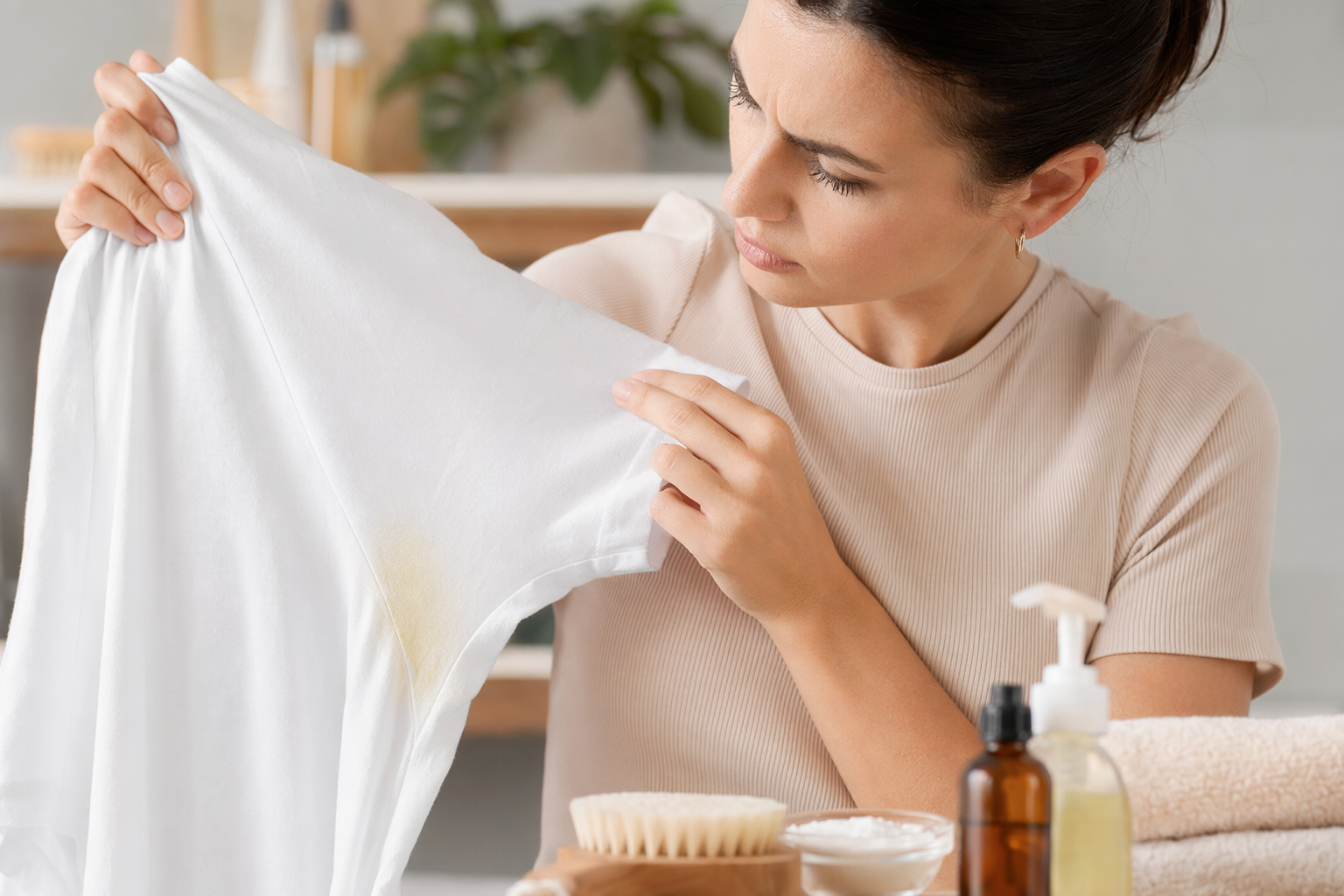
The underarm stain problem nobody wants to talk about, but we all have it
#Okay, so deodorant stains. Not glamorous. Not the kind of thing you bring up at brunch unless you’re very comfortable with your friends, or you’ve reached that age where everyone talks about laundry and back pain anyway. But honestly? Few things annoy me more than pulling out a perfectly good black shirt and seeing those chalky white half-moons in the armpits, or worse, finding that weird yellow-ish crusty patch on a white tee that used to look crisp and now looks like it’s been through some emotional damage.
I used to think deodorant stains meant the shirt was basically done. Like, oh well, this one is now a sleep shirt. Into the sad drawer it goes. But after ruining enough tops, especially my “nice casual” shirts that I somehow always wear when I’m running late and applying deodorant like I’m frosting a cupcake, I got stubborn. I started testing stuff. Some worked, some absolutely did not. One time I made a paste so thick it looked like cake batter and then wondered why my washer sounded angry. So, yeah, learning happened.
The good news is most deodorant stains are removable, or at least dramatically improvable, if you treat them the right way. The bad news is the dryer is not your friend here. Heat sets stains, especially oily, waxy, protein-ish buildup, and once you’ve tumble-dried a stained shirt ten times, you’re playing laundry on hard mode. Still not impossible. Just more annoying.
First, figure out what kind of deodorant stain you’re dealing with
#This sounds fussy, I know, but it matters. Not every armpit mark is the same beast. Those white streaks on a black top after you get dressed? That’s usually fresh deodorant transfer, more cosmetic than deep stain. The stiff yellow patches on white shirts? That’s often a whole cocktail of antiperspirant ingredients, sweat, body oils, dead skin, detergent residue, and time. Lovely, right? Laundry is basically chemistry but with socks.
Antiperspirants are often the bigger culprit because many contain aluminum-based compounds that reduce sweating. Those compounds can mix with sweat and oils and cling to fabric. Regular deodorant, the kind that mostly handles smell, can still leave waxes, oils, and fragrance residue, especially if you use a lot of it. And if you’re like me and do the “two extra swipes for security” thing before leaving the house... well. We are both part of the problem.
- White chalky marks on dark clothes usually need a quick rub, rinse, or gentle wash, not a full laundry intervention.
- Yellow underarm stains on white clothes usually need soaking or pretreating because the buildup has settled into the fibers.
- Crunchy or stiff armpit fabric means residue has layered up over time, so one wash may not fix it completely.
- Lingering odor even after washing often means bacteria and body oils are still trapped in the fabric, not that you need more perfume-y detergent.
Before you attack the stain, do these boring-but-important things
#I hate laundry rules as much as the next person, but a couple of tiny checks can save a shirt. First, read the care label. I know. Nobody wants to stand there squinting at symbols like they’re decoding ancient pottery, but it helps. Silk, wool, rayon, acetate, and anything labeled dry clean only can be sensitive to vinegar, peroxide, scrubbing, hot water, or basically your whole enthusiastic cleaning mood. If the shirt was expensive or sentimental, test first somewhere hidden, like the inside hem.
Also, don’t throw every cleaner in your cabinet at the stain at once. Vinegar and baking soda fizz, which is fun, but the fizz is not magic and mixing everything can cancel things out or make fabric unhappy. Never mix chlorine bleach with vinegar or ammonia. Actually, just don’t mix bleach with random stuff, period. I’ve learned that “more aggressive” is not the same as “more effective.” Sometimes it just means your shirt now smells like a science fair and has a pale patch.
My main deodorant-stain rule: treat gently first, rinse well, and do not put the garment in the dryer until you’re sure the stain is gone. The dryer is basically a stain laminator.
Quick fix for white deodorant marks on black or dark clothes
#Let’s start with the easy one, because sometimes you’re already dressed and you have, like, four minutes before you need to leave. If you see a white deodorant streak on dark fabric, don’t panic and don’t immediately wet the whole shirt. A dry or barely damp microfiber cloth often works. Rub gently in the direction of the fabric. A clean sock works too, and yes, I have absolutely done this in a bathroom at work. Not proud, not ashamed.
Another weird little trick: rub the mark with another part of the same fabric, like folding the shirt and rubbing fabric against fabric. It sounds too simple, but it lifts those powdery streaks surprisingly well. Some people use nylon stockings or a dryer sheet. I’m not personally a big dryer-sheet person because they can leave their own residue, but in an emergency? Fine. We’re not doing museum conservation here, we’re trying to get through the day without looking like we lost a fight with a stick of deodorant.
- Use a dry microfiber cloth, clean towel, sock, or the shirt fabric itself.
- Rub lightly, don’t grind the mark into the fibers.
- If it remains, dab with a tiny bit of water and keep blotting.
- Wash normally later, because the residue is still technically there even if you can’t see it.
My go-to method for fresh deodorant stains: dish soap and patience
#For fresh stains, especially if there’s a greasy feel, dish soap is my favorite boring hero. Not dishwasher detergent, not the powder pods, just regular hand dish soap. It’s made to cut oils, and deodorant buildup usually has oils or waxy stuff involved. I use a small drop, and I mean small. If you use too much, you’ll be rinsing suds until next Tuesday.
Lay the shirt inside out so you’re treating the armpit area from the back of the stain. Wet the area with cool or lukewarm water. Add a drop of dish soap and gently rub the fabric against itself. You can use a soft toothbrush, but go easy, especially on knits. I have roughed up a cotton tee before by scrubbing like I was sanding furniture. Don’t be me. Let it sit for 10 to 20 minutes, rinse, then wash with a good detergent. Check before drying. Always check.
If you’re already in stain-removal mode, this is also the mindset I use for other everyday disasters. Coffee, for example, has its own little set of rules, and if that’s your current nightmare too, I’ve got a soft spot for guides like How to Remove Coffee Stains From Clothes because treating fabric safely is half the battle. Different stain, same lesson: don’t panic and don’t blast it with heat.
The vinegar soak, which smells like salad but works more often than not
#White vinegar is one of those laundry things people either worship or side-eye. I’m somewhere in the middle. It’s not a miracle liquid. It will not solve your entire life. But for deodorant residue and odor, especially on washable cotton shirts, it can really help loosen buildup. Use plain white vinegar, not apple cider vinegar unless you want your laundry smelling like a health food store accident.
Here’s the basic version I use: mix one part white vinegar with about four parts cool water in a bowl or sink. Soak the underarm area for 30 minutes, sometimes an hour if the shirt is really grumpy. Then gently rub the fabric, rinse, and wash as usual. If the fabric is delicate, bright colored, or you’re even a tiny bit unsure, test first. Vinegar is mild compared with many cleaners, but “mild” doesn’t mean “safe for literally every fabric on earth.”
Also, don’t pour vinegar straight into every laundry situation like it’s holy water. Too much acid over time can be hard on elastic and certain finishes, and some washing machine manuals are picky about what they want in there. I usually soak in a separate basin, then wash normally. It feels less risky and, honestly, I like seeing the problem area up close before it goes into the machine.
Baking soda paste for the old yellow stains that make you sigh
#Old yellow armpit stains on white shirts are a different emotional category. They’re the stains you discover when you’re getting ready for something and suddenly the lighting hits your shirt just right and you’re like, “oh no, has it looked like this the whole time?” Fun little crisis.
For these, I usually start with a baking soda paste. Mix baking soda with a little water until it’s spreadable, not runny. Rub it into the underarm stains and let it sit for at least 30 minutes. For really stubborn shirts, I’ll let it sit longer, maybe a couple hours, but I don’t let it dry into a concrete slab if I can help it. Then rinse thoroughly and wash. Baking soda is mildly abrasive and can help with odor, but again, don’t scrub like you’re mad at the shirt. Even if you are.
Sometimes I add a little liquid laundry detergent to the paste instead of just water. That can help if the stain feels greasy or stiff. If the shirt is white cotton and sturdy, this is usually fine. If it’s a thin fancy tee that cost more than it should’ve, be gentle. I have this one white linen-blend top that I love, and I treat it like it has feelings because it basically does.
When baking soda doesn’t quite finish the job
#If the stain lightens but doesn’t disappear, don’t assume it failed. That’s actually progress. Deodorant buildup can be layers on layers, especially if you’ve been washing and drying the shirt for months. Repeat the process once or twice before moving to stronger stuff. I know waiting is annoying. But slower is better than bleaching a hole into your favorite tee and then pretending it’s “distressed.”
Hydrogen peroxide can help whites, but please test first
#Hydrogen peroxide is useful on white or colorfast fabrics because it’s an oxygen-based bleaching agent. The drugstore 3% kind is what most people mean when they talk about using peroxide at home. It can help lift yellowing and organic stains, and I’ve had good luck with it on white cotton undershirts. But it can lighten colors. It can also be too much for some delicate fabrics. So test. I know I keep saying test, but that’s because I have learned the hard way and I am trying to spare you the quiet laundry rage.
A simple mix is equal parts hydrogen peroxide and water, dabbed onto the stained area for 20 to 30 minutes before washing. For white cotton, some people make a paste with hydrogen peroxide, baking soda, and a tiny bit of dish soap. It can work beautifully. It can also be messy and foamy and make your sink look like you’re doing a low-budget chemistry experiment. Rinse very well before washing, and don’t combine peroxide with chlorine bleach. Honestly, I’d skip chlorine bleach for deodorant stains most of the time anyway, because it can yellow some sweat-related stains and weaken fabric, especially over repeated use.
- Best candidates: sturdy white cotton tees, undershirts, white dress shirts that are washable.
- Be careful with: bright colors, prints, delicate blends, anything stretchy or expensive.
- Avoid on: silk, wool, leather trim, dry-clean-only pieces, or anything you’d cry over if it faded.
For crunchy buildup, use detergent like a pretreatment, not just in the wash
#If the underarms feel stiff, a normal wash may not penetrate enough. This is where liquid laundry detergent or an enzyme detergent can help. Enzymes are designed to break down certain types of soils like body oils and proteins, depending on the enzyme blend. Not every detergent is the same, and I’m not loyal to one brand like it’s a sports team, but I do think a decent liquid detergent rubbed directly into the underarm area makes a difference.
Turn the shirt inside out, wet the armpit area, add a small amount of liquid detergent, and gently work it in with your fingers. Let it sit 15 to 30 minutes. Then wash in the warmest water that’s safe for the garment. For cotton whites, warm water often helps. For darks and synthetics, cooler water may be safer to prevent fading or damage. Care label wins. The care label is annoying, but it wins.
One thing I’ve noticed with workout tops and office shirts is that synthetic fabrics can hold onto odor and residue in a very clingy way. Like, emotionally clingy. Polyester especially can trap body oils, and if you use heavy antiperspirant every day, the underarms can get funky fast. If sweat and humid-weather clothes are part of your life, the prevention side matters too. This guide on Sweat-Proof Office Shirts for Humid Weather: A Practical Guide fits right into that whole “please let me get through a workday without destroying my shirt” situation.
What about lemon juice, aspirin, vodka, and all those internet tricks?
#Ah yes, the internet laundry cabinet. Lemon juice, crushed aspirin, vodka, shampoo, denture tablets, meat tenderizer... I’ve seen it all, and I’ve tried more of it than I should admit. Some of these can work in specific situations, but I don’t reach for them first.
Lemon juice is acidic and can have mild bleaching effects in sunlight, which sounds charming and old-fashioned until your shirt fades unevenly. Aspirin pastes are popular for yellow stains, but aspirin is basically an acid and filler, and results are hit-or-miss. Vodka can help with odors on some fabrics because alcohol evaporates quickly, but it’s not really my pick for actual deodorant buildup. Shampoo can help with body oils, since it’s made for oils on hair and skin, but I’d rather use dish soap or detergent because I know how they rinse out of fabric.
I’m not saying never try them. I’m just saying if you have a stain you care about, start with the methods that make the most fabric sense: dish soap for oily residue, vinegar soak for buildup and odor, baking soda for mild abrasion and deodorizing, peroxide for white/colorfast stains, and detergent pretreatment for body soil. Less cute, more reliable.
How to wash after pretreating, because this part matters more than people think
#After pretreating, wash the garment with a normal load if you want, but don’t overstuff the machine. Clothes need room to move. I used to cram my washer like I was packing for a 3-week trip in a carry-on, and then I’d wonder why stains didn’t come out. The water and detergent need to actually reach the underarms. Revolutionary, I know.
Use the right amount of detergent. Too little won’t clean well, but too much can leave residue, and residue can trap more odor and dirt. If you have hard water, stains can be more stubborn too because minerals interfere with cleaning. A laundry booster or water softening product can help in some homes, but don’t go wild adding six products at once. That’s how you end up with stiff towels and regret.
- Pretreat from the inside of the shirt, where the deodorant and sweat actually hit first.
- Let the pretreatment sit long enough to do something, usually 15 to 60 minutes depending on the method.
- Wash with enough space in the machine for agitation and rinsing.
- Air dry until you know the stain is gone. If you can still see it, repeat before using the dryer.
Preventing deodorant stains so you’re not fighting them forever
#This is the part where I say something irritating but true: prevention is easier than removal. I still forget sometimes, because mornings are chaos and I am not my best self before coffee. But a few small habits really do reduce stains.
Let your deodorant or antiperspirant dry before putting on clothes. Even two or three minutes helps. Apply less than you think you need. Most sticks do not require twelve aggressive swipes. If you’re using an antiperspirant, some products work best when applied at night to clean, dry skin, because they need time to form the sweat-blocking effect. Follow the product directions, obviously, especially if your skin gets irritated.
Also, wash shirts sooner rather than letting them marinate in the hamper for a week. I’m sorry, but it’s true. Sweat and deodorant sitting in fabric makes buildup worse. Turn shirts inside out before washing so the underarm area gets more direct cleaning. And every few washes, inspect the pits before drying. This sounds obsessive until you save a shirt, then suddenly you’re a laundry detective and it’s kind of satisfying.
- Switch to a clear gel or lower-residue deodorant if white marks are your main issue.
- Try using slightly less product, especially with waxy solid sticks.
- Give deodorant time to dry before dressing, even if you’re rushing.
- Wear undershirts with dress shirts if you’re prone to heavy staining.
- Treat underarms every few wears instead of waiting for yellow stains to become permanent-looking.
Special fabrics need a softer touch
#Cotton is forgiving. Cotton will put up with a lot. But silk, wool, rayon, linen blends, modal, viscose, and stretchy athletic fabrics can be more dramatic. Silk and wool do not love enzymes or aggressive scrubbing. Rayon can weaken when wet. Elastic fibers can break down with heat and harsh chemicals. Dark fabrics can fade if you get too enthusiastic with peroxide or acids. Basically, the nicer or more delicate the garment, the more boring and careful you should be.
For delicate items, I’d start with cool water and a tiny amount of gentle detergent, blotting rather than scrubbing. If it’s dry clean only and there’s visible underarm staining, point it out to the cleaner. Don’t assume they’ll magically notice. I once handed over a blouse and said nothing, then got it back with the exact same underarm shadow and acted betrayed. That was on me.
A tiny note on wool and silk
#Avoid long vinegar soaks, enzyme detergents, peroxide, and baking soda scrubbing unless the care label and fabric testing says it’s okay. With silk especially, water itself can leave marks. Sometimes the best stain-removal method is admitting you are not a professional and letting a cleaner handle it. Painful, but cheaper than replacing the shirt.
When the stain won’t come out, here’s what I’d do
#If you’ve treated a shirt twice and the stain is still there, don’t keep escalating forever. At some point the stain may be oxidized, set by heat, or bonded into damaged fibers. That sounds dramatic, but you know what I mean. The shirt might not return to perfect-white-new-shirt status. But you still have options.
For white cotton, I’d try an oxygen bleach soak according to the product directions. Oxygen bleach is different from chlorine bleach and is generally more fabric-friendly for many washable items, though you still need to check labels and colors. Soaking overnight can help with dingy whites and old deodorant shadows. For colored clothes, use color-safe oxygen bleach only if the label allows it and test first. If the fabric has already faded under the arms from deodorant or sweat, stain removal won’t bring dye back. That’s not a stain anymore, that’s a tiny tragedy.
And if all else fails? Rehome the shirt into a different category. Sleep shirt, gym shirt, cleaning shirt, gardening shirt. I have a whole hierarchy. Not every garment gets to stay in public rotation, and that’s okay. It had a life. It served.
My simple deodorant stain routine, if you want the short version
#If you skipped around, no judgement. I do that too. Here’s the routine I use most often, and it handles maybe 80% of my deodorant stain problems without making laundry feel like a part-time job.
- For fresh white marks on dark clothes: rub gently with a microfiber cloth or the same fabric, then wash later.
- For fresh underarm residue: pretreat with a tiny drop of dish soap or liquid detergent, wait 15 to 20 minutes, rinse, wash.
- For odor or mild buildup: soak the underarm area in diluted white vinegar for 30 to 60 minutes, rinse, wash.
- For yellow stains on white cotton: use baking soda paste, or carefully try diluted hydrogen peroxide after testing.
- For stubborn old stains: repeat gently, consider oxygen bleach for washable whites, and never dry until you’re done treating.
That’s it, mostly. Nothing fancy. No secret product with a name that sounds like it belongs in a laboratory. Just matching the cleaner to the stain and not making things worse with heat.
Final thoughts from my laundry corner
#Deodorant stains are annoying because they make clean clothes look dirty, which feels deeply unfair. Like, I washed you. Why are you embarrassing me? But once you understand that you’re dealing with buildup, not just a surface mark, the whole thing gets less mysterious. Fresh marks need gentle lifting. Old yellow stains need soaking, time, and sometimes oxygen-based help. Crunchy residue needs detergent worked directly into the fabric. And prevention, as boring as it sounds, saves you a lot of scrubbing later.
If I could go back and tell younger me one thing, besides “stop buying white shirts if you’re going to treat them like napkins,” it would be this: check the armpits before drying. That one habit saves clothes. Also use less deodorant. Also stop doing laundry at midnight when you’re tired and careless. Actually, that’s three things, but whatever.
Anyway, I hope this helps you rescue a few shirts from the sad drawer. I’m still learning little laundry tricks all the time, usually because I’ve spilled something or ruined something first, which is very on brand for me. If you like practical home-and-clothes fixes like this, have a poke around AllBlogs.in sometime. There’s usually something useful to read while you’re waiting for a vinegar soak to finish.