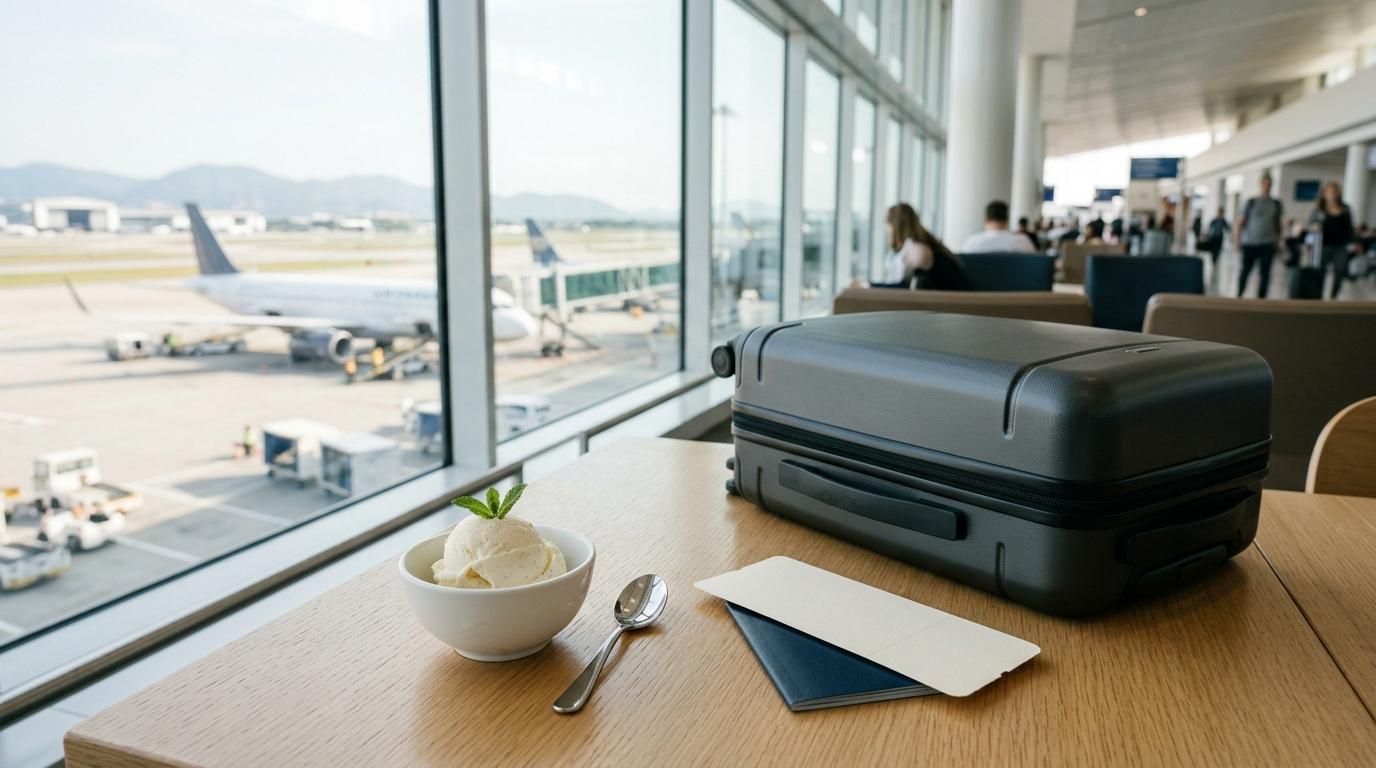
Airport ice cream is one of those ideas that feels brilliant in the moment.
You’re early for your flight. Your layover is dragging. The kids are getting restless. Or maybe you just want something cold and comforting before spending the next few hours in a plane seat. A scoop of gelato or a soft-serve cone can feel like a little pre-vacation reward.
But ice cream is not like a granola bar or a bag of pretzels. It melts. It drips. It can leak. It’s dairy. And if you’re trying to bring it through security, the rules can get surprisingly fussy depending on whether it’s frozen solid, soft, slushy, or halfway to milkshake.
Here’s how to decide when airport ice cream is worth it, when it’s better to skip it, and what to know before packing it in your carry-on.
Quick Answer
#If you’re making a fast decision at the airport, here’s the short version:
- Buying ice cream after security is usually the easiest option. Eat it in the terminal before boarding.
- You can sometimes bring ice cream on a plane, but it depends on its condition. Frozen-solid ice cream may be treated differently than melted or soft ice cream.
- If it’s soft, slushy, or melted, expect liquid rules to apply. In TSA-style screening, that usually means the 3.4 oz / 100 ml carry-on limit.
- Small containers are safer for carry-on. A tiny cup that fits within the liquids rule is less risky than a full pint.
- Checked luggage can work better for larger amounts, but melting and leaking are still big concerns.
- Security officers have the final say. Rules can vary by airport, country, airline, and checkpoint.
- Skip heavy dairy right before boarding if you’re prone to nausea, bloating, lactose sensitivity, or motion discomfort.
The Simple Airport Ice Cream Test
#Before you buy ice cream or try to pack it, ask yourself one very practical question:
Where will I be when this starts melting?
That answer usually tells you whether it’s a good idea.
Airport ice cream is best when it stays simple: buy it after security, sit down, enjoy it, clean up, and then board.
When Airport Ice Cream Is Actually Worth It
#Airport ice cream can be a great little treat. The key is timing.
It works best when you’re already through security, you’re not rushing, and you have enough time to eat it like a normal person instead of trying to juggle a cone, a suitcase, a phone, and a boarding pass.
It’s perfect for a relaxed layover
#If you have a comfortable layover, ice cream can make the wait feel less dull. A cup of gelato, frozen yogurt, sorbet, soft serve, or a simple scoop gives you something to do besides checking the departure board every two minutes.
It’s a good idea when you have time to:
- Walk to the shop without sprinting
- Sit down while you eat
- Finish before boarding starts
- Wash your hands
- Get back to your gate without stress
That last part matters. Ice cream is not a great “I’ll just eat this while power-walking through Terminal B” food.
Buying it after security is easiest
#If you want airport ice cream, buying it after security is usually the cleanest option. You don’t have to worry about whether it counts as a liquid, whether it’s frozen enough, or whether a security officer will let it through.
But buying it after security does not automatically make it plane-friendly. A melting cup of ice cream can still become a problem in the boarding line, jet bridge, or narrow airplane aisle.
Eat it before you board
#This is the big rule:
Eat the ice cream in the terminal.
Boarding almost always takes longer than you think. You may stand in line, wait in the jet bridge, stop while people wrestle with overhead bins, and then squeeze into your seat with barely any elbow room.
Meanwhile, your cone is dripping. Your cup is softening. Your spoon has somehow disappeared. Your napkins are stuck to your hand.
If boarding has already started, skip the ice cream. If boarding starts in 30 minutes and the shop is nearby, you’re probably fine.
Bringing Ice Cream Through Airport Security
#Trying to bring ice cream through security is where things get tricky.
The problem is that ice cream lives in a weird category. When it’s frozen hard, it behaves like a solid. When it softens, it behaves more like a liquid, gel, or spread. Security rules often care about that difference.
TSA ice cream rules, in plain English
#For U.S. TSA-style screening, be cautious with ice cream in your carry-on. TSA food rules generally treat liquids, gels, creams, and spreadable foods differently from solid foods. TSA’s guidance for ice cream also points travelers toward the 3.4 oz / 100 ml carry-on limit.
In real life, if your ice cream is melted, soft, slushy, or spreadable, you should expect it to be treated like a liquid or gel. That means it may need to be in a container of 3.4 oz / 100 ml or less and fit with your other liquids.
Some frozen items may be allowed if they are completely frozen solid at screening, but don’t treat that as a promise. It can depend on the airport, the country, and the officer checking your bag.
The safest way to think about it:
- If it’s small enough for the liquids rule, you have a better chance.
- If it’s larger than 3.4 oz / 100 ml, only try it if it is truly frozen solid and you’re okay with security possibly saying no.
- If it’s soft, slushy, or melted, assume it will be treated like a liquid or gel.
Keep it easy to pull out
#If you pack ice cream in your carry-on, don’t bury it at the bottom of your bag under clothes, electronics, chargers, and snacks.
Food can make an X-ray image harder to read, and officers may ask you to remove it for separate screening. Keep frozen desserts near the top of your bag or inside a small insulated pouch you can easily take out.
That won’t guarantee it gets through, but it can make the process less frustrating.
Ice packs and gel packs matter too
#If you’re using ice packs or gel packs to keep ice cream cold, remember that those packs have rules as well.
For carry-on screening, frozen packs are usually less of an issue when they are completely frozen solid. If they’re soft, squishy, slushy, or partly melted, they may be treated like gels or liquids.
So if your plan depends on a half-thawed gel pack, it’s not a great plan.
Checked bags avoid some rules, but create new problems
#If you’re bringing a larger container of ice cream, checked luggage may seem easier because the normal carry-on liquid limit is not the main issue.
But checked bags come with a different problem: your ice cream may melt long before you see it again.
Bags can sit in warm areas during loading, unloading, baggage handling, and baggage claim. If your ice cream melts and leaks, it can soak into clothes, shoes, papers, and anything else in your suitcase.
If you pack ice cream in checked luggage:
- Use a tightly sealed container.
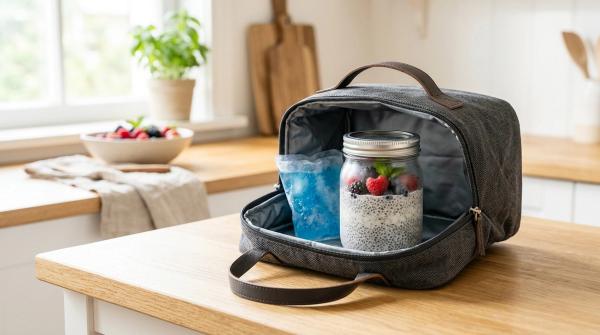
- Put it in an insulated bag or cooler-style pouch.
- Add frozen packs if allowed and practical.
- Wrap everything in a leak-resistant bag.
- Keep it away from clothes or items you care about.
And if it arrives fully melted and warm, don’t think of it as “still edible, just soft.” Think of it as a food safety issue.
Be careful with dry ice
#Dry ice can keep frozen foods colder for longer, but it comes with special airline and safety rules. It releases carbon dioxide gas, so packaging usually needs to allow venting. Airlines may also have limits, labeling requirements, and approval rules.
Don’t improvise with dry ice at the airport. Check your airline’s rules before you pack it, especially for international travel.
When You Should Skip Ice Cream Before a Flight
#Sometimes airport ice cream is not worth the trouble. Not because ice cream is bad, but because the timing is bad.
Skip it during a tight connection
#If you’re changing planes and don’t have much time, keep walking.
A tight connection already requires attention. You’re checking the gate, watching the clock, maybe changing terminals, maybe needing a restroom, maybe trying to keep kids moving. Adding a melting dessert to that situation is asking for stress.
If time is short, choose something packaged, tidy, and easy to toss in your bag.
Skip it once boarding starts
#Once boarding begins, ice cream becomes inconvenient almost immediately.
You may think, “I’ll finish it in line,” but boarding lines are unpredictable. Sometimes they don’t move at all. Sometimes they move all at once. Either way, you’re holding something sticky while also managing your phone, passport, boarding pass, bag, and possibly a child.
If your group is about to board, get water or a packaged snack instead.
Skip it if dairy bothers your stomach
#Ice cream before flying can be rough if you’re lactose sensitive or prone to stomach issues. It’s cold, rich, sweet, and dairy-based. For some people, that combination does not feel great at 30,000 feet.
Cabin pressure changes can also make bloating or digestive discomfort feel more noticeable. If dairy tends to make you gassy, nauseated, crampy, or uncomfortable, airport ice cream is probably not the best gamble before a flight.
If you handle dairy well and eat a small portion with time to spare, you’ll probably be fine. But if your stomach is unpredictable, skip it.
Skip the giant sundae before a long flight
#A huge sundae might sound comforting before a long-haul flight, but it can feel very different once you’re buckled into a seat for hours.
If you want something sweet, go small. A little cup is a better idea than a giant dessert. Or choose a snack that travels neatly and feels easier on your stomach.
Dairy, Melting, and Food Safety
#Ice cream is perishable, and travel makes that more complicated.
At home, ice cream goes from freezer to bowl. At the airport, it may go from freezer to car, to check-in, to security, to gate, to aircraft cabin, to baggage claim, and then into another car. That’s a lot of temperature change.
Watch how long it sits out
#Common food safety guidance says perishable foods should not sit at room temperature for more than about two hours, or about one hour in very hot conditions. The “danger zone” is often described as roughly 40°F to 140°F, where bacteria can multiply faster.
For airport ice cream, keep it simple:
- Cold and still firm is best.
- Soft but still chilled is a warning sign.
- Fully melted and warm should be thrown away.
Don’t taste questionable melted dairy just to see if it’s okay. It’s not worth getting sick over a travel snack.
Don’t refreeze fully melted ice cream
#If ice cream melts completely during travel, refreezing it is not a real fix.
The texture will probably turn icy, grainy, and unpleasant. More importantly, if it spent too much time warm, refreezing does not automatically make it safe again. Freezing slows bacterial growth, but it does not erase poor temperature handling.
If your ice cream arrives as warm liquid, throw it out.
Plan for leaks
#Even if you’re less worried about eating the ice cream later, melted ice cream can still ruin a bag. It’s sticky, dairy-based, and can start to smell sour if it gets into fabric.
If you pack it, use layers:
- Original sealed container
- Zip-top or leak-resistant bag
- Insulated pouch
- Outer plastic bag or washable compartment
This is especially important in checked luggage. Nobody wants melted vanilla ice cream soaked into their socks.
Tips for Families Buying Airport Ice Cream
#Ice cream with kids at the airport can be sweet and fun, or it can turn into a sticky disaster five minutes before boarding.
The difference is usually timing.
Make it a sit-down treat
#If you’re buying ice cream for kids, treat it like an activity, not a walking snack. Find a table or a quiet gate area before handing it over.
Cups are usually easier than cones, especially if you’re worried about drips. They’re less exciting, maybe, but also less likely to end up on a shirt, backpack, or airport floor.
Try to finish before heading back into the gate crowd. Once boarding starts, you want clean hands and no open desserts.
Choose the smaller size
#A small cup is usually the better move. Kids often ask for the biggest, most colorful option and then abandon it halfway through. Then you’re stuck holding a melting cup while also managing bags, boarding passes, and everyone’s mood.
A smaller portion keeps it fun without turning it into a project.
Clean up before the jet bridge
#Before boarding, make time for a quick cleanup. Wash hands, wipe faces, check sleeves, and throw away sticky napkins before joining the line.
Sticky fingers on a plane quickly become sticky tray tables, seat belts, windows, armrests, and screens. At that point, the “fun little treat” has become a full cleaning situation.
Have backup snacks
#Don’t make airport ice cream the only treat option. The shop might be closed. The line might be too long. Your flight might start boarding early. Or you may simply not have time.
Good sweet travel snacks include:
- Firm cookies
- Granola bars
- Muffins
- Dry cereal
- Crackers
- Apples or other sturdy fruit
Solid snacks are usually easier at security, easier on the plane, and much easier to clean up.
Final Takeaway
#Airport ice cream is worth it when you have time, a place to sit, and a clean way to enjoy it. It is not worth it when you’re rushing, boarding, carrying a large melting container, or hoping security will be flexible.
The easiest option is simple: buy ice cream after security and finish it in the terminal.
If you want to pack ice cream through security, remember the frozen-solid question and the 3.4 oz / 100 ml liquid limit. If it softens or melts, expect liquid-style rules.
And if dairy tends to bother you, skip the pre-flight ice cream and choose something easier.
The best airport treat is the one that doesn’t leak in your bag, upset your stomach, or melt down your hand right as your boarding group gets called.