Packing a school tiffin during the monsoon looks like a small daily job, until your child comes home with a lunchbox that smells odd, feels damp, or has half the food untouched.
Most parents know that feeling. The paratha was fresh in the morning. The idlis looked soft and perfect. The rice was fine when you packed it. But by recess, after sitting inside a closed box in a school bag for 3 to 5 hours, things can change.
Rainy weather brings humidity. School bags stay closed. Classrooms and buses can get warm and crowded. And there is usually no fridge anywhere near the lunchbox.
So during the monsoon, tiffin needs a little extra thought. Not panic. Not fancy meal planning. Just a few practical changes.
The safest idea is simple: pack food that is cooked, fairly dry, cooled before closing, and easy to eat without chutney or gravy.
This guide is for everyday Indian school tiffins in the rainy season: what packs well, what is better avoided, and the small habits that keep food from turning soggy.
Quick answer
#For a safer monsoon school tiffin, choose foods that are:
- Fully cooked
- Not too wet
- Cooled properly before the lid goes on
- Easy to eat without chutney, dip, or gravy
- Packed in a clean, completely dry box
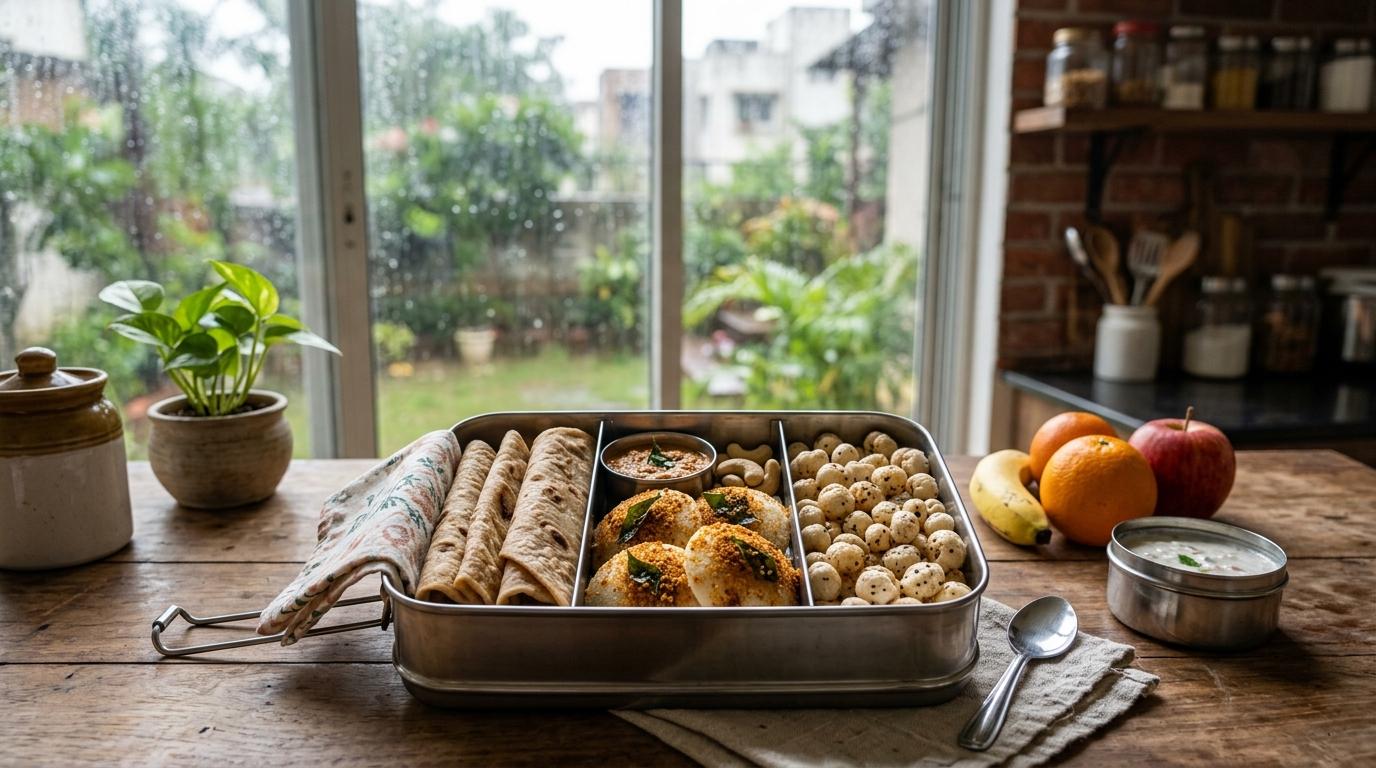
Good monsoon tiffin options include dry sabzi with roti, stuffed parathas, podi idli, besan chilla, dal chilla, lemon rice, tamarind rice, thepla, roasted makhana, roasted chana, khakhra, and dry poha chivda.
Try to avoid very wet, raw, dairy-heavy, or chutney-heavy foods when the lunchbox will sit for many hours. Curd rice, raita, watery chutneys, coconut chutney, cut watermelon, cucumber salad, cream pasta, and gravy-heavy dishes are better kept for home on humid rainy days.
The biggest rule: do not close the lunchbox while the food is still steaming hot. Steam gets trapped, turns into water droplets, and makes the whole tiffin damp.
Why monsoon tiffins spoil faster
#A lunchbox is a tiny closed space. Once it goes into the school bag, the food sits there for hours. During the monsoon, that space can become warm and humid, especially if the bag is kept in a crowded classroom, bus, or van.
The main problem is moisture.
If you pack hot rotis, parathas, rice, idlis, or sabzi and close the lid immediately, the steam has nowhere to escape. It settles on the lid and sides of the box, turns into water, and drips back into the food.
By recess:
- Rotis can feel sweaty
- Parathas can become limp
- Idlis can turn sticky
- Rice can become clumpy
- Crunchy snacks can lose their crunch
This does not mean every tiffin becomes unsafe. But warm, wet, closed conditions do make food spoil faster, especially if the food contains curd, fresh coconut, raw vegetables, watery chutney, mayonnaise, cream, or lots of gravy.
For an Indian monsoon lunchbox, remember this simple line:
Cook well, cool well, keep it dry.
Safe foods to pack in monsoon tiffin
#When you are choosing school tiffin ideas for monsoon, think of sturdy foods. The kind that can handle a bus ride, a humid classroom, and a few hours inside a bag.
1. Dry stuffed parathas
#Stuffed parathas are one of the most dependable tiffin foods, as long as the filling is not watery.
Good fillings include:
- Aloo
- Gobhi
- Sattu
- Cooked dal
- Light paneer filling
- Methi aloo
- Mixed vegetables cooked dry
A few small things make a big difference:
- Cook the stuffing until extra moisture dries up.
- Avoid too much tomato in the filling.
- Let the paratha cool before packing.
- Wrap it in parchment paper, food-safe paper, or a clean cotton cloth.
Try not to wrap hot parathas tightly in foil. They sweat inside and become soft and limp. Children may not explain it politely, but they definitely notice.
If you are using paneer, keep the filling dry and simple. Avoid creamy paneer stuffing on very humid days.
2. Dry sabzi with roti or paratha
#Dry sabzis are much better than gravies for rainy season tiffins. They leak less, keep rotis cleaner, and are easier for children to eat at school.
Good options include:
- Jeera aloo
- Bhindi sabzi
- Cabbage poriyal
- Beans poriyal
- Gajar-beans sabzi
- Dry methi aloo
- Beetroot sabzi
- Carrot sabzi
- Dry potato roast
Avoid packing watery curry in the same box as roti. By lunchtime, both can become messy and unappetising.
If you are packing sabzi and roti together, keep the sabzi as dry as possible. A little oil or tempering is fine. Extra water or gravy is not.
3. Podi idli or dry tempered idli
#Podi idli is a very good monsoon tiffin option. The idlis are cooked, the podi adds flavour, and you do not need to send chutney separately.
Use a little oil or ghee so the podi coats the idlis nicely. Let the idlis cool before closing the box.
You can also pack mini idlis tossed with mustard seeds, curry leaves, and a dry spice mix.
During monsoon, skip coconut chutney in the school tiffin, especially if the lunchbox will not be refrigerated. Fresh coconut chutney may taste lovely at breakfast, but it is not the best choice for a humid box that sits for hours.
4. Besan chilla, dal chilla, or oats chilla
#Chillas work well because children can eat them without a dip. Cut them into strips, triangles, or small squares and they become easy finger food too.
Good add-ins include:
- Onion
- Carrot
- Capsicum
- Coriander
- Finely chopped spinach
- Grated bottle gourd, squeezed well
- Ajwain or jeera
Keep the batter slightly thick so the chilla does not become too soft. Cook both sides properly, then cool before packing.
Avoid spreading chutney inside or adding wet paneer stuffing. It may taste good when fresh, but by recess it can make the chilla soggy.
5. Lemon rice or tamarind rice
#Rice is not off-limits during the monsoon. You just need to choose drier rice dishes.
Lemon rice and tamarind rice usually travel better than curd rice, mushy pulao, or rice mixed with watery gravy. The grains should be separate, not wet and sticky.
A few tips:
- Cool the rice before packing.
- Do not add fresh coconut if the tiffin will sit for hours.
- Use a clean, dry container.
- Avoid closing the box while the rice is still steaming.
For children who enjoy rice, lemon rice and tamarind rice are familiar, filling, and practical.
6. Thepla or methi paratha
#Thepla is a good monsoon tiffin food because it is drier and does not need much accompaniment. Methi paratha also works well when cooked properly and cooled before packing.
Avoid sending curd with thepla during monsoon. Also skip wet pickle or watery chutney.
Better sides include:
- Dry peanut chutney powder
- Idli podi
- Roasted sesame-peanut powder
- A small dry sabzi
- Roasted chana
If your child likes rolls, you can make small thepla rolls without chutney. They are easy to hold and less messy.
7. Roasted snacks for short breaks
#For a short snack break, dry foods are your best friend.
Good options include:
- Roasted makhana
- Roasted chana
- Khakhra pieces
- Dry murmura mix
- Dry poha chivda
- Plain mathri, in a small quantity
- Nuts and raisins, if allowed by the school and suitable for your child
Pack these in a separate small box. Do not put them next to cut fruit or wet sabzi, or they will lose their crunch.
This low-moisture idea is useful not just for school but also for travel. If you are packing for trains or buses, this guide on no-fridge travel food for Indian summers follows a similar approach.
Foods to avoid in monsoon tiffin
#The usual foods to avoid in monsoon tiffin are not “bad” foods. Many of them are healthy and perfectly fine when eaten fresh at home.
The problem is how they behave inside a closed, humid lunchbox for several hours.
1. Curd, raita, and yogurt dishes
#Curd rice, raita, dahi poha, yogurt dip, and curd-based salads are better avoided in regular school tiffins during monsoon.
Dairy-heavy foods can sour faster in warm, humid weather. They can also leak, smell strong, and make the whole lunchbox wet.
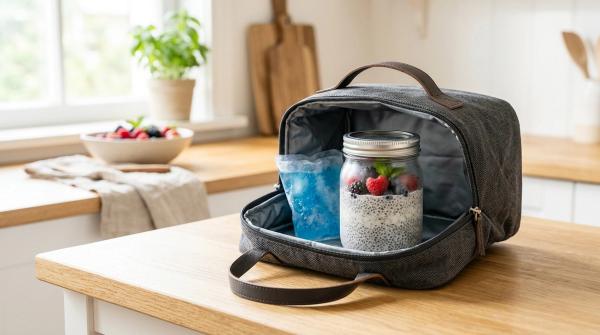
If you use an insulated lunch bag with an ice pack, it may be different. But for everyday school tiffin, especially in a normal school bag, dry food is more practical.
Save curd for breakfast, after-school snacks, or meals that can stay chilled.
2. Fresh coconut chutney and wet chutneys
#Fresh coconut chutney, coriander chutney, mint chutney, tomato chutney, and other wet chutneys are not ideal for a tiffin that will sit for 3 to 5 hours.
They are moist, often handled after cooking, and can spoil faster in humid weather.
Better options are:
- Idli podi
- Dry garlic-peanut chutney powder
- Roasted sesame-peanut powder
- Dry peanut chutney
- Dry coconut powder, used carefully and in small amounts
If you really need to send chutney, keep it thick, send a tiny portion, and pack it separately. But on very humid days, dry chutney powders are a safer choice.
3. Raw salads
#Cucumber, tomato, onion, grated carrot, and cabbage salad may look fresh in the morning, but they release water as they sit.
That water can make rotis, bread, rice, and snacks soggy. Raw cut vegetables also do not always stay fresh in a warm lunchbox.
If your child likes vegetables, pack a cooked dry sabzi instead. It is usually a better monsoon lunchbox choice.
4. Cut watery fruits
#Cut watermelon, muskmelon, papaya, orange segments, and cucumber sticks can release a lot of water. Cut apples and pears can brown and look dull by lunchtime.
Whole fruit is better when possible:
- Banana
- Whole apple
- Small orange or mosambi, unpeeled
- Guava, whole or cut only if it will be eaten soon
- Dates
- Raisins
- Dry fruits in small portions
For younger children, cut fruit according to age and choking safety. But avoid leaving very watery cut fruit in a closed tiffin for many hours.
5. Wet gravies and creamy dishes
#Rajma with lots of gravy, chole with extra curry, paneer butter masala, creamy pasta, and watery dal can leak and spoil faster in a warm lunchbox.
They also become messy. And many children simply avoid eating food that looks mixed, wet, and untidy by recess.
If you want to pack dal or beans, try a drier version:
- Dal paratha
- Sattu paratha
- Dry chana
- Lightly spiced boiled chana
- Chana roll without chutney
- Stuffed paratha with cooked dal filling
6. Bread with wet fillings
#Sandwiches can become soggy very quickly in the rainy season. Cucumber, tomato, mayonnaise, cheese spread, chutney, and wet paneer fillings all add moisture.
If you pack a sandwich:
- Toast the bread lightly.
- Keep the filling dry.
- Avoid watery vegetables.
- Let it cool before closing the box.
- Pack it for shorter tiffin windows, not long humid days.
A dry aloo sandwich or simple toasted veg sandwich may work better than a chutney-cucumber sandwich during monsoon.
Monsoon tiffin packing checklist
#A safer tiffin is not only about what you cook. How you cool, wrap, and pack the food matters just as much.
1. Cool food before closing the lid
#This is the most important habit.
Do not close the tiffin when the food is still steaming. Let parathas, idlis, rice, chilla, or sabzi cool until the visible steam is gone.
At the same time, do not leave cooked food open for too long. Cool it in a clean place, use clean spoons and hands, and pack it properly.
2. Keep the lunchbox completely dry
#After washing the tiffin, dry it well. Check:
- Corners
- Lids
- Silicone rings
- Dividers
- Dip containers
- Spoon compartments
Even a little leftover water can make food damp. During monsoon, drying racks and kitchen counters can stay damp too, so wiping the box with a clean dry cloth helps.
3. Use separate compartments
#Keep dry and wet items apart.
A good tiffin layout can be:
- Roti or paratha in one section
- Dry sabzi in another
- Roasted snack in a separate small box
- Whole fruit outside the main tiffin, if possible
If the lunchbox has one large compartment, wrap rotis or parathas separately before placing sabzi beside them.
4. Use breathable wrapping for rotis and parathas
#Hot rotis wrapped tightly in foil often turn sweaty.
Better options, after cooling, are:
- Clean cotton cloth
- Food-safe paper
- Parchment paper
Foil is okay only when the food has cooled completely and is not releasing steam.
5. Do not overpack the box
#A tightly packed tiffin traps more moisture. Food gets pressed together and becomes soggy faster.
Leave a little space if possible. A neat tiffin is more likely to be eaten than an overfilled box where sabzi, roti, and snack have all become one strange mixture.
6. Clean bottles and spoons properly
#Monsoon dampness affects more than food. Water bottles, spoons, lids, and gaskets can hold moisture too.
Wash and dry them well. Pay attention to bottle caps, straw lids, and silicone parts, where water can sit unnoticed.
7. Pack according to school timing
#If your child eats within 2 hours, you may have more flexibility. If the tiffin sits for 3 to 5 hours, be stricter with dairy, chutney, raw vegetables, cut fruit, and gravies.
The same logic works for an office lunch without refrigeration too, especially if it sits on a desk without refrigeration.
Simple monsoon tiffin combinations
#Here are some easy combinations that keep moisture low but still feel like a proper meal.
For younger children
#- Mini methi parathas with dry aloo sabzi
- Podi idli with roasted makhana
- Besan chilla strips with banana
- Thepla with dry peanut chutney powder
- Lemon rice with roasted chana
- Mini aloo paratha with khakhra pieces
For older children
#- Sattu paratha with bhindi sabzi
- Tamarind rice with dry potato roast
- Dal chilla with carrot-beans sabzi
- Light paneer paratha with roasted makhana
- Dry chana with phulka and whole fruit
- Methi thepla with roasted chana
For short snack breaks
#- Khakhra pieces with roasted chana
- Makhana roasted with mild masala
- Dry murmura chivda
- Small thepla rolls without chutney
- Plain idli tossed with podi
- Roasted peanuts, if allowed by school
A simple rule for parents
#Before closing the tiffin during monsoon, ask yourself three quick questions:
- Is the food fully cooked?
- Is it cool enough to pack?
- Is it dry enough to sit for a few hours?
If the answer is yes, it is usually a better school tiffin choice for rainy weather.
If the food depends on curd, cream, fresh coconut, raw salad, watery chutney, or lots of gravy, keep it for home. Some foods are just not lunchbox-friendly during monsoon, and that is okay.
A good monsoon tiffin does not have to be complicated. It just needs to stay dry, fresh, and easy for your child to eat.