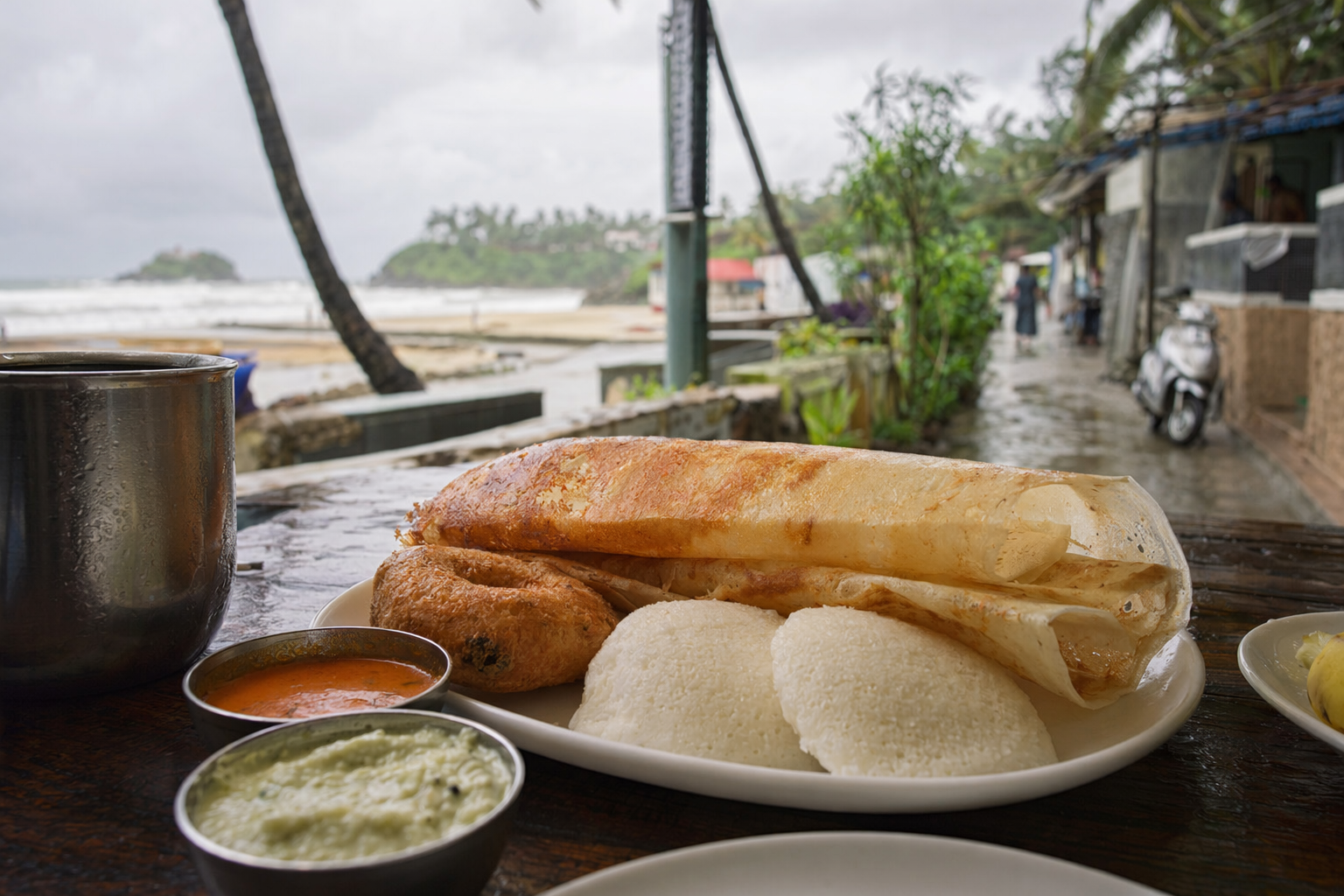
I have this theory, and I’m very stubborn about it now: if you’re travelling along India’s coast during monsoon, breakfast is not just breakfast. It’s the whole mood-setter. It decides whether you’ll enjoy that wet fort walk in Goa, that misty ferry ride in Kochi, that slippery temple lane in Udupi, or whether you’ll become one of those cranky tourists standing under a shop awning complaining that their shoes are soaked. I’ve been both people, honestly.
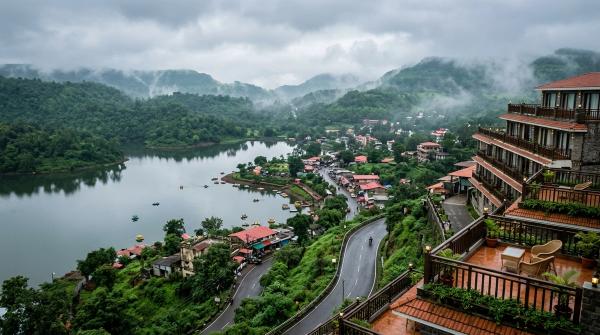
The Indian coastline in the rains is ridiculous in the best way. Coconut trees doing their dramatic swaying thing, fishing boats pulled up like tired animals, sea spray mixing with chai steam, and roads that look like someone polished them with oil. Before sightseeing, before museums and beaches and churches and spice markets and viewpoints, I want something hot, soft, slightly fermented, maybe coconut-heavy, and definitely served with chutney that wakes up my soul. That’s the rule.
This post is basically my love letter to monsoon breakfasts on the Indian coast, from Mumbai’s rainy pavements to Goa’s old cafés, Mangalore’s ghee-scented mornings, Kerala’s appam-steam universe, and a few Konkan corners that don’t get enough attention. Not a perfect itinerary. More like a hungry person’s map.
Why Monsoon Breakfast Hits Different on the Indian Coast
#You know how some food tastes better because of weather? Like pakoras in Delhi rain, or hot chocolate in some snowy European town. Coastal Indian breakfast in monsoon is that, but with more coconut, more curry leaves, more wet umbrellas dripping beside your table. The humidity makes you crave food that’s both comforting and light. Something like idli, neer dosa, appam, poha, puttu, buns, or even a simple pav with chai just behaves differently when the sky is grey and the sea is making noise nearby.
Also, monsoon sightseeing needs strategy. You can’t just wake up at 10, nibble a biscuit, and go climb a fort in Ratnagiri or wander Fort Kochi lanes. Bad idea. The rain comes sideways sometimes. Ferries can run late. Beach walks become muddy detours. And if you’re driving the coastal highways, breakfast is your insurance policy against getting stuck between two villages with only a packet of banana chips and regret.
- A hot breakfast before sightseeing keeps you patient when rain delays your plans, which it absolutely will.
- Fermented dishes like idli, dosa, appam, and sannas feel gentle but filling, so you’re not sleepy-heavy.
- Coastal breakfasts use coconut in every possible form, grated, milked, roasted, chutney-ed, and I support this lifestyle completely.
- Morning markets are best before the tourist rush, especially in fish towns, spice lanes, and old port areas.
By 2026, the food-travel crowd seems properly obsessed with these early morning local meals again. Not just fancy tasting menus. People are booking breakfast walks, toddy-shop style food trails, homestay cooking mornings, market-to-table experiences, all that. I get it. Dinner can be performative. Breakfast is where a place tells the truth.
Mumbai: Rain, Irani Chai, and the First Bite Before the Local Train Madness
#My first monsoon breakfast on this trip was in Mumbai, because Mumbai in the rain is both a romance and a logistical warning. I stayed near Dadar because I wanted easy access to Matunga and the old South Indian breakfast places. Everyone talks about Mumbai street food at night, but honestly, give me a 7:30 am table at Cafe Madras in Matunga and I’m gone. No notes. Just feed me.
Cafe Madras has been around forever, and yes, it’s popular enough that you may wait, especially on weekends. But that wait in the drizzle, watching office-goers, students, uncles with newspapers, and aunties who clearly know exactly what to order, it’s part of it. I ordered idli, rasam vada, filter coffee, and then because I have no self-control, a plate of upma too. The chutney was the kind that makes you question why you ever tolerated sad fridge chutney at home.
If you’re sightseeing after, Matunga works beautifully before heading to the Chhatrapati Shivaji Maharaj Vastu Sangrahalaya, Kala Ghoda, Marine Drive, or even just a rainy walk around Fort. Another classic is Kyani & Co near Metro Cinema, that old Irani café energy with bun maska, omelette, kheema pav if you’re going non-veg in the morning, and tea served like it has seen generations of gossip. The place is not coastal in the coconut sense, but Mumbai is a port city, and Irani cafés are part of its morning bloodstream.
My monsoon rule in Mumbai: don’t start with sightseeing. Start with filter coffee or Irani chai, then let the city attack you gently.
Goa Before the Beaches: Patal Bhaji, Poi, and That Sweet Rain Smell
#Goa in monsoon is a funny thing. Half the people will tell you it’s not beach season, and the other half, me included, will say that’s exactly why you should go. The beaches are moody and not always swimmable, sure, but the villages are green beyond reason, waterfalls wake up, and breakfast feels slower. Like nobody is trying to prove they’re on holiday.
In Panaji, I’ve had very satisfying mornings at places like Café Tato, where the old-school Goan breakfast thing is alive and well. Patal bhaji with puri, mushroom xacuti if available, buns, sheera, tea. Nothing plated in a twee little way. Just proper food that arrives fast and makes sense when rain is tapping the windows. The Goan poi bread, when fresh, is one of those things I could build a whole trip around. Slightly chewy, airy, perfect for scooping gravy, and better than it gets credit for.
One morning I was planning to go see Fontainhas, the Latin Quarter, then maybe Old Goa churches if the rain behaved. I ate bhaji-pav standing near a counter while my umbrella dripped onto my own foot. A man next to me, local I think, told me not to rush to Old Goa because “rain will come from that side.” He pointed vaguely at the sky like a weather app with personality. He was right. I delayed, had another chai, and avoided getting drenched in the middle of a church courtyard. Food people give the best travel advice, I swear.
What to Eat in Goa Before Sightseeing
#- Patal bhaji with puri or pav, especially if you have a long walking day ahead.
- Goan buns, sweetish, fluffy, sometimes banana-y, and dangerously easy to keep eating.
- Poi with omelette or curry, simple but very good when fresh.
- Ros omelette if you find it early, though it’s more famous as an evening thing in many places.
If your plan is Chapora Fort, Reis Magos Fort, Fontainhas, or the Old Goa churches, eat before you go. Monsoon steps and laterite stone can get slippery, and hunger makes you careless. I learnt this the annoying way near Chapora, slipping slightly, pretending it was a graceful move, and then immediately needing tea.
Mangalore and Udupi: The Breakfast Belt I Keep Dreaming About
#If someone asked me where coastal breakfast culture feels most serious, I’d probably say the Mangalore-Udupi stretch. Not fancy serious. Devotional serious. Here breakfast is crisp, soft, sour, sweet, ghee-brushed, coconut-backed, and served with a rhythm that makes you feel like the whole city has been awake since 5 am making batter.
Mangalore in the rain smells like wet earth, temple flowers, sea air, and frying batter. I once reached a small hotel near Hampankatta half-soaked because my auto driver insisted the rain was “small rain.” It was not small rain. I ordered Mangalore buns and goli baje, because when in doubt, eat the golden things. Buns are these slightly sweet, banana-based fried breads, usually eaten with coconut chutney or sambar. Goli baje, also called Mangalore bajji, are soft, spongy fritters that taste like clouds went to culinary school.
For more classic sit-down breakfast, Taj Mahal Café in Mangaluru has that old local reputation people mention often, and you’ll also find good dosas, idlis, buns, and coffee across the city. In Udupi, the temple-town breakfast scene is legendary for a reason. Masala dosa, neer dosa, idli, vada, sheera, filter coffee. And neer dosa, my god. It looks so delicate, almost lace-like, but it’s one of the best things to eat before sightseeing because it doesn’t sit heavy in the stomach.
After breakfast in Udupi, go to Sri Krishna Matha early if you’re visiting, then Malpe Beach if the weather is safe, or take the boat to St. Mary’s Islands only when services are running and sea conditions allow it. Monsoon can change plans. Don’t argue with the Arabian Sea. It’s older than your itinerary.
- Start with something fermented or steamed, like idli or neer dosa, if you’re walking temples and markets.
- Add one fried thing, because rain demands it. Buns, goli baje, vada, whatever is hot.
- Finish with filter coffee, then pretend you are a calm, organized traveller.
Kerala Mornings: Appam, Puttu, Kadala, and the Art of Not Rushing
#Kerala breakfast during monsoon might be my personal weakness. I know that’s a big statement. But appam with vegetable stew on a rainy morning in Kochi? Puttu and kadala curry before a backwater ride? Idiyappam with egg roast before wandering Mattancherry? It’s unfair. It’s too good.
In Fort Kochi, the mornings are damp and cinematic. Chinese fishing nets in the distance, crows making noise, cafés opening slowly, spice shops not fully awake yet. I’ve had good café breakfasts there, sure, but the meals I remember most are the local ones, usually in simple restaurants where appam arrives with lacy edges and a soft middle, and the stew smells of coconut milk, curry leaves, pepper, and patience.
Puttu is another monsoon hero. For anyone who hasn’t had it, puttu is steamed cylinders of rice flour layered with coconut, served with kadala curry, banana, papad, or sometimes fish curry depending where you are and what kind of morning you’re having. I like it with kadala, black chickpeas cooked in a dark, coconut-rich gravy. It looks humble, then suddenly it becomes the thing you compare every future breakfast to.
If you’re heading for sightseeing in Kochi, do breakfast before the humidity rises. Walk Fort Kochi, Mattancherry Palace, Paradesi Synagogue area if open, Jew Town’s antique shops, and the waterfront. In Alleppey or Kumarakom, eat before the boat, not after. Boat breakfasts can be lovely, but if rain delays boarding, you’ll be hungry and dramatic. Nobody needs that.
Kerala Breakfasts Worth Planning Your Morning Around
#- Appam with stew, especially in Kochi or coastal Kerala towns.
- Puttu with kadala curry, filling without being greasy.
- Idiyappam with egg roast, very good before a long walking day.
- Pathiri with curry in Malabar areas, soft and elegant and easy to love.
- Banana fritters and tea when the rain gets too loud to continue sightseeing.
Konkan Breakfasts: The Quiet Stuff Between the Famous Stops
#The Konkan coast is where I’ve had some of my most underrated rainy breakfasts. Maharashtra’s coastal belt, places like Alibaug, Murud, Dapoli, Guhagar, Ratnagiri, Malvan, and Sindhudurg, has this breakfast personality that doesn’t always shout online. It’s rice, coconut, poha, ghavan, amboli, ukad, chutneys, fresh fruit, sometimes fish if your breakfast boundaries are flexible, and lots of strong tea.
In Ratnagiri one morning, I had ghavan, which is a soft rice flour dosa, with coconut chutney that had a little green chilli bite. The guesthouse owner also gave me poha with grated coconut and a squeeze of lime. I was supposed to leave early for the Thibaw Palace and then Ganpatipule, but the rain came down so hard that the road outside turned into a mirror. So I sat there eating slowly, listening to her talk about mango season, fish prices, and how tourists always think monsoon means “empty beaches” but forget it also means landslides, wet clothes, and delayed buses.
That’s the thing about Konkan breakfast. It doesn’t always come with a famous brand name or Instagram queue. Sometimes it’s in a homestay courtyard, under a tiled roof, with someone’s grandmother yelling from the kitchen that the chutney needs more salt. And maybe it does. Or maybe it’s perfect. Hard to say when you’re already on your third ghavan.
What’s New in Food Travel Right Now, and Why Breakfast Is Having a Moment
#Something I’ve noticed over the last couple years, and it feels even stronger in 2026, is that travellers are getting less impressed by copy-paste luxury and more curious about local mornings. Breakfast walks. Home kitchens. Millet dishes. Fermentation. Hyperlocal breads. Regional coffee. Small-batch spice blends. People want to know what locals eat before work, before fishing, before school, before temple, before the day becomes a performance.
There’s also a big push toward slower, weather-aware travel, especially in monsoon destinations. Instead of trying to cover five sightseeing spots in one wet day, more people are building trips around one neighborhood, one market, one meal, one heritage walk. I love this shift. It makes travel less checklist-y. And breakfast is perfect for it because it’s affordable, revealing, and usually less crowded than dinner. Usually. Not always. Cafe Madras on a Sunday will humble you.
Another trend I’m happy about is the return of old grains and local staples on travel menus: ragi, red rice, jackfruit, local bananas, kokum, fermented batters, coconut jaggery sweets, and regional breads like poi, pathiri, sannas, and appam. Hotels and boutique stays are finally realizing that guests don’t always want the same sad buffet croissant. Give us the local breakfast. Give us the chutney. Give us the thing your cook grew up eating.
A Rainy Morning Game Plan Before Sightseeing
#I’m not a hyper-organized traveller, which has caused many problems, but I do have a breakfast system for coastal monsoon trips. First, check the weather before leaving the hotel, but don’t trust it fully. Second, eat close to your first sightseeing area so you’re not crossing half the city in rain. Third, choose hot food. This is not the time for questionable cut fruit sitting outside. Fourth, carry cash. Smaller breakfast places may accept digital payments, many do now, but during heavy rain networks can act like moody teenagers.
Also, footwear. Please. Wear proper sandals or shoes with grip. I’ve seen people in cute flat leather slides trying to climb wet fort steps and it’s basically a live-action cautionary tale. Keep a light towel or napkin in your bag, because you will sit somewhere damp. And if you’re carrying a camera, wrap it properly. Monsoon doesn’t care about your lens.
- Eat by 7:30 or 8:00 if you’re visiting popular places, especially temples, markets, forts, and old town areas.
- Pick one main breakfast dish and one small fried snack. Balance, sort of.
- Ask what’s fresh today instead of ordering only from memory. Rain changes what kitchens make.
- Plan indoor backups: museums, cafés, churches, spice shops, galleries, or just another breakfast. No shame.
My Favorite Coastal Breakfast Pairings With Sightseeing
#| Destination | Breakfast I’d Choose | Best Sightseeing After | Small Warning |
|---|---|---|---|
| Mumbai | Idli, rasam vada, filter coffee in Matunga | Kala Ghoda, CSMVS museum, Marine Drive | Local trains get chaotic in heavy rain |
| Panaji, Goa | Patal bhaji with puri, poi, chai | Fontainhas, Old Goa, Reis Magos | Fort steps and laterite paths get slippery |
| Mangaluru | Buns, goli baje, dosa, coffee | St. Aloysius Chapel, markets, beaches if safe | Don’t underestimate traffic in rain |
| Udupi | Neer dosa, idli, vada, filter coffee | Sri Krishna Matha, Malpe area | Island boats depend on sea conditions |
| Kochi | Appam stew, puttu kadala, idiyappam | Fort Kochi, Mattancherry, spice lanes | Humidity will win by noon |
| Ratnagiri or Malvan | Ghavan, poha with coconut, amboli | Forts, beaches, temples, local markets | Road delays are common in heavy showers |
The Small Food Moments I Still Think About
#Not every travel memory is a big dramatic meal. Sometimes it’s the chutney refill that came without asking. The old man in Goa who moved his umbrella so I could squeeze under the awning. The Kochi waiter who looked personally offended when I ordered only one appam and brought two anyway. The Mangalore coffee that burned my tongue but fixed my mood. The Konkan homestay breakfast where the banana was from their backyard and somehow tasted more banana than other bananas. You know what I mean.
One of my clearest memories is from a rainy morning near Malvan. I had planned to visit Sindhudurg Fort, but boat operations were uncertain because of the sea. I was annoyed, because I had built this whole mental picture of walking the fort walls in dramatic weather. Instead, I ended up at a small place eating amboli with chutney and drinking tea while fishermen argued about whether the rain would ease. It didn’t. But that breakfast was so good that I stopped being irritated. Travel does that sometimes. It replaces your plan with a better memory, but only if you’re not too busy sulking.
A Few Honest Tips, Because Monsoon Travel Isn’t Always Cute
#Look, I love monsoon travel, but I’m not going to pretend it’s all mist and poetry. Clothes don’t dry. Your backpack smells weird by day three. Some beaches are unsafe for swimming. Landslides and road closures can happen in hilly coastal stretches. Ferries and boats may stop. Restaurants may have limited items if supply is affected. And yes, sometimes you will step into a puddle that is much deeper than it looked and say words your mother wouldn’t approve of.
But breakfast helps. It really does. Starting with hot, local food makes you more flexible. You become less obsessed with perfect photos and more interested in the place as it is that day. Rainy, messy, alive. Eat where there’s turnover, where food is hot, where locals are eating. Drink bottled or filtered water if you’re unsure. Go easy on very spicy food before long drives, unless you enjoy risky adventures. And don’t pack your day too tight. Coastal India in monsoon does not like tight schedules.
If I Had to Build the Perfect Monsoon Breakfast Day
#If I could design one perfect day, I’d wake up in Kochi before 7, with the room smelling slightly damp because all monsoon rooms smell slightly damp no matter what anyone says. I’d walk to a simple breakfast place, eat appam with stew and one plate of puttu kadala because apparently I’m two people, then drink tea while watching scooters hiss over wet roads. After that, I’d wander Fort Kochi before the tour groups got loud, duck into a spice shop when the rain turned heavy, and later sit by the water doing absolutely nothing useful.
Or maybe I’d choose Udupi. Neer dosa first, temple bells after, coffee somewhere old, then a slow drive toward the coast. Or Goa, with patal bhaji before Fontainhas. Or Mumbai with filter coffee before museums. See, this is the problem. Coastal breakfast doesn’t give you one favorite. It gives you ten and then laughs at your indecision.
The best Indian coastal breakfast in monsoon is not the fanciest one. It’s the one that makes you okay with changing your plans.
Final Thoughts From a Very Well-Fed Rain Chaser
#Indian coastal breakfasts in the monsoon are one of the great travel pleasures, and I will defend this opinion loudly. They’re practical, emotional, affordable, and deeply tied to place. You taste rice fields, coconut groves, old ports, temple kitchens, fishing towns, colonial streets, family recipes, and rainy roads all before 9 am. That’s pretty amazing when you think about it.
So if you’re planning a coastal India trip in the rains, don’t treat breakfast like a quick hotel buffet checkbox. Go out. Get wet a little. Follow the smell of dosa batter on a hot tawa, chai boiling over, curry leaves hitting oil, bread coming warm from a local bakery. Ask what people eat there in the morning. Then eat that before you go sightseeing. Your day will be better, even if the weather misbehaves.
And if you’re collecting more food-travel ideas for India and beyond, I’d casually suggest browsing AllBlogs.in sometime. I’ve found it useful when I’m in that dangerous mood where one breakfast story turns into planning a whole new trip.