Landing in KL, hungry and slightly overconfident
#Kuala Lumpur always feels like it’s doing three things at once. One minute you’re staring up at glass towers near KLCC, next minute you’re wedged between a flower garland shop and a dosa counter in Brickfields, and then somehow you’re in Chinatown eating something smoky, spicy, and totally not what you planned. For Indian vegetarian travelers, that’s honestly the charm and the confusion of KL. It is easy, but not automatic. You can eat brilliantly here, like properly satisfying meals that remind you of home and also surprise you, but you do need to ask the right questions.
My first evening in Kuala Lumpur, I had that classic travel hunger where you’re too tired to think but too excited to sleep. I had landed, changed some money, dragged my bag through KL Sentral, and decided I’d “just grab something simple.” Famous last words. I walked into Brickfields, also called Little India, and the smell hit me before the signboards did. Sambar, ghee, fried curry leaves, jasmine flowers, filter coffee, incense from a temple nearby, traffic fumes, all mixed up in that very KL way. I remember thinking, okay, this city gets me.
But KL also taught me quickly that vegetarian doesn’t mean the same thing everywhere. In Indian places, sure, you’ll find idli, thosai, chapati, banana leaf meals, veg biryani, and enough chutney to fix your mood. Outside Indian restaurants, you have to watch for belacan, ikan bilis, fish sauce, oyster sauce, chicken stock, and sometimes lard. Not to scare anyone. Just saying, don’t wander around assuming “no meat” means no fish paste. Malaysia loves flavor and some of that flavor is very much from the sea.
Brickfields is where most Indian vegetarians should begin
#If you’re arriving by train from the airport, Brickfields is almost too convenient. KL Sentral is right there, and within a short walk you’re in Little India with saree shops, sweet stalls, temples, spice stores, budget hotels, and vegetarian food that can rescue any jet-lagged Indian soul. I always tell people, if it’s your first KL trip and food anxiety is real, stay near Brickfields or at least plan your first meal there. It calms you down. You realize you’re not going to survive on fruits and airport chips.
The neighborhood has well-known South Indian vegetarian restaurants like Saravanaa Bhavan and other long-running local Indian eateries, and you’ll also come across banana leaf places where vegetarian sides are part of the whole rhythm of eating. Annalakshmi, connected with the Temple of Fine Arts, is one of those names Indian travelers often hear about because it has that cultural, almost homely feel, though hours and formats can change so I’d check before going. Bakti Woodlands in Brickfields is another familiar stop for many South Indian food lovers. I’m not pretending every single meal in Brickfields is life-changing. Some places are ordinary, some are excellent, and some depend entirely on what time you show up and how hungry you are. But the density of veg-friendly food here is a blessing.
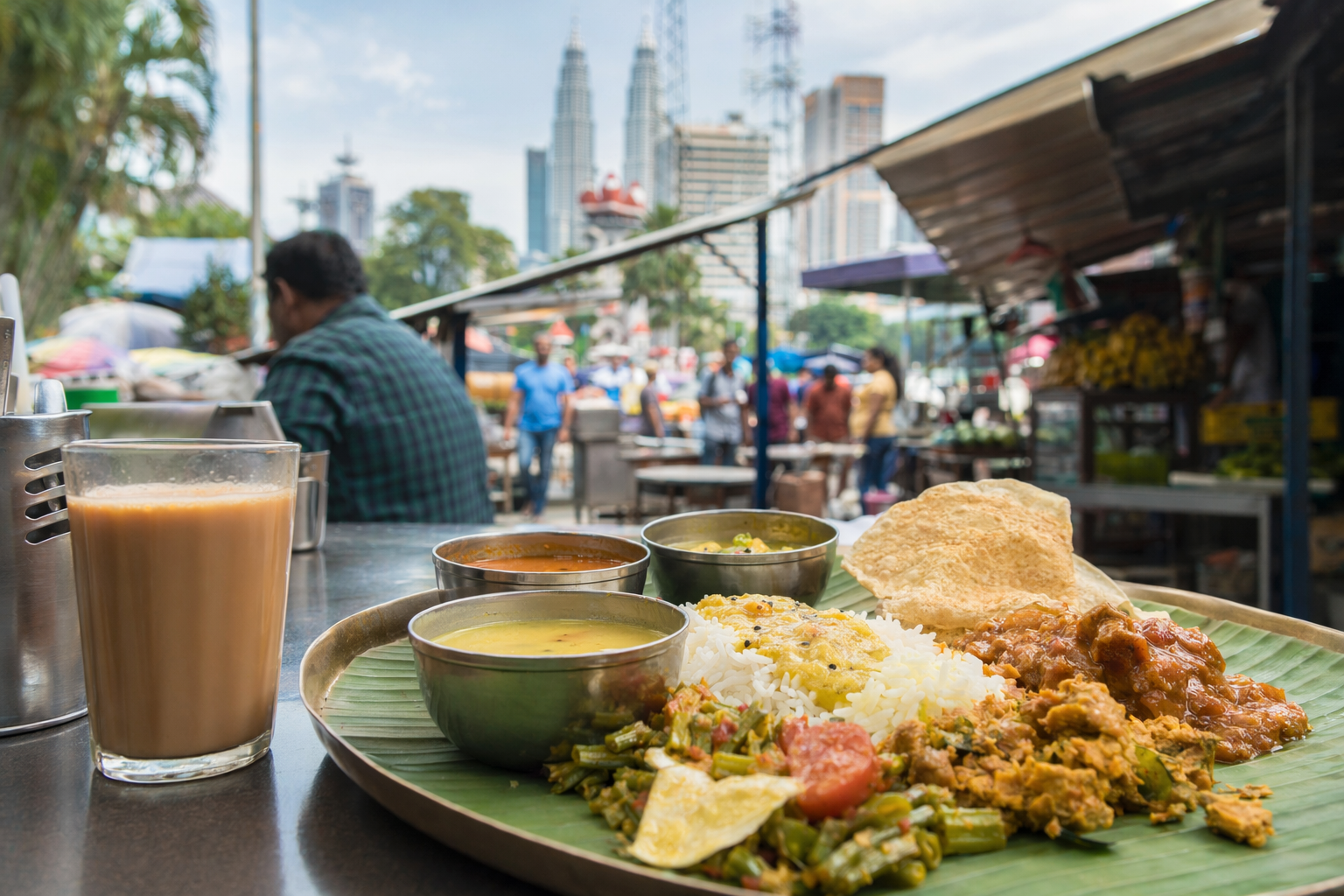
My favorite Brickfields breakfast is simple: crispy thosai, coconut chutney, sambar, maybe a vadai if I’m pretending walking all day burns everything. And teh tarik on the side, though sometimes I switch to filter coffee because, well, Indian brain. Sitting there in the morning watching office workers, tourists, aunties buying flowers, delivery riders squeezing through traffic... it feels like a meal and a travel documentary at the same time.
What to order when you don’t want drama
#For Indian travelers who eat vegetarian but not necessarily Jain, KL’s Indian restaurants are the easiest place to start. Thosai, idli, uttapam, poori bhaji, chapati with kurma, pongal, lemon rice, curd rice, veg meals, paneer dishes in North Indian places, and sweets like kesari or gulab jamun are usually safe bets. I say usually because kitchens differ, and if you’re strict about egg, ghee, onion, garlic, or cross-contact, you still need to ask.
Banana leaf rice is one of those KL meals that feels like a festival even when it’s just lunch. Rice lands on the leaf, then comes sambar, rasam, curries, poriyal, pickle, papad, maybe moru if they have it. You eat with your hand and suddenly your travel day improves by 40 percent. The only thing is, some banana leaf restaurants also serve meat and fish curries. If you want pure vegetarian handling, choose a vegetarian restaurant. If you are okay with a mixed restaurant but want only veg items, say it clearly and point. I’ve seen travelers get shy and then complain later. Don’t be shy. Ask. Malaysians are generally used to food preferences, but you have to communicate.
A quick phrase that helped me: “Saya vegetarian. Tak makan daging, ayam, ikan, udang.” That means I’m vegetarian and I don’t eat meat, chicken, fish, shrimp. Add “tanpa telur” if you don’t eat egg. For belacan, say “tanpa belacan.” I probably pronounced it badly the first few times and still survived.
Beyond Indian food: the real vegetarian adventure in Kuala Lumpur
#Here’s where KL gets interesting. If you only eat Indian food in Kuala Lumpur, you’ll be comfortable, yes, but you’ll miss the fun part. Malaysia’s food culture is Malay, Chinese, Indian, Peranakan, and many other influences all bumping into each other, arguing politely, and making dinner better. The trick is finding vegetarian versions of local dishes, because the standard versions often use shrimp paste, dried anchovies, fish sauce, chicken stock, or oyster sauce.
Vegetarian Chinese restaurants are a huge help here. Kuala Lumpur has Buddhist-style vegetarian spots where mock meats, tofu, mushrooms, greens, noodles, and rice dishes are done in a way that lets you taste local flavors without constantly negotiating. Places like Dharma Realm Guan Yin Sagely Monastery’s vegetarian canteen near the city center are often mentioned by veg travelers, especially for lunch, and Blue Boy Vegetarian Food Centre has been one of those old-school names people bring up when discussing KL vegetarian eating. Again, check timings before you go because canteens and food courts don’t always behave like tourist restaurants.
I had a vegetarian nasi lemak once that honestly made me emotional, and yes that sounds dramatic. Coconut rice, sambal without shrimp paste, peanuts, cucumber, a veg curry, and some kind of crispy soy or tempeh thing on the side. It had the comfort of curd rice and pickle, but also not at all. That’s the joy. You recognize parts of it, then it goes somewhere else.
- Ask whether the sambal has belacan or ikan bilis, because many traditional versions do.
- For noodles, check for oyster sauce, fish sauce, chicken stock, and egg if you avoid it.
- Halal is not the same as vegetarian. It just means the food follows Muslim dietary rules, so don’t rely on that label for veg safety.
- If a place is fully vegetarian or vegan, relax a bit and order local dishes there. That’s where you can try nasi lemak, laksa-style bowls, rendang-inspired mushroom dishes, and noodle plates without doing detective work every 2 minutes.
Chinatown, Petaling Street, and the vegan side of cool KL
#Chinatown in KL is not just knockoff bags and tourists taking photos under lanterns. Around Petaling Street, Kwai Chai Hong, and the surrounding lanes, there’s a newer food and cafe energy mixed with old kopitiams, temples, murals, and little lanes that are fun to get lost in. For vegetarians, this area can be slightly more modern and slightly more confusing, because the menus look trendy but ingredients need checking. Still, it’s worth exploring.
The Hungry Tapir in Chinatown is one of the better-known plant-based restaurants in KL, popular with locals, expats, and travelers who want something stylish but still rooted in Malaysian flavors. I liked that it didn’t feel like “sad vegan travel food.” You know those places where someone throws lettuce in a bowl and calls it mindful eating? Not that. In KL, the better vegan spots understand spice, texture, heat, and proper satisfaction. You can get hearty plates, local-inspired dishes, and drinks that feel like a treat after walking in the humidity.
Around Chinatown, I also found that coffee shops and dessert places were easier than full meals sometimes. Kaya toast usually contains egg in kaya, so careful there, but you can still find fruit, drinks, shaved ice desserts, and snacks depending on the stall. Cendol may be vegetarian in some places, but ask about gelatin or additives if you’re strict. I am mildly paranoid with desserts abroad because hidden gelatin has betrayed me before. Not in KL specifically, just in life.
Jalan Alor at night: go for the atmosphere, not blind faith
#Everyone mentions Jalan Alor when talking about Kuala Lumpur food, and yes, it’s lively. Neon signs, smoke, tables spilling onto the street, tourists photographing durian like it’s a wild animal, hawkers shouting, skewers everywhere. It is a proper sensory overload. But for Indian vegetarians, Jalan Alor is more of a travel experience than a guaranteed dinner plan.
You’ll find fruit stalls, juices, roasted chestnuts, maybe corn, some fried snacks, and restaurants that can possibly make vegetable dishes. But many cooking stations use shared woks, oyster sauce, seafood sauces, and meat stock. If you’re very strict, eat dinner elsewhere first and then come here for the vibe, coconut water, fruit, and people-watching. That’s what I ended up doing, and it was honestly perfect. I had already eaten a very safe masala thosai in Brickfields, so on Jalan Alor I could just wander, smell everything, and not make desperate food decisions.
Travel hunger makes you reckless. This is a scientific fact in my personal life.
Batu Caves day trip and the vegetarian question
#Batu Caves is one of the easiest and most meaningful trips from central KL, especially for Indian travelers. The Murugan statue, the huge staircase, the limestone caves, the temple bells, the monkeys acting like local gangsters, all of it stays with you. It is touristy, yes, but also genuinely powerful if you go early and give yourself time. Wear comfortable clothes, carry water, and please don’t feed the monkeys unless you enjoy chaos.
Food-wise, the area around Batu Caves has Indian vegetarian options, particularly near the temple zone, though what is open depends on the day and timing. During festivals like Thaipusam, the whole area becomes something else completely, with crowds and food arrangements changing a lot. On a normal day, I’d still carry a small backup snack because after climbing steps in Malaysian humidity, my decision-making becomes weak. A banana, some nuts, or a thepla from your bag can prevent unnecessary drama.
This is actually my main KL vegetarian travel rule: eat adventurously, but carry boring backup food. I know, it sounds like something your mother says. Mothers are often correct, annoyingly. I carried khakhra, chikki, and instant poha sachets on one trip, and while I didn’t need them every day, just knowing they were there made me more relaxed. If you’re planning more vegetarian travel outside India, I wrote similar planning notes in my Japan Theme Park Vegetarian Food Guide for Indians, especially around backup snacks and ingredient checks when you don’t want to survive on guesswork.
KL malls are not boring when it’s raining and you’re hungry
#Kuala Lumpur has serious mall culture. Pavilion, Suria KLCC, Mid Valley Megamall, NU Sentral, Sunway Pyramid if you go further out, all of them can become food shelters when rain suddenly attacks your plans. And KL rain does not negotiate. It falls like someone overturned a bucket from the 38th floor.
For vegetarians, malls are useful because menus are clearer, restaurants are more likely to understand dietary requests, and you can find chains. Simple Life is a vegetarian restaurant chain in Malaysia that many veg travelers find convenient, with rice sets, noodles, soups, and plant-based dishes. Not every branch feels the same, and mall food can be pricier than street eating, but when you’re tired and want air-conditioning, it’s a gift. Some Indian restaurants also have mall outlets, especially around transport hubs like NU Sentral.
The thing I like about KL malls is that you can pair sightseeing with survival. Visit the Petronas Towers area, wander KLCC Park, take the classic photos, then duck into Suria KLCC for a vegetarian meal or drink. Is it the most romantic food travel advice? Maybe not. But when your shirt is sticking to your back and Google Maps says your restaurant is “12 minutes walk” but the sky says “monsoon,” romance can wait.
What I’d eat in a KL mall if I had one tired evening
#- Start with a proper vegetarian rice or noodle set at a veg-friendly chain, because it fills you up without a long explanation.
- Get a cold drink after, maybe iced lime tea or fresh juice. Malaysian humidity deserves respect.
- If you see an Indian sweet or snack counter, buy something for the hotel room. Late-night hunger in a new city is not cute.
- Check tomorrow’s breakfast plan before sleeping. This sounds too organized, but it saves you from waking up starving and angry.
Ingredient checks Indian vegetarians should memorize
#I don’t like turning travel into homework, but in Malaysia a few ingredient words are worth knowing. Belacan is shrimp paste and it hides in sambal, sauces, fried rice, vegetable dishes, and things that look totally innocent. Ikan bilis means anchovies, usually dried, and they show up in nasi lemak and sambals. Udang is shrimp. Ayam is chicken. Daging is meat, often beef. Telur is egg. Sup or broth can contain chicken stock even when the visible ingredients look vegetarian.
For Chinese-style restaurants, ask about oyster sauce. For Malay-style dishes, ask about belacan and ikan bilis. For Indian-Muslim mamak places, vegetarian dishes are easier but still ask if gravies share bases or if fried items are cooked together, depending on your strictness. I personally don’t panic about every shared surface when traveling, but I know many people do for religious reasons, and that’s valid. Pure veg travelers should prioritize fully vegetarian restaurants, Indian vegetarian places, and Buddhist vegetarian eateries.
Jain travelers need more planning. South Indian restaurants can sometimes manage no onion, no garlic dishes if you go at a quieter time and explain nicely, but don’t assume. North Indian restaurants may be easier for custom orders, especially paneer, dal, roti, rice, and simple sabzi. Still, KL is busy, kitchens are busy, and “Jain” may not be understood everywhere. Say no onion, no garlic, no potato if needed, and confirm calmly. I’ve found that being polite but specific works better than giving a lecture while the waiter is holding six plates.
My Kuala Lumpur food rule is simple: don’t be scared, don’t be careless. Ask one extra question, then enjoy your meal properly.
My messy little 3-day vegetarian eating plan for KL
#If a friend from India asked me how to eat in Kuala Lumpur without stressing, I’d suggest a loose plan, not a military timetable. KL rewards wandering, but hunger needs structure.
Day one: arrive, settle near KL Sentral or wherever you’re staying, and eat in Brickfields. Keep it familiar. Thosai, idli, banana leaf rice, or North Indian if that’s what your stomach wants. Walk around Little India in the evening, buy some snacks, and don’t overdo it. Travel day digestion is a delicate creature.
Day two: do the classic city sights. KLCC, Merdeka Square, Central Market, Chinatown. For lunch, pick a vegetarian or vegan place near Chinatown or a mall food option if you’re moving fast. Evening at Jalan Alor for the atmosphere, but eat a safe dinner before or after depending on your comfort. If you want local flavors, try vegetarian nasi lemak or laksa at a fully veg place. That’s the sweet spot.
Day three: Batu Caves in the morning. Go early, seriously. Eat something before you leave or carry snacks. Back in the city, do a relaxed lunch at a South Indian place or a Chinese vegetarian restaurant. Later, maybe visit Thean Hou Temple, which is beautiful at sunset and not too far from Brickfields by Grab depending on traffic. End with filter coffee or teh tarik and something fried because you earned it. Or because you wanted it. Both are fine.
Airport and layover food reality
#Kuala Lumpur International Airport has food options, but I never like depending on airport luck for vegetarian meals, especially if I have an early flight or a tight connection. Airports are where confident plans go to become sad sandwiches. If you’re flying into KL from India, or onward to somewhere else, pack at least one dry snack and keep your water bottle ready to refill after security where allowed.
At KLIA, Indian-style vegetarian food may be available depending on terminal, time, and which outlets are open, but don’t assume your exact preference will be easy at 2 am. If you’re transiting through other Asian airports, the same logic applies. I had written about this kind of label-reading and snack strategy in the Hong Kong Airport Vegetarian Food Guide for Indian Layovers, and honestly the lesson is the same: airports are manageable when you don’t arrive hungry and hopeful like a fool. I say this with love, because I have been that fool.
Also, if you order a vegetarian meal on your flight, reconfirm it. Airline meal requests sometimes vanish into the digital universe. Carry something anyway. A packet of roasted makhana has saved more moods than meditation ever did.
The dishes I still think about
#The funny thing is, the meals I remember most from KL are not always the fancy ones. One was a paper dosa in Brickfields that was too big for the table and made me laugh like an idiot. One was a vegetarian nasi lemak where the sambal had that deep chilli sweetness without any shrimp paste. One was a Chinese vegetarian mixed rice plate with tofu skin, mushrooms, greens, and a curry that tasted like someone’s grandmother knew exactly what she was doing. One was just fresh mango cut by a street vendor when I was sweaty and tired near Central Market.
Food travel is like that. You plan for famous places and end up remembering the five-ringgit snack, the waiter who explained something kindly, the auntie who scolded you for not eating enough sambar, the first sip of iced tea after walking in heat. Kuala Lumpur is not a city that reveals itself neatly. It’s layered and noisy and sometimes inconvenient, and then suddenly it feeds you so well that you forgive the traffic.
For Indian vegetarians, KL is one of the better international cities to start with because there’s a safety net. You can always return to Indian food when you need comfort. But the real joy is stepping a little outside that net and trying Malaysian flavors in vegetarian spaces. That balance is what makes the trip memorable.
Final tips before you go hunting for your next meal
#Book accommodation near public transport if food matters to you. KL’s trains are useful, Grab is widely used, and walking is possible in pockets, but heat and rain can change your plans quickly. Brickfields is convenient for Indian food and airport connectivity. Bukit Bintang is great for nightlife and malls. Chinatown is atmospheric and increasingly interesting for cafes and plant-based dining. KLCC is polished and easy, especially for first-timers who want comfort.
Carry snacks, but don’t let them become your whole diet. Learn five food words, but don’t become scared of every menu. Check restaurant hours on the day, because listings change, public holidays happen, and small places sometimes close without much online drama. If you’re strict vegetarian, choose fully veg places for local dishes. If you’re flexible, mamak stalls and mixed restaurants can work, but ask clearly.
Most importantly, leave space for surprise. Kuala Lumpur is a wonderful city for the Indian vegetarian traveler precisely because it feels familiar and unfamiliar at the same time. One street gives you sambar, the next gives you coconut rice and sambal, another gives you vegan rendang mushrooms, and somewhere in between you’re standing under monorail tracks wondering why you didn’t come sooner.
I’d go back just to eat, honestly. And maybe to climb Batu Caves again, complain about the humidity again, and then reward myself with dosa again. If you’re planning your own food-heavy trip, keep reading around, compare notes, and check out AllBlogs.in too, they’ve got plenty of travel-food rabbit holes to fall into.