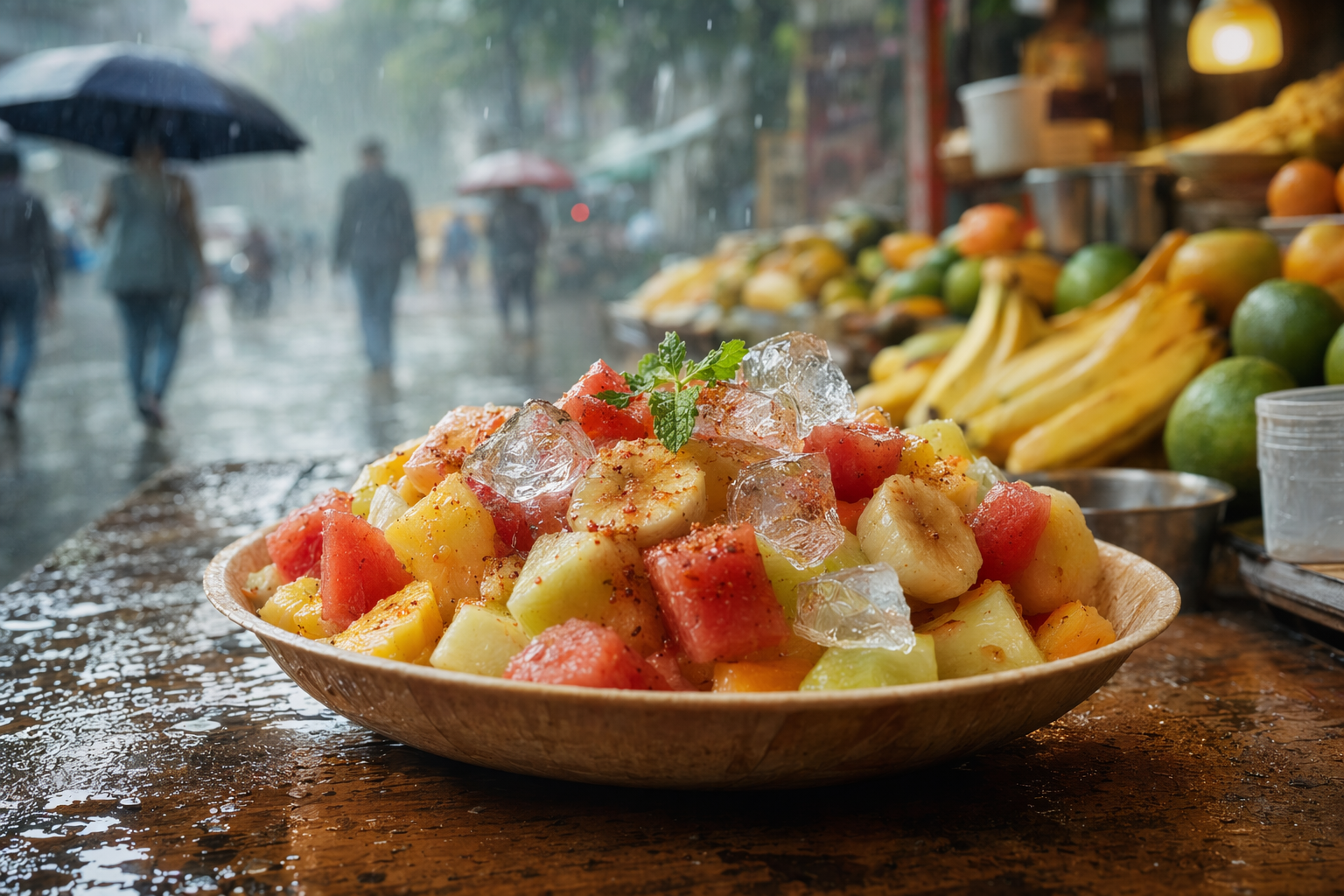
Every monsoon, I get this very specific craving. Cold fruit chaat with kala namak, lemon, maybe a little chilli, and that sweet-sour masala smell that somehow feels like childhood and street corners and rainy evenings all at once. Honestly, I love it. But I’ve also learned, the slightly miserable way, that monsoon fruit chaat safety is not some boring over-careful topic. It matters. Especially when the fruit is already cut, sitting out, and there’s ice involved. A few years ago I ate a beautiful plate of mixed fruit near a bus stand during heavy rain, and that night my stomach basically resigned from service. Cramps, loose motions, nausea, the whole drama. Since then, I still eat fruit chaat, but I’m much more picky about where, when, and how.
I’m not trying to scare anyone away from fruit. Fruit is genuinely good for us. It gives fiber, vitamin C, potassium, polyphenols, water, all that nice stuff our bodies actually need. But cut fruit is different from whole fruit. Once papaya, watermelon, banana, apple, guava, pineapple, muskmelon or whatever else is chopped, the clean protective skin is gone and the juicy surface becomes a very friendly place for germs. Add monsoon humidity, flies, muddy water splashes, crowded stalls, wet hands, and ice made from questionable water, and suddenly that healthy snack can turn into a stomach infection lottery. Not always, of course. But enough times that we should pay attention.
Why Monsoon Makes Fruit Chaat Riskier Than Usual
#The monsoon is wonderful, but for food safety it is kind of a mess. Rainwater can overflow drains, contaminate water lines, flood markets, and make it harder for vendors to keep things dry and clean. Bacteria and viruses don’t need a fancy invitation. They just need moisture, warmth, food, and time. Cut fruits give them that. In India, common monsoon-linked stomach trouble can involve germs like E. coli, Salmonella, Shigella, Vibrio cholerae, norovirus, and sometimes hepatitis A or E through contaminated water. Typhoid also remains a concern in places where water and sanitation are not reliable. And no, lemon juice sprinkled on top does not magically sterilize everything. I wish it did, because I put lemon on almost everything.
The basic food safety message in 2026 is still surprisingly old-school. Clean hands. Safe water. Clean knives and boards. Keep cold foods cold. Don’t let cut produce sit out for ages. That’s it, mostly. There are lots of newer wellness trends right now, like gut-health powders, probiotic drinks, immunity shots, wearable hydration reminders, portable UV bottles, and people tracking their glucose response to mangoes on apps. Some of that can be useful, sure. But none of it cancels out dirty water or a contaminated knife. A probiotic can’t politely ask Salmonella to leave your intestine. Food safety comes first, wellness hacks later.
The Cut Fruit Problem: It Looks Fresh, But Is It?
#This is the part I had to learn. Fruit can look perfectly fine and still be unsafe. A vendor may have cut it an hour ago, or five hours ago. Maybe the knife was used for raw vegetables, or kept on a wet cloth that hasn’t been washed properly. Maybe the board has old fruit pulp stuck in tiny cuts. Maybe the fruit was washed in tap water that is okay some days and risky after heavy rainfall. None of this is always visible. In food safety, we talk about the “danger zone,” where bacteria multiply faster. For many foods, that’s roughly between 5°C and 60°C. Cut fruits, especially high-water fruits like watermelon and melon, should not hang around in warm weather.
A simple rule I follow now: if cut fruit has been sitting at room temperature for more than about two hours, I skip it. If it’s very hot and humid, I’m even stricter. Some guidance uses a one-hour rule in hotter conditions, and honestly Indian monsoon afternoons can absolutely qualify. At home, I refrigerate cut fruit quickly, ideally below 5°C, and eat it within a day or so. I used to keep a big bowl of cut watermelon in the fridge for three days and snack from it with the same spoon. Don’t judge me. But yeah, I don’t do that anymore.
Ice Is the Sneaky One
#People worry about fruit, but ice is often the real villain. Ice is just water in solid form, and freezing does not reliably kill all germs. If the ice was made from unsafe water, or handled with dirty hands, or stored in a sack dragged across a wet floor, it can carry germs straight into your drink or chaat. I used to think, “It’s frozen, so it must be fine.” Nope. Freezing can slow microbes down, but many survive. When the ice melts into fruit juice, lemon water, kala khatta, sugar syrup, or that watery fruit chaat dressing, you basically drink whatever was in the water.
Now my monsoon rule is pretty boring but effective: no loose ice from street stalls unless I am very sure about the source. I prefer no ice, or ice made at home from filtered and boiled water, or sealed packaged ice from a trusted place. Even in restaurants, I’m a little cautious during outbreaks or after heavy flooding. If I’m travelling, I ask for bottled water without ice. Yes, sometimes people roll their eyes. Fine. My stomach has opinions too.
What I Look For Before Buying Fruit Chaat Outside
#- The fruit should be cut fresh in front of me, not scooped from a mountain of pre-cut pieces sitting open near traffic, flies, and rainwater splashes.
- The vendor’s hands matter. Gloves are nice, but only if they’re clean and changed. Dirty gloves are just dirty hands with confidence.
- I watch the knife and board. If the board looks blackened, slimy, or permanently wet, I walk away. Same if the wiping cloth looks like it has lived several lives.
- I avoid chutneys, watery masala mixes, and syrups kept uncovered. Dry masala is usually safer than wet mixtures, though high salt is another thing.
- I skip stalls where the fruit is kept near open drains, standing water, garbage, or lots of flies. This sounds obvious, but cravings make us stupid sometimes.
One thing I’ve noticed is that the safest-looking stall is not always the fanciest one. Sometimes a small vendor who cuts fruit fresh, keeps produce covered, uses bottled water, and washes utensils properly is safer than a busy place where everything is rushed. I don’t want to shame street food vendors either. Many work incredibly hard in difficult conditions, and plenty are careful. The point is to choose wisely, not act superior. Food safety is also about systems: clean water supply, drainage, waste management, training, and inspections. Individual vendors can only do so much if the environment around them is flooded and filthy.
At Home: My Monsoon Fruit Chaat Routine
#At home I’m not perfect, but I’ve built a little routine that makes fruit chaat feel safe without making it joyless. First, I wash my hands properly with soap, not the three-second rinse I used to call washing. Then I rinse whole fruit under safe running water before cutting. For thick-skinned fruits like watermelon or muskmelon, I still wash the outside because the knife can drag germs from the peel into the flesh. This was a big “ohhh” moment for me. I used to think the peel didn’t matter if I wasn’t eating it.
I don’t wash fruit with dish soap or detergent, because that can leave residues and is not recommended. Salt water and vinegar rinses are popular in many homes, including mine growing up, and they may help remove some dirt, but they are not a guarantee against pathogens. Clean running water, scrubbing firm produce with a clean brush when needed, safe storage, and clean cutting tools are more important. If the municipal water supply seems doubtful after heavy rains, I use filtered water that has been boiled and cooled for rinsing produce I’ll eat raw. Is that a bit extra? Maybe. But after one bad gastro episode, extra feels reasonable.
- I cut only what we’ll eat soon, especially watermelon, papaya, pineapple, and melon.
- I keep cut fruit covered in the fridge, not in an open bowl absorbing fridge smells and random drips.
- I use a clean spoon for serving. No fingers, no tasting and dipping back, no “just one piece” chaos.
- I add lemon, roasted cumin, chilli, mint, and chaat masala just before eating, not hours earlier.
- If power cuts are long and the fridge warms up, I don’t take chances with cut fruit. Sad, but safer.
The Chaat Masala and Salt Angle Nobody Talks About
#Since this is a wellness blog, I have to say it: fruit chaat can quietly become very salty. Chaat masala, black salt, regular salt, packaged spice mixes, sev on top, even some bottled sauces. For most healthy people, a salty snack now and then is not the end of the world. But if you have high blood pressure, kidney disease, swelling issues, heart problems, or your doctor has asked you to reduce sodium, go light. I say this as someone who loves kala namak so much I could probably put it on air. The World Health Organization has long advised adults to keep salt under 5 grams a day, and many Indian diets go above that without us noticing.
Sugar is another small thing. Some fruit chaat recipes add sugar syrup, sweet chutney, honey, or packaged juices. Fruit already has natural sugars along with fiber, which is fine for most people in normal portions. But if you have diabetes, insulin resistance, PCOS, or you’re monitoring blood glucose, a huge bowl of mango, banana, grapes, sweet chutney, and juice is not exactly a “free” food. In 2026, lots of people are using continuous glucose monitors for wellness, sometimes too obsessively in my opinion, but one useful lesson from that trend is that mixed fruit portions matter. Pairing fruit with nuts, seeds, curd if safe and fresh, or eating a smaller serving can make it feel more balanced.
Who Should Be Extra Careful With Street Cut Fruit?
#Some people can eat risky food and just get a mild upset stomach, while others can get seriously ill. Pregnant people, small children, older adults, and anyone with low immunity should be more careful with cut fruit and ice outside, especially during monsoon. This includes people on chemotherapy, high-dose steroids, transplant medicines, or those living with uncontrolled diabetes, liver disease, kidney disease, or HIV with low immunity. For these groups, I’d choose whole fruits that can be peeled, freshly cut at home, or fruit prepared in a place with very reliable hygiene. It’s not about living in fear. It’s about knowing your risk.
If you’re pregnant, please be cautious with raw cut produce from outside. Infections and dehydration can hit harder during pregnancy. For toddlers too, diarrhea can become dehydration quickly. I’ve seen parents give a child roadside fruit because “it’s healthy,” and I get it, we’re all trying. But during rains, a banana you peel yourself or a washed apple from home may be safer than pre-cut fruit salad with ice. Not as exciting, I know. Parenting is basically choosing the less exciting option 400 times a day.
What If You Already Ate It and Now Your Stomach Is Angry?
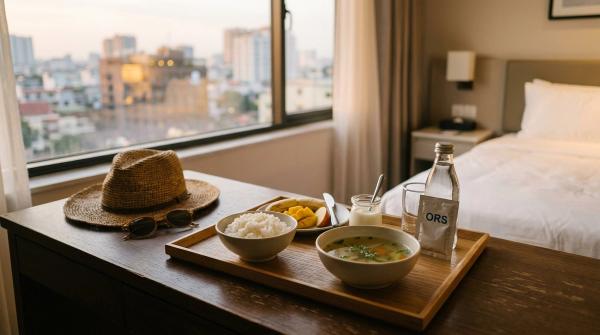
#First, don’t panic. Most mild stomach upsets improve with fluids, rest, and simple food. Oral rehydration solution, the proper ORS packet mixed exactly as instructed, is one of the best things to keep at home during monsoon. Coconut water can help with fluids, but it does not replace ORS in significant diarrhea. Homemade lemon-salt-sugar water can be okay in a pinch if made correctly with safe water, but packaged ORS is more reliable. Sip often, even if you don’t feel like drinking. Dehydration creeps up.
I usually stick to bland foods for a bit: rice, curd if I’m tolerating dairy and it’s fresh, bananas, toast, dal water, khichdi. I avoid alcohol, greasy snacks, and very spicy food, even though spicy food is exactly what I want when I’m annoyed. Don’t randomly take antibiotics. Many stomach infections are viral or self-limiting, and unnecessary antibiotics can cause side effects and resistance. Also be careful with anti-diarrhea medicines like loperamide. They are not suitable if you have high fever, blood in stools, severe abdominal pain, or suspected dysentery. When in doubt, ask a doctor.
Red Flags Where You Should Get Medical Help
#- Blood in stool, black stool, or severe mucus with fever.
- Repeated vomiting so you can’t keep fluids down.
- Signs of dehydration: very little urine, dizziness, dry mouth, sunken eyes, extreme weakness, or confusion.
- Diarrhea lasting more than 2 to 3 days, or sooner for babies, older adults, pregnant people, and anyone immunocompromised.
- High fever, severe belly pain, yellow eyes, dark urine, or symptoms after a known local outbreak of cholera, typhoid, or hepatitis.
My Slightly Overprotective Monsoon Fruit Chaat Checklist
#Okay, this is the part I actually use. If I’m at home, I wash the fruit before cutting, wash hands, use a clean knife and board, avoid old cut fruit, refrigerate quickly, and use safe water for ice. If I’m outside, I prefer fresh-cut fruit without ice, from a clean stall, with dry masala only. I avoid pre-cut melon and watermelon that has been sitting uncovered. I avoid watery chutneys unless I fully trust the place. And if the area is flooded, the stall is near dirty water, or my gut feeling says no, I don’t buy it. Gut feeling is not science, but it has saved me a few times.
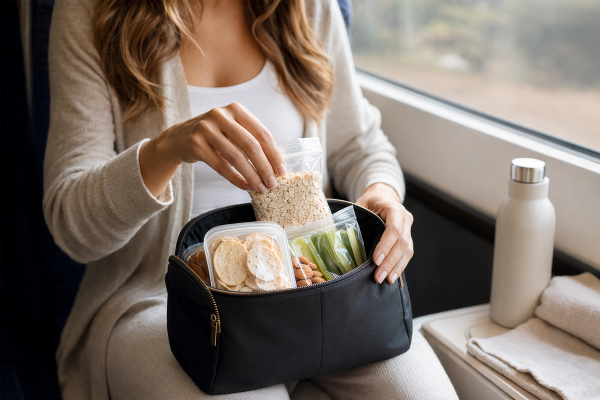
I also carry a water bottle more often now. This sounds very wellness-influencer, but it’s practical. If I’m hydrated, I’m less tempted to buy random iced drinks. During monsoon travel, I keep ORS sachets, hand sanitizer, and sometimes a small pack of roasted chana or nuts. Not glamorous. Very aunty behavior, maybe. But aunty behavior survives monsoon better than reckless behavior.
The Balance: Don’t Fear Food, Just Respect It
#I don’t believe in turning wellness into anxiety. Food is culture, memory, pleasure, and community. Indian fruit chaat is not just nutrients in a bowl. It’s the vendor calling out near the school gate, the steel plate, the lemon squeeze, the masala dust, the first bite of guava with chilli. I don’t want us to lose that. But I also don’t want anyone spending two days running to the bathroom because we ignored basic safety. So I try to hold both truths: enjoy the food, and be careful with cut fruit and ice when the rains are heavy.
My personal monsoon rule is simple: whole fruit is safer than cut fruit, fresh-cut is safer than pre-cut, no ice is safer than unknown ice, and clean hands beat every fancy wellness hack.
Also, please remember that food poisoning isn’t a personal failure. Sometimes you do everything right and still get unlucky. Sometimes a trusted place has one bad day. If you get sick, hydrate, rest, and get medical help if there are red flags. And if you’re preparing fruit chaat for others, especially kids or elders, take that responsibility seriously. Clean board, clean knife, safe water, quick refrigeration. It’s not complicated, but it does require attention.
Final Thoughts Before the Next Rainy-Day Craving
#This monsoon, I’m still going to eat fruit chaat. I’m just going to be that person asking, “Bhaiya, fresh cut kar doge?” and “Ice mat daalna.” Maybe slightly annoying, but alive and hydrated. The big lesson for me has been that healthy food can become unsafe if handled badly, and street food can be enjoyed more safely if we make smarter choices. Don’t depend on smell, looks, lemon juice, or confidence alone. Depend on hygiene, safe water, temperature, and timing. Boring things, but they work.
If you’re on your own health journey like me, trying to enjoy Indian food without ignoring your stomach’s limits, start small. Carry safe water. Skip unknown ice. Choose freshly cut fruit. Wash properly at home. Be kinder to your gut during the rains. And if you like reading practical wellness stuff without it feeling too preachy, have a look at AllBlogs.in sometime. I’ve found that kind of casual health reading helpful, especially when I’m trying to make better choices but still live like a normal person.