The monsoon problem is not just “bad air” or “too much moisture”
#In many Indian homes, the rainy season turns indoor comfort into a small daily negotiation. The floor feels slightly sticky. Clothes take forever to dry. Wardrobes smell musty. Someone in the house may start sneezing more, or waking up with a blocked nose, or feeling uneasy in a room that just feels “closed.” And then the shopping question pops up: should you buy an air purifier or a dehumidifier?
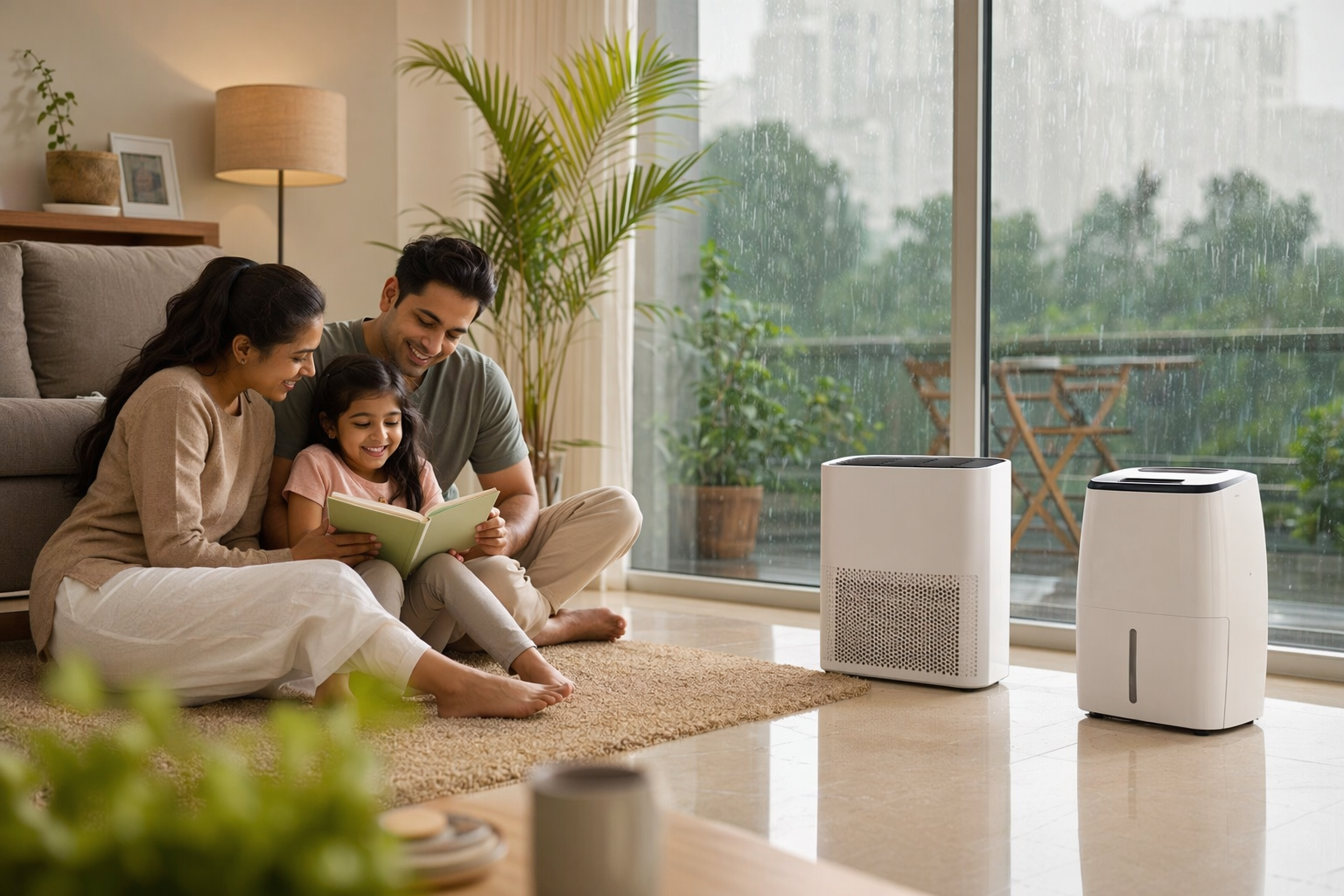
The honest answer is: they solve different problems. An air purifier mainly deals with particles and some pollutants floating in the air, depending on the filters used. A dehumidifier deals with excess moisture in the room. During the Indian monsoon, both problems can happen together, which is why the decision feels confusing. Damp air can support mould growth and dust mites, while outdoor pollution, traffic smoke, cooking fumes, incense smoke, pet dander, and mould spores can still circulate indoors. So it is not always an either-or situation, but most homes should still start by identifying the main issue before buying another appliance.
This is also a health topic, so it needs a bit of care. Air purifiers and dehumidifiers may support comfort and reduce certain triggers, but they are not medical treatment. If someone has asthma, COPD, repeated wheezing, severe allergies, persistent cough, chest tightness, breathlessness, fever, or symptoms that keep worsening, it is safer to speak with a qualified doctor rather than relying only on devices. Appliances can help manage the indoor environment. They cannot diagnose what is going on.
Air purifier vs dehumidifier: the simple difference
#| Device | What it mainly does | Best for monsoon homes when... | What it does not do |
|---|---|---|---|
| Air purifier | Filters airborne particles such as dust, PM2.5, pollen, pet dander, smoke particles, and some mould spores if the filter is good | The room feels dusty, smoky, polluted, or allergy-triggering even when humidity is not the main issue | It does not remove moisture from the air or dry walls, clothes, wardrobes, and mattresses |
| Dehumidifier | Pulls water vapour from indoor air and collects it as water | Rooms feel damp, musty, sticky, or mould-prone, especially with humidity staying high | It does not filter fine pollution like PM2.5 unless it has a separate filter, and most do not |
| AC dry mode | Reduces some humidity while cooling less aggressively than normal cooling mode | You already use an AC and need short-term humidity control in a closed room | It may not maintain ideal humidity all day, and it is not a full replacement for a dehumidifier in very damp spaces |
| Exhaust fan and ventilation | Moves humid or polluted indoor air out, if outdoor conditions allow | Bathrooms, kitchens, and closed balconies trap steam and smells | It can bring in outdoor pollution or humid air if used at the wrong time or in a polluted area |
Think of it like this: an air purifier is a “what is floating in the air?” machine. A dehumidifier is a “how wet is this air?” machine. If your walls are getting black patches, cupboards smell like old wet cloth, and shoes grow fungus in a week, a purifier alone will not fix that. If your indoor humidity is fine but the room faces a busy road and dust settles quickly, a dehumidifier will not clean the air.
Why Indian monsoon homes are a special case
#Monsoon homes in India have a few very specific challenges. Many cities already deal with traffic pollution, construction dust, open drains, seasonal viral infections, and indoor smoke from cooking or incense. Add high humidity and poor drying, and suddenly small problems multiply. A room that was manageable in February can feel completely different in July.
High humidity does not just feel uncomfortable. It can encourage mould growth on walls, ceilings, curtains, mattresses, wooden furniture, books, leather bags, and even inside wardrobes. Dust mites also tend to do better in humid environments. Public health bodies such as the WHO have long linked damp indoor environments and mould with respiratory symptoms and asthma-related concerns, though the exact risk varies from person to person. The U.S. EPA commonly recommends keeping indoor relative humidity roughly between 30% and 50% where possible to discourage mould growth, and many practical home-care guides use a similar range. In Indian monsoon weather, staying under 50% all day may be hard, but knowing the target helps.
A small hygrometer, the cheap digital humidity meter kind, is honestly one of the most underrated monsoon buys. It tells you whether your room is sitting at 62%, 78%, or 90% relative humidity. Without that, people often guess. And guesses lead to buying the wrong appliance. A room can smell bad because of dampness, not because the air needs more filtration. Or a room can feel stuffy because pollution and poor ventilation are trapped, not because moisture is the main villain.
When an air purifier makes more sense
#An air purifier is usually the better first choice when airborne particles are the bigger concern. This is common in homes near main roads, construction sites, industrial areas, dusty lanes, or places where windows must stay shut because outdoor air is visibly polluted or smells smoky. It can also be useful in bedrooms where someone is sensitive to dust, pollen, pet dander, or smoke particles, though again, symptoms should be discussed with a healthcare professional if they are persistent or serious.
For monsoon homes, look for a purifier with a true HEPA-type filter or a clearly stated high-efficiency particulate filter, plus a suitable CADR for the room size. CADR stands for clean air delivery rate, and it basically tells you how fast the purifier can clean air in a specific room. A tiny purifier in a large bedroom is like using a hand fan in a wedding hall. Technically something is happening, but not enough to matter much.
- Choose a purifier based on room size, not just brand name or discount price.
- Check filter replacement cost before buying. Some filters cost enough to make people stop using the device after one season.
- Avoid ozone-generating “air cleaners.” Ozone can irritate the lungs and is not considered safe for occupied indoor spaces.
- If cooking smoke is a big issue, improve kitchen exhaust first. A purifier in the bedroom cannot undo a smoky kitchen routine across the whole house.
One thing to be clear about: an air purifier may capture airborne mould spores, but it will not remove mould growing on a wall. If there is a damp patch behind a cupboard, the source needs fixing. That may mean stopping seepage, improving ventilation, drying the surface, cleaning safely, or getting help for larger mould areas. If mould is widespread, or if someone in the home has asthma, is immunocompromised, elderly, pregnant, or a small child, it is sensible to be extra cautious and get professional advice.
When a dehumidifier makes more sense
#A dehumidifier is usually the better first choice when the house feels wet rather than dirty. Classic signs include musty smell, condensation on windows, damp bedding, swollen wooden doors, fungus on shoes, black or green patches on walls, clothes that smell even after washing, and a general sticky feeling in closed rooms. In coastal cities like Mumbai, Kochi, Chennai during wet spells, Goa, parts of Kolkata, and many hill or ground-floor homes, this can be a very real problem.
Dehumidifiers work best in closed spaces. You shut the doors and windows, run the machine, and let it pull moisture from the air. If windows are open during heavy rain or very humid weather, the machine keeps fighting endless moisture from outside. That wastes electricity and patience, both of which are limited in most homes.
For a bedroom, a compact compressor dehumidifier may be enough, depending on room size and dampness. For larger rooms or badly damp homes, capacity matters. Dehumidifier capacity is often listed as litres per day, but those ratings can be based on ideal test conditions that may not match your actual room temperature and humidity. So do not buy only by the biggest number. Check tank size, noise, power use, auto shut-off, continuous drainage option, and whether service is available in your city.
Also, monsoon humidity does not stay politely inside bedrooms. Kitchens suffer too. Batter, spices, snacks, flour, pulses, wooden chopping boards, lunch boxes, and dish cloths all behave differently when the air is damp. If you are dealing with sour smells or storage issues around fermented foods, this guide on Idli Batter in Monsoon: Fermentation, Sour Smell and Safe Storage Fixes fits the same larger problem: moisture changes everything at home, not just the bedroom air.
The health angle: what these devices may help with, and what they cannot promise
#It is tempting to think, “I will buy the right appliance and allergies will stop.” But bodies are not that neat. Sneezing, coughing, blocked nose, itchy eyes, wheezing, headaches, fatigue, and throat irritation can have many causes, including infections, allergies, asthma, pollution exposure, reflux, sinus problems, medication effects, and more. Indoor air quality is one piece of the puzzle, not the whole puzzle.
That said, improving indoor conditions may help reduce exposure to common triggers. A good air purifier can lower indoor particle levels when used correctly in a closed room. A dehumidifier can support mould and dust mite control by keeping humidity lower. Better exhaust can reduce cooking fumes and bathroom steam. Regular cleaning can reduce dust reservoirs. These are practical steps, not miracle cures.
Seek medical care promptly if there is difficulty breathing, chest pain, blue lips, fainting, severe wheezing, blood in sputum, high or persistent fever, sudden worsening symptoms, or symptoms in infants, older adults, pregnant people, or anyone with existing heart or lung disease. If someone is using asthma medication more often than usual, or waking at night with breathing symptoms, that deserves proper medical attention. Please do not wait for a purifier delivery slot in that situation.
A healthier monsoon home is usually built from layers: moisture control, ventilation, cleaning, source reduction, and medical guidance when symptoms need it. No single gadget should carry the whole burden.
A practical decision guide for your home
#Before buying anything, spend two or three days observing the room. Not in a dramatic way, just basic notes. What is the humidity reading? Does the smell get worse after rain? Is there visible mould? Does dust settle fast? Is the room near a road? Are clothes drying indoors? Is the bathroom exhaust working? Is the kitchen chimney cleaned? Are windows opened at times when outdoor air is cleaner, or only when traffic is at its worst?
- Buy or borrow a hygrometer and check relative humidity in the room, especially in the morning and evening.
- If humidity is often above 60% and there is musty smell, condensation, or mould, consider moisture control first.
- If humidity is reasonable but dust, smoke, pollen, pet dander, or PM2.5 are concerns, consider an air purifier first.
- If both are bad, prioritize the problem causing damage or symptoms, and consider a staged approach rather than buying everything in one go.
A staged approach is kinder to your wallet. For example, fix obvious leakage first. Clean the AC filter. Use bathroom and kitchen exhaust properly. Stop drying multiple loads of laundry inside a closed bedroom if there is any alternative. Move furniture a few inches away from damp external walls. Then see what remains. Sometimes a dehumidifier becomes clearly necessary. Sometimes the room improves enough that a purifier becomes the more useful buy.
Room-by-room advice for Indian monsoon homes
#Bedrooms deserve first attention because people spend long hours there. If sleep feels disturbed because the room smells musty or bedding feels damp, check humidity. A dehumidifier may make the room feel more comfortable, especially if the room is closed most of the day. If the bedroom faces traffic, has dust entering, or someone is sensitive to particles, an air purifier may be useful at night. In some homes, both may be used, but avoid overcrowding one small room with noisy appliances. Sleep matters too.
Bathrooms need moisture removal more than air purification. Run exhaust fans during and after bathing. Wipe wet surfaces where possible. Do not ignore black patches on grout or ceilings. If there is no exhaust, even a simple ventilation habit can help, though outdoor humidity and privacy issues make this tricky in apartments. Large mould growth should be handled carefully, not scrubbed dry in a way that spreads spores into the air.
Kitchens need source control. Cooking fumes, moisture from boiling, wet cloths, leaking sinks, and stored grains all add up. Use a chimney or exhaust fan if available. Clean filters regularly because a greasy chimney filter is basically a decorative object after a point. Keep dry foods sealed. If the kitchen is always damp, a dehumidifier nearby may help, but only if safety and placement are sensible. Do not keep appliances where water splashes can reach them.
Wardrobes and storage rooms are a different beast. Small desiccant boxes, silica gel packets, camphor alternatives, sunlight when available, and periodic airing can help, but if the room itself is humid, these are temporary patches. A dehumidifier used in a closed storage room for a few hours may help reduce moisture load. For expensive clothes, documents, musical instruments, cameras, leather bags, and electronics, humidity control matters more than most people realise.
What to check before buying an air purifier
#For air purifiers, start with the filter. A HEPA or high-efficiency particulate filter is the main feature for fine particles. Activated carbon can help with some odours and gases, but carbon filters vary a lot in quality and amount of carbon used. A thin carbon sheet is not the same as a serious carbon filter. If the product is vague about filtration, that is a red flag.
CADR should match the room. Many brands advertise coverage in square feet, but check whether that assumes ideal conditions and low air changes. For bedrooms, you generally want enough clean air delivery to cycle the room air multiple times per hour. Keep doors and windows closed while running it, otherwise it is constantly cleaning new air entering the room. Place it with some space around the intake and outlet, not squeezed behind curtains or under a table.
Noise matters. A purifier that is too loud on effective speed will be kept on sleep mode all day, and sleep mode may not clean enough air. Look for real user feedback on sound, filter availability, and after-sales service. Also check electricity use if you plan to run it many hours daily through monsoon and winter pollution season.
What to check before buying a dehumidifier
#For dehumidifiers, capacity and drainage are the big things. A small tank fills quickly in a damp room, and if the machine shuts off every few hours, the benefit drops. Auto shut-off is important for safety. Continuous drainage is useful if you have a safe drain point. Compressor dehumidifiers work well in warm humid conditions, which fits many Indian monsoon settings. Desiccant dehumidifiers can work better in cooler spaces, but they may use more power and add some warmth.
Placement matters here too. Keep the dehumidifier away from walls enough for airflow. Close the room. Empty the tank. Clean the filter if the model has one. Do not run it beside open windows during rain and then blame the machine for not performing. It is not magic, it is physics, slightly boring but useful physics.
Be careful with extension cords, wet floors, and overloaded sockets. Monsoon electrical safety is not a side issue. If there is seepage near plug points, flickering power, or water dripping down walls, fix that before running appliances. And if the room has major water intrusion, a consumer dehumidifier may not be enough. You may need repairs, waterproofing, plumbing work, or building maintenance support.
Do you ever need both?
#Yes, some homes do. A ground-floor apartment near a busy road, a coastal flat with poor cross-ventilation, or a bedroom with damp walls and outdoor pollution may benefit from both moisture control and particle filtration. But using both should be planned. The dehumidifier may warm the room a little. The purifier needs airflow. Both need electricity, maintenance, and space. If budget is tight, start with the problem that is measurable and visible.
A sensible combination might look like this: run the dehumidifier for a few hours to bring humidity down, then run the purifier during sleep, or run both if the room is closed and the load is high. There is no universal schedule. The hygrometer reading, smell, comfort, and visible dampness will guide you. If someone has a diagnosed respiratory condition, ask their clinician what indoor triggers matter most for them.
Also remember the rest of monsoon life. Buying the right home appliance while wearing damp cotton socks for a three-hour commute is only solving half the comfort problem. For everyday rainy-season purchases, this piece on Quick-Dry Socks vs Cotton Socks for Indian Monsoon Commutes: What Should You Buy? is a useful companion because moisture management follows you outside the house too.
Common mistakes that waste money
#The first mistake is buying an air purifier for a mouldy wall. It may reduce spores floating around, yes, but the wall will keep producing trouble if the damp source continues. The second mistake is buying a dehumidifier for traffic pollution. It will collect water beautifully while PM2.5 continues floating around. Different job.
Another common mistake is ignoring maintenance. A purifier with a clogged filter becomes weak and sometimes smelly. A dehumidifier with a dirty tank can become unpleasant. Filters, tanks, vents, and coils need regular care according to the manufacturer’s instructions. If that sounds annoying, it is. But it is still easier than dealing with a cupboard full of fungus or a room that never feels fresh.
- Do not use scented sprays to hide musty smells. Find the moisture source.
- Do not dry wet clothes in a closed bedroom every day unless you are also managing humidity.
- Do not assume “ionizer” means healthy. Some ionizing devices can produce ozone, so read carefully.
- Do not over-clean mould with dry brushing, especially large areas, because it can spread particles into the air.
- Do not forget simple fixes: leaks, exhaust fans, window timing, sunlight, and decluttering against damp walls.
A realistic monsoon setup for most homes
#For many Indian homes, the best setup is not fancy. It is basic and consistent. Keep a hygrometer in the bedroom or the dampest room. Ventilate when outdoor air is not awful. Use exhaust fans in kitchen and bathroom. Keep furniture slightly away from external walls. Clean dust with a damp cloth instead of sweeping it into the air. Wash and fully dry curtains, bedsheets, and doormats. Store clothes only when fully dry. Fix leaks quickly. Then choose the appliance that fills the remaining gap.
If humidity regularly stays high and the house smells musty, a dehumidifier often gives more direct monsoon relief than an air purifier. If pollution, smoke, dust, or fine particles are the main concern, an air purifier is the more relevant tool. If both are present, you may need both, but not necessarily on day one. Measure, observe, and buy slowly. That sounds unglamorous, but it prevents regret.
And finally, keep health expectations grounded. Better indoor air may support comfort, sleep quality, and trigger reduction for some people, but it should not replace medical care. If symptoms are severe, unusual, persistent, or worsening, please speak with a qualified healthcare professional. Your home environment matters, but so does getting the right advice for the person, not just the room.
Bottom line: choose based on the problem, not the season
#During the Indian monsoon, a dehumidifier fights dampness. An air purifier fights airborne particles. The season can create both, but your home will usually show which one is louder: musty smell and mould point toward humidity control, while dust, smoke, PM2.5, pollen, and pet dander point toward air filtration. When in doubt, start with a humidity meter and a room-by-room check before spending money.
A careful monsoon home is not about panic-buying gadgets. It is about noticing what the room is telling you, reducing sources, keeping things dry where possible, and using the right device for the right job. Small, practical, boring steps often work better than big dramatic purchases. For more grounded home and wellness reads, you can wander through AllBlogs.in.