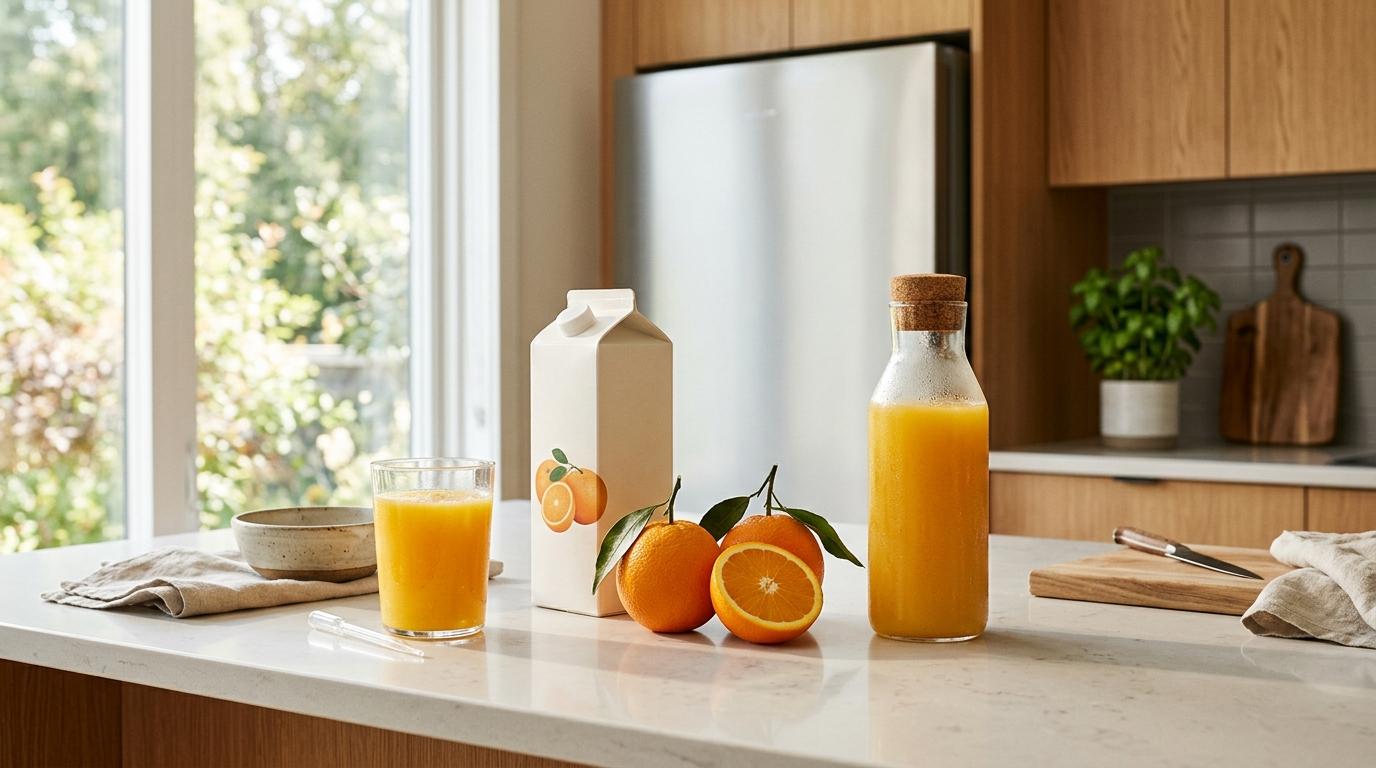
You open a carton of orange juice, pour a glass, put it back in the fridge, and then a few days later you pause with the cap in your hand.
Is this still good?
Maybe it sat out during breakfast longer than you meant it to. Maybe someone drank straight from the bottle. Maybe a half-finished juice box came home in a backpack and now you’re wondering if it can be saved.
That’s where opened juice safety gets important. Juice feels harmless because it’s sweet, familiar, and often sold in shelf-stable packaging. But once you open it, the rules change. The printed “best by” date is no longer the only thing that matters. What matters most is how long the juice has been open, whether it stayed cold, and how cleanly it was handled.
This guide breaks down practical juice fridge rules, what to do with opened juice left out, how to handle juice cartons after opening, and why fresh juice storage needs a little extra caution.
Quick answer
#Once juice is opened, it should go in the refrigerator.
As a general rule:
- Opened pasteurized juice in cartons or bottles: use within about 7 to 10 days if it has stayed refrigerated.
- Fresh, homemade, cold-pressed, or unpasteurized juice: use within about 48 to 72 hours if refrigerated.
- Opened juice left out at room temperature: throw it away after about 2 hours.
- Opened juice left out in hot weather, around 90°F or 32°C or above: throw it away after about 1 hour.
These are general food-safety guidelines, not guarantees. If the label gives a shorter timeframe, follow the label. And if the juice smells odd, looks strange, tastes off, or makes you hesitate, don’t drink it.
The main thing to remember is this: unopened shelf-stable juice can sit in the pantry because it was processed and sealed that way. Once it’s opened, it is no longer shelf-stable. It belongs in the fridge.
Why juice changes after you open it
#Before you open it, commercial juice is protected by its packaging. Many juices are pasteurized, which means they’ve been heated to reduce harmful microbes. Shelf-stable cartons, cans, and boxes are also sealed so air and new contamination can’t get in.
The moment you open the container, that protection changes.
Air gets in. Tiny amounts of bacteria, yeast, and mold spores can get in too. Every time you open the cap, pour from the bottle, touch the rim, or drink straight from the container, there’s another chance for contamination.
Juice also has what microbes like: moisture and natural sugar. Refrigeration slows their growth, but it doesn’t stop everything forever. That’s why juice can taste bright and fresh on day one, then seem dull, sour, fizzy, or yeasty a few days later.
Some changes are just quality changes. Juice can lose flavor, aroma, and color after it’s exposed to oxygen. A flatter taste does not always mean it is unsafe. But other changes are warning signs.
Throw away opened juice if you notice:
- A sour, sharp, alcoholic, or vinegary smell
- Unexpected fizz, bubbles, or pressure when you open it
- Mold on the surface, cap, rim, or inside the container
- A swollen carton or bulging bottle
- Thick, ropey, slimy, or unusual texture
- A flavor that seems wrong, especially sour or fermented
Do not taste juice to “check” it if it already smells bad, has mold, or comes from a swollen container. That’s not worth the risk.
One easy habit helps a lot: write the opening date on the carton or bottle. It feels a little fussy until the day nobody in the house remembers who opened the apple juice or when.
Cartons vs. bottles vs. fresh juice
#Different juices have different storage rules before they’re opened. After opening, though, they all need to be kept cold.
Shelf-stable cartons, cans, and juice boxes
#Shelf-stable juice is the kind sold on regular grocery shelves. It may come in cartons, cans, pouches, or small boxes. While unopened, it can usually be stored at room temperature according to the label.
Once it’s opened, treat it like a perishable drink.
For juice cartons after opening, close the cap tightly and refrigerate the carton as soon as you can. Use it within the time on the label, or within about 7 to 10 days for many pasteurized juices if the label does not give a shorter window.
Small juice boxes are a bit different. If a straw has been poked in and someone drank from it, the juice has been exposed to saliva and room temperature. If it isn’t finished, it’s usually better to throw out the rest instead of saving it.
Refrigerated pasteurized bottles
#Some juices are sold cold in the dairy or produce section. These may be pasteurized, but they are not meant for pantry storage. They need to stay refrigerated before and after opening.
Once opened, many refrigerated pasteurized juices are best used within about 7 to 10 days, as long as they stay cold and are handled cleanly. Still, check the label. Some brands recommend using them sooner.
To help juice stay fresh and safe:
- Close the cap tightly after every pour.
- Store the bottle in the main part of the fridge, not the door if your fridge runs warm.
- Don’t drink directly from a shared bottle.
- Pour what you need, then put the container back in the fridge.
If you pour juice into another container, use a clean, food-safe, airtight bottle or jar. Don’t add fresh juice to a container that still has old juice residue in it.
Fresh, homemade, cold-pressed, and unpasteurized juice
#Fresh juice storage needs more care. Homemade juice, juice bar blends, cold-pressed juice, and unpasteurized cider often have a shorter life because they may not have gone through the same heat treatment as commercial pasteurized juice.
Keep these juices refrigerated from the start and use them within about 48 to 72 hours. If the label says “consume within 24 hours” or gives another shorter timeframe, follow that instead.
Fresh juice should not sit out through a long brunch, picnic, commute, or school day unless it’s kept cold with ice packs. The same 2-hour room-temperature guideline applies, and the 1-hour hot-weather rule is especially important for fresh or unpasteurized juice.
People who are more vulnerable to foodborne illness should be extra careful with unpasteurized juice. This includes young children, older adults, pregnant people, and people with weakened immune systems. When in doubt, choose pasteurized juice and keep it cold after opening.
What about juice concentrates?
#Frozen juice concentrate is different while it is still frozen and unopened. Once you mix it with water, treat it like opened juice. Keep it refrigerated and use it within the time suggested on the package, or within the same general window as similar pasteurized juice.
What about sparkling juice?
#Sparkling juice is supposed to have bubbles, so fizz alone is not a problem if the product is carbonated. Look for other signs too, such as a sour or alcoholic smell, mold, unusual pressure, or a flavor that has changed a lot.
Everyday juice safety: home, work, school, picnics, hotels, and travel
#Most juice safety questions don’t happen in a perfect kitchen. They happen during breakfast, in lunchboxes, on road trips, or in hotel rooms with questionable mini-fridges.
Here’s how to handle the common situations.
At home
#Keep: Opened juice in the main part of the fridge with the cap closed tightly.
Skip: Leaving the carton on the breakfast table for hours and then putting it back.
The refrigerator door is convenient, but it’s often warmer because it gets opened so often. For better quality, especially with fresh juice, store the container toward the middle or back of the fridge where the temperature is steadier.
Try not to take juice out, pour some, leave it out, come back later, and repeat. Pour what you need and return the container to the fridge.
If you’re serving several people, pour juice into cups instead of letting everyone drink from the same bottle. Drinking straight from the container adds mouth bacteria and can shorten the life of the juice.
In the office
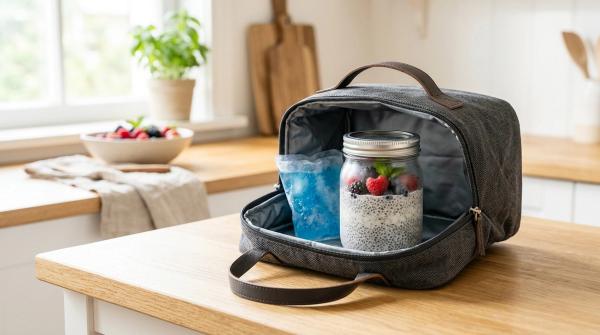
#Pack: A single serving in a clean bottle, kept in an insulated bag with an ice pack until you can refrigerate it.
Skip: Leaving opened juice on your desk all morning and chilling it later.
Office fridges can be unpredictable. They may be crowded, opened constantly, or set too warm. If you keep a larger carton at work, write your name and the opening date on it. Keep it closed, and don’t let it sit out during long meetings.
If you forgot an opened juice bottle on your desk for more than 2 hours, throw it away. Putting it in the fridge later will not make it safe again.
Kids and school lunches
#Pack: Unopened shelf-stable juice boxes, or chilled juice in an insulated bottle with a cold pack.
Skip: Saving a half-finished juice box for the next day.
For school, unopened shelf-stable juice boxes are often the easiest choice. They don’t need refrigeration until opened. Once the straw goes in and a child drinks from it, leftovers should be treated as perishable.
If you pack opened juice from home, keep it cold with an ice pack and use a leakproof bottle. If the bottle comes home warm and unfinished, discard what’s left.
Picnics
#Pack: Pre-chilled juice in a cooler with enough ice or frozen gel packs.
Skip: Leaving a large opened bottle on the picnic table all afternoon.
Keep the main bottle in the cooler between pours. Pour small amounts into cups, then return the bottle to the ice. In hot weather, be especially strict with juice that has been sitting out. Use the 1-hour guideline when temperatures are around 90°F or 32°C and above.
Also, keep juice out of direct sun. Even if the air feels mild, a bottle or carton sitting in sunlight can warm up quickly.
Road trips
#Pack: Unopened shelf-stable cartons or boxes for backup, plus a cooler for opened or refrigerated juice.
Skip: Relying on car air conditioning to keep juice safely cold.
Cars heat up fast when parked. If you stop for lunch, gas, or sightseeing, keep opened juice in the cooler instead of leaving it in a cup holder or seat pocket.
For long drives, smaller containers are easier. Open one, finish it, and keep the rest sealed until you need them. That way you’re not warming up the same large bottle over and over.
Hotels
#Pack: Unopened shelf-stable juice for travel days, especially if you’re not sure about refrigeration.
Skip: Assuming every hotel mini-fridge is cold enough for opened juice.
Some hotel mini-fridges are better at chilling drinks than keeping food at a steady refrigerator temperature. If your opened juice does not feel very cold after several hours, be cautious. For fresh or unpasteurized juice, it’s safer to buy only what you can drink soon.
An ice bucket can help for a short time, but melted ice water is not the same as reliable refrigeration. Keep containers sealed, and avoid letting the cap or opening sit in water.
Travel days
#Pack: Sealed, shelf-stable single servings.
Skip: Carrying opened fresh juice through a long travel day without a reliable cold source.
For busy travel days, the safest plan is to keep juice unopened until you’re ready to drink it. Once it’s opened, finish it within a reasonable time or keep it properly chilled.
If you can’t keep it cold, choose a sealed shelf-stable option and open it later.