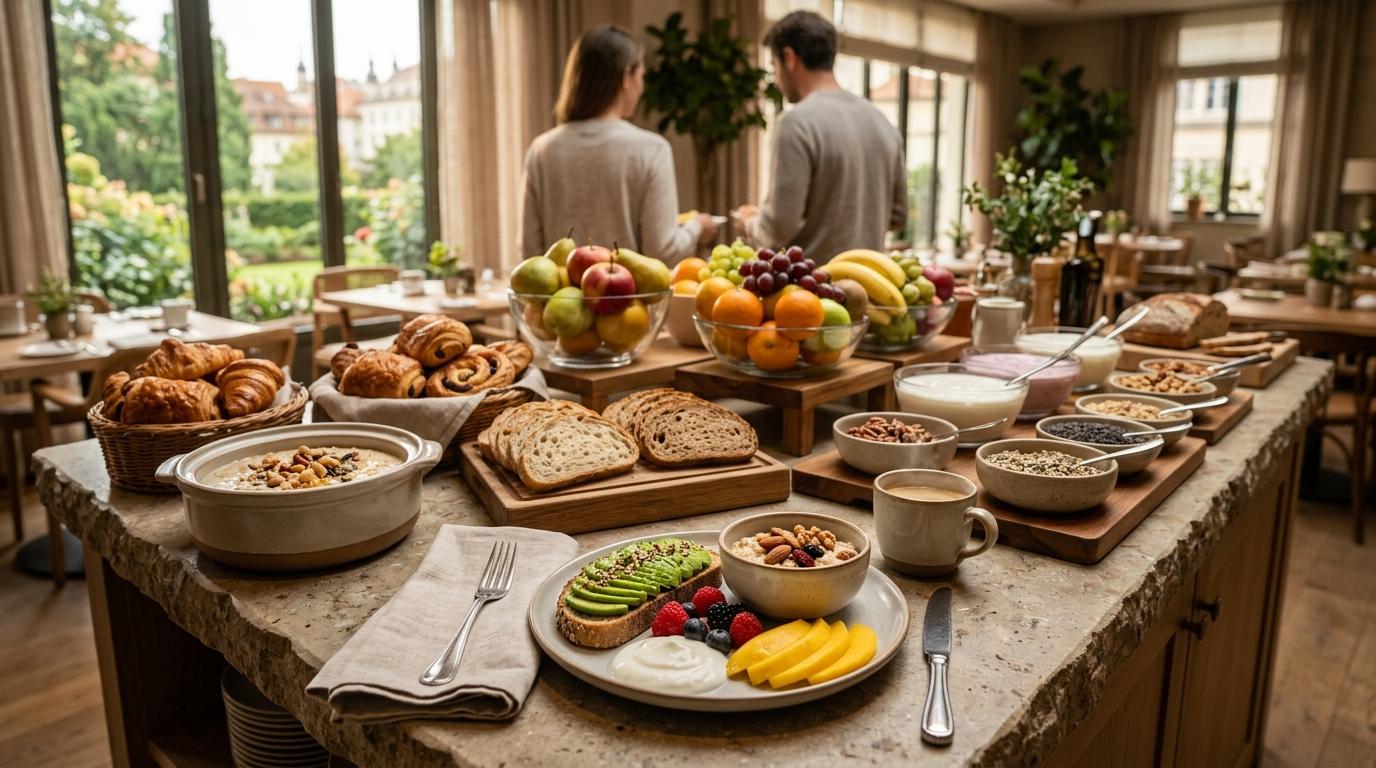
A vegetarian hotel breakfast can be wonderfully simple. It can also become a tiny investigation before you’ve even had your first sip of coffee.
You walk into the breakfast room and everything looks promising: eggs, potatoes, yogurt, pastries, fruit, beans, maybe soup, maybe congee. Then the doubts begin. Were those potatoes cooked in bacon fat? Is the soup made with fish stock? Did someone just use the sausage tongs in the scrambled eggs?
If you’ve been there, this guide is for you.
It’s written for vegetarian travelers trying to make the most of hotel breakfasts, buffets, bakery counters, and the occasional emergency snack stash. The goal is not perfection. The goal is a breakfast that is actually vegetarian, filling enough to get you through the morning, and not so complicated that it ruins your day before it starts.
Ingredients and kitchen habits vary a lot by hotel, country, and even by staff shift. When in doubt, ask for ingredient or allergen information.
Quick Answer Summary
#If you’re standing at the buffet right now and just need the short version, here it is.
Good choices:
- Made-to-order eggs, especially if you can ask for a clean pan
- Whole fruit with peels, like bananas, apples, and oranges
- Sealed yogurt, if it fits your diet and you’ve checked for gelatin if needed
- Oatmeal, plain cereal, nuts, seeds, and nut butter packets
- Plain toast or bread, after checking for lard or hidden meat in savory baked items
Worth checking:
- Soups, congee, miso soup, rice dishes, and savory porridges, since they may contain fish stock, dashi, chicken broth, or bone broth
- Breakfast potatoes and cooked vegetables, because they may be cooked in bacon fat, duck fat, or shared oil
- Baked beans, since some versions contain pork, lard, or bacon fat
- Yogurt, jams, jellies, and shiny fruit toppings, which may contain gelatin
- Cheese, especially if you avoid animal rennet
Better to skip:
- Vegetarian-looking dishes sitting right beside meat with shared utensils
- Lukewarm hot foods, especially eggs and dairy-heavy dishes
- Pre-cut fruit if the buffet looks messy or poorly managed
- Pastries when staff can’t confirm whether they contain lard, gelatin glaze, ham, or bacon
Best habit:
Ask specific questions. “Is this vegetarian?” is not always clear enough. In some places, people may still consider fish stock, broth, or animal fat acceptable unless you name them.
Try asking:
- “Is this cooked with vegetable oil or animal fat?”
- “Does this contain fish stock, chicken broth, or gelatin?”
- “Was this cooked separately from the meat?”
Why Vegetarian Hotel Breakfasts Need a Little Planning
#At first, hotel breakfast sounds easy for vegetarians. There is usually bread. There is usually fruit. There may be eggs, cereal, yogurt, potatoes, beans, or oatmeal.
The problem is rarely the obvious bacon tray. It’s the food that looks vegetarian but may not be.
A bowl of congee might be made with chicken broth. Breakfast potatoes might be cooked in bacon fat. A glossy fruit tart might have gelatin in the glaze. Baked beans might include pork or lard. Even cheese can be a question if you avoid animal rennet.
Then there’s the second problem: staying full.
A lot of vegetarian travelers accidentally end up with a breakfast of toast, croissants, juice, and maybe some hash browns. That can work for a slow morning, but it’s not ideal before sightseeing, meetings, flights, trains, or a long drive.
A better vegetarian travel breakfast usually has three things:
- Protein
- Fiber
- A little fat
Before you fill your plate, ask yourself two quick questions:
- Is this actually vegetarian, including how it was cooked?
- Will this keep me full for a few hours?
That simple filter makes the buffet much easier to handle.
The Vegetarian Breakfast Buffet: Choose, Check, or Skip
#The easiest way to scan a hotel breakfast buffet is to divide foods into three groups:
- Choose
- Check
- Skip
This is not a strict rulebook. The same dish may be vegetarian in one hotel and not vegetarian in another. But it gives you a practical way to move through the buffet without analyzing every tray like a crime scene.
Choose: Better Buffet Items for Vegetarians
#These are usually the easiest foods to build a breakfast around. You may still need to check labels or ask questions, but they’re often a good starting point.
Made-to-order eggs
#If you eat eggs, the omelet or egg station can be one of the safest and most filling parts of a hotel breakfast.
You can ask the cook to use a clean pan, fresh oil or butter, and only vegetables or cheese if suitable. This is usually better than taking eggs from a buffet tray where the serving spoon may have touched bacon, sausage, or ham.
Good things to say:
- “Could you please make this in a clean pan?”
- “Can you use fresh oil or butter?”
- “No ham, bacon, sausage, or meat, please.”
If the egg station is busy, keep it simple and friendly. Smile, ask clearly, and don’t be afraid to repeat the important part.
Whole fruit
#Whole fruit with peels, such as bananas, oranges, and apples, is one of the easiest hotel breakfast choices.
It’s naturally vegetarian, easy to carry, and less exposed to buffet handling. If the hotel allows it, a banana or apple can also become a very useful backup snack later.
Pre-cut fruit can be fine too, especially at a clean, well-managed buffet. But if the fruit tray looks old, watery, or messy, whole fruit is the calmer choice.
Oatmeal and plain cereal
#Plain oatmeal is a great breakfast base. It’s warm, simple, and easy to make more filling.
Look for toppings like:
- Nuts
- Seeds
- Raisins
- Fresh fruit
- Peanut butter
- Yogurt, if suitable
With cereal, packaged or clearly labeled options are best. If you avoid gelatin or certain additives, check the label when you can.
Sealed yogurt and packaged items
#Single-serve yogurt, packaged cheese, sealed cereal, and wrapped bread can reduce the risk of cross-contact from shared buffet utensils.
Still, sealed does not automatically mean suitable for every vegetarian. Some yogurts contain gelatin. Some cheeses use animal rennet. If those matter to you, check the label.
Toast, plain bread, and simple spreads
#Bread can be a good base for breakfast, especially if you pair it with protein or fat.
For example:
- Toast with peanut butter
- Bread with eggs
- Toast with cheese, if suitable
- Bread with confirmed vegetarian beans
Just don’t assume every bread or pastry is vegetarian. Some baked goods may contain lard, and some savory breads hide ham, bacon, or meat flavoring.
Check: Foods That Look Vegetarian but Might Not Be
#This is where breakfast gets sneaky. A dish may look harmless, but the broth, cooking fat, glaze, or seasoning can change everything.
Breakfast potatoes and cooked vegetables
#Potatoes look like an obvious vegetarian choice. Sometimes they are. Sometimes they’re cooked with bacon fat, duck fat, or oil that was also used for meat.
Ask:
- “Are the potatoes cooked in vegetable oil?”
- “Do they contain bacon fat, duck fat, or any meat?”
- “Are they cooked separately from the bacon or sausages?”
Cooked vegetables can have the same issue. They may be grilled beside meat, seasoned with stock, or tossed with meat drippings.
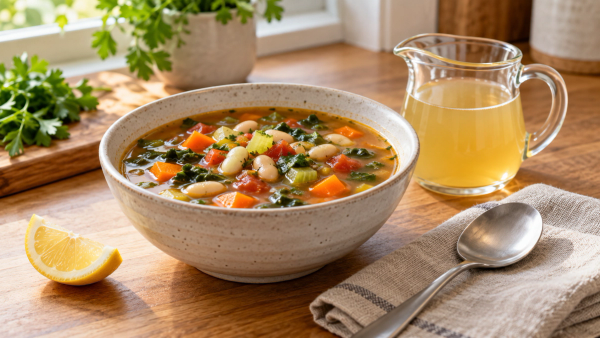
Soups, congee, miso soup, and savory porridges
#Some hotels serve soup, rice porridge, miso soup, or congee at breakfast. These can be warm and comforting, especially when you’re tired, but they’re worth checking.
Common hidden non-vegetarian ingredients include:
- Fish stock
- Dashi
- Chicken broth
- Bone broth
- Dried shrimp
- Fish sauce
- Meat-based seasoning
Ask clearly:
- “Does this contain fish stock, dashi, chicken broth, or meat broth?”
- “Is the base vegetarian?”
- “Is there dried shrimp or fish sauce in this?”
Baked beans
#Baked beans can be vegetarian, but they’re not always. Some versions contain pork, bacon, lard, or bacon fat.
Ask:
- “Are these beans vegetarian?”
- “Do they contain pork, bacon, lard, or meat fat?”
If staff are unsure, it may be easier to choose another protein source.
Yogurt, jams, and fruit toppings
#Yogurt is a helpful protein option for many vegetarians, but some commercial yogurts contain gelatin.
Jams, jellies, and glossy fruit toppings can also contain gelatin, especially if they are thick, shiny, or dessert-like.
A useful question:
- “Does this yogurt or fruit topping contain gelatin?”
If there’s a label, check that too. Labels are your best friend when the buffet is busy.
Cheese
#Many vegetarians eat cheese, but some avoid cheese made with animal rennet.
Hotel buffets do not always label the type of rennet used, and staff may not know right away. If this matters to you, ask for the ingredient label or choose another option.
Ask:
- “Do you know if this cheese uses animal rennet?”
- “Is there an ingredient label for the cheese?”
- “Is this cheese suitable for vegetarians?”
Skip: Higher-Risk Buffet Situations
#Sometimes the smartest choice is to leave something alone, even if it looks good.
Shared utensil zones
#If eggs, potatoes, or vegetables are placed right beside bacon, sausage, or ham, check the utensils. If the same spoon or tongs are moving between trays, skip the item or ask for a fresh portion from the kitchen.
This matters most if you’re strict about cross-contact.
You can ask:
- “I’m vegetarian. Could I please have a fresh portion that hasn’t touched meat?”
Most hotel staff understand this kind of request, especially if you keep it simple and polite.
Lukewarm hot dishes
#If eggs, dairy-heavy foods, or cooked vegetables are supposed to be hot but are sitting lukewarm, skip them.
This is not just a vegetarian issue. It’s basic buffet caution. Freshly cooked, properly hot, sealed, or naturally shelf-stable foods are usually better choices.
Messy pre-cut fruit
#Pre-cut fruit can be great, but only if it looks fresh and well handled.
Skip it if:
- The tray looks old
- The serving spoon is sitting in juice
- The fruit looks mushy
- The buffet area looks unclean
- People are grabbing it with their hands, which unfortunately does happen
Whole fruit is much less stressful in those moments.
Unlabeled savory pastries
#Savory pastries, muffins, rolls, and stuffed breads can hide small pieces of ham, bacon, sausage, or meat seasoning.
If the item is not labeled and staff can’t confirm what’s inside, skip it.
Bakery and Bread Counter Checks
#The bakery counter can save a vegetarian breakfast. It can also be where hidden ingredients sneak in quietly.
Plain bread, toast, baguette, sourdough, and simple rolls are often easier choices than filled pastries. But “bread” does not always mean “vegetarian” everywhere. Some recipes use lard, and some savory breads contain meat.
Safer bakery picks to consider
#- Plain toast
- Simple rolls
- Baguette or plain bread
- Plain bagels, if available
- Bread with clearly labeled ingredients
Try to pair bread with something filling, such as eggs, yogurt, cheese if suitable, nut butter, or confirmed vegetarian beans.
Bakery items to check carefully
#Croissants and pastries
#Many croissants are made with butter, but some pastries and biscuits may use lard. It depends on the country, hotel, and recipe.
Ask:
- “Are these made with butter or lard?”
- “Do any of these pastries contain animal fat?”
Glossy fruit tarts and sweet toppings
#That shiny glaze on fruit pastries may contain gelatin.
Ask:
- “Does the glaze contain gelatin?”
Savory muffins, rolls, and stuffed breads
#Savory baked goods often hide tiny pieces of ham, bacon, or meat-flavored fillings.
Ask:
- “Does this contain ham, bacon, sausage, or any meat?”
- “Is there meat inside the filling?”
Tortillas, biscuits, and regional breads
#Some regional breads, biscuits, or tortillas may be made with lard. Don’t assume either way. Ask for ingredients if possible.
Protein and Fiber Breakfast Strategy
#A vegetarian hotel breakfast should not leave you running on coffee, juice, and two pieces of toast.
That might be fine for a slow morning, but it’s not ideal before a full travel day. A more useful plate has protein, fiber, and a little fat.
1. Start with protein
#Protein is the anchor. Look for:
- Eggs, if you eat them
- Greek yogurt or plain yogurt, if suitable
- Cottage cheese, if available and suitable
- Cheese, if suitable
- Tofu scramble, where available
- Nuts and seeds
- Nut butter packets
- Confirmed vegetarian beans
If the only eggs are cooked beside meat, ask for made-to-order eggs in a clean pan.
2. Add fiber
#Fiber helps breakfast feel more satisfying.
Look for:
- Oatmeal
- Whole fruit
- Whole-grain bread
- Beans, if confirmed vegetarian
- Vegetables from an omelet station or salad section
Whole fruit is usually better than juice because it gives you fiber and keeps you fuller for longer.
3. Add a little fat
#Fat helps a simple breakfast feel complete.
Look for:
- Peanut butter
- Nuts
- Seeds
- Cheese, if suitable
- Yogurt, if suitable
- Olive oil on tomatoes or cucumbers, where available
Easy vegetarian hotel breakfast combinations
#Use what the hotel has. It does not need to be fancy.
- Oatmeal with banana, nuts, and peanut butter
- Made-to-order vegetable omelet with toast and fruit
- Yogurt with cereal, seeds, and whole fruit
- Toast with nut butter, plus yogurt or eggs
- Confirmed vegetarian beans with toast, tomatoes, and fruit
- Plain bread with cheese if suitable, cucumber, tomato, and coffee or tea
- Cereal with milk, nuts, and a banana
The goal is not a perfect breakfast. The goal is something vegetarian, filling, and low-stress.
Cross-Contact: When the Food Is Vegetarian but the Buffet Is Not
#Some vegetarians are comfortable with shared buffet areas. Others avoid any contact with meat. Both approaches are normal.
It helps to decide your comfort level before you arrive at the buffet. That way, you’re not making every decision while hungry and half-awake.
Watch for:
- Shared tongs between meat and non-meat foods
- Meat trays placed above or beside vegetarian items
- Scrambled eggs with visible meat pieces dropped in
- Potatoes mixed with sausage pieces
- Omelet stations using the same spatula for ham and vegetables
- Serving spoons resting across several trays
If cross-contact matters to you, ask for a fresh serving from the kitchen. You can also choose sealed foods, whole fruit, oatmeal, or made-to-order items prepared separately.
A short request usually works better than a long explanation.
Try:
“I’m vegetarian. Could I please have a fresh portion that hasn’t touched meat?”
Polite Hotel Staff Questions
#The best questions are specific. In many places, “vegetarian” can mean different things.
Some people think it means no visible meat. Others may not think about fish stock, chicken broth, animal fat, or gelatin unless you mention them.
So ask about the exact ingredient you want to avoid.
Questions for eggs and hot foods
#- “Could you please make my eggs in a clean pan?”
- “Can you use fresh oil or butter, not the shared griddle?”
- “Are the potatoes cooked in vegetable oil or animal fat?”
- “Are the vegetables cooked separately from meat?”
Questions for soups, congee, and savory dishes
#- “Does this contain fish stock, dashi, chicken broth, or meat broth?”
- “Is the stock vegetarian?”
- “Is there dried shrimp, fish sauce, or meat seasoning in this?”
Questions for beans and cooked grains
#- “Do the beans contain pork, bacon, lard, or meat fat?”
- “Is the rice cooked in water, vegetable stock, or meat broth?”
Questions for bakery items
#- “Are these pastries made with butter or lard?”
- “Does this glaze contain gelatin?”
- “Do any of these savory breads contain ham, bacon, or sausage?”
Questions for dairy and packaged foods
#- “Does this yogurt contain gelatin?”
- “Is there an ingredient label I can check?”
- “Do you know if this cheese uses animal rennet?”
One simple sentence to use anywhere
#“I’m vegetarian and I avoid meat, fish stock, chicken broth, animal fat, and gelatin. Could you help me check which items are suitable?”
That sentence is clear and polite. It also gives staff the details they need, which makes everyone’s morning easier.
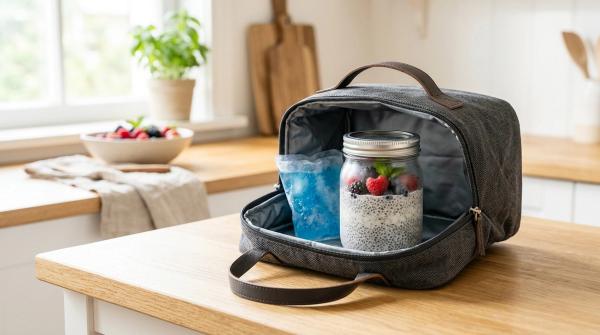
Backup Snacks to Carry
#Even careful travelers eventually run into a hotel breakfast with weak vegetarian options.
Maybe the buffet is mostly meat. Maybe everything is unlabeled. Maybe breakfast opens after you need to leave. Maybe the only safe option is plain toast, and honestly, that is not much of a breakfast.
This is where backup snacks save the day.
Pack or buy a few simple items that can turn a thin breakfast into something decent.
Good vegetarian travel breakfast backups
#Nut butter packets
#Small, easy to pack, and useful with toast, bananas, apples, crackers, or plain bread.
Nuts and seeds
#Almonds, walnuts, cashews, pumpkin seeds, sunflower seeds, or chia seeds can upgrade oatmeal, cereal, or yogurt.
Instant oatmeal packets
#If the hotel has hot water, you have breakfast. Add nuts, seeds, fruit, or nut butter if you have them.
Protein powder
#A single-serve protein packet can help when the buffet is only bread and fruit. Choose whey or plant-based protein depending on your diet.
Granola or high-fiber cereal
#Useful with hotel milk, yogurt, or even eaten dry when options are limited.
Fruit you can carry
#Bananas, apples, and oranges are simple travel-friendly backups when you can find them.
Crackers or plain bread with shelf-stable spreads
#Helpful for early departures, long transfers, or hotels where breakfast is not reliable for vegetarians.
The mini-fridge approach
#If your room has a mini-fridge, a quick grocery stop can make breakfast much easier.
Depending on what is available locally, you can keep:
- Yogurt
- Milk
- Fruit
- Cheese, if suitable
- Ready-to-eat vegetarian items
- Hummus, if available
- Chilled coffee or drinks
Keep it practical. You do not need to cook in your room. You just need enough food to avoid starting the day hungry.
A Simple Plate-Building Formula
#When you reach the buffet, try this order:
- Find your protein first. Eggs, yogurt, tofu, beans, cheese, nuts, seeds, or nut butter.
- Add fiber. Oatmeal, whole fruit, whole-grain toast, vegetables, or confirmed vegetarian beans.
- Check hidden ingredients. Broth, fish stock, gelatin, lard, animal fat, and rennet.
- Watch the utensils. Avoid shared meat contact if that matters to you.
- Use backups if needed. Nut butter, protein powder, instant oats, nuts, or fruit.
This keeps you from ending up with a plate that is technically vegetarian but not very useful.