There’s something special about eating outside.
A late dinner on the terrace. A backyard barbecue. A picnic blanket under a tree. A family potluck where every dish comes with a story and at least one person says, “You have to try this.”
Outdoor food feels relaxed and generous. But it also needs a little extra care.
Heat, humidity, direct sunlight, open coolers, slow grazing, and buffet tables that stay out for hours can make food unsafe much faster than you might expect. And the tricky part? Unsafe food often looks and smells completely normal.
The good news is that outdoor party food safety does not have to be stressful. You do not need to hover over every plate or buy fancy equipment. You just need a simple plan for keeping cold foods cold, hot foods hot, and everything else moving along safely.
Quick answer
#For hot weather buffet food safety, remember these basics:
- Keep cold food cold and hot food hot. Cold food should stay at 40°F (4°C) or below. Hot food should stay at 140°F (60°C) or above. The temperatures in between are often called the danger zone because bacteria can grow more quickly there.
- Use the 2-hour rule. Perishable food should not sit out for more than 2 hours in normal weather.
- Shorten that to 1 hour in very hot weather. If it is around 90°F (32°C) or hotter, perishable food should not sit out for more than 1 hour.
- Serve smaller portions. Put out small batches and keep the rest in the fridge, cooler, oven, warmer, or insulated container.
- Replace dishes instead of topping them up. Do not add fresh food on top of food that has already been sitting out.
- Do not rely on smell. Food can be unsafe even if it looks and smells fine.
- When in doubt, throw it out. It is frustrating to waste food, but it is much worse to make people sick.
Why outdoor food needs extra attention
#Food is easier to control indoors. The fridge is nearby. The kitchen is cooler. Hot dishes can stay on the stove until everyone is ready to eat.
Outside, things change quickly.
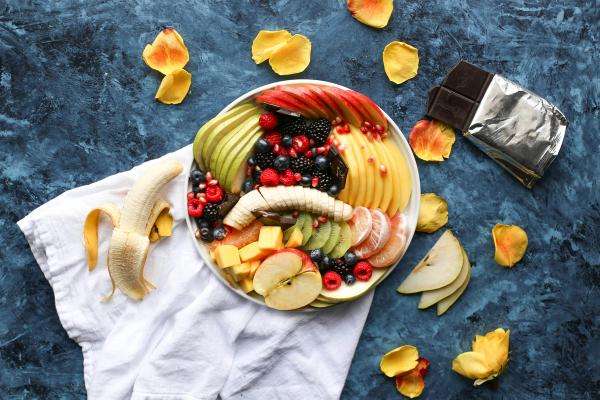
A bowl of raita can warm up fast on a sunny table. A tray of grilled chicken may sit around while guests talk and go back for seconds. Cut fruit, dips, cooked rice, pasta salads, sandwiches, chutneys, creamy desserts, and salads can all spend too much time at unsafe temperatures without looking spoiled.
Even the table itself can become part of the problem. Metal trays, serving spoons, and plates heat up in direct sun. Coolers get opened again and again. People serve themselves with the wrong spoon. Someone brings a dish that has already been sitting in a warm car.
None of this means you should avoid outdoor meals. It just means you need a simple system.
Before the food goes out, think of your menu in three groups:
- Food that needs to stay cold
- Food that needs to stay hot
- Food that can sit at room temperature more safely
That one decision makes everything easier.
The simple serve-time rule
#The most useful rule for outdoor food is this: watch the clock.
Perishable food can usually sit out for up to 2 hours. This includes:
- Cooked meat and poultry
- Seafood
- Eggs
- Dairy-based dishes
- Cut fruit
- Cut vegetables
- Cooked rice
- Pasta salads
- Creamy dips
- Sandwiches
- Many prepared dishes
If the weather is very hot, around 90°F (32°C) or above, use the 1-hour rule instead.
That matters for summer picnics, beach meals, terrace parties, garden lunches, and daytime buffets where food is sitting in the heat.
A practical way to manage it:
- Put perishable food out only when people are ready to eat.
- Make a note of the time, even casually.
- After 1 hour in high heat, or 2 hours in milder weather, deal with the food.
- If it stayed properly cold, chill it again quickly.
- If it stayed properly hot, keep it hot.
- If it has been sitting in the danger zone, throw it out.
- If you are not sure how long it has been out, throw it out.
This is not about being dramatic. It is just the safest way to handle food outdoors.
Build your buffet in three zones
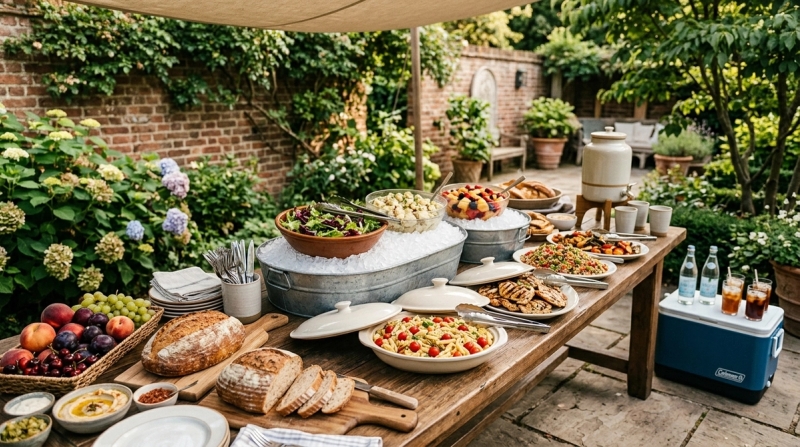
#The easiest way to keep a buffet safe is to avoid making every dish high-maintenance.
Instead of putting out one huge bowl of raita, serve a smaller bowl and keep the rest chilled. Instead of one massive tray of kebabs, put out a smaller tray and keep the rest hot.
Small batches help because:
- Food spends less time outside.
- Refills taste fresher.
- Temperatures are easier to control.
- Leftovers are easier to judge.
- The buffet looks neater for longer.
Replace, do not refill
#When a platter is almost empty, do not pile fresh food on top of food that has already been sitting out.
Replace the dish with a clean one.
This keeps fresh food from mixing with older food that may have warmed up, cooled down, or been handled by several guests.
Use clean serving tools
#Give every dish its own spoon, tong, or ladle.
Do not let one spoon travel between raita, salad, chicken, chutney, and rice. That creates unnecessary cross-contamination.
Keep extra serving spoons nearby too. Outdoor parties get messy. If a spoon falls on the ground, replace it with a clean one.
Make hand cleaning easy
#Guests may be playing games, touching picnic mats, handling pets, helping with the grill, or eating with their hands.
Make hand cleaning obvious and easy:
- Soap and water, if available
- Clean towels
- Hand sanitizer as backup
- Napkins near the food table
It is a small detail, but it helps prevent a lot of avoidable contamination.
During the party: keep it simple
#You do not need to stand guard over the buffet all day. Just create a rhythm.
- Put perishable foods out close to eating time.
- Keep cold bowls over ice when possible.
- Keep hot foods covered and hot.
- Refill with fresh small batches.
- Remove empty or older plates.
- Watch the clock.
- Clear perishable foods once the safe time window is over.
If guests are arriving in waves, do not put the entire buffet out at once. Serve in rounds. Keep later portions in the fridge, cooler, oven, warmer, or insulated container until needed.
This is especially helpful for potlucks, where dishes may arrive at different times and in different conditions.
Picnic and park food safety tips
#Picnics need a little more planning because you may not have a kitchen nearby.
Before leaving:
- Chill perishable food thoroughly.
- Pack cold food in a cooler with enough ice or ice packs.
- Keep raw meat separate from ready-to-eat food.
- Carry clean plates for cooked food.
- Pack extra spoons, tongs, tissues, and trash bags.
- Keep the cooler in the coolest part of the car.
- Do not leave coolers in direct sun.
- Move coolers to shade as soon as you arrive.
At the picnic:
- Open the food cooler only when needed.
- Keep drinks in a separate cooler if possible.
- Do not leave cooked food half-covered on a mat for hours.
- Keep perishable food covered and shaded.
- Throw away food that has crossed the safe time limit.
Picnic food safety is mostly about not letting food quietly drift from “fresh and chilled” to “warm and questionable.”
What to do with leftovers
#Leftovers are where a lot of outdoor meals become risky.
Only keep leftovers if:
- Cold food stayed at 40°F (4°C) or below.
- Hot food stayed at 140°F (60°C) or above.
- The food did not sit out beyond 2 hours, or 1 hour in very hot weather.
- Clean utensils were used.
- The food was not heavily picked over.
- You are confident it was handled safely.
Throw leftovers away if:
- You are unsure how long they sat outside.
- They were in direct sun.
- Cold food became warm.
- Hot food cooled down and stayed out.
- Guests ate directly from the serving dish.
- Raw juices may have touched the food.
- Something simply feels questionable.
Pack safe leftovers into shallow containers and refrigerate them quickly. If you eat them later, reheat them thoroughly.
“When in doubt, throw it out” may sound boring, but it is still the best rule.
Quick buffet safety checklist
#Use this before your next outdoor meal.
Before the party
#- Plan dishes as cold, hot, or room-temperature.
- Chill cold foods fully before serving.
- Cook hot foods properly and keep them hot.
- Prepare small serving portions.
- Set up the buffet in shade.
- Keep raw and ready-to-eat foods separate.
- Pack coolers with enough ice or ice packs.
- Keep drinks in a separate cooler if possible.
- Keep extra serving spoons and clean plates ready.
During serving
#- Keep cold foods at 40°F (4°C) or below.
- Keep hot foods at 140°F (60°C) or above.
- Follow the 2-hour rule.
- Use the 1-hour rule in very hot weather.
- Replace dishes instead of refilling old ones.
- Use clean serving spoons and tongs.
- Keep food covered when possible.
- Do not rely on smell to judge safety.
After the meal
#- Refrigerate safe leftovers quickly.
- Discard food that sat out too long.
- Throw away anything questionable.
- Clean coolers, serving trays, and utensils properly.