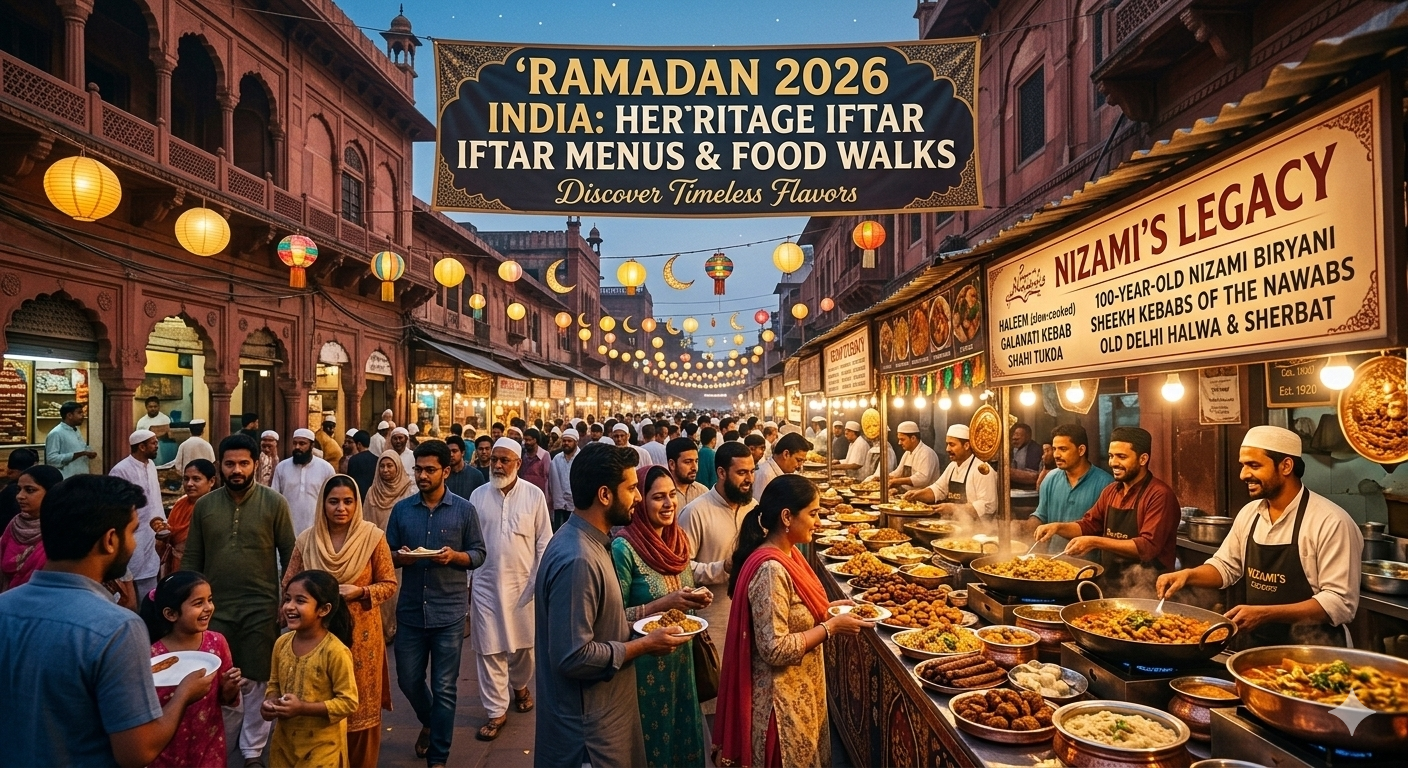
So, um… I didn’t plan to do a full-on “Ramadan 2026 India” food trip. It kinda happened the way the best food trips always do. I was in India anyway (work + visiting friends), Ramadan lined up, and suddenly my evenings were getting booked around iftar like it was a concert tour. And honestly? It was magic. Not perfect-movie magic. Real magic… traffic, sweat, chaos, prayers echoing in lanes, and then a plate of something warm and fried landing in your hands like a tiny edible blessing.
Also, I’ve done food walks before—Bangkok, Istanbul, Mexico City—so I thought I knew the vibe. But India during Ramadan hits different. It’s not just “here are tasty things.” It’s heritage food, community, generosity, and this nightly rhythm where entire neighborhoods change gears right before sunset. Like the city holds its breath… then exhales into samosas, haleem, kebabs, sheer khurma, and that first sip of water.
Quick reality check: what Ramadan food travel looks like in 2026 (not the romantic Instagram version)
#In 2026, food travel’s gotten… faster? smarter? more “curated”? Like, people are doing micro-itineraries. You’ll see folks land in the afternoon, do a heritage walk at 4pm, hit an iftar tasting at 6, then a midnight chai crawl. And booking is so app-ified now—QR menus everywhere, UPI for literally a 10-rupee lime soda, and guided food walks that sell out a week in advance because everyone saw the same Reels.
One thing that’s definetly bigger in 2026: heritage menus. Hotels and old restaurants are leaning into regional Ramadan traditions instead of generic ‘Ramadan buffet.’ Some are doing recipe-led menus (grandma-style), some are reviving old dishes from royal kitchens, and some are doing modern twists (like date syrup reductions and millet-based fried snacks). I’m not saying all of it works… but when it works, wow.
Also, small but important: a lot of places are more mindful about sourcing and waste now. Smaller plates, refill culture, composting. Not everywhere, but it’s showing up more than when me and him travelled in 2019 and nobody cared about single-use anything.
Stop #1: Old Delhi for iftar—chaos, charm, and the best accidental kebab of my life
#I started in Delhi because… well, Delhi grabs you by the collar. Old Delhi during Ramadan evenings is like someone turned the saturation up. Chandni Chowk and the lanes near Jama Masjid get packed, and you’re basically moving in a slow delicious human river.
I did a proper old-city iftar walk (booked through a local guide, small group, thankfully). And yeah, it had the usual touristy bits, but also these tiny stops I never would’ve found alone without getting lost forever.
What I ate (and I’m still thinking about it):
- Fruit chaat with chaat masala and that sharp lemony kick
- Phirni served in those little clay cups (mitti smell included)
- Haleem that was rich and sticky and kind of emotional??
- A seekh kebab that I swear was the best thing I had all week — smoky, fatty, spicy, the works
And then, the accidental moment: I wandered off (my fault), ended up near a stall with a small queue. I pointed at what everyone else was holding. Turned out to be a juicy kebab wrapped in rumali roti, with green chutney that made my eyes water. I don’t even know the stall name. Which is tragic. But also… that’s Old Delhi. You don’t always get receipts, you get memories.
If you want the ‘heritage’ part of heritage food, go where the food is a habit, not a headline.
Heritage iftar menus in Delhi: where it felt special (and where it felt like a buffet with fairy lights)
#I tried a couple hotel iftars too, because sometimes you just want to sit down and not elbow-fight for space. In 2026, Delhi hotels are going big on themed Ramadan spreads—Mughlai corners, live kebab grills, date-based desserts, mocktail bars.
But here’s my honest take: some of these buffets feel like… they’re doing Ramadan cosplay. Pretty, yes. But the soul is missing.
Where it felt more grounded was when menus told a story. Like: “this dish is from Hyderabad, this one’s a Bohra tradition, this is the kind of sherbet families make at home.” I’m not naming-and-shaming places because honestly it changes season to season, but if you’re picking, look for:
- smaller menus with regional specificity
- staff who can actually explain what you’re eating
- at least one old-school dessert like shahi tukda, firni, or sheer khurma done right
And please, if you see ‘date cheesecake shots’… try one if you’re curious. I did. I didn’t hate it. I also didn’t love it. Mixed feelings, like a situationship.
Stop #2: Lucknow — where kebabs are basically a religion (and yes, I got emotional over galouti)
#Lucknow during Ramadan is soft and intense at the same time. The pace is slower than Delhi, but the food… oh man. The food is like velvet with a knife hidden inside.
If you’ve never had galouti kebab in Lucknow, it’s hard to explain. It’s not just tender. It’s like it dissolves. Like meat turned into a poem. I remember sitting near Aminabad area with a plate in front of me, and for a second I literally stopped talking. My friend laughed and was like, “you good?” and I just nodded like a weirdo.
Also tried:
- nihari (late night, because that’s the real way)
- kulcha soaked in gravy till it almost falls apart
- sheermal that smelled like saffron and nostalgia
Ramadan nights here feel communal. People share tables. Someone will tell you where to go next. A stranger offered me a bite of their dessert like it was totally normal (it was).
Food walk tip that nobody told me (but I’m telling you): start BEFORE iftar, not at iftar
#Most people show up at sunset like, “okay feed me.” But the best part is the hour before—when vendors are setting up, frying starts, the air smells like ghee and spice, and you can actually talk to people without yelling.
Also, you’ll see the prep foods that don’t get posted online. The trays of dates, the homemade sherbets, the stacks of bread. There’s a sweetness to it.
And practical stuff: wear shoes you can ruin. And carry cash and UPI. And don’t over-order because you’ll do that thing where you’re hungry and then iftar hits and suddenly you’re full after three bites. Classic.
Stop #3: Hyderabad — haleem season is basically a city-wide event
#Hyderabad in Ramadan is… loud, delicious, and slightly unhinged (in a good way). The haleem culture here isn’t casual. It’s serious. People debate haleem the way sports fans debate teams.
I did a haleem-first itinerary (no regrets). You’ll find it at restaurants big and small all over the city. Some do the more classic style, others go heavy on ghee and spices. I had one bowl that was so rich I needed a break after, like a literal intermission.
And yes, I did the thing tourists do: late night around Charminar area. The energy is insane. You’re weaving through crowds, smelling kebabs and sweets, hearing shopkeepers call out. It’s the kind of place where you lose track of time and then suddenly it’s 1am and you’re drinking Irani chai like it’s medicine.
I’ll say this though: it can get overwhelming. If crowds stress you out, go earlier in the evening, or pick a slightly quieter neighborhood spot. Same flavors, less chaos.
The dish that surprised me most: sheer khurma (I used to think it was… fine)
#Confession: I never cared that much about sheer khurma before. I’d eat it, sure, but it wasn’t my fave.
Then in 2026, I had a bowl made by a friend’s auntie in Hyderabad (home iftar invite, I felt so lucky I could cry). It was creamy but not heavy, scented with cardamom, and there were these toasted nuts that actually tasted like nuts (not soggy sadness). The vermicelli had a bite. It wasn’t overly sweet.
I went back for seconds. Then thirds. No shame.
That’s the thing with heritage food: restaurants can do it well, but home versions? They hit your heart different.
Kolkata Ramadan evenings: gentle, poetic, and full of biryani opinions
#Kolkata was my wildcard stop. Ramadan here feels calmer compared to Delhi/Hyderabad, but the food is still very much a big deal. And yes, Kolkata biryani discourse is alive and well in 2026. People will talk about the potato like it’s a political issue.
I did an evening walk near areas known for Muslim heritage food (with a local friend guiding, not an official tour). We had:
- Kathi rolls (don’t come for me, I know they’re not “Ramadan-only,” but they hit)
- rezala-style gravy with bread
- sweets that were floral and milky and impossible to pronounce properly when you’re full
And the vibe? It’s more about strolling. Less about pushing through crowds. You can actually breathe.
What’s new-ish in 2026: “heritage + wellness” iftars (and my mixed feelings)
#Okay so here’s a trend I kept seeing in 2026: upscale places offering “light iftar” menus—millet bowls, baked samosas, date-and-nut energy bites, less sugar desserts, probiotic drinks.
Part of me likes it because, yeah, if you’re fasting, your stomach can be sensitive. And not everyone wants deep-fried everything.
But also… Ramadan food is allowed to be comforting. Like, give me the pakora. Let me live.
The best version I saw was when they didn’t try to replace traditional items, they just balanced them. Like offering grilled options alongside fried, smaller dessert portions, better hydration drinks. That felt respectful, not preachy.
Mini-guide (messy edition): how to plan a Ramadan heritage food trip in India without losing your mind
#Not a perfect list, because travel never is, but here’s what worked for me:
- Pick 2–3 cities max if you’re doing it in one Ramadan week. Moving every two days gets exhausting.
- Book one guided food walk early in the trip, then use what you learn to freelance the rest.
- Always ask, “what do locals break their fast with here?” It changes by region.
- Don’t ignore morning food. Suhoor spots can be iconic and weirdly peaceful.
One more: be respectful with photos. People are fasting, praying, living their life. Ask before sticking a camera in someone’s face. Basic manners, but yeah.
Two nights I won’t forget (because travel is not just food, it’s the whole scene)
#Night one: sitting near Jama Masjid steps with a paper plate, hearing the call to prayer drift across the crowd. Everyone moving at once but also… together. I felt like a guest in something ancient.
Night two: Hyderabad, after too much haleem, walking under strings of lights, stopping for Irani chai. My friend told me about how their family does iftar—what they always make, what they argue about (who makes the best chutney lol), who shows up late. It made me miss my own family in that sudden sharp way.
Food does that. It makes you homesick and grateful at the same time.
What I’d eat again tomorrow (and what I’d skip, sorry)
#Eat again tomorrow:
- Haleem (Hyderabad style, but I’ll take any)
- Galouti kebab + sheermal (Lucknow, forever)
- Firni in clay cups (Delhi, my beloved)
- A proper sharbat that’s not neon-sweet
Skip (maybe controversial):
- Overpriced “global Ramadan platters” that taste like hotel room service with branding
- Desserts that are just sugar bombs with no spice/flavor balance
But hey, if that’s your thing, go for it. I’m not the food police. I’m just… tired of beige luxury food pretending to be heritage.
If you’re going in Ramadan 2026 (or next year), here’s the vibe: go for the stories, not the checklist
#I used to travel like a collector. Must eat this. Must photograph that. Must rank everything.
This trip reminded me to slow down. Sit with people. Ask questions. Let the evening unfold. Sometimes the best bite is the one you didn’t plan for, the kebab from the nameless stall, the dessert from someone’s kitchen, the chai you drink standing up because there’s nowhere to sit and honestly it doesn’t even matter.
India in Ramadan isn’t one cuisine. It’s many. It’s regional, it’s layered, it’s complicated. And it’s also very simple: people breaking fast, sharing food, being human.
Anyway, if you’re into this kind of food-and-travel rambling, I’ve been finding more fun reads on AllBlogs.in lately—worth a casual scroll when you’re planning your next trip.