The night market rule I learned the sweaty way
#I love night markets in the way some people love museums. Give me smoke from a charcoal grill, plastic stools wobbling on cracked pavement, somebody yelling order numbers over a sizzling wok, and I’m basically useless for the rest of the evening. Taipei’s Raohe, Bangkok’s Yaowarat, Penang’s Gurney Drive, the hawker lanes around Singapore, even little weekend markets that don’t have a famous name... I’ll walk toward the smell every single time.
But I also learned, after one very sad bus ride in northern Thailand years ago, that “street food adventure” and “reckless stomach gambling” are not the same thing. I had eaten something that tasted fine, looked fine-ish, and was probably sitting in a metal tray for longer than my jet-lagged brain wanted to admit. Not dramatic food poisoning, thank god, but enough cramps and cold sweats that me and my backpack both looked defeated. Since then I still eat like a curious gremlin, just with a hot-food checklist running quietly in the background.
This isn’t about being scared of night markets. Honestly, some of the safest meals I’ve had while traveling were from street stalls because the food was cooked right there, fast, in front of everyone. The World Health Organization’s basic food-safety advice is boring but true: keep food clean, separate raw and cooked, cook thoroughly, keep food at safe temperatures, and use safe water and ingredients. The CDC also keeps saying the traveler thing we all know and sometimes ignore: food served hot and cooked thoroughly is usually the safer bet than raw, undercooked, or lukewarm stuff. So yeah. Hot food is your friend. Lukewarm mystery tray? Less friendly.
First, follow the smoke, not just the crowd
#People always say “eat where locals eat,” and mostly I agree, but crowds can lie a little. A big queue can mean good food, or it can mean one viral TikTok ruined the rhythm of a stall that used to be chill. What I’m really watching is turnover. Is the vendor cooking batch after batch? Are skewers going from raw to grill to plate quickly? Are noodles being tossed in a wok and handed over steaming, not scooped from a sad pile? That’s the good sign.
In Taipei I had pepper buns at Raohe Night Market that came out of a tandoor-like clay oven so hot the paper bag fogged up. I burned my tongue, complained like a baby, then went back the next night because that’s what love is. In Bangkok, the best pad see ew I ate was from a woman who cooked every portion separately in a blackened wok, flames licking up the side like a small kitchen dragon. I could see the noodles go in, the egg hit the pan, the greens wilt, the whole thing land on the plate still steaming. That’s the kind of “hot food” I trust.
A queue matters most when it causes movement. If twenty people are waiting and the vendor is cooking non-stop, great. If twenty people are waiting for pre-fried chicken wings that were made who-knows-when and are now just hanging out under a weak bulb, I start doing that little tourist shuffle away from the stall, pretending I suddenly need to check a map.
My traveler’s hot-food checklist, the version I actually use
#- Look for food cooked after you order, or at least cooked in tiny batches that sell out fast. Steam is not everything, but steam plus speed is a beautiful combo.
- Choose stalls where heat is obvious: boiling broth, bubbling oil, a ripping-hot griddle, charcoal flames, wok smoke, skewers sizzling so loudly you can hear them from three stalls away.
- Be suspicious of warm-ish food. Not cold, not hot, just sitting there in the middle. Food-safety people often talk about the temperature “danger zone,” roughly between fridge-cold and properly hot, where bacteria can multiply faster. You don’t need a thermometer in your pocket, you need common sense and eyeballs.
- Watch the vendor’s hands for one minute. Do they touch raw chicken, then cooked food, then money, then your garnish with the same fingers? I know markets are chaotic, but that little minute tells you alot.
- Sauces and toppings count. A fresh grilled satay can get risky if it’s dunked into a communal sauce pot full of old spoons and random fingers. I’m not saying skip all sauce, please don’t live that sadly, just notice how it’s handled.
- If reheating is involved, it should be serious reheating. A quick wave over a lukewarm pan is not the same as boiling, frying, steaming, or grilling until properly hot again.
That’s the checklist. Not glamorous. Not very Anthony Bourdain of me, maybe, but it has saved my trips more than once. I wrote a similar mental note after chasing food trucks across cities too, because the same clues keep coming up: queue quality, sauce handling, vendor focus, and whether the person cooking looks in control or completely buried. If you like that angle, this piece on Food Truck Meals While Traveling: Safety Clues and Red Flags lines up weirdly well with night-market eating.
The “hot” in hot food has to be real hot
#Here’s the annoying thing: plenty of food looks cooked but isn’t being kept hot. Fried rice, noodles, curries, dumplings, grilled meats, seafood, soups, all of them can be wonderful at night markets, and all of them can become a problem if they sit around cooling down for hours. Rice especially makes me pay attention. I adore fried rice from a smoky wok, but I’m wary of rice that has been sitting in a mound waiting to be scooped. Same with noodles. Same with pre-cooked meat that gets a decorative two-second reheat.
In Penang, I had char kway teow from a stall where the uncle cooked with such focus it felt rude to blink. One plate at a time. Cockles, noodles, egg, lard, bean sprouts, that dark sauce, everything slammed together over fierce heat. It was oily, smoky, slightly sweet, and honestly one of those plates that makes you quiet. I ate it standing beside a drain with sweat running down my back and thought, yep, this is why I travel. Also, because it came straight off the wok, I felt much better about eating it than I would’ve felt about something pre-plated.
Hot soup is another night-market gift. Boat noodles in Thailand, bak kut teh in Malaysia and Singapore, Taiwanese beef noodle soup, pho from a late-night cart in Vietnam, menudo in Mexico, harira in Morocco. Boiling broth is comforting on a safety level and on a soul level. If the pot is actively bubbling and ingredients are cooked through, I relax. Not completely. I’m still me. But mostly.
The stall hygiene clues nobody wants to talk about while hungry
#I’ve eaten from stalls that looked rough but were actually meticulous, and I’ve avoided shiny stalls that had terrible habits. Clean does not always mean fancy. A vendor with a tiny cart can be cleaner than a glossy “modern street food concept” with staff who keep touching their phones. So I look for small practical clues, not perfection.
- Separate tongs for raw and cooked food. This one is huge with grilled meats and seafood.
- A place for dirty plates that isn’t right beside ready-to-eat garnishes. Sounds obvious, somehow isn’t.
- A vendor who wipes surfaces, changes gloves when needed, or uses tools instead of bare hands for cooked food.
- Covered ingredients. Not sealed like a lab, just protected from flies, dust, and the general drama of a busy market.
- A handwashing setup, sanitizer, or at least some sign they’re not using the same wet rag since breakfast. Wet rags are my villain origin story.
Money handling is another little thing. I don’t panic if the cook takes cash, because in many places that’s just how it works, but I love when one person cooks and another handles payment. Or when the cook uses tongs and doesn’t touch the ready-to-eat bits. In Marrakech’s Jemaa el-Fnaa, I watched a grill team move like a football squad: one guy on skewers, one on bread, one on money, one shouting at everyone including possibly the moon. Chaotic, but organized. The lamb brochettes came off the grill charred and juicy, and I still think about the cumin-salt they gave on the side.
Meat, seafood, eggs: delicious little risk magnets
#I’m not anti-meat at markets. Far from it. Some of my best travel memories involve grilled pork in Chiang Mai, chicken satay in Singapore, lamb kebabs in Istanbul-style night stalls, and oyster omelet in Taiwan. But animal foods need real heat. Chicken should not be pink near the bone. Ground meats should be cooked through. Seafood should smell fresh, not like low tide and regret. Eggs should be set unless you really trust the place and your stomach is feeling brave.
Shellfish is where I become boring uncle energy. Raw oysters at a night market? Usually no for me. Maybe at a reputable seafood restaurant with cold-chain confidence, but standing under a hot tarp after three beers? I pass. Same for barely cooked clams or mussels that have been sitting around. I want them cooked, hot, and moving fast from pan to plate. If a stall is famous for oyster omelet and the omelets are frying constantly, that’s a different story. Taipei’s version, with that chewy starch and sweet-savory sauce, is not everyone’s favorite texture, but I love it in a “why is this so strange and good” way.
Skewers are a mixed bag. I like stalls where raw skewers are kept in a chilled box or covered tray, then grilled thoroughly. I get nervous when raw meat is stacked in the open air beside cooked skewers, especially in humid weather. And if cooked skewers are brushed with marinade that touched raw meat? Nope. That’s one of those tiny details you only notice after you’ve made mistakes, which I have, because apparently wisdom requires stomach cramps.
Sauces, chutneys, herbs, and the sneaky stuff after cooking
#The biggest trap with hot food is what happens after the heat. A dumpling comes out steaming, and then gets topped with raw herbs washed in questionable water. A grilled sausage is fine, then sliced with a knife used on raw pork. A fresh roti is hot, then gets a ladle of room-temperature dairy sauce that’s been sitting all evening. I hate saying this because sauces are often where the magic lives, but toppings deserve attention.
I still eat chutneys, sambals, pickles, salsas, and herb piles. I’m not trying to turn travel eating into sad beige food. I just make little choices. I prefer sauces that are cooked, acidic, salty, or used quickly. I like squeeze bottles more than open bowls with communal spoons, though squeeze bottles can also be gross if they look ancient. I avoid creamy sauces that seem warm from the weather rather than intentionally heated. Peanut sauce for satay? Yes, if it’s being handled well and the stall is busy. Mayo-ish seafood dressing from a bottle crusted at the cap? My friend, no.
In India, especially in monsoon months, I get extra careful around cut fruit, ice, and wet toppings. I love fruit chaat with masala and lime, but humidity changes the whole equation. If you’re heading into that kind of setting, the advice in Indian Monsoon Fruit Chaat Safety: Cut Fruit & Ice is very much the same brain muscle: watch water, knives, ice, and how long cut ingredients sit out.
Dessert at night markets is where I get both happy and suspicious
#Night-market desserts are my weakness. Mango sticky rice, Taiwanese wheel cakes, Thai roti with banana, Malaysian apam balik, hotteok in Korea, churros in Mexico, egg waffles in Hong Kong, jalebi in India, loukoumades in Greece. If it’s fried, filled, sticky, or wrapped in paper so it burns your fingers, I’m interested. Hot desserts are usually where I feel safest because sugar plus heat plus fast turnover can be a very nice situation.
Fresh fried dough? Yes. Pancakes cooked to order? Yes. Custard-filled pastries kept cold properly or baked fresh? Maybe. Shaved ice with syrups, dairy toppings, cut fruit, and a mountain of add-ons sitting in open tubs? That’s where I slow down. Ice safety depends on the water source and handling, and travelers don’t always know either. I’ve had great shaved ice in places with reliable food systems and busy shops, but from random low-turnover stalls I’m more cautious. Same with dairy sweets, whipped toppings, and fruit cups that look pretty but have been waiting under lights.
I once skipped a gorgeous rainbow shaved ice in a market because the toppings looked like they’d been sweating all evening, then immediately bought a hot sesame ball that sprayed red bean paste onto my shirt. Did I look elegant? Absolutely not. Was I happier and probably safer? Also yes. For a deeper dessert-specific rabbit hole, Street Dessert Safety While Traveling: What to Skip covers the exact things I tend to side-eye: ice, syrups, dairy, and slow-moving sweet stalls.
Water, ice, and drinks: the boring side quest that matters
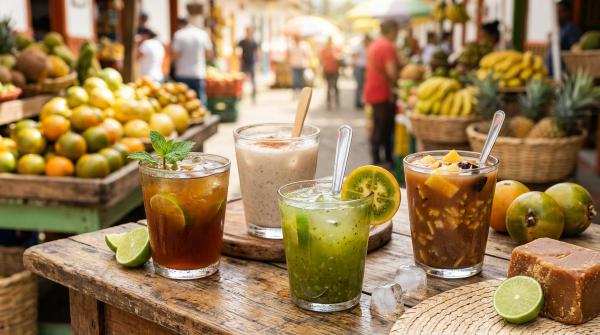
#Food gets all the attention, but drinks can wreck you too. In places where tap water safety is uncertain for travelers, I stick to sealed bottled drinks, boiled tea, hot coffee, or drinks made in busy places where ice is clearly commercial. Not all ice is bad. In many cities, market vendors buy factory ice made from treated water. But if I don’t know, I don’t assume. I ask if I can, or I choose hot tea and pretend I’m wise.
Fresh sugarcane juice, lime soda, fruit shakes, iced coffee from a stall... I love them, I really do. But I watch the ice, the cups, and the rinsing water. If glasses are being dipped into a cloudy bucket between customers, I’m out. If disposable cups are used and the stall is burning through orders, I feel better. With fruit shakes, I look for whole fruit peeled in front of me rather than pre-cut fruit in tubs. Again, not perfect science, just traveler pattern-recognition built from embarrasing lessons.
One little habit: I carry oral rehydration salts, just in case. Not because I expect disaster, but because travel days are already dehydrating. Heat, walking, beer, salty food, long transit, then one dodgy snack and you’re a raisin. ORS packets weigh nothing. Pack them and forget them until you need them.
How I choose between two stalls selling the same thing
#This happens constantly. You walk down a night market lane and see five stalls selling grilled squid, ten doing noodles, three frying dumplings, a dozen skewers. People ask for the “best” one, but honestly best is often the one that’s cooking cleanly and turning food fast while smelling like heaven. My decision process is very unromantic.
- I circle once before buying. Hunger makes bad decisions, so I force myself to do a lap.
- I watch what locals order repeatedly, not just where tourists take photos.
- I pick the stall where the signature item is the main focus. If a vendor sells grilled fish, smoothies, sushi, pancakes, fried chicken, and phone chargers, I get nervous.
- I choose smaller menus. A stall doing one dish all night usually has better turnover and better muscle memory.
- I check the end of the line. Are people eating happily right there? Are plates coming out hot? Are customers moving quickly?
In Singapore, this is easier because hawker centres are regulated and graded by local authorities, and many stalls have a long public reputation. Still, I use the same eyes. At a satay stall, I want smoke and steady grilling. At a laksa stall, I want broth moving hot. At a chicken rice stall, I know the chicken may be served room temp by tradition, so I’m more selective about hygiene and turnover. Context matters. Not every safe dish is bubbling hot, but when you’re unsure, hot is the safer lane.
When to walk away, even if the smell is flirting with you
#Walking away is a travel skill nobody praises enough. We talk about bravery, trying everything, saying yes. Fine. But a good traveler also knows when to say, “nah, not tonight.” Especially if you’ve got a flight, a trekking day, or a long bus ride tomorrow. I am much more adventurous on nights when my only plan the next morning is coffee and wandering.
- Food sitting in trays with no visible heat source and no turnover.
- Raw and cooked meat touching, or the same tongs bouncing between both.
- A sour, rotten, or ammonia-like smell around seafood. Fresh seafood can smell like the sea, not like a dare.
- Lots of flies on ready-to-eat food. A couple flies in an outdoor market is normal. A fly convention is not.
- The vendor looks overwhelmed and starts cutting corners. I feel bad, but my stomach doesn’t care about my empathy.
- Food that should be cold but is just sitting cool-ish, especially dairy, custard, raw salads, cut fruit, and seafood.
I’ve broken my own rules, obviously. In Oaxaca, I ate a tlayuda from a market stall at midnight because the smell of toasted tortilla, asiento, beans, quesillo, and grilled meat pulled me in like a cartoon hand. But the stall was busy, the meat was grilled hard, the tortilla crisped over heat, and the toppings were moving fast. That felt like a good risk. Travel eating is always some level of risk. The point is picking the delicious risks instead of the dumb ones.
A simple night-market eating plan that doesn’t ruin the fun
#If you want a practical plan, here’s mine. I start with something hot and simple: grilled skewers, dumplings from a steamer, soup, wok noodles, fried bread, whatever is fresh and moving. Then I wander. I don’t buy the first shiny thing unless it’s obviously the thing everyone is there for. I drink bottled water or hot tea early, because dehydration makes me impulsive and cranky. Then I choose a second dish from a stall that passed the little hygiene-and-heat test.
I also avoid turning the night market into an eating contest on day one. This is where I sound like your mum, sorry. Your gut is adjusting to new spices, oils, microbes, meal times, and maybe a time zone that makes dinner feel like breakfast. I’ll taste a lot, but I share portions if I’m with someone. If I’m alone, I pick three things max and call that dinner. Okay, sometimes four. Five if there are dumplings. I contain multitudes.
Another trick: eat earlier in the evening. Not always, because some markets peak late, but earlier often means fresher prep, cleaner setups, and less tired vendors. Late-night food can be amazing, though. I’ve had midnight noodles that fixed my personality for a few hours. Just look harder at turnover and reheating when the night stretches on.
What to do if your stomach still gets weird
#Even careful people get hit sometimes. It doesn’t mean the whole market was dirty or that street food is bad. Travel changes everything your body is used to. If I feel off, I go boring fast: water, oral rehydration salts, plain rice or toast if I can find it, bananas, soup, rest. I skip alcohol, dairy, and spicy food for a bit, which is emotionally difficult but usually wise.
If symptoms are severe, persistent, bloody, or come with high fever or dehydration, get medical help. I’m not a doctor and I don’t play one while eating noodles under neon lights. Before a trip, I check travel health advice for the destination and make sure my insurance isn’t useless. That sounds painfully adult, but being sick abroad is already annoying, and not knowing where to go makes it worse.
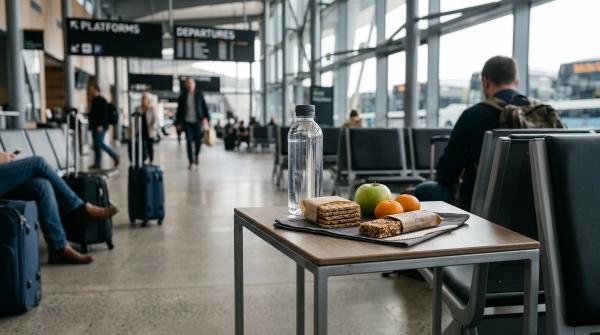
Also, don’t blame the last thing you ate automatically. Foodborne illness timing can be tricky. The culprit might be lunch, yesterday’s ice, or something you ate on the plane. I say this because I once accused an innocent bowl of soup in my mind for two days, then realized the suspicious airport sandwich was the more likely criminal. Poor soup. It deserved better from me.
The joy is still the point
#I don’t want this checklist to make night markets feel like a hazard course. They are some of the best food classrooms on earth. You learn what a city loves by watching what people line up for after work. You learn how heat, smoke, oil, spice, and patience turn cheap ingredients into something people remember for years. You learn that a plastic stool can be a throne if the bowl in front of you is good enough.
My favorite travel meals were not always the fanciest or safest-looking. They were the ones where I could see the cook’s rhythm, smell the wok before I found the stall, burn my fingers on something wrapped in paper, and feel, for ten minutes, like I’d landed exactly where I was supposed to be. The checklist just helps me stay in the game longer. More markets, more noodles, more skewers, less time curled up in a hotel room negotiating with my intestines.
Choose food that is cooked hot, sold fast, handled cleanly, and topped thoughtfully. Then sit down, eat slowly, and let the market do its noisy, smoky, beautiful thing.
So yeah, follow the smoke, watch the hands, respect the sauces, be picky with ice, and don’t let fear steal the fun. Night markets are worth it. They’re messy and loud and sometimes confusing, but they’re also where travel tastes most alive. And if you’re hungry for more food-travel rambling like this, I’d honestly poke around AllBlogs.in sometime, preferably with a snack nearby.