The day my cooler turned into soup somewhere outside Mobile
#I learned cooler food safety the gross way, which is probably how most of us learn it. Years ago I was driving from Atlanta down toward the Gulf Coast, already daydreaming about fried shrimp, oyster po’boys, and that first salty breeze when you roll the window down too early because you’re impatient. I had packed what I thought was a beautiful road trip cooler: chicken salad, sliced peaches, a little tub of pimento cheese, boiled eggs, cold brew, and these fancy local sausages I bought because I was apparently feeling like a picnic poet. By noon, the ice had melted into this sad gray puddle, the chicken salad container was bobbing around like a tiny shipwreck, and the cooler smelled... not right. Not horrible, but not right either. And that’s the thing. Food doesn’t always announce danger with a dramatic stink. Sometimes it just quietly becomes a bad idea.
Since then, I’ve become the annoying person who packs a cooler like it’s a small expedition. I still travel for food, honestly that’s the whole reason I drive half the time. I’ll detour for a farmers market tamale, a roadside peach stand, a proper brisket sandwich, or a diner pie that somebody’s aunt allegedly makes in the back. But I don’t mess around with ice melt anymore. If you’re hauling real food across state lines, mountains, deserts, or just two hours to a lake, the cooler is basically your tiny portable fridge. Treat it like one, and you get cheese, fruit, sandwiches, leftovers, and cold drinks that actually stay safe. Treat it like a picnic basket with ice cubes, and... well. Mobile chicken salad soup.
The boring temperature rule that saves the fun food
#Okay, the official-ish rule I keep in my head is simple: cold perishable food should stay at 40°F or below. The USDA and FDA both talk about the “danger zone,” which is between 40°F and 140°F, where bacteria can multiply faster than you’d like to think about while you’re trying to enjoy a scenic overlook. Perishable food should not sit out more than 2 hours, or more than 1 hour if it’s hotter than 90°F outside. That 90°F bit matters so much on summer road trips, especially in places like Arizona, inland California, Texas, Rajasthan, or honestly any blacktop parking lot in July.
The part people hate, me included, is that you can’t always smell whether food is unsafe. I’ve had yogurt look totally innocent after a long drive and I’ve had melon smell weird after barely an hour because it got warm in the trunk. So now I use a cheap fridge thermometer in the cooler. Nothing fancy. Just one of those little ones that tells me if I’m still in the safe zone. It feels nerdy until you’re eating chilled mango, salami, and sharp cheddar at a lookout instead of wondering if your stomach is about to file a complaint.
Ice melt is not the enemy, but it is a warning light
#Here’s where people get tripped up: melted ice doesn’t automatically mean the food is unsafe. Ice melts because it’s doing its job, absorbing heat. If the water in the cooler is still icy cold and your thermometer says 40°F or under, you’re probably okay. But if the ice is gone, the water is just cool-ish, and the food has been floating around for hours while you’ve been stopping for tacos and gas station coffee, then you need to start making decisions.
I think of ice melt like the gas gauge. You don’t panic the second it moves off full, but you also don’t ignore it until the engine coughs on a mountain road. On my last drive through New Mexico, I packed breakfast burritos from home, green chile cheese, grapes, and a tub of salsa I was unreasonably attached to. I checked the cooler at a rest stop outside Tucumcari and saw the block ice was half melted, but still cold enough. Great. I drained a little water, topped it with bagged ice, and kept going. By Santa Fe, the cheese was still firm and cold, and the burritos reheated beautifully in the rental cabin skillet. Small victory, but food people understand these things.
How I pack the cooler now, after many dumb mistakes
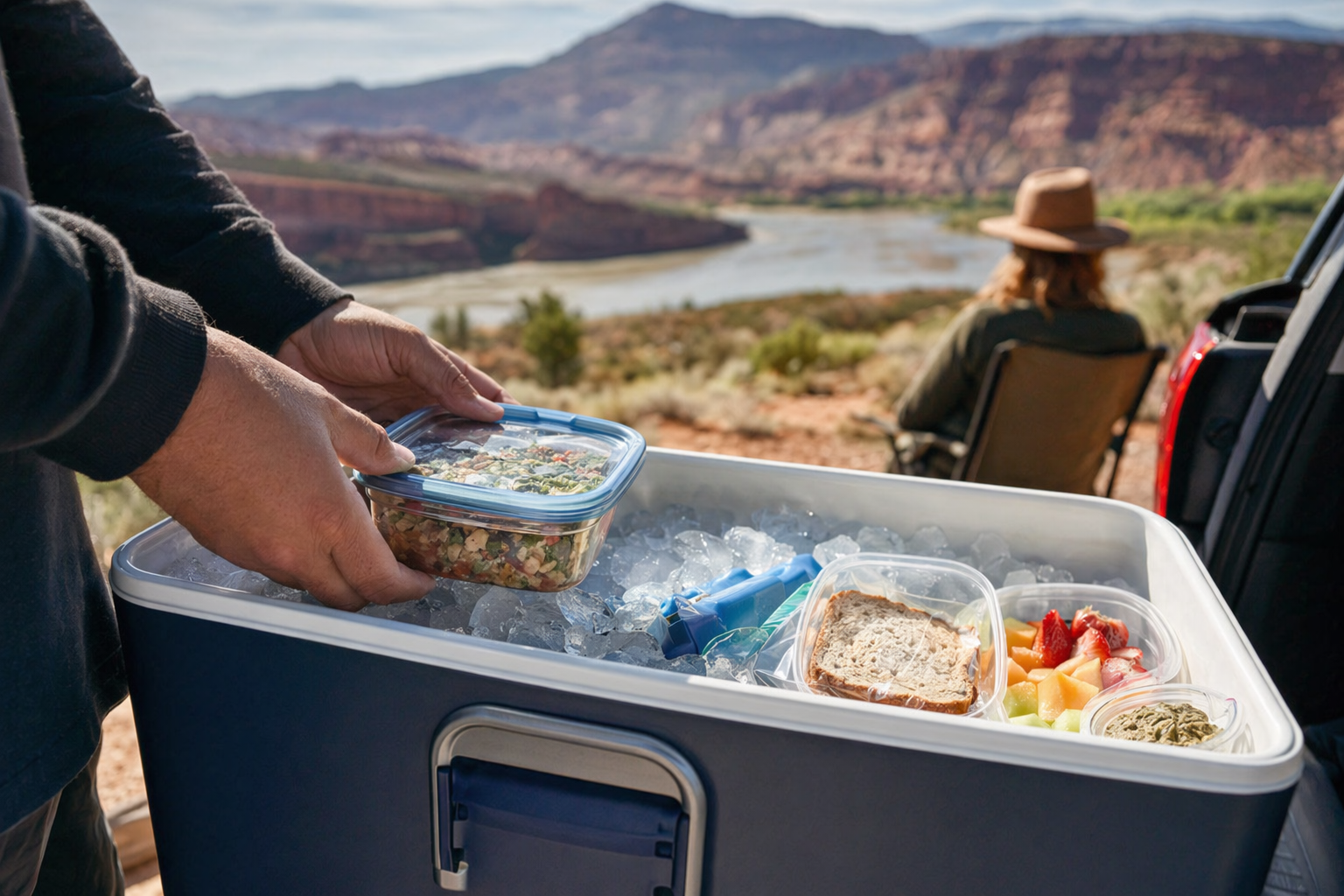
#I used to just throw stuff in with a bag of ice and call it good. That is chaos. Wet chaos. Now I pack in layers, like a lasagna, except the sauce is frozen water and the cheese is... actual cheese. The key is pre-chilling everything. A cooler cannot quickly chill warm food, it can only help keep cold food cold. If you put room-temp pasta salad in there, the ice has to work too hard right from the start. I chill drinks overnight, freeze water bottles, refrigerate the cooler foods until the last minute, and if I’m using a hard cooler, I sometimes pre-chill the cooler itself with a sacrificial bag of ice the night before. Sounds fussy. Works.
- Start with frozen water bottles or block ice on the bottom because they melt slower than loose cubes and don’t flood everything as fast.
- Put the foods you’ll eat later at the bottom, especially meat, dairy, cooked rice dishes, and leftovers. Stuff you’ll grab often goes near the top.
- Fill empty spaces with ice packs, frozen bottles, or even chilled towels in bags. Air pockets are the enemy because warm air sneaks around in there like it owns the place.
- Keep raw meat in a separate sealed container or, better, a separate cooler. I know that sounds extra, but raw chicken juice in the snack cooler is a road trip crime.
- Use a thermometer. Not your hand. Your hand is a liar, especially when you’re hungry.
Cubed ice, block ice, gel packs, frozen bottles: what actually works
#I’m weirdly opinionated about ice now. Cubed ice is great for quick chilling and filling little gaps, but it melts faster. Block ice lasts longer, especially for long highway stretches when you won’t open the cooler much. Gel packs are tidy and reusable, though some cheap ones don’t stay cold as long as you’d hope. Frozen water bottles are my favorite because they do double duty: they keep food cold, then become drinking water later. Very road-trip elegant, if you ask me.
| Cold source | Best for | What I don’t love |
|---|---|---|
| Block ice | Long drives, camping, keeping the bottom cold | Harder to fit around odd containers |
| Cubed ice | Filling gaps, chilling drinks fast, topping up at gas stations | Melts quickly and can soak labels, bread, paper bags |
| Frozen water bottles | Day trips, snacks, emergency drinking water | Round bottles leave weird air gaps unless you pack around them |
| Gel packs | Lunch coolers, hotel-to-hotel travel, dry packing | They need refreezing, and not all are equal |
| Dry ice | Frozen food on very long hauls | Needs careful handling and ventilation, and it can freeze things rock solid |
One note on dry ice because somebody always brings it up at a campground table like they’ve discovered wizardry. Dry ice can be useful for keeping frozen items frozen, but it’s not casual. Don’t touch it bare-handed, don’t seal it airtight, and don’t use it in a tiny enclosed car without understanding ventilation. I usually skip it unless I’m transporting something frozen for a specific reason, like seafood after a coastal trip. For most food travelers, block ice plus frozen bottles is plenty.
The two-cooler trick changed my trips completely
#If you have space, use two coolers: one for drinks and one for food. I swear this is the single easiest upgrade. The drink cooler gets opened every 14 seconds because somebody wants sparkling water, then lemonade, then the iced coffee they forgot about. The food cooler stays closed, calm, and cold. It’s like giving your sandwiches their own quiet hotel room.
This really clicked for me on a Blue Ridge Parkway drive where we were hopping between overlooks and tiny mountain towns, stopping for apple butter, smoked trout dip, and those little paper bags of boiled peanuts that make the car smell like salt and earth. The drinks cooler was abused all day. Open, shut, open, shut, rummage, spill, laugh, repeat. But the food cooler stayed tucked under a blanket in the back, only opened at lunch. When we finally pulled out the trout dip and cucumbers at a picnic table, everything was still properly cold. That felt luxurious in a very low-budget way.
Foods I trust in a cooler, and foods I side-eye hard
#Some road trip foods are forgiving. Hard cheeses, whole fruit, hummus if kept cold, cut vegetables, sealed yogurt, boiled eggs, cured meats, cooked beans, and sturdy sandwiches can be great. But “forgiving” doesn’t mean magical. Once they’re in the temperature danger zone too long, they need to go. I know, tossing food hurts. It hurts my soul. But not as much as spending the night in a motel bathroom off I-10.
The foods I watch extra carefully are anything with cooked rice, cooked pasta, seafood, poultry, eggs, dairy-heavy salads, cut melon, and leftovers. Rice especially has a reputation for being harmless, but cooked rice can be risky if it’s held warm too long. That’s why I’m careful with dishes like biryani, curd rice, and rice bowls. If you pack biryani for a long drive, you really want clear cold-time rules, and I’ve gone deeper on that in Biryani on Indian Trips: How Long It Stays Safe. Same with curd rice, which is gorgeous and cooling in hot weather but still dairy and rice, so the cooler plan matters. This piece on Curd Rice for Travel: Safe in Indian Summer? is a good companion if that’s your kind of travel food.
- Better bets: whole oranges, apples, firm grapes, carrots, sealed cheese sticks, nut butter packets, roasted nuts, crackers, unopened pickles, and chilled drinks.
- Needs real cold: chicken salad, tuna salad, egg salad, cooked meats, yogurt, soft cheese, tofu, cooked rice, cut fruit, salsa, dips, and anything creamy.
- Please don’t gamble with: lukewarm seafood, mayo salads that sat in the sun, leftovers from last night’s chicken dinner that you forgot to chill, or a cooler full of melted ice water with no thermometer reading.
Packing restaurant leftovers without ruining tomorrow’s lunch
#Food travel means leftovers. It just does. I am physically unable to leave half a rack of ribs or three slices of Detroit-style pizza behind if there’s even a chance I can eat it the next day. But restaurant leftovers are tricky because they often spend time at the table, then in a takeout box, then in your car while you “just quickly” walk around a historic downtown for 45 minutes. Quickly is never quickly. Suddenly your beautiful leftovers have been warm for two hours.
My rule now is boring but useful: if I know I want leftovers, I get them boxed and into the cooler fast. Not after sightseeing. Not after one more boutique. If the food has been sitting out too long, I let it go. Cooked chicken is one I’m especially strict about, whether it’s barbecue, rotisserie, or the half chicken you bought from a grocery store because the hotel room smelled lonely. For a deeper meat-specific breakdown, especially hotel fridges and reheating, I like this guide on Rotisserie Chicken While Traveling: Fridge & Reheat Safety. The short version: chill it quickly, keep it cold, reheat thoroughly, and don’t be sentimental if the timing got sketchy.
Hotel ice machines, gas stations, and the art of topping up
#I have a complicated relationship with hotel ice machines. They are lifesavers, but also sometimes they look like they’ve witnessed things. If I’m using hotel ice directly around sealed containers and drinks, fine. If I’m packing food that could get wet, I put ice in zip bags or use it only outside a sealed bin inside the cooler. Meltwater gets everywhere. It peels labels off jars, sneaks into deli containers, makes tortillas gummy, and turns paper-wrapped cheese into a tragedy.
Gas station ice is usually my road trip rhythm. Morning top-up, afternoon check, evening drain if needed. I drain meltwater only when I need to make room or when it’s no longer icy cold. Cold water actually helps surround food and transfer cold, so dumping it too often can make the cooler warm up faster if you don’t replace it with ice. That surprised me at first. I thought dry cooler equaled safe cooler. Not always. Cold is the goal, not dryness, though obviously soggy bread is a seperate issue and a personal heartbreak.
Regional food stops that taught me cooler lessons
#In Louisiana, I learned that seafood leftovers need urgency. I once bought boiled shrimp from a market near the coast, packed them over ice, and ate them at a picnic table with lemon, hot sauce, and napkins flying everywhere because Gulf wind has no manners. Perfect meal. But I also knew shrimp is not a “we’ll see later” food. It stays cold or it goes. No romantic nonsense.
In Vermont, the cooler was all about cheese. We were driving through little towns with farm stores selling cheddar, goat cheese, maple yogurt, and butter that tasted like a field in June. Cheese feels sturdy, and some aged cheeses are more resilient than soft dairy, but I still kept everything cold because quality drops even when safety might still be okay. Nobody drives all that way for sweaty cheese. In the Pacific Northwest, it was berries: marionberries, blueberries, raspberries from farm stands. Whole berries travel better than cut fruit, but they still mold fast if crushed and warm, so I packed them in shallow containers on top, not under a frozen brick like an idiot. Learned that one the sticky way.
Texas taught me brisket discipline. Leftover brisket seems invincible because it’s smoky and salty and spiritually powerful, but cooked meat is cooked meat. After a barbecue lunch, I portion it small, chill it fast, and keep it buried deep in the cooler. Later, in a cabin or motel with a microwave, it becomes breakfast tacos with eggs and salsa. That, to me, is one of the great joys of road food: yesterday’s local meal becoming tomorrow’s slightly weird but perfect breakfast.
My actual ice melt packing system for a full travel day
#For a long driving day, I pack the night before and then finish in the morning. First I freeze water bottles, at least four if the cooler is medium-sized. I chill all food completely. If I made pasta salad or rice, it goes into shallow containers so it cools faster in the fridge before the trip. Big deep containers hold warmth in the middle, and that’s not what you want. In the morning, I put a layer of frozen bottles or block ice at the bottom, then the serious perishables, then more ice packs around the sides. Snacks and lunch items go on top. Thermometer goes where I can see it without digging forever.
I also pack a small “eat first” bag. This is the stuff that shouldn’t be buried: morning yogurt, cut vegetables, maybe a sandwich for the first stop. That way I’m not opening the cooler and excavating like an archaeologist every time we pull over. I keep a towel over the cooler in the car, especially if sun is coming through the windows. And I never, ever put the cooler in a hot trunk if I can avoid it. The passenger area with air conditioning is better. If the trunk is the only option, I pack more ice and check more often.
When to toss food, even if it makes you mad
#This is the part nobody likes. If perishable food has been above 40°F for more than 2 hours, or more than 1 hour in heat above 90°F, toss it. If you don’t know how long it’s been warm, toss it. If raw meat leaked into the cooler, toss anything it touched that can’t be washed or safely cooked. If the container opened and food has been floating in meltwater, I usually toss it unless it’s something sealed inside another bag and still cold. The “when in doubt, throw it out” line is annoying because it sounds like a fridge magnet, but it’s also true.
My road trip rule is this: I will mourn a lost sandwich for five minutes, but I will not let a $6 sandwich ruin a three-day food adventure.
I’ve broken my own rule once or twice. Most food travelers have. You think, “It’s probably fine,” because the bakery stop was expensive or the chicken was from that legendary roadside place everybody talks about. But safety doesn’t care about reputation. A famous pie can still sit too warm. A perfect curry can still cross the line. It’s brutal, but it’s better to buy something fresh in the next town than spend the next day unable to enjoy the next town at all.
Little habits that make cooler travel feel less like homework
#A good cooler routine doesn’t have to kill spontaneity. Actually, I think it gives you more freedom. When your food is packed safely, you can stop at that overlook longer, take the scenic road, buy local cheese without panic, and say yes to a farm stand because you know you’ve got room and cold space. My favorite trips are part planned, part wandering: breakfast from the cooler, lunch at a local counter, dinner from wherever smells best, leftovers handled properly so they become part of the next day.
- Bring extra zip bags, because something always leaks, and future-you will be grateful.
- Pack a tiny cutting board and knife if you’re doing cheese, fruit, or picnic lunches, but keep the knife wrapped safely. I have poked myself digging for grapes. Not elegant.
- Use square containers instead of round ones when you can. They stack better and waste less cold space.
- Label leftovers with the day, especially on multi-day trips when all containers start looking suspiciously alike.
- Keep hand sanitizer and paper towels near the cooler, not buried under luggage. Roadside picnics get messy fast.
A few sample cooler menus I’d actually pack
#For a summer mountain drive, I’d pack frozen water bottles, iced coffee, hard-boiled eggs, cheddar, cherries, cucumbers, hummus, salami, crackers, and maybe cold sesame noodles in a small container if I know I’ll eat them early. For a coastal seafood weekend, I’d leave room in the cooler for market purchases and pack mostly non-risky snacks going out: fruit, nuts, sparkling water, pickles, and bread kept seperate so it doesn’t become wet sponge. Coming home, the seafood gets the coldest real estate.
For an Indian summer road trip, I’d be more careful with cooked rice dishes, curd, paneer, and meat curries. Not avoid them, just respect them. Pack them cold, keep them under 40°F, eat within a sensible window, and don’t let them sit around during temple stops, beach stops, shopping stops, and “one quick chai” stops that become an hour because someone met a cousin. Food is emotional on trips, especially homemade food, and I get that deeply. But heat is heat.
For a fall food crawl, like apple orchards and farm stores, the cooler becomes more about quality than emergency survival. Butter, cheese, cider, smoked fish, fresh pasta, and pies with dairy fillings all appreciate cold. The plain apple cider donuts can sit up front with me, obviously, because I’m not a monster.
The best cooler is the one that lets you eat like you mean it
#I don’t pack a cooler because I’m trying to be uptight. I pack it because I want to eat better while traveling. I want roadside peaches that are still firm and cold at sunset. I want leftover brisket tacos without side-eyeing the container. I want yogurt in the morning, cheese at a trailhead, and the freedom to buy something delicious from a tiny town market even if dinner is still four hours away. A cooler, packed well, is not just a safety tool. It’s a food passport with ice in it.
So yeah, watch the melt. Keep perishables at 40°F or below. Respect the 2-hour rule, and the 1-hour rule when it’s brutally hot. Use block ice, frozen bottles, and a thermometer. Separate drinks from food if you can. Don’t gamble with chicken, seafood, rice, dairy, or leftovers just because you’re attached to them. And leave room for the good stuff you find along the way, because that’s half the reason to take the road in the first place. If you like these practical food-travel rabbit holes, I’d honestly poke around AllBlogs.in sometime. It’s the kind of place I’d open while planning a trip and then accidentally spend an hour reading instead of packing.