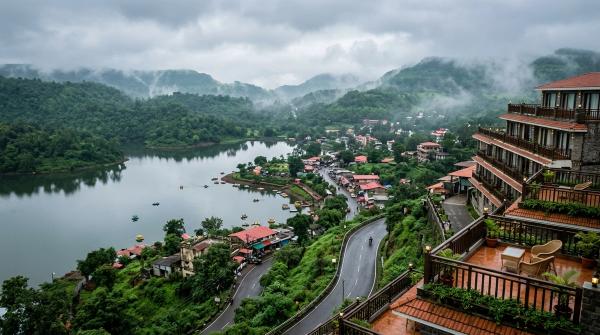
I went to Meghalaya thinking I'd mostly be chasing clouds, waterfalls, root bridges, the usual postcard stuff. And yeah, that happened. But honestly? What I keep replaying in my head is breakfast smoke curling out of a village kitchen, sticky red rice on a metal plate, pork slow-cooked till it basically gave up, and cups of black tea while somebody's auntie told me I wasn't eating enough. Classic. If you're the sort of traveler who picks a destination partly by what you might eat there, Meghalaya is ridiculously rewarding. Especially if you skip the standard hotel circuit and do village stays instead. That's where the real thing is... the home food, the firewood cooking, the weirdly comforting silence at night, the conversations that go nowhere and everywhere.
And before someone says, oh but village stays are too rustic, too basic, not 'curated' enough - um, that is literally why they're good. In 2026, travel trends are all about slower itineraries, community-based tourism, hyperlocal food experiences, low-waste stays, and learning one region properly instead of ticking off fifteen spots for Instagram. Meghalaya fits that mood so well it's almost unfair. A lot of travelers now are actively looking for farm-to-table but not the polished-city version with tiny portions and a long chef speech. They want actual local ingredients, seasonal cooking, millet and indigenous greens, smoked meats, fermented flavors, less plastic, more story. Meghalaya has been doing versions of that forever, way before it became trendy.
Why Meghalaya village stays work so well for food lovers
#Meghalaya isn't just one vibe, by the way. Khasi, Jaintia, and Garo food traditions overlap in places but they each have their own rhythms, ingredients, and little surprises. You taste a lot of pork, chicken, fish, wild or foraged greens depending on season, bamboo shoot, sesame, local herbs, yam, tapioca, and rice in different forms. Smoked food is a big thing. Fermented ingredients show up. Some meals are super simple, almost austere, and then the flavor sneaks up on you. It's not loud food in the way some other Indian cuisines are. Less spice-bomb, more depth. More earth, smoke, broth, tang, texture. The kind of food that starts making sense when you're sitting in the cold or after walking uphill for two hours and your body is like yes, this. This exactly.
- Village stays usually mean you eat what the family cooks, not some generic tourist menu pretending to be local
- A lot of hosts now offer food walks, cooking demos, bamboo-cooking sessions, and market visits because culinary travel has become a real draw in Meghalaya
- Many newer homestays are leaning into low-impact tourism in 2026 - rainwater harvesting, kitchen gardens, seasonal menus, less food waste
- You also get access to regional dishes that barely show up in city restaurants, or if they do, they feel toned down a bit
My first proper village meal near Mawlynnong kind of reset my standards
#I remember arriving near Mawlynnong after one of those roads where you're too busy looking out the window to realize your neck has started hurting. Everyone calls Mawlynnong the clean village, which, yes, is true, but the surrounding countryside and nearby hamlets are the real reason I'd linger. I stayed in a simple homestay setup outside the busiest lane because I wanted less foot traffic and more actual village life. Lunch was jadoh, a Khasi rice dish usually cooked with meat, plus dohneiiong - pork in black sesame gravy - and a side of tungrymbai, which is fermented soybean and one of those things that can scare off cautious eaters till they try it. The sesame pork was unreal. Nutty, dark, rich, not too aggressive, just deeply satisfying. Tungrymbai smelled stronger than it tasted, thank God, though after the second bite I was hooked. I kept asking for 'just a little more' and then fully embarassed myself by needing thirds.
What made it special wasn't just the food. It was the sequence of it. The uncle of the house showed me their pepper plants and the little patch where they grew herbs. Somebody's cousin had gone to a local market that morning for fresh pork. Rice came from nearby. There was no performance around sustainability, no signboard saying authentic organic experience, none of that. It was just their normal life. Funny how what city people now package as food innovation in travel - traceable ingredients, zero-kilometre produce, immersive dining - is basically how villages have functioned all along.
Best village stay areas in Meghalaya if local food matters as much as the scenery
#Okay, so if I had to narrow it down, these are the areas I think are strongest for village stays with meaningful food experiences, not just a bed and a view.
- Mawphlang - amazing if you want Khasi food, sacred grove walks, village kitchens, and easy access from Shillong without feeling like you're still in Shillong
- Kongthong - known for the whistling village tradition, and a really good place for slower homestay life, smoked meats, local rice, and proper conversations with hosts
- Mawlynnong and nearby villages - popular, yes, but still worth it if you choose a family-run stay slightly away from the busiest visitor flow
- Nongriat side villages - more effort to reach, obviously, but the food after that trek? almost emotional. Simple home meals hit different there
- Jowai and West Jaintia villages - really underloved by mainstream travelers, but excellent for putharo, meat dishes, local produce, and a less crowded feel
- Garo Hills villages around Tura belt - more distance, more planning, but if you care about broadening beyond Khasi-heavy itineraries, this matters a lot
Mawphlang was probably my favorite all-rounder
#Mawphlang just gets the balance right. It's accessible from Shillong, but still feels rooted. Several community-run and family-run stays around here now understand that visitors don't only want a room. They want context. In 2026 that has become a huge part of travel planning, especially among younger Indian travelers and international food tourists doing Northeast circuits. At my stay there, dinner included jastem, a local rice preparation, a clear chicken broth with herbs, smoked pork, and putharo, the soft steamed rice bread that I got weirdly attached to. Breakfast was even better - putharo with a light meat curry and red tea while fog was doing that dramatic Meghalaya thing outside. Later, my host showed me how black sesame is ground for dohneiiong and why some households make it thicker while others prefer a looser gravy. Tiny detail, maybe, but those are the bits I love.
Also, near Mawphlang, if you pass through Shillong before or after your village stay, do not ignore the city food stops. Police Bazaar is chaotic and not exactly peaceful, but Shillong's food scene in 2026 is more confident than ever. Cafes are using local oranges, Lakadong turmeric from nearby Meghalaya trade networks, indigenous honey, hill-grown coffee, and local millet in desserts and brunch menus. At the same time, old-school Khasi eateries remain the real anchor. I like that contradiction actually. Fancy coffee in the morning, fermented soybean and pork by lunch.
Kongthong felt less polished, more personal, which I mean as a compliment
#Kongthong is famous for the jingrwai lawbei, the whistled call tradition, and yes that's reason enough to visit. But I wasn't prepared for how much I'd enjoy the food there. The homestay I stayed at served smoked pork with bamboo shoot one evening that honestly would've become my whole personality if I lived there. There was also a chutney-ish side with local chilli that nearly removed my soul from my body. Delicious though!!! The meals were seasonal and not overplanned. One night fish, one night pork, one lunch mostly greens, squash, rice, and a very clean-tasting dal-like preparation that was not dal, but I never got the exact name because we got distracted talking about rainfall and road conditions. This happens to me a lot while traveling. Zero journalistic discipline, amazing meals.
If you're booking a Meghalaya village stay for food, ask one question before anything else - 'What do you usually cook at home?' Not 'Do you have local cuisine available?' The first gets you reality. The second gets you a brochure answer.
The dishes I think you should actually look for, not just the ones every list repeats
#Some dishes get mentioned everywhere, and fair enough, they're good. But there are other things worth chasing too. Jadoh is the obvious start and can vary a lot household to household. Dohneiiong, yes definitely. Tungrymbai, absolutely, if you can get over your own fear of fermented food. Putharo is softer and more comforting than it sounds. In some places I got rice with dry fish chutneys or pungent side condiments that completely changed the meal. One host made chicken cooked inside bamboo, which had this clean woodsy fragrance that was subtle but addictive. Another served yam and forest greens sautéed very simply, and weirdly that's one of the plates I remember most. Maybe because travel makes you expect spectacle, and then a humble side dish just wins.
- Jadoh - meat rice, often pork-based, filling and practical and deeply comforting
- Dohneiiong - pork in black sesame, rich and almost velvety if made well
- Tungrymbai - fermented soybean, funky but worth trying
- Putharo - steamed rice bread, perfect with tea or curry
- Bamboo-cooked meats or fish - ask in advance because it may need planning
- Local smoked pork - honestly one of Meghalaya's greatest gifts to hungry people
And if your route includes Jaintia Hills, keep an eye out for local rice preparations, smoked or dried meat accompaniments, and the way families use less flashy seasonings but still build flavor. In Garo areas, too, you'll notice food rhythms shift again. That's why I always push people to stop saying 'Northeast food' like it's one big bowl. It isnt. Meghalaya alone is varied enough to humble that habit.
What village stays are doing differently in 2026
#This part surprised me. A lot of Meghalaya homestays, especially the good independent ones and community-linked stays, are adapting to newer food-travel expectations without becoming fake. I saw QR-based pre-arrival meal planning in one place with options like vegetarian local dinner, smoked meat dinner, low-spice meal, and seasonal foraged add-on if available. Another stay had a small 'taste table' in the evening - not a restaurant thing, just a host explaining 4 or 5 local ingredients to guests. Some are partnering with village women's groups for cooking sessions. A few now offer market-to-kitchen experiences where you go with the family, buy ingredients, and then help prep. This aligns with wider 2026 culinary travel trends where travelers want participatory food experiences, not passive consumption. People are done with just photographing plates. They want process, memory, texture, usefulness.
I also noticed more awareness around dietary adaptation. Not in a preachy way, but practical. If you're vegetarian, don't panic. Traditional food culture in many parts of Meghalaya is meat-forward, sure, but hosts can usually prepare seasonal vegetables, local mushrooms if in season, potato dishes, rice breads, chutneys, pumpkin, beans, and leafy preparations. The trick is to communicate early and respectfully. Don't show up expecting tofu lasagna in a hill village, you know?
A small reality check because not every 'authentic' stay is automatically great
#Let's be real for a sec. Some places market themselves as authentic village homestays and then serve instant noodles, factory bread, and generic paneer curry because they assume tourists won't eat local food. Which... yeah, some won't. But if food matters to you, message ahead. Ask if meals are cooked by the family, whether they can serve Khasi/Jaintia/Garo dishes, if ingredients are seasonal, if they can explain what you'll be eating. The best places are usually transparent. They don't promise a 20-item menu. They say things like, tonight we have pork, squash, rice, local greens, and chutney. Perfect. Book that.
Also, roads and weather can mess with plans. Meghalaya is gorgeous and moody and a little chaotic. Supplies may not arrive. Rain changes everything. One afternoon our expected fish lunch became egg curry and rice because transport got delayed. Was I disappointed for 30 seconds? Sure. Then I ate the egg curry cooked on firewood with local herbs and basically forgot my own complaint. Travel fixes your entitlement if you let it.
My favorite food moments weren't fancy at all
#One was in a village near Nongriat after the climb back had absolutely wrecked me. I was sweaty, half-annoyed at my own fitness level, and probably not speaking in full sentences. Dinner was plain rice, a peppery chicken stew, boiled vegetables, chutney, and tea. That's it. But I swear that meal tasted like mercy. Another was a rainy morning in a Jaintia-side homestay where the host handed me warm putharo and I ate it standing near the kitchen fire because it was too cold to be dignified. There was this smell of wet earth and woodsmoke and fermented something in the background, and I had that stupidly dramatic traveler thought like, ah yes, this is living. Embarrasing, but true.
I think that's why Meghalaya works so well for culinary travel. It doesn't always overwhelm you with obvious spectacle. It sort of seeps in. The flavor of black sesame. The quiet confidence of smoked meat. The fact that breakfast can be rice-based and nobody apologizes for it. The way hospitality feels direct, not over-managed. And when hosts tell you where the pork came from or why a chutney tastes different this month, that's not just trivia. That's the place revealing itself.
If I were planning a food-first Meghalaya trip now, this is roughly how I'd do it
#- Start with one night in Shillong for markets and a couple of Khasi meals, but don't stay too long if you want village depth
- Move to Mawphlang for 2 nights - easiest gateway into village food experiences without hardcore logistics
- Then pick either Kongthong or a Jaintia village stay for 2 nights depending on whether you want cultural immersion or quieter under-the-radar food exploration
- Add Mawlynnong side only if you can stay just outside the busiest tourist core
- If you have time and patience, extend to Garo Hills because your understanding of Meghalaya food will be way less one-dimensional
And leave blank space in your plan. Seriously. The best meals happen when somebody says, hey, tomorrow we're making something special because relatives are coming, do you want to join? That's not bookable in a neat package. That's just luck, and being around long enough to recieve it.
Final thoughts, and what I'm still craving back home
#I miss Meghalaya food in a very specific way. Not in the dramatic 'best meal of my life' way, though a couple came close. More in the creeping, persistent way where you're in your own kitchen weeks later thinking about black sesame pork, or the softness of putharo, or how a simple smoked meat broth somehow tasted like mountain weather. Village stays gave me that. Hotels wouldn't have. Restaurants helped, yes, especially in Shillong, but the homestays are where the food became part of daily life instead of a standalone event.
So if you're heading to Meghalaya in 2026 and you care even a little bit about food, go beyond scenic checklists. Sleep in villages. Eat what the family eats. Ask too many questions. Try the fermented stuff even if it scares you a bit. Be okay with plans changing. And maybe don't pack jeans that are too tight, that's my practical wisdom here. Meghalaya will feed you well. Maybe too well. No complaints from me. If you like this kind of slightly obsessive food-and-travel rambling, poke around AllBlogs.in too, there's always another trip making somebody hungry.