There are two kinds of travel meals I trust after a long flight: the local dish someone’s grandma has been making forever, and a warm rotisserie chicken from a supermarket that smells like garlic, paprika, lemon, or whatever magic they rubbed under the skin. I know, not exactly glamorous. But if you’ve ever landed in Lisbon at 9 p.m., dragged a suitcase over cobblestones, found a tiny apartment rental with one fork and a suspiciously loud minifridge, and then discovered a shop selling frango assado around the corner... you understand. Rotisserie chicken is travel gold. It’s dinner, next-day lunch, picnic protein, sandwich filling, salad topper, and emergency hotel-room snack. But it’s also cooked poultry, and cooked poultry gets risky fast if you treat it like a souvenir magnet.
I’ve learned this the hard way. Not hospital-hard-way, thankfully, but close enough. Years ago on a road trip through Arizona, I bought a rotisserie chicken in Flagstaff because it smelled so good I basically followed my nose through the store like a cartoon character. Me and my friend were heading toward Sedona, stopping for photos, lingering too long, doing that dumb travel thing where you say “five more minutes” eight times. The chicken sat in the back seat. It was warm, then lukewarm, then just... questionable. By the time we got to the rental, I wanted to save it because I hate food waste, but the smarter part of my brain said no. That day taught me the main rule: if your food safety plan is based on vibes, you don’t have a plan.
Why Travelers Are Suddenly So Into Grocery-Store Dinners
#One of the big food travel shifts I keep seeing in 2026 is that people aren’t only chasing fancy tasting menus anymore. Don’t get me wrong, I love a beautiful restaurant with tiny spoons and a wine pairing I can’t pronounce. But a lot of travelers are mixing splurge meals with “local life” meals: grocery stores, open-air markets, convenience stores, food halls, bakeries, apartment cooking, train picnics. It’s partly prices, honestly. Travel is expensive. It’s also because grocery stores are weirdly intimate. You learn what people actually buy on a Tuesday. In Paris, the poulet rôti turning slowly outside the butcher shop tells you as much about the neighborhood as a museum does. In Mexico City, a pollo rostizado with tortillas, salsa, and a tub of beans can feel like a feast. In Lima, pollo a la brasa is practically a cultural institution, and yes, it makes airport chicken look very sad.
Another trend is protein-forward travel eating. After years of snack boards and aesthetic pastries, people want meals that actually keep them alive during a 17,000-step day. Rotisserie chicken fits that perfectly. It’s familiar, adaptable, usually cheaper than restaurant mains, and available in places where your language skills may be... let’s say decorative. I’ve bought versions in Portugal, France, Canada, the U.S., Spain, Japan, and once in a supermarket outside Reykjavik where the price made me briefly reconsider all my life choices. Still delicious though.
The Food Safety Rules I Actually Use, Not Just the Ones I Pretend to Know
#Here’s the practical bit, and I’m going to be a tiny bit bossy because chicken is not the food to be casual with. Food safety guidance from agencies like the USDA still centers on the same core ideas: keep cold food cold, keep hot food hot, and don’t let cooked chicken hang out in the “danger zone” between 40°F and 140°F, which is about 4°C to 60°C. Bacteria love that range. They don’t care that you’re on vacation, that the sunset is pretty, or that the chicken was expensive.
| Travel situation | What I do | Why it matters |
|---|---|---|
| Eating soon | Keep it hot and eat within 2 hours of buying | Cooked chicken should not sit at room temperature too long |
| Hot weather above 90°F or 32°C | Eat or chill within 1 hour | Heat speeds up bacterial growth |
| Saving leftovers | Refrigerate at 40°F or 4°C or colder | Cold slows bacterial growth |
| Reheating | Heat to 165°F or 74°C | That’s the safe internal temp for leftovers |
| Keeping in a cooler | Use plenty of ice packs and check it stays cold | A cooler is only a fridge if it’s actually cold |
| Hotel minifridge | Check it with a thermometer if possible | Some hotel fridges are more like mildly cool cabinets |
The two-hour rule is the one I live by. From the moment you buy that hot chicken, the clock is ticking if it’s not being held hot or chilled properly. If it’s a blazing day, like summer in Seville or New Orleans or Bangkok, I use the one-hour rule. I know that sounds strict. But after you’ve traveled with someone who got food poisoning on a ferry day, you become the annoying friend with the thermometer. I accept this role.
My Paris Chicken Picnic That Almost Went Wrong
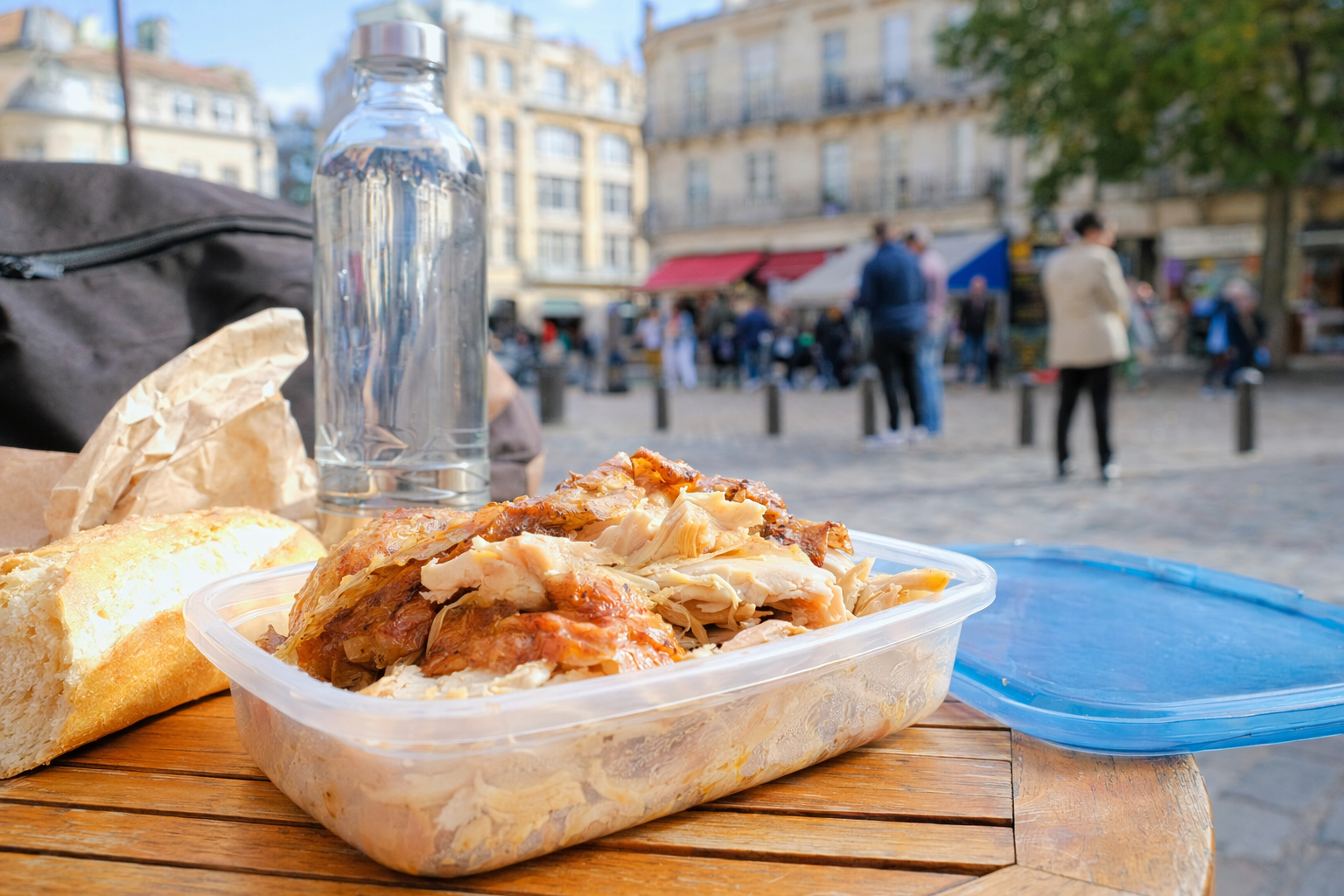
#Paris is where I fell in love with rotisserie chicken as travel food. Not supermarket chicken exactly, but those golden birds spinning outside boucheries, dripping fat onto potatoes below. I was staying near Rue des Martyrs, which is one of those streets that makes you believe you are a better person than you are. Cheese shop, fruit stand, bakeries, little wine places. I bought a poulet rôti, potatoes, cornichons, a baguette, and a cheap bottle of something white because I was pretending to be effortless. The plan was a picnic by the Seine.
The problem was that I bought the chicken too early. Classic hungry-person mistake. I wandered. I took photos. I stopped for coffee. I looked at a scarf I didn’t need for 25 minutes. By the time I sat down, I realized the chicken had been sitting in my tote for almost two hours. It was still warm-ish, and we ate it right away, which was fine, but I didn’t keep the leftovers. The old me would have wrapped them in paper and saved them for the next morning. The smarter me knew those potatoes and bits of chicken had already spent enough time in the danger zone. Romantic picnic, yes. Next-day tummy roulette, no thanks.
How to Cool a Rotisserie Chicken in a Hotel Room Without Making a Mess
#If you buy a whole chicken and want leftovers, don’t just shove the entire bird, plastic dome and all, into a tiny hotel fridge. First, those containers trap heat. Second, a whole chicken cools slowly. Third, hotel fridges are often packed with random drinks and that one yogurt you bought with unrealistic breakfast ambitions. What I do now is simple: I strip the meat off the bones while it’s still warm, put it into shallow containers or zip bags, and spread it out so it cools quickly. If I’m in an apartment rental with proper containers, great. If I’m in a hotel, I use clean takeaway containers, a resealable bag, or even a covered bowl if that’s what I’ve got.
- Take the meat off the carcass before refrigerating, especially if the bird is large.
- Use shallow containers so the chicken cools faster.
- Label it in your head, or on tape if you’re organized: eat within 3 to 4 days.
- If the fridge feels barely cool, don’t trust it blindly. A cheap fridge thermometer is boring but brilliant.
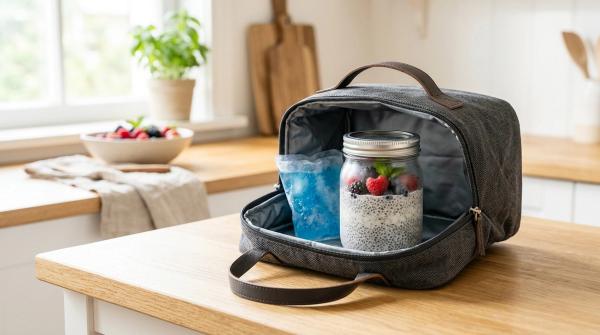
I started carrying a tiny digital thermometer after a campervan trip in New Zealand. It weighs basically nothing and has saved me from guessing so many times. There are also smarter travel coolers now, including battery-assisted ones and app-monitored coolers that overlanders and van-life folks love, but I’m not always that high-tech. Usually I’m a soft cooler bag and ice-pack person. Still, the innovation is nice. Food travel has gotten practical in a cool way: collapsible containers, USB lunch warmers, insulated grocery totes, reusable ice sheets, and compact thermometers that don’t make you look like you’re running a science lab in your Airbnb.
The Minifridge Problem Nobody Talks About
#Hotel minifridges are sneaky. Some are excellent. Some are decorative. Some are beverage coolers designed to keep soda pleasant, not chicken safe. I’ve stayed in business hotels where the fridge froze lettuce solid overnight, and beach hotels where butter stayed soft for two days. If you’re storing rotisserie chicken, you want 40°F or 4°C or below. If you can’t confirm that and the chicken matters, put it in a cooler with ice or eat it sooner.
Also, don’t pack the fridge so tightly that cold air can’t move around. I know this is hard when you’ve just visited a market and bought strawberries, yogurt, local cheese, sparkling water, half a tart, and something fermented you don’t fully understand. But air flow matters. Put chicken toward the back where it’s usually coldest, not in the door if there is a door shelf. And if the fridge shuts off when you remove your key card from the room, ask the hotel. Some do. I learned that in a hot little guesthouse in southern Italy and I was furious at myself for not noticing sooner.
Reheating Chicken in Weird Travel Kitchens
#Reheating is where travel gets comical. At home, you have an oven, a stovetop, maybe an air fryer. On the road, you might have a microwave from 1998, a pan with a wobbly handle, or nothing but a kettle and optimism. The rule is still the same: leftovers should be reheated to 165°F or 74°C internally. A thermometer makes this easy. Without one, you’re guessing, and guessing with chicken is not my favorite sport.
Microwaves heat unevenly, so I chop the chicken into smaller pieces, cover it loosely, add a splash of water or broth if I have it, heat, stir, and heat again. Then let it stand for a minute because standing time helps the heat even out. In an apartment, I prefer a skillet. A little oil, chicken pieces, maybe leftover potatoes or vegetables, and suddenly you have a real meal. In Spain, I reheated rotisserie chicken with canned chickpeas, smoked paprika, and jarred peppers. In Canada, I made hotel-room chicken wraps with bagged salad and hot sauce. In Japan, I tucked cold properly stored chicken into convenience-store rice balls and called it lunch. Was it traditional? Absolutely not. Was it great? Actually, yes.
Cold Chicken Is Fine, If It Stayed Cold
#People sometimes ask if you have to reheat rotisserie chicken. Nope. You can eat it cold if it was cooled and stored safely. Cold chicken with crusty bread and pickles is one of my favorite train meals. The issue isn’t cold versus hot. The issue is time and temperature. If it sat out too long before chilling, reheating won’t magically undo everything. Some bacteria can produce toxins that heat doesn’t reliably destroy. That’s the part people forget. Cooking is not a time machine.
My travel rule is boring but dependable: when in doubt, throw it out. I hate wasting food, but I hate losing a travel day to food poisoning way more.
Buying Rotisserie Chicken Abroad: What I Look For
#In any country, I look for turnover. Busy counter, chickens moving fast, staff handling food cleanly, hot display that actually looks hot. If the bird is sitting in a lukewarm case looking tired, I skip it. I also pay attention to packaging. If condensation is pouring down inside the container, that can mean it’s cooling in a sealed dome, which isn’t ideal if you’re going to store it later. If I’m eating immediately, no big deal. If I’m saving it, I want to get it chilled fast.
Some places are especially wonderful for this kind of eating. Portugal’s frango assado shops are smoky, salty, and perfect with piri-piri. Peru’s pollo a la brasa is on another level, often with ají sauces and fries that soak up all the juices. In France, poulet rôti with potatoes is proof that simple food can be luxurious. In Mexico, pollo rostizado with tortillas, salsa verde, and lime is the kind of meal that makes a hotel desk feel like a dining room. Even in U.S. road-trip culture, the supermarket rotisserie chicken has become almost iconic, especially for families, hikers, and people trying not to spend $28 on a mediocre airport sandwich.
Coolers, Trains, Airports, and the Chaos of Moving Around
#If I’m traveling by car, I keep a cooler accessible, not buried under luggage. Ice packs on top and bottom if possible. If using ice, keep chicken sealed so meltwater doesn’t get in. Nobody wants cooler soup. On long train trips, I treat rotisserie chicken like a same-day meal unless I have a proper insulated bag with ice packs. For flights, solid cooked chicken is generally allowed through U.S. airport security, but sauces, gravies, and juicy sides can run into liquid rules. Different countries can have strict rules about bringing meat across borders, so don’t pack chicken internationally unless you’ve checked customs rules. Honestly, I usually finish it before the airport because cold chicken sandwiches at the gate are elite.
- Buy the chicken as late as you can, not at the start of your wandering day.
- If you won’t eat it within 2 hours, plan how you’ll chill it before you buy it.
- Use a cooler bag for road trips, beach days, and train picnics.
- Reheat leftovers to 165°F or 74°C, especially in microwaves where cold spots happen.
- Eat refrigerated leftovers within 3 to 4 days, sooner if the fridge situation is sketchy.
A Little Story From Lisbon, Because I Still Think About That Chicken
#My favorite rotisserie chicken travel memory is still Lisbon. I had spent the day walking from Alfama to Graça, getting lost in staircases, drinking tiny coffees, and pretending my knees were fine. Near the apartment, there was a small takeaway place with chickens spinning by the window, the skin blistered and shiny, the smell hitting the street before you even saw the sign. I bought half a chicken, rice, salad, and piri-piri sauce. The man behind the counter wrapped everything with the seriousness of someone sending me home with treasure.
I ate by the open window while trams screeched somewhere below. No fancy plating. No reservation. Just chicken, sauce, plastic fork, tired feet, and that lovely feeling when a city lets you into its ordinary routines for a minute. I saved the leftovers properly that night because I had a real fridge, and the next morning I made the most chaotic breakfast: chicken, bread, tomato, and the last bit of sauce. Was it breakfast by Portuguese standards? Maybe not. But travel food doesn’t always follow rules, except the safety ones. Those rules I keep.
What Not to Do, From Someone Who Has Been Tempted
#Don’t leave the chicken in the rental car while you hike “just a short trail.” Don’t assume winter weather means the car is a fridge, because sunshine through glass can warm things fast. Don’t put hot chicken straight into a packed minifridge and expect miracles. Don’t reheat a whole half-chicken in a weak microwave and only check the outside. Don’t keep leftovers for a week because “it smells fine.” Smell is not a safety test. Some dangerous bacteria don’t announce themselves with a dramatic stink.
And please don’t let travel romance bully your common sense. I say that with love. I’m the person who wants to save the last wing, the extra potatoes, the little tub of sauce, all of it. Food memories feel precious when you’re far from home. But the best culinary travelers know when to eat boldly and when to be boring. Boring keeps you on the road.
My Simple Rotisserie Chicken Travel Kit
#I’m not a maximalist packer, but for food trips I carry a few small things: a foldable tote, a lightweight insulated bag, one or two reusable zip bags, a tiny digital thermometer, and sometimes a spork because hotel forks disappear into another dimension. If I’m renting a car, I add ice packs or buy a bag of ice. If I’m staying somewhere with a kitchen, I check the fridge first thing. Not in a paranoid way. More like, hello little fridge, are we going to be friends?
This tiny kit has made my meals better in expensive cities and sleepy towns alike. It lets me shop markets without panic, save leftovers safely, and turn one chicken into two or three meals. It also lets me spend more money where I actually want to spend it: a special seafood lunch in San Sebastián, a bakery crawl in Copenhagen, tacos in Mexico City, or a really good bowl of noodles after a museum day.
Final Thoughts: Eat the Chicken, Just Respect the Clock
#Rotisserie chicken is one of the great travel hacks because it sits right between comfort food and local discovery. It can be French, Peruvian, Portuguese, Mexican, American, or something totally specific to a neighborhood shop with handwritten signs and a line out the door. It can rescue you from tourist-trap dinners and feed you after a delayed train. But it needs a plan. Two hours at room temperature, one hour in serious heat, fridge at 40°F or below, leftovers reheated to 165°F, and eaten within 3 to 4 days. That’s the whole rhythm.
I’ll keep buying rotisserie chicken when I travel, probably forever. I’ll keep eating it on balconies, in rental kitchens, at picnic tables, and once in a while straight from the container while standing over a sink, because travel is not always elegant. If you love food and travel as much as I do, keep chasing the markets and the little local shops, but pack a thermometer and don’t gamble with chicken. And for more casual food-travel stories and practical trip ideas, I’d definitely poke around AllBlogs.in sometime.