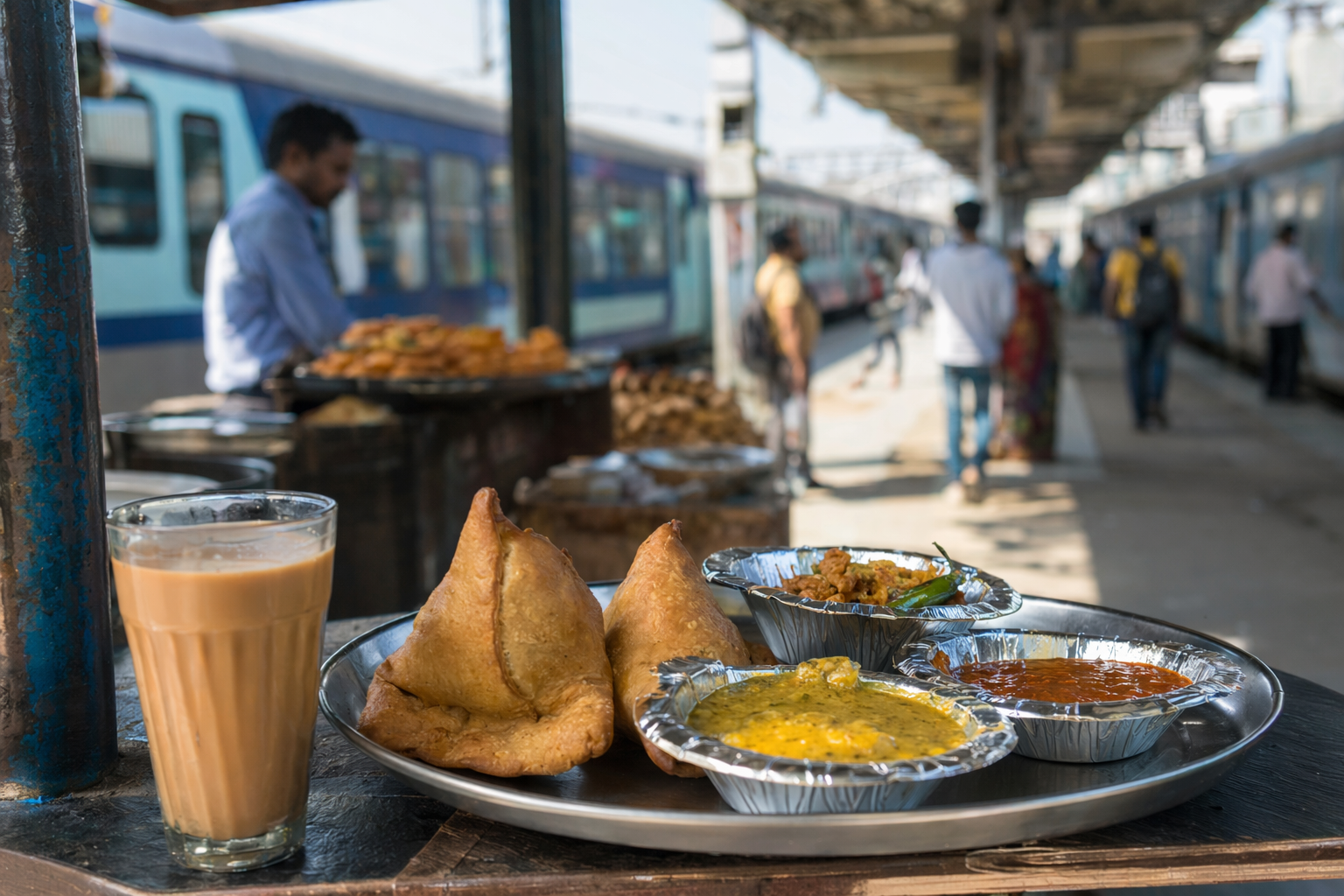
There is a very specific kind of hunger that only happens in train stations. You know the one. You’ve been dragging a suitcase with one broken wheel across half a city, your train is delayed by 43 minutes, your phone battery is doing that dramatic 9% thing, and suddenly the smell of fried dough or noodles or coffee hits you like a spiritual message. I love train travel for this exact reason. Stations are messy, emotional, loud, and weirdly delicious. But they’re also places where you can make excellent food choices, or choices your stomach will remember for the next two days in a deeply personal way.
I’ve eaten in stations from Tokyo to Milan, Delhi to Istanbul, London to Bangkok, and a bunch of tiny regional stops where the “restaurant” was basically a man with a kettle, a basket of boiled eggs, and a confidence level I still admire. Some of those meals were glorious. Some were... educational. So this is my very honest traveler’s guide to train station food safety: what I’ll happily eat, what I’ll avoid, and how I decide when I’m tired and hungry and not exactly thinking like a health inspector.
First, I Don’t Think Train Station Food Is Automatically Sketchy
#Let’s get this out of the way. Train station food gets unfairly judged. People act like anything sold near a platform is one step away from disaster, but honestly, some of the best casual food in the world lives in train stations. Japan’s ekiben culture is a whole culinary universe. In Italy, I’ve had better espresso standing at a station bar than in fancy cafes back home. In India, hot chai from a busy railway stall can make you believe in humanity again. And in France, grabbing a fresh baguette sandwich before a long ride feels like the correct way to live.
The difference is not station food versus “real” food. It’s turnover, temperature, water, handling, and your own risk level that day. That sounds boring, I know, but it’s the stuff that separates a fantastic travel memory from lying in a hotel bathroom Googling symptoms at 3 a.m. I’ve done both, sadly.
The Golden Rule: Busy Is Usually Better
#If I had to give only one piece of advice, it would be this: eat where the line is moving. Not just where there’s a line, because sometimes tourists queue for anything with a sign in English, but where food is being made and sold fast. High turnover means ingredients are not sitting around for hours. It usually means locals trust the place too, which matters more than a glossy menu photo ever will.
I learned this in Bangkok years ago at Hua Lamphong. I was nervous about eating before an overnight train, so I ignored the stall with steaming bowls and a crowd of office workers, and bought a sad plastic-wrapped sandwich from a quiet shop because it looked “safer.” Big mistake. The sandwich had probably been sitting there since breakfast, maybe since the previous government, who knows. Meanwhile the noodle stall was turning out hot bowls every minute. Now I follow heat and movement. If steam is rising and locals are eating, I’m interested.
Eat: Hot Food Cooked in Front of You
#Hot, freshly cooked food is usually my safest bet in a station. Not always, nothing is magic, but it’s what I choose most often. Think sizzling gyoza in a Japanese station concourse, paniyaram from a hot griddle in South India, a fresh omelet sandwich in Turkey, grilled corn outside a smaller station, or a bowl of soup that is visibly boiling before it lands in your hands.
Temperature matters because bacteria love the danger zone, roughly the warm-but-not-hot range where food sits and becomes a little party for microbes. So if something is meant to be hot, I want it properly hot. Not lukewarm. Not “was hot in 2017.” Actually hot. I’ll take fresh dumplings, hot rice, toasted sandwiches, soups, curries, fried snacks straight from oil, or anything that is cooked after I order. I’m less excited by trays of food that look tired, especially if they’re only sort of warm.
Avoid, Or At Least Think Twice: Lukewarm Buffets and Lonely Trays
#The most suspicious thing in a train station is not street food. It’s the lukewarm tray. You know the one. A metal pan of creamy chicken pasta under a weak lamp. Fried rice that looks dry at the edges. Sausages sweating quietly. A curry that has formed a little skin on top. I’m not saying these will always make you sick, but I am saying I’ve been betrayed by this exact category.
I once ate a room-temperature meat pastry in a station in Eastern Europe because I was starving and it looked rustic in a charming way. Rustic, it turns out, is not a food safety strategy. I spent the next six hours on a train making bargains with the universe. Since then, I ask myself: is this food supposed to be hot or cold, and is it being kept that way? If the answer is “kind of,” I keep walking.
| Food situation | My usual decision | Why |
|---|---|---|
| Steaming soup or noodles made fresh | Eat | High heat and fast turnover are good signs |
| Packaged snack from a known shop | Eat | Lower risk if sealed and within date |
| Cut fruit sitting uncovered | Avoid | Handling, flies, and time are all question marks |
| Lukewarm buffet tray | Usually avoid | Temperature control can be unreliable |
| Fresh bakery item from a busy counter | Usually eat | Dry baked goods are often lower risk |
| Creamy salads or mayo sandwiches | Think twice | Need reliable refrigeration |
| Bottled water with intact seal | Eat or drink | Safer than questionable tap water |
| Ice from unknown water source | Avoid in higher-risk places | Water quality can be the issue |
The 2026 Station Food Trend I Actually Like: Better Grab-and-Go, But Read the Label
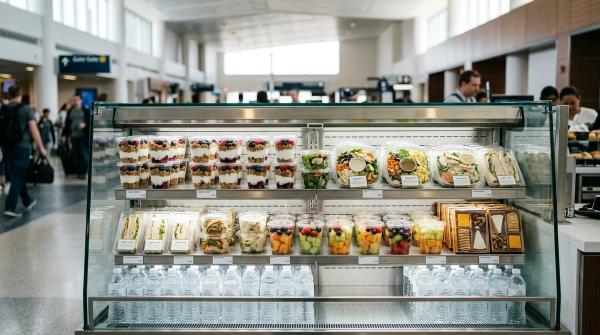
#One thing I’ve noticed more and more in big stations is the upgrade of grab-and-go food. Not just a limp ham sandwich, but proper boxed salads, protein bowls, vegetarian bentos, rice bowls, fresh juices, cold brew, gluten-free snacks, and locally branded picnic boxes. Travelers in 2026 are still obsessed with convenience, but also with transparency: where ingredients come from, whether packaging is recyclable, whether there are plant-based options, and whether the meal looks good enough to post before eating. I get it. I’m guilty too.
But pretty packaging can make people too trusting. I always check the use-by date, refrigeration, and whether the box is sealed properly. If a chicken Caesar wrap is sitting in a warm kiosk with the fridge door constantly open, I don’t care how cute the kraft paper label is. Cold food needs to be cold. Also, if the lettuce looks wet and tired inside the plastic, that’s a no from me. I’d rather eat a bag of nuts and a banana than gamble on sad mayonnaise at platform 8.
Eat: Local Specialties With a System Behind Them
#Some countries have train food traditions that are almost destinations by themselves. In Japan, ekiben boxes are one of my favorite food-travel rituals. They’re regional lunch boxes sold at stations, often beautifully arranged, and many are made with strict timing and packaging standards. I still think about an ekiben I bought in Kanazawa with crab rice, pickles, and tiny vegetables arranged like someone cared deeply about my lunch, which they clearly did. Eating it while the landscape slid past the window felt like a tiny private banquet.
In Switzerland and Germany, station bakeries can be extremely reliable. In Italy, station espresso bars are chaos in the best way, and a cornetto plus coffee is usually a safe, happy choice. In Taiwan, railway bentos are beloved for good reason, especially those with rice, braised pork, egg, and pickles. In India, the official e-catering options and large station vendors have improved a lot in many places, though I still use my usual checks: hot food, busy counter, clean hands, and no mystery water.
Avoid: Raw and High-Moisture Foods When You’re Not Sure About Hygiene
#This is where I sound less adventurous than I actually am. I love street food. I love markets. I love trying the thing I can’t pronounce. But train stations are not always the place where I choose raw foods, especially if I’m about to be trapped on a train with questionable bathrooms. Raw oysters in a station? Absolutely not. Sushi from a high-quality Japanese station shop with proper refrigeration? Maybe yes. Sushi from a random warm display case in a station basement? No, thank you.
Cut fruit is another heartbreak. It looks so refreshing when you’re hot and tired. Mango slices, melon cups, pineapple with chili salt... I want all of it. But if I didn’t see it cut, if it’s uncovered, or if it’s being rinsed with water I wouldn’t drink, I skip it. Whole fruit is much safer. Bananas are the traveler’s best friend, honestly. They come in their own packaging and never ask anything of you emotionally.
Drinks: Coffee, Chai, Water, and the Ice Question
#Drinks are where a lot of travelers mess up. Hot coffee or tea is generally one of the safest station pleasures, assuming the cup and handling are decent. I’ve had tiny paper cups of chai on Indian platforms that were so sweet and strong they could restart a dead laptop. I’ve had espresso in Rome Termini that cost less than my bottled water and tasted better than many expensive cafe drinks elsewhere. Hot drinks are comforting, practical, and honestly one of the joys of train travel.
Water is more complicated. I buy sealed bottled water when I’m unsure about local tap water, and I check that the seal actually clicks or cracks when opened. In countries where tap water is reliable, I refill from official fountains or refill stations if they look maintained. More stations now have refill points, which is great for sustainability and your wallet, but don’t assume every tap is drinking water. Look for signs. If in doubt, ask. And ice? I avoid ice in places where water quality is uncertain, unless I’m at a reputable place that clearly uses filtered water.
The Bathroom Test, Which Is Gross But Useful
#This is not scientific, okay, but it has saved me more than once. If the vendor’s surrounding area is filthy, if there’s no visible handwashing setup, if money and food are handled by the same person without tongs or gloves, I get cautious. I’m not expecting a hospital operating room. Some of the best food comes from simple stalls. But there’s a difference between humble and unhygienic.
I also look at the staff. Are they using tongs? Are they covering food? Are they keeping raw and cooked items apart? Is the fridge actually cold? Are flies having a full conference on the pastries? Little signs add up. And yes, I’ve ignored these signs before because I was hungry and dramatic. Hunger makes fools of us all.
My Personal Train Station Food Safety Checklist
#- I choose food that is cooked fresh, steaming hot, or properly chilled.
- I trust busy counters more than quiet ones, especially if locals are eating there.
- I avoid lukewarm meat, seafood, dairy-heavy salads, and anything creamy that isn’t clearly refrigerated.
- I buy whole fruit instead of pre-cut fruit when hygiene or water quality is uncertain.
- I keep hand sanitizer and tissues in my day bag because station sinks are not always where you need them to be.
- I never experiment wildly right before a long train with limited bathroom access. That is not bravery. That is poor planning.
When I Break My Own Rules
#Of course, I break my own rules sometimes. Food travel would be boring if we lived like nervous accountants all the time. I once bought a hot potato-stuffed paratha at a station stall in northern India even though I was running late and couldn’t inspect anything properly. It was wrapped in paper, burning my fingers, and came with pickle that made my eyes water. It was fantastic. I also had a grilled cheese-like sandwich from a station kiosk in Portugal at midnight that probably wasn’t special to anyone else, but I was tired and it tasted like comfort itself.
The trick is knowing when the risk is worth it and when it isn’t. If I’m at the start of a trip, I’m more careful. If I have a 12-hour ride ahead, I’m very careful. If I’m in a city with good healthcare access and staying put for a few days, I might be a bit more playful. Your stomach, your immune system, and your itinerary matter. People forget that food safety is personal. What wrecks one traveler might not affect another, and the reverse is true too.
Station Food Around the World: What I’d Eat Again Tomorrow
#In Tokyo Station, I’d happily spend an hour choosing an ekiben, then panic-buy a second one because everything looks too good. In Seoul, I’m looking for hot tteokbokki or kimbap from a busy shop, though I check how it’s stored. In Istanbul, simit from a high-turnover vendor is one of life’s simple joys. In Milan or Florence, I’ll do espresso and a fresh pastry, or a focaccia if it’s from a busy bakery counter. In London stations, the food halls have become surprisingly solid, with everything from sushi chains to sourdough pizza, though prices can be rude.
In India, I lean toward hot chai, freshly made dosa or idli at reputable station outlets in the south, hot poha or vada pav where turnover is high, and official packaged meals when they look well sealed. In Thailand, hot noodle soups are safer and more satisfying than many cold snacks. In France, I’m not above making a whole train picnic from bread, cheese, fruit, and a pastry, but I’ll buy cheese from a refrigerated shop and eat it soon rather than letting it sweat in my backpack all afternoon.
Food Innovation Is Helping, But Common Sense Still Wins
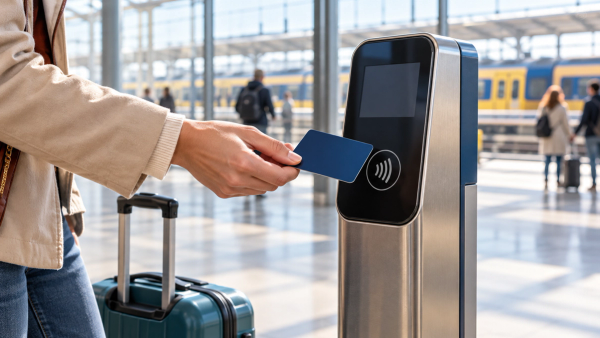
#Travel food has changed a lot. Bigger stations now use mobile ordering, digital menus, cashless payment, smart vending machines, better refrigeration, and in some places QR codes that show allergen details or sourcing information. There are more plant-based meals, more halal and vegetarian labeling, more gluten-free snacks, and more local chef collaborations in premium stations. I love this. A station meal doesn’t have to mean emergency calories anymore. It can actually be part of the trip.
But technology doesn’t replace your eyes and nose. A smart fridge still needs to be cold. A QR code doesn’t make old chicken safe. A beautiful vegan bowl can still be risky if the greens were washed badly or left out too long. I’m excited by food innovation in travel, especially better packaging and clearer allergen labeling, but the old rules still work: hot hot, cold cold, clean hands, high turnover.
What To Pack So You Don’t Make Desperate Choices
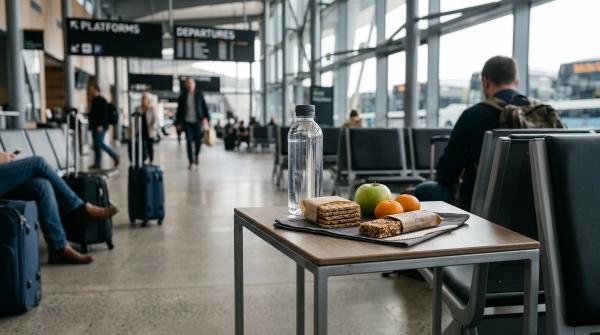
#The worst food decisions happen when you have no backup. I always pack a small “don’t be stupid” snack kit. Nothing fancy. Nuts, crackers, a protein bar, maybe instant miso soup if I know hot water will be available, and something sweet because I become a worse person when my blood sugar drops. This little stash means I can skip a questionable sandwich without feeling like I’m going to faint dramatically beside the departures board.
I also carry hand sanitizer, oral rehydration salts, a reusable bottle, and sometimes a tiny spork. If I’m traveling somewhere my stomach may need time to adjust, I pack basic meds recommended by my doctor. I’m not trying to be paranoid. I’m trying to keep the trip about food, not about recovery.
So, Eat or Avoid?
#Eat the hot dumplings. Eat the fresh pastry from the busy bakery. Eat the regional bento with proper packaging. Eat the soup that’s bubbling away and smells like someone’s grandmother is in charge. Drink the coffee. Drink the chai. Buy the sealed water when you need to. Enjoy the station, because train stations are one of the best places to taste how a country feeds people on the move.
Avoid the lonely lukewarm tray. Avoid uncovered cut fruit when water and hygiene are uncertain. Avoid seafood that isn’t clearly fresh and cold. Avoid creamy sandwiches sitting in a tired fridge. Avoid anything that makes your gut whisper, “friend, maybe not.” That whisper is wisdom. Listen to it.
My train station food rule is simple: be curious, not reckless. The best travel meals often happen between platforms, but so do the worst mistakes.
Final Bite
#Train station eating is one of my favorite little rituals of travel. It’s not polished, and that’s the point. You’re eating between places, surrounded by people going somewhere, everyone holding tickets and bags and tiny private stories. A good station meal feels like a postcard you can taste. Just choose with your eyes open, trust heat and turnover, and don’t let hunger bully you into eating something suspicious.
And if you’re planning your next food-heavy rail adventure, or just want more rambling, hungry travel notes like this, have a look around AllBlogs.in. There’s always another platform snack worth talking about.