Boiled eggs feel like the perfect tiffin shortcut. They are filling, not messy, easy to season, and they turn a plain lunch into something that actually keeps you full till evening. But in Indian summer, or even in a humid monsoon commute, eggs are not the same as khakhra, roasted chana, thepla, or whole fruit. They are perishable.
Quick answer: boiled eggs can go in a tiffin only when you can keep them cool and eat them early. If your lunchbox will sit for hours in a warm school bag, office desk drawer, parked car, train berth, or bus luggage rack, treat boiled eggs as risky and choose a sturdier snack instead.
This is not meant to scare you away from eggs. It is just the practical version of food safety: if you pack them like a fresh cooked food, they can work. If you pack them like a dry snack, they can disappoint you badly.
Why boiled eggs are tricky in Indian tiffins
#A hard-boiled egg looks protected, especially when the shell is still on. That makes many people assume it can sit anywhere for half a day. The problem is that eggs are high-protein, moist food. Once cooked, cooled, handled, peeled, sliced, mixed with masala, or added to a sandwich, the safety picture changes.
The FDA’s egg-safety guidance reminds readers that eggs need careful handling because even clean shells can sometimes carry bacteria such as Salmonella. USDA FSIS lunch-packing guidance also recommends keeping perishable lunch foods cold with a cold source when they are carried away from home.
In a real Indian tiffin, the risk often comes from small everyday details:
- the egg was boiled the night before and cooled slowly on the counter
- it was peeled with damp hands in the morning rush
- it was packed beside chutney, mayo, butter, cut cucumber, or cheese
- the tiffin sat in a school bag from 7:30 AM to 1 PM
- the office AC was not on, or the lunch bag stayed near a sunny window
- the train or bus got delayed, stretching a “short trip” into a long one
None of these automatically means the egg is unsafe. But they add up.
The safest way to think about timing
#For a normal Indian tiffin, do not ask, “Will the boiled egg smell okay by lunch?” Ask a better question: can I keep this egg cool until I eat it?
If the answer is yes, boiled eggs can be useful. If the answer is no, avoid making them the main protein of a long-day tiffin.
Safer situations
#Boiled eggs are more reasonable when:
- you pack them from the fridge in the morning
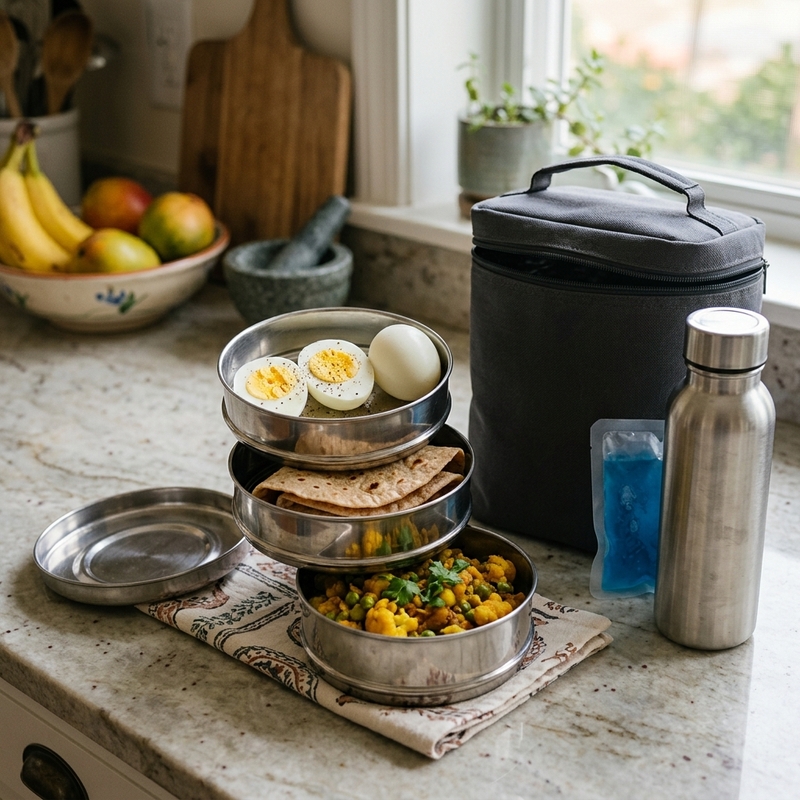
- they stay in an insulated lunch bag
- you include a frozen gel pack or ice pack
- you eat them in the first half of the day
- the shell stays intact until eating
- the tiffin is not kept inside a hot vehicle or closed metal box in sunlight
This setup is common for office-goers who leave home around 9 AM and eat around 12:30 or 1 PM. It is also manageable for short school hours if the lunch bag has a cold pack.
Riskier situations
#Skip boiled eggs when:
- the tiffin will sit without cooling for many hours
- the egg is already peeled, sliced, mashed, or mixed
- you are travelling by train or bus with uncertain delays
- the lunchbox will sit in a backpack during peak heat
- you are packing for a child who may eat late
- you cannot tell when the egg was boiled or how it was stored
For long no-fridge days, dry foods usually behave better. If you need ideas, AllBlogs already has a broader guide to no-fridge travel food for Indian summers and a list of Indian tiffin foods that spoil fast in summer.
Peeled vs unpeeled: which is better?
#If you have a choice, pack boiled eggs unpeeled and peel them right before eating. The shell is not magic armour, but it does reduce handling and surface exposure.
Peeled eggs are more convenient, yes. They are also easier to contaminate. The moment you peel the egg, your hands, cutting board, knife, container, masala spoon, and lunchbox all become part of the safety chain.
If you must peel them at home:
- Wash hands first.
- Use a clean plate or board.
- Avoid leaving peeled eggs open on the counter.
- Pack them in a small, clean, sealed container.
- Keep them cold with an ice pack.
- Do not mix with wet chutney, mayo, or cut salad unless you can keep the whole box chilled.
A plain peeled egg with salt and pepper packed cold is safer than an egg-mayo sandwich in a warm bag.
What about egg sandwiches?
#Egg sandwiches feel like a complete meal, but they are often more delicate than a whole boiled egg. The risk is not only the egg. It is the full combination.
An egg sandwich may include:
- mayonnaise
- butter
- cheese slices
- green chutney
- tomato or cucumber
- onion
- lettuce
- soft bread that traps moisture
That is a lot of perishable, damp, handled food inside one box. If the sandwich will stay chilled, fine. If it will sit warm until lunch, keep it simple or choose another filling.
A safer egg sandwich for a short, chilled tiffin would be:
- freshly made in the morning
- cooled egg, not hot egg trapped in bread
- minimal mayo or no mayo
- no watery cucumber or tomato
- packed in a clean box
- carried in an insulated bag with a cold pack
- eaten early
If your main worry is sandwich fillings, this AllBlogs guide on packed sandwiches while traveling goes deeper into mayo, eggs, cheese, and safer combinations.
Indian summer vs monsoon: the risk changes slightly
#Summer heat is obvious. You touch the tiffin box and know it is warm. Monsoon is sneakier. The weather may feel cooler, but humidity, wet bags, traffic delays, power cuts, and crowded commutes can still make lunchbox food more fragile.
In monsoon, pay extra attention to:
- damp lunch bags that were not dried properly
- containers that smell musty
- eggs packed beside wet chutney or cut vegetables
- office fridges that are overcrowded or unreliable
- commute delays after rain
- school bags kept on wet floors
If your area has frequent power cuts, do not assume eggs stayed safe in the fridge overnight. A fridge that has been off for a long time may not keep perishable food properly cold. When in doubt, use a fresh batch or skip eggs that day.
What to pack with boiled eggs
#The sides matter. Boiled eggs are already heavy and protein-rich. Pairing them with very oily, spicy, or wet foods can make lunch uncomfortable, especially in heat.
Better tiffin pairings include:
- roti with dry sabzi
- lightly spiced poha eaten early
- plain paratha without wet stuffing
- whole fruit packed separately
- roasted chana or makhana
- cucumber only if kept cold and eaten early
- lemon water or plain water in a separate bottle
Avoid pairing eggs with:
- mayo-heavy salads
- watery chutney
- curd-based dips without cooling
- cut melon or very juicy fruit in the same box
- leftover gravy
- strong-smelling fish or meat in a mixed lunchbox
If your tiffin already includes paneer, curd rice, tofu, or other perishable foods, adding eggs does not make it safer. It simply makes the whole lunch more dependent on cooling.
How to pack boiled eggs for office
#For office lunch, the most practical plan is simple:
- Boil eggs the previous evening or early morning.
- Cool them properly.
- Refrigerate them in a clean covered container.
- Pack them cold in the morning.
- Keep shells on if possible.
- Use an insulated lunch bag.
- Add a frozen gel pack.
- Eat them at lunch, not as a late-evening backup snack.
If your office has a fridge, use it. Put the egg box in the fridge when you arrive, not after three hours on the desk.
If your office has no fridge, do not keep boiled eggs as your “maybe I’ll eat this at 5 PM” protein. Eat them early or pack a sturdier snack.
For general no-fridge tiffin logic, the guide on office lunch safety in Indian heat is a useful companion.
How to pack boiled eggs for school
#School tiffins need a stricter approach because children may not notice food safety clues. They may also eat late, share food, keep the box open, or leave half the egg for later.
For children:
- pack smaller portions
- prefer unpeeled eggs only if the child can peel them safely
- otherwise peel with clean hands and pack in a sealed box
- add an ice pack in the lunch bag
- avoid egg mayo sandwiches in peak heat
- do not pack eggs on days with long outdoor activities or bus delays
- teach them not to eat eggs that smell strange
For younger children, a dry paneer-free paratha, idli eaten early, thepla, or roasted chana may be easier than eggs on very hot days.
What about trains, buses, and road trips?
#A short local commute is one thing. A train or bus journey is another. Delays, warm luggage racks, uncertain meal timing, and crowded conditions make eggs harder to manage.
Boiled eggs can work for very short journeys if they are chilled and eaten soon. But for long-distance travel, they are not the best no-fridge food. Once the cold pack warms up, you are guessing.
For road trips, the biggest mistake is leaving food in a parked car. A closed car can get hot quickly, and the tiffin may become much warmer than the outside air. If eggs are part of a road snack plan, keep them in a cooler and eat them early.
For Indian train journeys, choose foods that tolerate delays better. Lemon rice, tamarind rice, dry thepla, khakhra, roasted snacks, whole fruit, and sealed packaged foods are usually easier than peeled eggs. If you want a wider travel-snack safety approach, read AllBlogs’ guide to homemade no-fridge train and bus snacks.
Smell and texture checks: useful, but not enough
#People often say, “If it smells fine, it is fine.” That is not a safe rule. Some harmful bacteria may not create an obvious smell or visible change.
Still, sensory checks are useful for deciding when to throw food away immediately.
Discard boiled eggs if:
- the shell is cracked and the egg sat warm
- the peeled surface feels slimy
- the egg smells sour, rotten, or unusually strong
- the yolk or white looks strange beyond normal greenish yolk rings from overcooking
- the storage time is unknown
- the egg sat in a warm bag for hours
- the container smells stale or musty
Do not try to “fix” a questionable egg with salt, pepper, chaat masala, frying, or reheating in a microwave. If you are unsure, skip it.
Is reheating boiled eggs a solution?
#Not really for tiffins. Reheating may make food hot, but it does not undo poor storage or remove every possible risk from food that sat warm too long. Also, microwaving whole boiled eggs can be messy or unsafe if pressure builds inside.
For office lunches, the better solution is cold storage, not reheating after hours in the danger zone.
Safer egg tiffin ideas for short days
#If you can keep the lunchbox cool, these are better than wet egg salads:
1. Whole boiled egg with dry masala
#Pack the egg separately. Add salt, pepper, roasted jeera powder, or a pinch of chaat masala in a tiny dry container. Season after peeling.
2. Egg with roti and dry sabzi
#Keep the egg separate from the sabzi so moisture does not spread. This is better than stuffing everything together in a wrap.
3. Egg and roasted chana snack box
#For a short office day, one boiled egg plus roasted chana and a whole fruit can be filling without creating a wet lunchbox.
4. Simple egg paratha roll, eaten early
#If you make an egg roll, keep it dry, avoid wet sauces, cool it before packing, and eat it early. This is not a full-day no-fridge option.
When you should choose something else
#Skip boiled eggs and choose sturdier tiffin foods when:
- the day is very hot
- you are travelling for more than a few hours
- there is no fridge, cooler, or ice pack
- lunch timing is uncertain
- the person eating is a young child, elderly adult, pregnant person, or immunocompromised
- the egg has already been peeled and stored casually
- you are packing for an outdoor event, picnic, sports day, or long school bus route
In these cases, safer choices may include khakhra, thepla, roasted makhana, roasted chana, dry poha chivda, whole fruit, nut mixes, or fresh food bought hot and eaten immediately.
A simple keep-or-skip checklist
#Before packing boiled eggs, run through this:
- Was the egg cooked recently and cooled safely?
- Has it been refrigerated?
- Is the shell intact?
- Will it stay cold until lunch?
- Is there an ice pack?
- Will it be eaten early?
- Is it packed away from wet chutneys, mayo, and cut salad?
- Is the person eating it able to notice smell or texture problems?
If you answer “no” to several of these, pack something else.
Bottom line
#Boiled eggs are a good tiffin food only when you treat them like perishable food. Keep them cold, keep them clean, keep them separate, and eat them early. In peak Indian summer or humid monsoon weather, they are not a reliable all-day, no-fridge snack.
The practical rule is simple: if your tiffin cannot stay cool, boiled eggs should not be your backup food. Pack them for short, controlled days. For long commutes, school bags, train delays, and road trips, choose sturdier dry foods and save the eggs for home, office-fridge lunches, or freshly made meals.