The car-free hill trip idea sounds romantic… until you’re standing at a bus stand at 5 am
#A weekend hill trip without a car is very much possible in India, and honestly, sometimes it is better. No parking drama, no hairpin bend driving, no one in the group becoming full-time driver instead of traveller. But also, let’s not act like it is always dreamy. There will be random waiting, auto guys quoting “fixed rate, madam/sir”, bus seats that don’t recline, and that one friend who says “bro we should’ve taken our own car” exactly when everyone is tired. Still, I’ve done enough car-free hill weekends now to say this clearly: train, bus and taxi all work, but not for the same kind of trip. Your best option depends on where you’re going, how much luggage you have, your budget, whether you can sleep in a bus, and how much jugaad you’re okay with. I’ve done the Delhi to Kathgodam/Nainital type circuit, the Dehradun-Mussoorie side, Mumbai to Matheran and Lonavala, and a Bengaluru to Chikmagalur trip where the last-mile transport tested my patience like anything. Each time I learnt something. Mostly the hard way.
So, train, bus or taxi? The short answer I wish someone gave me earlier
#If your hill station has a reliable railhead nearby, take the train for the long stretch and then taxi or local bus for the climb. This is usually the most comfortable car-free combo. For example, Kathgodam for Nainital/Bhimtal/Mukteshwar, Dehradun for Mussoorie, Kalka for Shimla, Chandigarh or Pathankot side for Himachal routes, Coimbatore or Mettupalayam for Ooty, and New Jalpaiguri for Darjeeling. Train gives you toilets, more leg space, less road sickness, and you reach the base town without feeling totally crushed. But trains need planning because weekend tickets disappear fast, especially around long weekends, school holidays and festival breaks.
Bus is the most direct option for many hill places, especially from Delhi to Manali, Dharamshala, Kasol side, or Bengaluru to Coorg/Chikmagalur, Hyderabad to Araku belt, etc. Overnight Volvo or sleeper buses can save one hotel night, which feels clever until you realise you didn’t sleep much and now have to start your trek with red eyes. Taxi is best for the last mile or if you’re 3-4 people sharing from the nearest station/bus stand. Full taxi from city to hill station is convenient but costly, and on weekend traffic days it can still be slow. Basically, train for comfort, bus for directness, taxi for flexibility. That’s my working formula.
My most practical car-free route style: train till base town, taxi up the hill
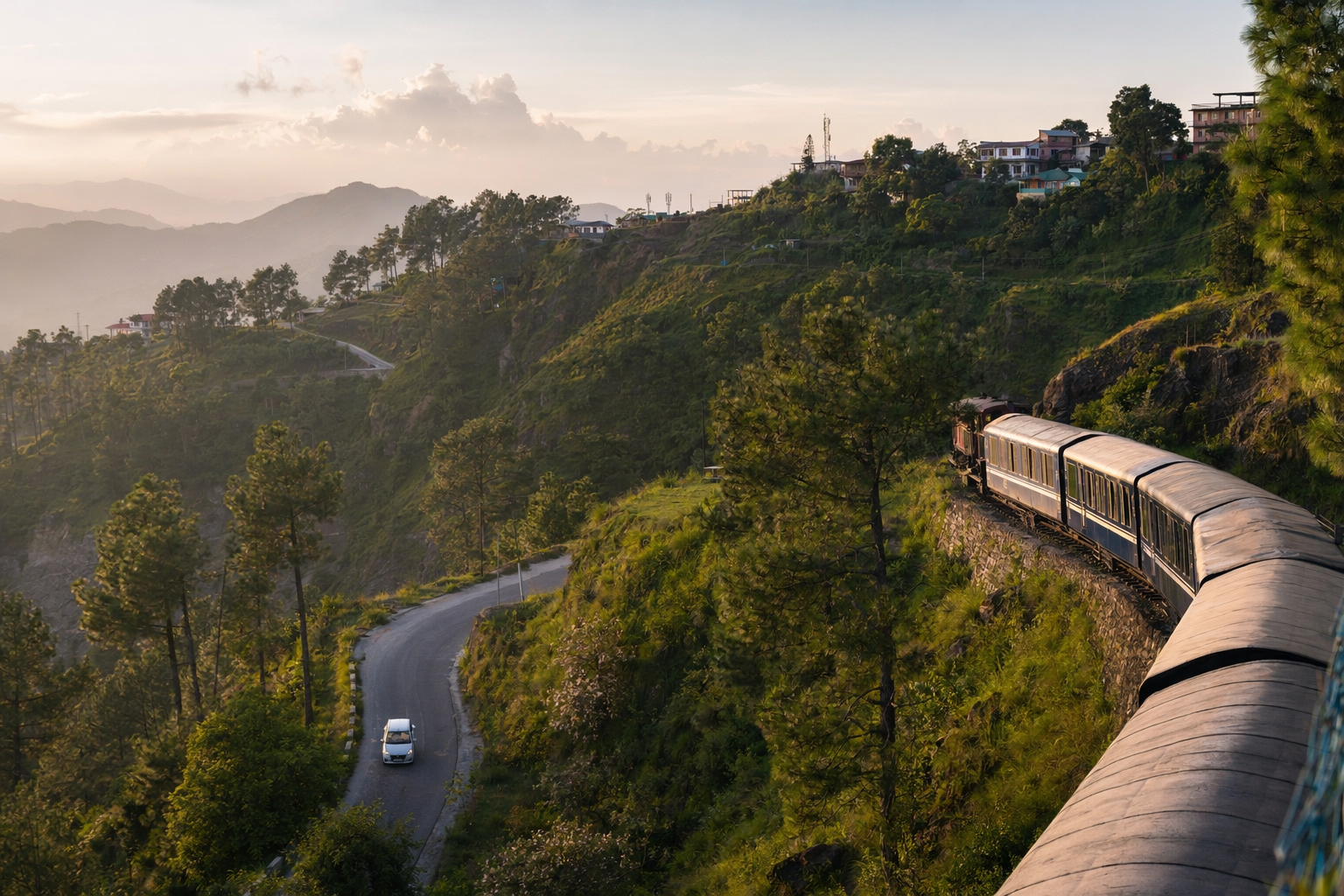
#This is the route style I personally trust the most. Like, if I’m going to Nainital, I’ll try for a train to Kathgodam or Haldwani and then take a shared taxi or pre-paid cab uphill. If it’s Mussoorie, Dehradun works beautifully because from the railway station or ISBT side you get taxis and buses easily. For Shimla, the Kalka-Shimla toy train is charming but slow, and I mean properly slow, so it’s more for the experience than speed. You can also take bus/taxi from Kalka or Chandigarh depending on timing. For Darjeeling, most people arrive via NJP or Bagdogra side, then take shared jeep. In Maharashtra, Matheran is probably one of the best no-car hill weekends because private vehicles anyway don’t go till the main market area, and the Neral-Matheran toy train or shared taxi plus walk/horse option gives that old-school hill feeling.
The nicest thing about this combo is you avoid the worst part: long mountain road travel after already sitting in traffic from your city. Train till base town lets your body stay sane. Then the hill climb is only 1 to 4 hours in many cases, depending on destination. But keep one thing in mind: don’t book your return train too tight. Hill roads are moody. Landslides in monsoon, tourist traffic in summer, snow traffic in winter, political rallies, road repair, even a random truck breakdown can delay you badly. I now keep at least 3-4 hours buffer at the base town if I have an important train, more if it’s peak season. Earlier I used to think buffer is for over-planners. Now I am that over-planner, proudly.
When bus is actually the smartest choice
#Buses win when trains don’t go anywhere useful, or when the bus drops you almost at the hill station itself. Delhi to Manali or Dharamshala, Bengaluru to Coorg, Mumbai/Pune to Mahabaleshwar, Chennai/Bengaluru to Kodaikanal side, these are routes where bus can be simpler than stitching together train plus taxi plus local bus. The good private Volvos and state transport luxury buses are usually decent, but choose boarding points carefully. I once picked a “near metro station” boarding point in Delhi and then spent 35 minutes dragging my bag across a service road because the actual pick-up was under some flyover. Not fun. Always call the operator or check live location if the app provides it.
For hill routes, I avoid the cheapest unknown operator if I’m travelling overnight. Not because expensive always means safe, it doesn’t, but established operators and state buses generally have more predictable stops, driver changes and customer support. Try to pick seats in the middle section if you get motion sickness. Front seats give view but also full drama of every turn, every overtake, every horn. Back seats bounce more. Sleeper buses are comfy on plains but on ghats they can feel like you’re rolling inside a tiffin box. Also, please don’t eat super oily food right before a mountain bus. I’ve made that mistake with chole bhature before an overnight ride and, bas, never again. If you’re taking a late train or bus, this guide on Dinner Before an Overnight Train in India: What to Eat, Pack, and Avoid is honestly the kind of practical thing we don’t think about until stomach goes on strike.
Taxi: convenient, but don’t treat it like magic
#Taxi is the most flexible option, especially for couples, families with kids, senior parents, or a group of friends who don’t want to keep negotiating every small transfer. But taxi cost adds up quickly. From a nearby railhead to a hill station, you may find shared taxis from around ₹200-₹800 per seat on common routes, while private cabs can be roughly ₹1,500-₹6,000 or more depending on distance, season, vehicle type and bargaining. Full city-to-hill taxi can easily go from ₹6,000 to ₹18,000+ for a weekend return on popular routes, sometimes more during peak season. These are not fixed rates, just typical ranges I’ve seen and paid around. Always confirm if tolls, parking, night charges, driver allowance and waiting time are included.
One thing people forget: hill taxis may not always be allowed to do local sightseeing if they’re from outside that state/town. Some places have local taxi unions, fixed sightseeing rates, or restrictions around mall roads and eco-sensitive zones. So your Delhi cab might drop you in Mussoorie but local points may require a local taxi. In Matheran, vehicles stop before the main hill zone. In many hill towns, parking is far from the hotel. Ask your stay before booking. Also, don’t be shy to ask the driver if they are comfortable with hill driving. A calm hill driver is worth paying extra for. The road itself teaches humility, boss.
One small taxi safety habit I follow now
#Before sitting in a taxi from a station or bus stand, I take a photo of the number plate and share live location with someone at home. Not in a paranoid way, just routine. If booking through apps, I check vehicle number, driver name, cancellation rules and payment mode. And when apps ask for ID uploads or card storage for hotels, buses and cabs, be careful with permissions and documents. This Travel Booking App Privacy Checklist: What to Check Before You Upload Passports, Cards, or Trip Documents is useful because we Indians have become too casual with sharing Aadhaar/PAN screenshots everywhere, no?
The hidden villain of weekend hill trips: last-mile transport
#Everyone plans the big transport. Nobody plans the 17 km from bus stand to homestay, which is where the real comedy begins. Many lovely homestays are not on the main road. Some are down a kutcha slope, some need a short walk, some are in villages where taxis don’t come after dark. I once booked a beautiful-looking stay outside Chikmagalur town because the photos had mist, coffee plants, wooden balcony, full Pinterest vibes. Then I reached the town bus stand in the evening and realised the property was still 22 km away, with no shared transport at that hour. The taxi quote was almost half my room rent. I paid it, obviously, but I was irritated with myself.
Now I message the property before paying advance: “How do I reach from railway station/bus stand without own car?” Their answer tells you everything. Good hosts will share bus timings, taxi contact, approximate fare, and whether the road is okay for small cars. If they reply only “you can come by cab” without details, ask again. For car-free travel, location matters more than room aesthetics. A slightly simpler hotel near the market or bus stand can be better than a fancy cottage where every tea run costs ₹600 cab fare. But then again, if you want quiet and you’re okay staying put, remote homestays are magic. Contradictory, I know, but that’s travel.
Accommodation without a car: where to stay and what it usually costs
#For a weekend hill trip, I prefer staying either walkable from the main market or near a reliable taxi stand. Not exactly in the loudest mall road lane, because weekend crowds can be too much, but close enough that dinner doesn’t become a project. Budget hostels in popular hill towns can start around ₹500-₹1,200 for dorm beds. Basic guesthouses and small hotels are often ₹1,200-₹2,500 for double rooms if you book early and avoid peak weekends. Decent boutique homestays or hotels usually sit around ₹2,500-₹6,000 per night. Resorts, view cottages, heated rooms, private balconies and fancy coffee estate stays can go ₹7,000 to ₹15,000+ easily. Prices jump during summer holidays, Christmas-New Year, snowfall weekends, and any long weekend when half the metro city has same idea as you.
If you’re travelling without a car, read reviews specifically for access. Search words like “steep”, “walk”, “parking”, “far from market”, “taxi”, “elderly”. These reviews are gold. A place can have 4.7 rating and still be bad for your trip if it requires climbing 200 steps with luggage. Also check heating and hot water in colder months. In Himachal, Uttarakhand, Sikkim, Kashmir side, even a beautiful room becomes sad if hot water comes only one bucket at 7 am. In monsoon, ask about dampness and road condition. In summer, check if the room has fan or ventilation because many older hill hotels assume “hill station means cool” but afternoon sun can roast you nicely.
Best months for a no-car hill weekend in India
#For most north Indian hill stations, March to June is popular because plains are burning and hills feel like rescue. But this is also when roads, hotels and viewpoints become crowded. September to November is my personal favourite for many places: clearer skies, post-monsoon greenery, less sticky weather, and fewer family vacation crowds. December to February is beautiful if you want snow or winter vibes, but transport can become unpredictable on higher routes. Always check road updates before going to places that see snow, and don’t assume every taxi will go till your hotel if roads are icy. July and August are tricky. Monsoon hills look gorgeous, properly cinematic, but landslides, leeches in some forest trails, slippery roads and cancellations are real. I don’t avoid monsoon completely, but I choose lower-risk places, stay longer than one night if possible, and avoid late-night hill transfers.
For Western Ghats like Lonavala, Matheran, Mahabaleshwar, Coorg, Wayanad and Chikmagalur, monsoon is actually a major attraction because waterfalls and green valleys come alive. But again, shoes matter, rain cover matters, and your train/bus buffer matters. South Indian hill stations like Ooty and Kodaikanal can be pleasant across much of the year, though holidays get packed. Darjeeling and Sikkim side are lovely in spring and autumn, with winter being crisp but sometimes foggy. Basically, there is no single best month for all hills. Decide if you want clear views, waterfalls, snow, flowers, or cheaper rooms. You rarely get all in one weekend, sadly.
Food planning, because hill travel hunger is a different animal
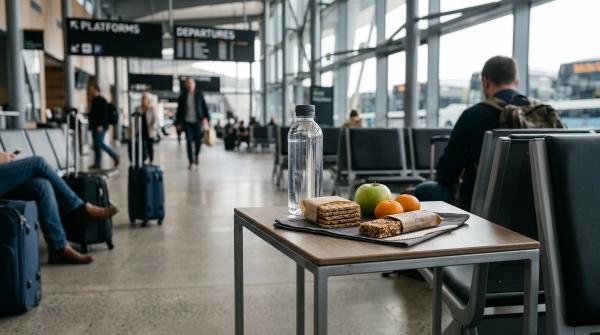
#I judge hill trips partly by food, not sorry. Car-free travel means you’re eating at stations, bus halts, small dhabas, mall road cafes, and whatever your homestay cooks. Train station food is improving in many cities, but I still keep simple backup snacks: thepla, khakhra, bananas, peanuts, ORS sachet, chocolate, and one water bottle I refill when safe. At bus food stops, I avoid heavy fried stuff if the road ahead is curvy. Idli, plain dosa, dal-rice, curd rice, poha, bread omelette, tea, simple paratha, these are safer choices for me. If you’re stuck at a food court during transit, this piece on Food Court Lunch While Traveling: What to Order, Split, and Skip has very real advice, especially when the group wants pizza but your stomach knows the bus is leaving in 20 minutes.
Once you reach the hill town, eat local where possible. In Himachal, try siddu if you find a good place, trout in river areas, local rajma-chawal, bun omelette from old bakeries. In Uttarakhand, kumaoni thali, bhatt ki churkani, aloo ke gutke, bal mithai around Almora side, and simple pahadi dal can make your whole trip better. In Darjeeling, momos, thukpa, tea, bakery stuff. In Coorg, pandi curry if you eat pork, akki roti, filter coffee. In Maharashtra hill towns, vada pav, misal, corn pakoda in rains, strawberry cream around Mahabaleshwar. Not every famous cafe is worth the queue, btw. Sometimes the small dhaba near taxi stand gives better chai and more honest conversation.
What to actually do when you don’t have a car
#This is where people get stuck. They reach a hill station without a car and then realise all “top 10 places” are spread across 30 km. My suggestion: don’t chase every viewpoint. Choose a walkable base and build your weekend around slow, local things. One sunrise point, one forest walk, one market lane, one local meal, one cafe with a view, maybe one half-day taxi tour if the spots are far. That’s enough. In fact, more than enough. Hill stations are not museum checklists. They’re for breathing a little better.
- Pick one cluster: Mall Road plus nearby church/temple/old bazaar, not five different corners of town.
- Ask locals for short walks. Many towns have old bridle paths, tea garden lanes, forest roads, cantonment walks or lake loops that don’t show up properly in reels.
- Use shared jeeps where common, like Darjeeling/Sikkim belt, parts of Uttarakhand, Himachal and Northeast routes. They’re not luxurious but they’re economical.
- Keep evenings flexible. Hill weather changes fast and sunset timings plus fog can mess with plans.
Some of my best no-car hill moments have been very small: walking from Landour side down to Mussoorie with a packet of peanut chikki, sitting near Bhimtal lake while taxi drivers discussed cricket, taking the toy train section near Matheran and then walking under those red-soil trees, drinking over-sweet tea at a bus stand because the return bus was late. None of these are “must visit attraction” type things, but they stay with you.
Budget breakdown for a typical 2-night car-free hill weekend
#For a budget traveller from a metro city, a weekend hill trip without car can be done around ₹4,000-₹8,000 per person if you use sleeper/3AC trains or standard buses, stay in hostels/budget guesthouses, eat local, and use shared transport. A comfortable mid-range trip usually lands around ₹8,000-₹15,000 per person with 3AC or Volvo, decent hotel/homestay, some cafe meals, and one or two private taxi rides. If you’re doing boutique stays, private cabs, popular long weekend dates, and fancy meals, ₹18,000-₹30,000 per person is not shocking anymore. Hill tourism has become expensive, especially in places that are Instagram-famous.
Where money leaks: last-minute train tickets, surge bus fares before long weekends, taxis from base town after dark, remote stay transfers, cafe hopping, and buying “just one shawl” from the market which somehow becomes three shawls and a wooden fridge magnet. Save by booking transport early, travelling Thursday night instead of Friday night if your office allows, choosing lesser-known nearby towns, and sharing taxis with other travellers from your hotel or station. I’ve split a cab with strangers from Kathgodam to Bhimtal once and it was perfectly fine, though obviously use judgement. Families may prefer private taxi for peace of mind.
Train vs bus vs taxi: my honest comparison
#| Option | Best for | Not great for | My take |
|---|---|---|---|
| Train + taxi/bus | Comfort, families, people who get road sick, predictable base-town arrival | Places with no useful railhead, last-minute weekend plans | Best overall if tickets are available and you plan last mile properly |
| Direct bus | Routes like Manali, Dharamshala, Coorg, Mahabaleshwar, quick overnight trips | Light sleepers, motion sickness, very tall people sometimes suffer | Most practical for many hill stations, but operator choice matters |
| Private taxi | Groups, senior citizens, flexible sightseeing, remote stays | Solo budget trips, peak traffic weekends, very long hill routes | Convenient but expensive, and local taxi rules can still surprise you |
| Shared jeep/local bus | Budget travel, short hill transfers, local experience | Heavy luggage, late-night arrivals, fixed schedules | Great when available, but don’t depend on it blindly after sunset |
Safety and common-sense stuff Indian travellers should not ignore
#Hill travel is safe in most popular Indian destinations if you use common sense, but weekend crowds create their own problems. Traffic jams, drunk driving, overbooked hotels, rash overtaking on ghats, and people stopping vehicles in stupid places for photos. If you’re taking buses, choose proper boarding points and avoid deserted pick-ups late night. If you’re arriving at a base town after 10 pm, pre-arrange pickup with your hotel or stay near the station and go uphill next morning. This is especially useful for solo travellers and women travellers. I know plenty of women who do car-free hill trips confidently, but they plan arrivals better than most men I know, honestly.
Weather is another thing. Check forecast, but also ask locals because mountain weather laughs at apps. Carry a light rain jacket even outside monsoon, a warm layer even in summer for higher places, power bank, basic medicines, motion sickness tablet if you need it, and shoes with grip. Don’t trek alone on unknown forest trails just because reels showed it as “hidden gem”. Hidden also means fewer people if something goes wrong. And please don’t litter. Every hill town I love is slowly drowning in plastic bottles, chips packets, and weekend tourist nonsense. We can do better, yaar.
Lesser-known car-free hill ideas that are easier than people think
#Not every weekend has to be Manali, Shimla, Mussoorie, Ooty. If you don’t have a car, choose places with strong public transport bones. From Delhi, you can look at Lansdowne via Kotdwar, Almora or Ranikhet via Kathgodam/Haldwani with onward taxis, Kanatal via Dehradun/Rishikesh side if you arrange last mile, or even smaller lake towns near Nainital if you don’t mind shared cabs. From Mumbai/Pune, Matheran is a classic, Lonavala is easy by train, Igatpuri is underrated for monsoon, and Mahabaleshwar works by bus though local sightseeing needs taxi. From Bengaluru, Chikmagalur and Coorg need some last-mile planning but buses are frequent, while Ooty via Mysuru/Coimbatore side is manageable. From Kolkata, Darjeeling/Kalimpong via NJP is very doable with shared jeeps.
The current trend I’m seeing among Indian travellers, at least in my circle, is less “cover 8 points” and more “book a nice homestay, take slow walks, eat local, maybe work half-day Friday and leave at night”. Workation-style stays became popular, but for a weekend I’d still say don’t carry laptop unless you really must. Another popular thing is guided nature walks, tea estate experiences, coffee plantation walks, stargazing in quieter villages, and local cooking meals at homestays. These are better without a car sometimes because you’re not rushing from one parking lot to another.
My final decision rule, after too many messy weekends
#If I’m travelling solo or with one friend, I first check train availability. If train works, I book it and then message the hotel for last-mile options. If train doesn’t work, I check state transport and reliable private buses, preferably ones reaching in daylight or early morning. If we are 3-4 people and the destination is not too far, I compare taxi cost against bus plus local transfers, because sometimes the difference is not huge after all the small rides. For parents or senior relatives, I choose comfort over savings. For monsoon, I avoid very tight itineraries. For snowfall weekends, I assume delays. For long weekends, I either book early or choose a quieter place. Simple.
So, train, bus or taxi? For me, the winner is not one mode. The winner is the right combination. Train till the base, taxi or shared jeep up, walking inside town, maybe one local cab for a half-day. That’s the sweet spot. A car-free hill trip teaches you to travel lighter, talk to people, notice bus stands and tea stalls, and accept that not everything will run on your exact schedule. Which, weirdly, is the whole charm. If you’re planning one soon, don’t overthink it so much that you cancel. Just plan the arrival, the last mile, and the return buffer properly. The hills will handle the rest. And if you want more such slightly practical, slightly personal travel notes, I keep finding good reads on AllBlogs.in, so yeah, worth browsing before your next weekend escape.