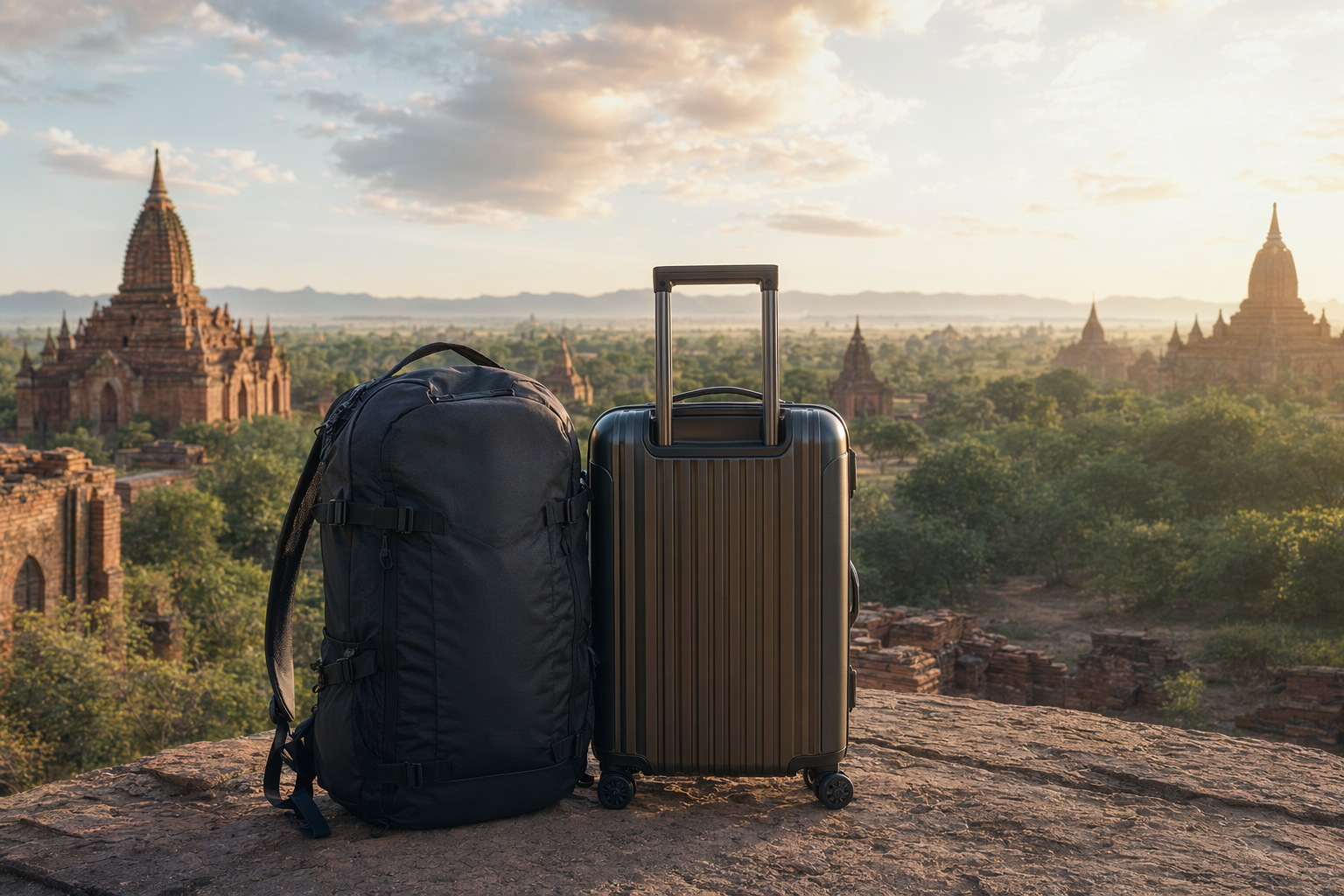
For a long time I used to think backpack people are “proper travellers” and suitcase people are, you know, slightly fancy. Then I dragged a trolley bag through a broken footpath outside a bus stand in Himachal and suddenly my whole philosophy changed. But then again, I carried a heavy backpack in humid Goa for just 20 minutes and started questioning my life choices. So yeah, the answer is not as simple as Instagram makes it look.
If you’re planning a one-week trip, especially from India, the backpack vs suitcase decision depends less on style and more on boring but important stuff: airport transfers, hotel stairs, local transport, weather, how much walking you’ll do, whether you’re taking trains or flights, and honestly how strong your shoulders are. A 7-day trip is that awkward middle zone. Too long for just a tiny duffel, too short to justify carrying your whole wardrobe. I’ve done both over the years: a 40L backpack for hill trips, a cabin suitcase for city breaks, a bigger checked suitcase for family travel, and one very stupid trip where I carried both because I couldn’t decide. Never again.
Short answer: which one should you pick?
#If your one-week trip has multiple stops, stairs, buses, ferries, hostels, old city lanes, beach shacks, or hill stations, take a backpack. If your trip is one base city, proper hotels, airports, cabs, weddings, work meetings, or you need neat clothes, take a suitcase. That’s my simple rule now. Not perfect, but it works.
| Trip style | Better choice | Why it works |
|---|---|---|
| One city, hotel stay, cabs | Suitcase | Easy packing, clothes stay neat, wheels save effort |
| Himachal, Uttarakhand, Northeast, treks | Backpack | Stairs, uneven roads, shared jeeps and walking are easier |
| Goa or beach trip | Backpack or soft duffel | Sand and broken lanes are annoying for trolley wheels |
| Business plus leisure trip | Suitcase | Formal wear, laptop, shoes and toiletries fit better |
| Hostels and budget travel | Backpack | Lockers, bunk beds and public transport feel simpler |
| Family trip with kids | Suitcase plus small backpack | You need organisation more than adventure vibes |
| International one-week trip | Depends | Europe old towns favour backpack, Singapore or Dubai suits a trolley |
My most honest test: Indian roads and Indian travel days
#The bag that looks perfect at home behaves very differently once you’re on an actual travel day. In India, that usually means one hand holding your phone with the driver calling “sir location share karo”, one hand holding chai, and one bag doing drama behind you. Suitcases are lovely on airport floors, metro stations, hotel lobbies and smooth pavements. But outside railway stations, small-town bus stands, market lanes, beach roads after rain, and those random places where the footpath just disappears, trolley wheels get bullied badly.
A backpack gives you freedom in these moments. You can jump into an auto, climb a footbridge, walk to your hostel, squeeze into a shared cab from Rishikesh to Joshimath, or cross a muddy parking lot without dragging anything. But the freedom has a price. Your back pays it. If the backpack is badly packed or too heavy, even a 10-minute walk feels like punishment. I’ve reached hotels sweating like I just completed a marathon, while my friend with a suitcase was fresh and irritatingly cheerful.
My rule now is simple: if the route from airport or station to stay has more uncertainty than comfort, I carry a backpack. If the stay is comfortable and transport is sorted, I stop acting heroic and take a suitcase.
For a 7-day trip, size matters more than people admit
#A one-week trip does not need a giant 70L backpack unless you are carrying winter gear, camera gear, or camping stuff. For most normal travellers, a 35L to 45L backpack is enough if you pack smart. For suitcases, a cabin-size 20 to 22 inch trolley works if you are disciplined, while a medium 24 inch suitcase is better if you need extra shoes, jackets, gifts, or you’re the kind of person who packs “just in case” outfits. No judgement, I am that person sometimes.
For domestic flights, always check your airline baggage allowance before packing because cabin and check-in limits vary by fare and airline. Many Indian travellers assume “arre it will be fine” and then end up shifting clothes at the airport counter in full public view. I have done this, and no, it is not a proud memory. For trains, there is more flexibility, but don’t forget you still have to lift the bag onto upper racks or fit it under the berth. A hard suitcase that is too bulky becomes everyone’s enemy in a crowded sleeper coach.
Backpack advantages: why I still love it for rougher trips
#The biggest advantage of a backpack is mobility. You’re hands-free, which sounds small until you’re carrying a phone, ticket, water bottle, or vada pav packet. In places like McLeod Ganj, Kasol, Varkala cliff, Old Manali, Pushkar lanes, parts of Pondicherry’s older streets, or even crowded Bangkok markets, a backpack just feels easier. You can move without thinking about wheels getting stuck. It also makes public transport less stressful. Metro, local bus, ferry, shared taxi, airport shuttle, all manageable.
- It works well for multi-city trips where you change stays every 1 or 2 nights.
- It is better for hostels, homestays, guesthouses and hill stays with no lift.
- It handles bad roads, rain puddles, gravel, sand and stairs better than a trolley.
- It keeps your hands free, which is genuinely useful in India where travel days can be chaotic.
But please buy a proper travel backpack, not a random college bag stretched beyond its destiny. Look for padded shoulder straps, a hip belt, front-loading zip, rain cover, lockable zippers if possible, and a laptop section if you work while travelling. Front-loading backpacks are underrated. Top-loading ones look rugged but finding one clean T-shirt becomes like digging for treasure. Also, try the bag with weight before the trip. Empty bag trial is useless. Everything feels nice when it has nothing inside.
Backpack problems nobody tells you until your shoulder hurts
#Backpacks are not magical. They can be uncomfortable, especially in hot places. In Goa, Kochi, Chennai, Hampi in warm months, or anywhere humid, carrying a backpack for even short walks can make your back sweat like crazy. If your stay is 1.5 km from the bus stop, Google Maps will say “walkable”. Your body may disagree. And if you have back pain, knee issues, pregnancy, or just don’t like carrying weight, forcing yourself to use a backpack is silly.
Another issue is organisation. Unless you use packing cubes, backpacks become a black hole. Socks disappear. Chargers migrate. Toiletries leak somewhere deep inside and you discover it only when your kurta smells like face wash. Also, backpacks don’t protect delicate items as well as hard suitcases. If you’re carrying a camera, formal shoes, perfume bottles, souvenirs, or wedding clothes, think twice. A backpack is freedom, yes, but sometimes it is messy freedom.
Suitcase advantages: comfort, neat clothes and less drama at hotels
#Suitcases are honestly brilliant for the right trip. If you’re flying into Jaipur, Udaipur, Mumbai, Delhi, Bengaluru, Singapore, Dubai, Kuala Lumpur, or any place where you’ll mostly use cabs and stay in hotels, a suitcase is easier. You roll it, open it like a drawer, and everything is visible. Clothes stay less crushed. Shoes sit separately. Toiletries can be packed upright. If you’re going for a wedding, workation, conference, anniversary trip, or a slightly nicer holiday, suitcase wins without too much debate.
For one-week travel, I like a cabin suitcase when I don’t want to wait at baggage belt. But if I’m carrying winter wear or shopping is part of the plan, then a medium check-in suitcase makes sense. In cities and popular tourist areas, accommodation options are wide now: hostels usually start around ₹600 to ₹1,500 per bed in many Indian destinations, budget hotels can be around ₹1,500 to ₹3,500 per night, and comfortable boutique stays or resorts may go from ₹4,000 to ₹10,000 plus depending on season and location. In these places, suitcases are totally manageable if the property has lifts or staff to help.
Suitcase problems: wheels are cute until the road becomes gravel
#The suitcase’s weakness is obvious: wheels. Good spinner wheels feel amazing on smooth airport tiles. Outside, not always. I once took a small trolley to a beach stay in Gokarna and the last stretch was a sandy, uneven path. Every 10 steps I had to lift it. By the time I reached, I was not in beach mood, I was in “why am I like this” mood. Same thing can happen in old towns with cobbled lanes, hill roads, railway footbridges, and budget stays hidden inside gullies.
Hard-shell suitcases also take more space in small rooms. In hostels, opening a suitcase on the floor can make you unpopular fast. In trains, big suitcases may not fit neatly. In buses, they go into luggage compartments where dust, rain and rough handling are normal. That doesn’t mean don’t use them, just use them when the trip style supports it. A suitcase is not lazy. It is practical. But only when the route is suitcase-friendly.
Season and destination should decide your bag
#This is where many of us mess up. We choose the bag first and then try to force the trip into it. Better to check season, terrain and transport. For Indian hill stations, March to June and September to November are generally popular because the weather is nicer, but road conditions, crowds and prices can change around long weekends. Monsoon in the hills can be beautiful but landslides and road delays are a real concern in many regions, so pack lighter and keep your hands free if you must travel. For Goa and coastal trips, November to February is peak pleasant season, while monsoon brings greenery and lower rates in some places, but also wet lanes and slippery paths.
For winter trips to Kashmir, Himachal, Uttarakhand, Sikkim or Europe, suitcase packing looks tempting because sweaters are bulky. But snow, stairs and icy paths can make wheels useless. In that case, a medium backpack plus one small daypack may work better, unless you have door-to-door cab transfers. For Southeast Asia, especially Thailand, Vietnam, Bali, Malaysia, I prefer a backpack if I’m moving between islands or budget stays. For city-only trips like Singapore, Dubai or Bangkok with metro and hotels, a cabin suitcase is honestly very comfortable.
Accommodation style changes everything
#If you’re staying in a hostel, backpack almost always feels easier. You can keep it near your bunk, use lockers, and pull out only what you need. Many hostels in India’s popular backpacking places like Rishikesh, Manali, Bir, Goa, Jaipur, Udaipur and Varkala offer dorm beds in budget ranges, plus private rooms if you want peace. But not every hostel has lifts, and sometimes the best views come after climbing a ridiculous number of stairs. A suitcase there is just extra comedy.
Hotels and serviced apartments are different. If you’re doing a one-week stay in one city, maybe a workation in Goa, a family holiday in Mysore, a food trip in Lucknow, or a slow trip in Pondicherry, suitcase makes life easier. You unpack once. You don’t have to repack every morning. You can carry nicer clothes for cafes, temples, markets, beaches, whatever your plan is. Homestays are mixed. Some are car-accessible and easy. Some are up a slope where the owner says “only 5 minutes walk” and that 5 minutes feels like UPSC mains.
Transport reality: flights, trains, buses, autos and walking
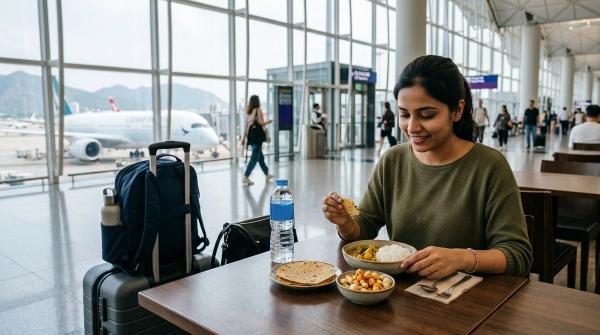
#For flights, both are fine. Suitcase is better if you’re airport-to-cab-to-hotel. Backpack is better if you’ll use metro, bus, or walk after landing. During layovers, I prefer having at least one small accessible bag no matter what main luggage I take. Keep a fresh T-shirt, basic toiletries, charger and meds in the top pocket or daypack. If your transit is long and you plan to freshen up, this guide on Airport Showers During Layovers: Find, Pack & Plan is actually useful, especially because digging through checked luggage at an airport is not happening.
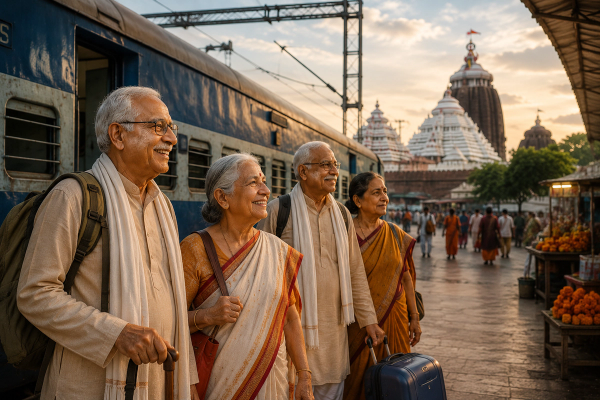
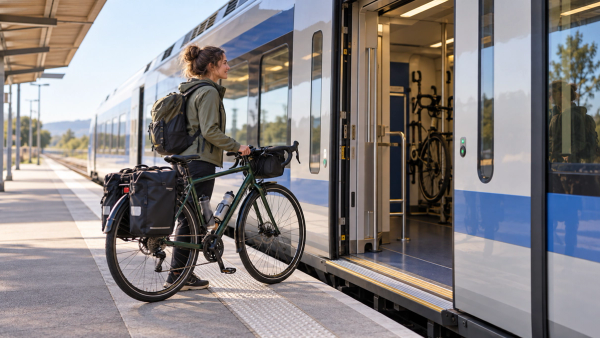
For trains, backpacks are easier to lift and tuck away, but they can be annoying if too many straps hang loose. Tie them up before boarding. Suitcases work in AC coaches if they’re not oversized, but railway platforms with stairs and crowds can test your patience. For overnight buses, soft bags and backpacks are better because luggage compartments are not gentle. For autos and local taxis, a backpack is easy if you’re solo. For families, suitcases are usually more organised, but someone has to manage the kids, snacks, tickets and bags together, which is a whole Olympic event.
What I pack for a one-week trip, Indian edition
#Whether I take backpack or suitcase, my packing list is now almost the same. The bag changes, not the brain. For 7 days, I usually pack 4 tops or T-shirts, 2 bottoms, 1 sleepwear set, 1 nicer outfit, undergarments for the week, a light jacket or rain layer depending on season, slippers, one walking shoe, basic toiletries, medicines, power bank, charger, sunglasses, small towel and a foldable laundry bag. If it’s a cold place, I reduce clothes and add layers. Thermals save space more than bulky sweaters.
For international one-week trips, I add passport pouch, forex card or local cash, universal adapter, and copies of important documents. Don’t confuse plug adapters with voltage converters, because they are not the same thing. I learnt this properly only after panicking over my trimmer abroad. If you’re carrying electronics, read Travel Adapter vs Voltage Converter: Do You Need Both? before packing. It’s one of those boring topics that becomes important only when your device refuses to charge.
- Packing cubes help both backpacks and suitcases, but they are almost compulsory for backpacks.
- A small daypack is useful even when your main bag is a suitcase.
- Keep one empty cloth bag for laundry, shopping or wet clothes.
- Don’t pack seven complete outfits unless you genuinely need them. Mix and match is your friend.
Food, shopping and the extra-space trap
#Indian travellers don’t come back empty-handed. We buy spices from Kerala, dry fruits from Kashmir, chikki from Lonavala, tea from Darjeeling, shawls from Kullu, ceramics from Jaipur, cashews from Goa, random fridge magnets from everywhere, and then act shocked when the bag doesn’t close. If your trip includes shopping, a suitcase gives you better structure and space. But it also tempts you to buy more. A backpack limits you, which is painful but financially healthy.
Food also affects packing in a funny way. If you’re doing a street food trip in Indore, Lucknow, Amritsar, Kolkata or Delhi, you may want looser clothes by day four. Just saying. If you’re heading to temples or cultural places, pack modest options that are easy to repeat. If you’ll visit beaches, carry quick-dry clothes and don’t overpack denim. Wet denim in a backpack is basically a punishment from the universe. For local markets, carry a foldable tote or small sling so you don’t open your main luggage every time.
Safety and security: what feels safer on the road
#A suitcase feels safer for fragile things because of the hard shell and lock. But in crowded places, a backpack kept behind you can be opened if you’re careless. I usually keep valuables in a front sling or money belt, not in the main backpack. In stations, buses and markets, keep the bag in front when crowded. In hotels and hostels, use locks. Don’t leave passports, cash, jewellery or expensive gadgets lying around just because the place has good vibes. Good vibes don’t replace common sense.
For solo travellers, especially women, bag choice is also about speed and confidence. If you can move quickly and keep your hands free, a backpack may feel safer. But if the backpack is too heavy and slows you down, it does the opposite. For late-night arrivals, pre-book transport when possible. Share trip details with family or friends. Check local weather and road updates for hill routes, especially during heavy rain or snow. This is not fear-mongering, it’s just practical travel in our part of the world.
Family travel is a different game altogether
#If you’re travelling with parents, kids or a baby, don’t romanticise backpacking too much. Suitcases are usually easier because everyone’s clothes can be separated and found quickly. For parents, wheeled luggage reduces strain. For babies, you already have diaper bags, stroller, feeding stuff, extra clothes, maybe a car seat depending on the trip. In that case, one hands-free backpack for essentials and one organised suitcase often works better than trying to carry everything on your back like a mountain goat.
Families flying with infants should plan cabin access carefully: diapers, wipes, change of clothes, snacks, medicines and comfort items must be reachable. Main luggage can be suitcase, but the real hero is the smaller cabin bag. If you’re doing your first flight with a baby, this checklist on Baby’s First Flight Checklist: Car Seat, Stroller and Diaper Bag covers the kind of stuff people forget until boarding starts and everyone is suddenly stressed.
So, my final recommendation for a one-week trip
#For most solo or couple travellers doing a normal one-week trip with some movement, I’d choose a 40L front-loading backpack plus a small daypack. It gives enough space without becoming too heavy, and it handles Indian travel chaos better. For city breaks, weddings, business travel, resort holidays, family trips, or one-base vacations, I’d choose a cabin or medium suitcase plus a small backpack. This combo is boringly sensible, which is why it works.
If you’re still confused, ask yourself these five questions before packing: Will I change hotels more than twice? Will I walk more than 15 minutes with luggage? Are there stairs, sand, gravel or hills? Do I need formal clothes or fragile items? Am I physically comfortable carrying 8 to 12 kg on my back? Your answers will tell you the truth. Not Pinterest, not reels, not that one friend who says “bro just travel light” and then borrows your sunscreen.
A simple one-week decision formula I actually use
#- Choose a backpack if your trip is budget, active, hilly, hostel-based, public-transport heavy, or involves multiple stops.
- Choose a suitcase if your trip is hotel-based, city-focused, family-oriented, formal, shopping-heavy, or mostly cab-to-door.
- Choose both only if the suitcase is main luggage and the backpack is small daypack. Don’t carry two full-size bags unless you enjoy suffering.
- Pack the bag once at home, walk around for 10 minutes, climb stairs, lift it into a car or onto a shelf. This test is brutally honest.
At the end of it, backpack vs suitcase is not about being a “real traveller”. Real travellers are the ones who reach comfortably, don’t lose their temper on day one, and still have energy left to eat local food, explore lanes, talk to people, watch sunsets, and enjoy the trip. For a one-week journey, pick the bag that supports your plan, not the bag that supports your ego. I learnt this after enough sweaty walks, broken wheels, overpacked nights and airport repacking scenes. Anyway, hope this helps you pack smarter for your next chhutti. For more such practical travel stories and guides, I keep finding good reads on AllBlogs.in, so maybe browse there before your next trip too.