I used to think “high-protein breakfast” meant either choking down a sweet protein shake at 7:30 am or eating six boiled eggs while pretending I was some ultra-disciplined fitness person. Which... lol, no. That lasted maybe four days. Then I got hungry again by 10, cranky by 11, and by noon I was inhaling biscuits with chai and telling myself I’d “start fresh tomorrow.” If that sounds painfully familar, hi, me too.
Over the last couple years, especially since trying to get my energy more stable and stop the constant snacky-snacky cycle, I’ve been leaning hard into Indian breakfasts that are naturally richer in protein. No protein powder, no fake health food vibe, no dry nonsense. Just regular food, mostly stuff our homes already make, with a few smarter tweaks. And honestly, this worked way better for me than any expensive “wellness stack” I got influenced into buying online.
A quick responsible note before I go full breakfast auntie on you: protein needs vary by body size, age, activity, health conditions, and whether you’re trying to build muscle, manage blood sugar, recover from illness, or just stay full longer. Recent nutrition guidance still supports spreading protein through the day instead of dumping all of it at dinner, and breakfast is a really practical place to start. Some newer 2025-2026 wellness conversations also focus more on protein quality, fiber pairing, blood sugar steadiness, and preserving muscle mass as we age, not just gym-bro macros. I’m into that approach, actually.
Why I even started caring about protein at breakfast
#For me it wasn’t about getting abs. I mean, sure, looking toned sounds nice in theory, but my real problem was energy crashes and ridiculous hunger. I’d have toast, poha, or just coffee and then wonder why I felt like a slightly emotional raccoon by mid-morning. Once I started aiming for a breakfast with a decent amount of protein, plus fiber and some healthy fat, the difference was pretty obvious. Better satiety, less random sugar craving, and my workouts felt less... floppy? That’s not scientific language, but you get me.
Also, current research keeps pointing in the same general direction: higher-protein breakfasts can support fullness, muscle maintenance, and steadier glucose response compared with low-protein, refined-carb-heavy breakfasts. Not every single person needs to obsess over grams, but most of us probably benefit from being less carb-only in the morning. Especially if breakfast is usually chai + vibes.
The trick, at least for me, wasn’t making breakfast “diet food.” It was making normal Indian breakfast a little more intentional.
A quick reality check before the list
#I’m giving rough protein estimates because exact numbers can swing a lot depending on portion size, batter ratio, brand, and whether your paneer is homemade, your chilla is tiny, your dosa is the size of a bedsheet, etc. So don’t take these like lab data. Think of them as useful ballparks. And if you have kidney disease, certain metabolic conditions, severe digestive issues, or doctor-advised protein limits, please personalise this with a registered dietitian or physician, seriously.
1) Moong dal chilla with paneer stuffing
#This is probably my number one, not because it’s trendy but because it works. Yellow moong dal chilla already has decent protein, and when you stuff it with paneer, green chutney, onions, coriander, maybe a little grated carrot if you’re feeling virtuous, it suddenly becomes one of those breakfasts that keeps you full for hours. Two medium chillas with a good paneer filling can land somewhere around 20 to 28 grams of protein depending on how generous you are.
I soak the dal overnight, blend with ginger, green chilli, jeera, salt. That’s it. Sometimes I mess up the batter consistency and the first chilla looks emotionally damaged, but the next ones recover. Add paneer and it’s honestly elite. If paneer feels heavy, use hung curd or tofu. And yes, tofu in Indian breakfast is not illegal, despite what some uncles may imply.
2) Besan chilla with curd on the side
#Besan is one of those ingredients I underappreciated for years. It’s affordable, versatile, and much more filling than plain toast or suji stuff. Two besan chillas with veggies, plus a bowl of curd, can easily hit around 16 to 22 grams protein. If you add grated paneer into the batter too, even better. This one is especially handy on mornings when you forgot to soak anything because, well, life.
A thing I’ve noticed: if I eat besan chilla alone, I’m okay. If I eat it with curd and a little mint chutney, I’m satisfied-satisfied. Tiny difference, big effect. Also besan gives that savory comfort thing that makes healthy eating easier to actually stick with.
3) Egg bhurji with multigrain roti or leftover phulka
#I know eggs are obvious, but they’re obvious for a reason. Two to three eggs in a proper masala bhurji with onions, tomatoes, peas, and maybe some extra egg whites if you want more protein, plus one or two rotis, is a seriously solid breakfast. Depending on your combo, you’re looking at maybe 18 to 25 grams. Add a side of curd and now we’re talking.
What I like here is the speed. On busy mornings, this is done before my brain fully boots up. Recent sports nutrition conversations still place eggs among the most practical whole-food protein options because of their amino acid profile and leucine content, which matters for muscle protein synthesis. That sounds very science-y, but basically eggs do a lot, for cheap-ish.
4) Paneer bhurji stuffed in a dosa or with toast
#Paneer bhurji as breakfast feels very north-meets-everywhere and I love that. If you do a generous portion, say 100 to 150 grams paneer, you can get roughly 18 to 27 grams protein depending on brand and prep. Stuff it into a dosa, eat with toast, roll into a roti, shovel it with a spoon over cucumber slices, whatever. It’s flexible.
I went through a phase where I was scared of paneer because wellness culture kept acting like dairy was the villian behind all human suffering. Then I looked at actual evidence and realised, for many people, dairy can absolutely fit into a healthy diet unless they’re intolerant or medically advised otherwise. Nuance, what a concept.
5) Idli with sambar... but make the sambar serious
#This one surprised me. Plain idli alone is not exactly a protein superstar, fine. But when you pair idli with a generous bowl or two of dal-heavy sambar, especially with more toor dal and vegetables, the meal becomes much more balanced. Add some side curd or a small portion of peanut chutney and suddenly the protein total looks way better than people assume, around 12 to 18 grams or more, depending on portions.
I think one 2026-ish wellness trend I actually agree with is this idea of “protein stacking” with traditional meals. Not replacing cultural food, just combining it smarter. Like idli doesn’t need to become egg white idli quinoa cloud nonsense. It just needs company.
6) Adai with chutney and curd
#Adai is one of the best breakfasts for this whole topic, period. Mixed lentils + rice, often with spices and curry leaves, gives you a heartier dosa-ish thing that’s naturally richer in protein and fiber than many common breakfasts. Two adais with curd can often reach 15 to 22 grams protein, sometimes more if the lentil ratio is generous.
Also, adai has chew. That matters! Foods that take some actual chewing weirdly help me register fullness better. Maybe that’s just me being dramatic, but I don’t think so. If you’ve only had paper-thin plain dosa for breakfast and felt hungry too fast after, adai is worth trying.
7) Sattu paratha or sattu drink bowl combo
#Sattu deserves way more mainstream love than it gets. Roasted gram flour is protein-rich, filling, and honestly pretty practical in hot weather too. A stuffed sattu paratha with curd can be around 14 to 20 grams protein depending on stuffing amount and side portions. You can also do a savory sattu drink with jeera, black salt, coriander, lemon, and pair it with boiled eggs or sprouts if you want a bigger breakfast.
My nani-ish side loves this because it feels old-school and sensible, not “biohacked.” And in 2026, with people talking more about affordable nutrition and sustainable protein sources, sattu really fits. It’s not glamorous, but neither is being hungry an hour later.
8) Sprouts chaat with peanuts and curd
#Okay, I have mixed feelings about sprouts because sometimes they feel like a punishment food when done badly. Cold, wet, sad. But when they’re tossed with onion, tomato, cucumber, coriander, lemon, chaat masala, roasted peanuts, and a scoop of curd, they become way more alive. A bowl can land around 14 to 20 grams protein depending on how much moong, chana, peanut, and curd you use.
One health note here, because responsible info matters more than pretending everything is perfect: raw sprouts can carry a higher food safety risk, especially for pregnant people, older adults, or anyone immunocompromised. Lightly steaming or sauteing them is a safer move if that applies to you. I usually do that because my stomach can be a bit dramatic, not gonna lie.
9) Greek-style dahi bowl, Indianized
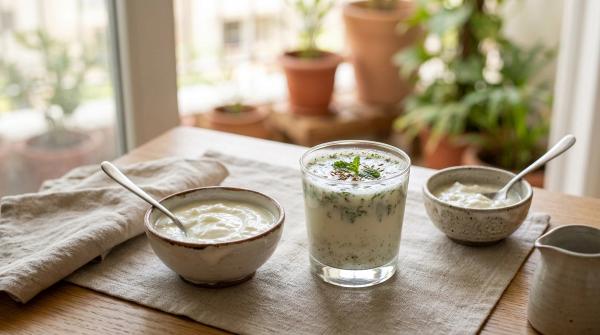
#Not every breakfast has to be hot. A thick dahi bowl with hung curd or high-protein curd, chopped fruit, chia or flax, nuts, seeds, and maybe some roasted chana on the side can work really well. If you use strained curd and portion it properly, you may get 15 to 22 grams protein without trying too hard. Is it traditional-traditional? Maybe not. Is it useful on gross humid mornings? Yep.
There’s been a lot of 2025-2026 discussion around gut health, but thankfully the conversation is getting less gimmicky. It’s not just “take this magical probiotic.” Fermented foods like curd, plus fiber from seeds and fruit, can be part of a gut-friendly routine. Not a miracle, just a decent habit.
10) Oats upma with soy chunks or peanuts
#I know, I know, oats are divisive. Some people act like they’re the food equivalent of disappointment. But savory oats upma can genuinely taste good if you cook it properly with mustard seeds, curry leaves, veggies, and enough seasoning. The protein gets interesting when you add rehydrated soy chunks, edamame if available, or even just more peanuts and curd on the side. Then you’re looking at maybe 15 to 23 grams.
Soy foods remain one of the more researched plant proteins, and no, the panic around soy ruining everyone’s hormones has never really held up in normal dietary amounts. Whole or minimally processed soy foods can be very useful, especially if you’re vegetarian. This breakfast isn’t my emotional favorite, but functionally? Pretty great.
11) Dal dosa or pesarattu with chutney
#Pesarattu is one of those breakfasts that makes you wonder why we ever accepted low-protein breakfasts as normal. Green moong-based, savory, satisfying, and usually more filling than standard dosa. Depending on size and what you pair it with, two pesarattus can give around 16 to 24 grams protein. Add curd or upma filling if that works for you and it goes higher.
I had this regularly for a couple weeks during a phase when I was trying to improve post-workout breakfasts, and honestly my recovery felt better. Could be the total protein, could be placebo, could be both. Bodies are messy. Still, this one stays in rotation because it tastes like real food, not a nutrition lecture.
12) Chana or rajma breakfast bowl with eggs or paneer
#This is a little unconventional for some households, but hear me out. Leftover chana or rajma from dinner can become a brilliant breakfast if you reheat it and pair it with eggs, paneer cubes, or even a small millet roti. Chickpeas or kidney beans alone bring some protein and lots of fiber, but combined with animal protein or dairy, the meal gets much more robust. Depending on portions, this can be 18 to 30 grams easy.
And can I just say, leftovers are deeply underrated in wellness spaces. Everything doesn’t need to be photogenic. Sometimes the healthiest breakfast is yesterday’s chana in a steel bowl while standing in your kitchen half-awake. That counts. It really does.
A few small tricks that helped me raise protein without making breakfast weird
#- Add curd, hung curd, or buttermilk with savory breakfasts instead of eating the main item alone
- Use paneer, tofu, egg, or extra dal as an add-on rather than trying to reinvent the whole dish
- Make chutneys count: peanut chutney, sesame chutney, even curd-based dips can help a bit
- If breakfast is usually carb-heavy, just ask: what’s the protein here? If the answer is “uhhh”, fix that first
One thing I messed up in the beginning was chasing protein and forgetting everything else. Then breakfast got too heavy, too dry, too joyless. The better formula, for me anyway, is protein + fiber + flavor. If a meal is technically healthy but makes you miserable, you probly won’t keep eating it.
What about how much protein you actually need?
#This gets overcomplicated online. The current conversation in health and fitness is moving beyond the bare minimum deficiency-prevention target and more toward what helps with satiety, physical function, and muscle maintenance. A lot of active adults do better when total daily protein is distributed across meals, with breakfast contributing a meaningful share rather than being an afterthought. But your exact requirement depends on you. A sedentary petite person, a pregnant woman, a strength-training guy, and an older adult trying to prevent muscle loss will not all need the same thing. Obvious, but the internet forgets.
If you’re generally aiming for a more satisfying breakfast, even getting into a rough 15 to 25 gram protein range can be a useful practical target for many people. Not a law. Just a helpful frame. And if you have diabetes or prediabetes, pairing protein with higher-fiber carbs at breakfast may also support a more stable glucose response, which a lot of clinicians still emphasize.
My honest final take
#You do not need protein powder to have a high-protein Indian breakfast. You don’t need to abandon traditional food either. Mostly you just need to stop treating breakfast like it doesn’t matter. That was my mistake for years, and it kinda affected everything else, hunger, mood, workouts, random snacking, all of it. Once I started eating breakfasts built around dal, eggs, paneer, curd, sattu, sprouts, and better combinations of things we already eat, my mornings got way less chaotic.
Try one or two of these first, not all 12 in some hyper-motivated Sunday planning spiral. See what actually fits your budget, digestion, schedule, and taste. Health that feels normal is the one that sticks. Anyway, that’s my breakfast rant for today... if you’re into this kind of practical wellness stuff, casual research-backed food talk, and not-too-preachy health reading, I’ve found some fun reads over on AllBlogs.in too.