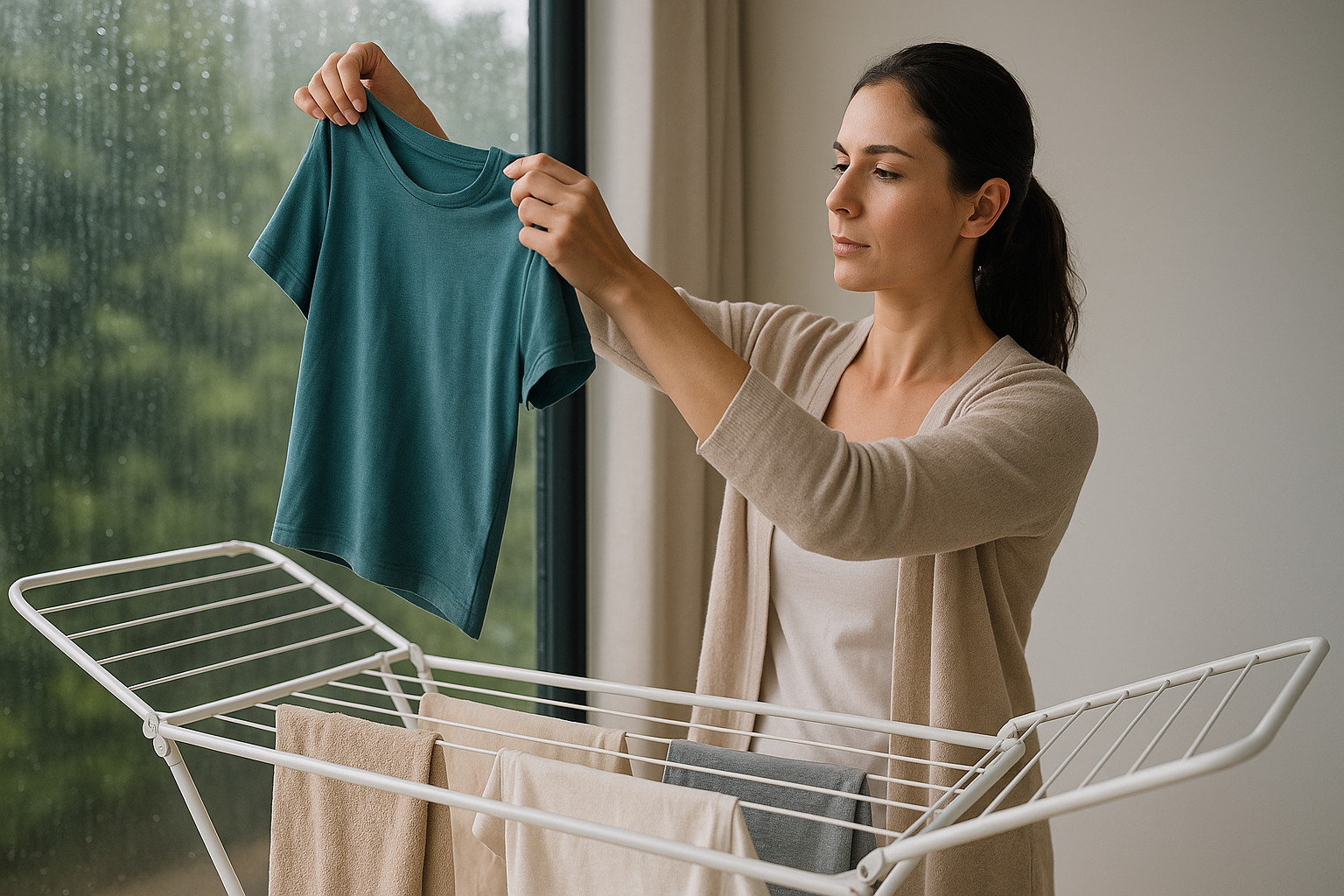
Every monsoon I tell myself this year will be different. This year my clothes will dry properly, towels won't smell like a damp cupboard, and I won't end up re-washing half the laundry because it got that weird sour-fungusy smell. And then... rain for 6 days straight, zero sunlight, humidity sitting around 80% or more, and my bedroom starts feeling like a steamed bun. If you live anywhere with a real monsoon, you probably know exactly what I mean.
I got weirdly obsessed with this topic after I had a stretch of itchy skin rashes one rainy season. Nothing dramatic, but enough to make me connect the dots. Damp clothes, not-fully-dry socks, towels that never really dried, and a room with no airflow. My dermatologist basically said, very politely, that fungus and bacteria absolutely love warm humid conditions, and fabric can become part of that whole annoying cycle. So yeah, this isn't just about smelling fresh. It's a small health thing too, actually a bigger one than people think.
Why monsoon laundry gets gross so fast
#The basic science is pretty simple. Clothes smell bad when moisture hangs around long enough for microbes to multiply. Sweat residue, skin cells, body oils, detergent buildup, and slow drying all team up and make fabric smell stale or musty. If the item stays damp for too long, especially thick stuff like jeans, bedsheets, leggings, undergarments, towels, gym clothes, then mold and mildew can start growing. Not always in a super visible way either. Sometimes it just smells "off" first.
And from a wellness angle, this matters because mold spores and damp indoor air can irritate some people more than others. Folks with asthma, allergies, eczema, sensitive skin, sinus issues, or fungal infection tendencies often notice it quicker. That's not me being dramatic. Public health advice has been saying for ages that indoor dampness is linked with respiratory irritation and mold exposure problems, and more recent home-health conversations in 2025 and 2026 have gotten way more practical about ventilation, humidity control, and laundry hygiene. Finally, honestly.
Monsoon laundry is not just a housekeeping problem. If your clothes stay wet too long, your skin, nose, lungs, and mood can all get dragged into it a bit. I learned that the hard way.
The first mistake I kept making... cramming clothes together
#I used to think if I put all the clothes on one stand and turned the fan on high, that was enough. Nope. Big nope. The center of the pile stayed damp for hours and hours, sometimes a whole day longer than the outside pieces. A laundry expert I read recently described drying as an airflow problem more than a heat problem, and that clicked for me. If air can't pass around each garment, moisture just gets trapped. Which is exactly what happened at my place.
- Leave at least a hand-width between hanging items if you can
- Hang shirts from the bottom hem sometimes, not always the shoulders, so thick seams dry faster
- Turn pockets inside out. Same for cuffs and hoodie sleeves
- Shake each item hard before hanging, it weirdly helps fibers open up
- Don't fold clothes over the line in half if the room is humid. Single-layer hanging is slower to set up but faster to dry
What actually changed things for me: less humidity, not just more waiting
#This was the big aha moment. I kept waiting for clothes to dry instead of changing the room conditions. In recent home wellness trends, dehumidifiers have become almost normal in humid cities, and I kinda get the hype now. If you can afford one, even a small compressor or desiccant dehumidifier can make a ridiculous difference in monsoon. You want indoor humidity ideally under 60%, and for quicker drying a lot of people aim for around 45% to 55%. Once I started watching humidity on a cheap little hygrometer, my whole strategy got smarter instead of just more frustrated.
If a dehumidifier isn't in your budget, don't worry, mine wasn't for ages. There are still decent options. Cross-ventilation helps when outdoor air is less damp than indoor air, but during heavy rain that's not always true, so blindly opening windows can backfire. What worked better for me was using a fan aimed across the clothes, not directly at one spot, and keeping the room door partly open only when the adjoining space was drier. Tiny thing, big difference. I also stopped drying clothes in the bathroom unless absolutely necessary because, well, that's basically a moisture cave.
My current monsoon drying setup is kinda ugly but it works
#Honestly it looks chaotic. A folding rack near the brightest window, ceiling fan on medium, pedestal fan on the side for airflow, and on really bad weeks either a dehumidifier for a few hours or the AC on dry mode. Dry mode has saved me more than once. It doesn't magically dry fabric by itself, but it pulls moisture from the room, which is the point. Some newer ACs and smart dehumidifiers in 2026 even show live humidity and estimate drying time, which feels very extra... but also useful.
- Wash smaller loads in monsoon. I know, annoying, but thick overloaded loads dry terribly
- Use an extra spin cycle. This is maybe the most underrated trick ever
- Dry the hardest items first: towels, jeans, bedsheets, underlayers
- Keep air moving for the full drying time, not just the first hour
- Put fully dried clothes away immediately so they don't re-absorb moisture from the room
The smell issue: detergent alone was not solving it
#For years I thought stronger fragrance meant cleaner. It doesn't. Sometimes perfume just sits on top of trapped damp smell and makes it even weirder, like flowers plus basement. What helped more was washing out residue properly. Too much detergent can cling to fabric, especially in hard water or short wash cycles, and that residue can trap odor. I started using a little less detergent than the cap suggested and adding an extra rinse for towels and activewear. Huge upgrade.
I also use white vinegar in the rinse compartment on occassion, not every wash and not mixed directly with detergent. It helps with lingering odor for some fabrics. Important caveat though: don't overdo DIY hacks, and don't mix vinegar with bleach ever. Like ever. That's dangerous. For people dealing with repeated mildew smell, oxygen-based laundry boosters can be useful too, but read the fabric care label because not every material likes the same treatment.
Sunlight is great, but let's be real, monsoon laughs at that advice
#A lot of old-school advice says just dry clothes in sunlight. Sure, lovely in theory. But in actual monsoon weather, sunlight appears for 17 minutes and then vanishes like it owes someone money. So I had to stop relying on that. If you do get a break in the rain, even 1 to 2 hours of bright indirect light plus airflow can help finish off nearly-dry clothes and reduce odor. But the main drying should happen indoors in a controlled way. That's the practical answer, even if it sounds less romantic than sun-dried sheets.
Towels, underwear, socks: the health priority pile
#These are the things I baby now. Anything that sits close to skin, especially in warm sweaty areas, needs to be genuinely dry before use. Not "feels mostly okay" dry. Dry dry. Dermatologists still keep repeating this because damp fabric can worsen chafing, fungal infections like athlete's foot or jock itch, and irritation in skin folds. If you've got eczema or very sensitive skin, half-dry laundry can be a sneaky trigger too, because dampness plus detergent residue is just a bad combo.
- Rotate more underwear and socks in monsoon so you never feel forced to wear damp ones
- Hang towels spread wide, never bunched
- If a towel smells even after drying, rewash it. Don't just "air it out" and hope
- For reusable cleaning cloths and bath mats, wash often because they can seed odors into the room
When clothes already smell musty, here's what I do now
#First, I don't mix them back into the wardrobe. Learned that one the painful way because one musty shirt can make a whole shelf smell suspect. I rewash smelly clothes sooner rather than later, ideally with warm water if the fabric allows, a good detergent, and enough drying time after. For persistent odor, I sometimes soak items briefly before washing, then run an extra spin. Some people swear by baking soda, some by laundry sanitizers, some by enzyme detergents. I think the best option depends on whether the smell is from body oils, mildew, or plain old detergent residue. It's annoyingly not one-size-fits-all.
Also, if you actually see mold spots on fabric, be careful. Small washable items can sometimes be treated and rewashed, but heavily moldy fabric, especially pillows or things with internal stuffing, may not be worth saving. And if someone in your house has asthma, severe allergies, or immune problems, I'd be extra cautious about keeping moldy textiles around. Better safe than stubborn.
New-ish wellness habits from 2026 that I weirdly love
#This whole home-health space has gotten more mainstream lately. People are talking less about picture-perfect homes and more about indoor air quality, humidity, and things that reduce actual irritation. Some trends I think are legit: compact air quality monitors that track humidity, washable moisture-absorbing wardrobe packets, heat-pump dryers that use less energy than older machines, and laundry racks designed for vertical airflow instead of just more bars crammed together. I don't buy every trendy thing, obviously. But I do think measuring humidity instead of guessing is one of the smartest low-effort upgrades out there.
Another thing that's become more common is using fragrance-free or low-fragrance detergents, especially among people with sensitive skin. I was resistant because I love nice-smelling laundry, but honestly, less fragrance made it easier to tell whether clothes were truly clean or just perfumed. Also my skin was calmer. So... annoying but true.
A quick word on dryers, steam closets, and those fancy gadget solutions
#If you have a tumble dryer, yes, life is easier. Not effortless, but easier. The biggest tip there is don't leave clothes sitting inside after the cycle ends because they can pick up a stale smell again from trapped moisture. Clean the lint filter too, obvious but people skip it. Heat-pump dryers are getting more popular because they're gentler and more energy efficient, though they cost more upfront. Steam closets and fabric refresh cabinets are trendy too, but I wouldn't use them as a substitute for washing musty clothes. Refreshing isn't the same as cleaning. Bit of a pet peeve of mine.
The wardrobe part nobody talks about enough
#You finally dry the clothes, great. Then you shove them into a packed cupboard that's slightly damp inside and... congrats, the smell comes back. Been there. I now leave a tiny bit of breathing room between stacks, wipe wardrobe interiors during monsoon, and use moisture absorbers when needed. Not because I'm trying to be some home guru, but because stale enclosed wardrobes can undo all the work. If your closet smells woody-damp or sour, deal with that too. The clothes aren't always the main culprit.
A shirt can be perfectly washed and mostly dried, but if the room or cupboard is damp, it still loses the battle. Monsoon is rude like that.
What I wish someone had told me earlier
#I wish someone had said this plainly: if clothes take more than about 24 hours to fully dry in humid weather, you need to change the process, not just be patient. That doesn't mean panic over every slightly cool T-shirt, but prolonged dampness is where odor trouble starts. The faster you can get moisture out, the less chance microbes have to settle in. Extra spin, spacing, airflow, humidity control, smaller loads. Those matter more than expensive detergent, at least in my experiance.
And I wish someone had told me that being health-conscious at home isn't only about supplements, yoga mats, seed cycling, cold plunges, or whatever trend is loud this month. Sometimes wellness is making sure your towel dries properly so your skin doesn't freak out. It's not glamorous. It's still real.
My simple monsoon laundry routine now
#So, this is what I do most weeks. I wash in smaller batches. I use a solid detergent but not too much. I run an extra spin if the weather is bad. I hang each item with space, inside out or seams exposed if needed. I keep one fan moving air across the rack. If humidity indoors is ridiculous, I use dry mode on the AC or a dehumidifier for a while. And I refuse to store anything until it's properly dry. If an item smells iffy, it goes back to wash. End of discussion.
It's not perfect. Sometimes I still end up with one rebellious towel that smells haunted. Sometimes the rain wins. But compared to a few years ago, my clothes smell better, my skin is happier, and the house feels less damp and gross overall. Which honestly helps my mood too. A room full of half-dry laundry can make a person feel slightly feral, no joke.
Final thoughts, from one damp-laundry struggler to another
#If you're dealing with monsoon clothes that never seem to dry, please know you're not lazy or doing everything wrong. A lot of it is just weather physics, bad ventilation, and the kind of trial-and-error nobody teaches you. Start with the basics: remove more water in the spin cycle, increase spacing, increase airflow, lower humidity, and don't ignore musty smells. If skin rashes, fungal infections, wheezing, or allergy symptoms keep happening, it's worth checking in with a doctor because the environment at home can absolutely be part of the picture.
Anyway, that's my rainy-season rant slash wellness routine. Not fancy, not influencer-perfect, but it works more often than not. If you're into practical health and home stuff like this, you can find more easy reads over on AllBlogs.in.