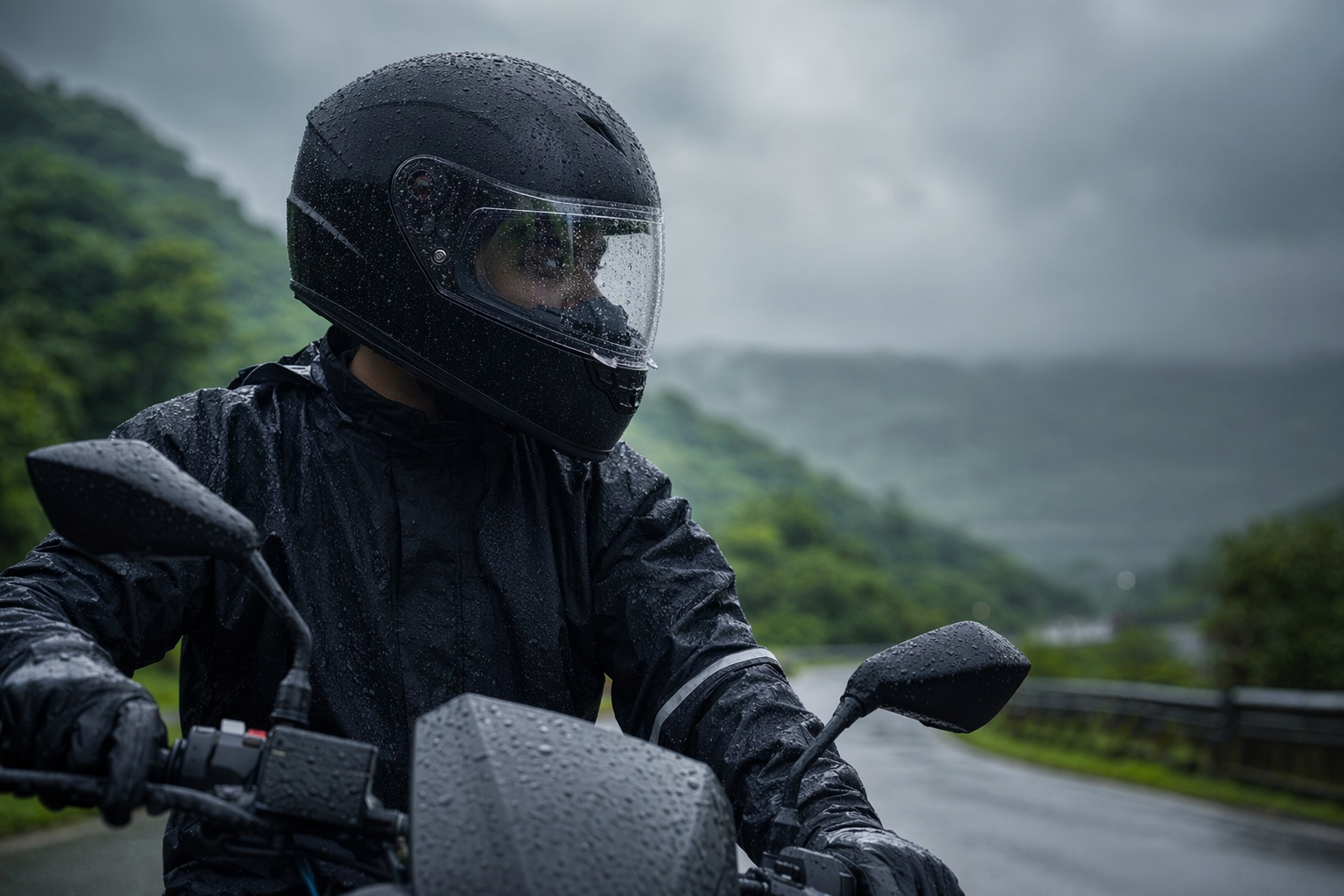
Every monsoon I relearn the same lesson like a fool: your helmet is only as good as the visor you’re looking through. Not the graphics. Not the spoiler thing at the back. Not whether your helmet looks like it came out of MotoGP. The visor. Because when you’re riding through Pune traffic, or Bengaluru ORR spray, or that lovely Mumbai rain that comes sideways for no reason, a fogged-up or scratched visor can turn a simple 20-minute ride into a full horror movie.
And Indian rain is not “nice drizzle” rain. It is muddy water from buses, diesel mist, headlight glare, potholes hiding like traps, and some uncle on a scooter suddenly cutting across because apparently indicators are decorative. So yeah, I’ve become a bit obsessed with visors. Maybe too much. But honestly, if you ride in India between June and September, this is not optional stuff.
A helmet protects your head in a crash, but a good visor helps you avoid the crash in the first place. That line sounds dramatic, but during monsoon it’s kinda true.
First thing: please don’t ride with a cheap, scratched visor
#I know, I know. Replacing a visor feels annoying. You already paid for the helmet, then gloves, then raincoat, then petrol is doing petrol things. But a scratched visor in the rain is horrible. Streetlights explode into starbursts, oncoming LED headlights become laser beams, and if your visor has those tiny circular wipe marks from cleaning with a dirty cloth, night riding becomes proper dangerous.
As of 2026, the safety conversation in India has thankfully become a little more serious. ISI/BIS-certified helmets are the minimum you should be buying for road use, and premium riders are also looking at ECE 22.06 helmets now, especially in metro cities and touring groups. But even with a good helmet shell, people still ignore visor condition. I’ve seen ₹18,000 helmets with visors that look like someone cleaned them with sandpaper. Why, bro?
Clear visor vs smoked visor in monsoon
#If you remember only one practical thing from this post, make it this: use a clear visor for monsoon. Smoked, mercury, rainbow, dark tint, all that looks cool in Instagram reels, but once the sky goes grey and traffic lights start reflecting on wet roads, visibility drops fast. At night, dark visors are basically self-sabotage.
Some riders keep a smoked visor for day rides and swap to clear in evening. That’s fine if your helmet has a quick-release system and you actually carry the spare visor safely. Most of us don’t. We say we will and then the spare visor lives under the bed for six months. For rainy season, I just run a clear visor full-time. Boring, yes. Sensible, also yes.
| Visor type | Good for monsoon? | My honest take |
|---|---|---|
| Clear visor | Yes | Best all-round option for rain, night rides, traffic, everything |
| Smoked visor | Not really | Okay in bright sun, bad in evening rain |
| Mirror/iridium visor | Mostly no | Looks great, scratches easily, terrible with glare when wet |
| Photochromic visor | Good but pricey | Nice if original quality, but don’t buy random cheap ones |
| Internal sun visor helmet | Useful | Keep outer visor clear, use internal tint only when needed |
Fogging is the real villain, not rain
#Rain outside the visor is manageable. Fog inside the visor is what makes you panic. You’re breathing warm air, outside air is cooler, humidity is high, and suddenly your visor goes milky. Then you crack it open, water comes in, your glasses fog up too if you wear specs, and now you’re riding by faith. Been there. Hated it.
This is why Pinlock-style anti-fog inserts have become so popular with Indian riders lately. In 2026, even mid-range helmets are coming with Pinlock-ready visors, or at least brands are selling compatible anti-fog inserts separately. It’s basically a second lens that creates an air gap inside the visor, reducing fogging a lot. Not perfect forever, but far better than rubbing shampoo or toothpaste like we used to hear from old-school riders.
- If your helmet visor has two small pins on either side, it may be Pinlock-ready or insert-ready.
- Buy the insert that matches your exact visor model. “Universal” ones can work, but fitment is hit or miss.
- Don’t keep removing and reinstalling it every week. The silicone seal can get weak.
- Clean it gently. Very gently. Anti-fog inserts scratch if you look at them angrily.
Hydrophobic coating: nice to have, not magic
#You’ll see a lot of rain-repellent sprays online now. Hydrophobic visor coating, ceramic rain repellent, water-beading solution, all with big claims. Some are decent. Some are basically overpriced perfume for plastic. The good ones make water bead and roll off faster, especially when you’re moving above 40-50 km/h. In city traffic though, where you’re crawling behind a bus spraying black water on your face, it’s not going to perform miracles.
Still, I use one before the monsoon starts. Apply on a clean visor, buff properly, let it cure if the instructions say so. Don’t spray random car windshield chemicals without checking if they’re safe for polycarbonate visors. Helmet visors are not glass. Some solvents can damage the surface or coating, and then you’ve created a new problem while trying to solve an old one.
The cleaning mistake most of us make
#Never wipe a muddy wet visor with a dry cloth. I did this for years and then wondered why my visors looked cloudy after one season. Mud has fine grit. You wipe it dry, you scratch the visor. Simple.
Best method, honestly, is boring: rinse first. If you’re at home, run water over the visor, let the dirt loosen, then use mild soap and your fingers or a clean microfiber cloth. If you’re on the road, carry a small spray bottle of plain water and one soft microfiber. Spray, wait a bit, dab first, then wipe lightly. Sounds fussy, but it adds months to visor life.
- Rinse or spray water first, don’t dry-wipe mud.
- Use mild soap, not harsh detergent or petrol-pump mystery liquid.
- Keep one microfiber only for the visor, not for chain lube, shoes, dashboard and everything else.
- Replace the visor when night glare becomes annoying. Don’t wait till you can barely see.
What about riding with visor slightly open?
#This is one of those things riders argue about forever. Keeping the visor one click open helps with fogging, yes. But during heavy rain, water comes in. Also dust and tiny stones can hit your eyes, especially behind trucks. So I use the smallest crack only at low speeds when fogging gets bad, and once visibility clears, I shut it again.
If you wear glasses, the problem is double. Your visor may be clear but your specs fog up. Anti-fog wipes for glasses help a bit. Also, helmets with better chin ventilation genuinely make a difference. Don’t block all vents with tape during rain unless water is pouring straight in. Ventilation is not just comfort, it’s visibility.
Buying a monsoon-friendly helmet visor in India in 2026
#The market has improved a lot. Earlier, finding replacement visors was a pain unless you owned a super common helmet. Now most decent brands sell clear visors, anti-fog inserts, and sometimes ready-to-ship spares on their own websites or big riding gear stores. Still, before buying a helmet, check spare visor availability. Seriously. A helmet without available spare visors is like buying a phone with no charger port. Okay, bad example because phones are also doing weird things now, but you get me.
- Check for ISI/BIS mark on helmets sold for Indian road use. Don’t buy fake sticker helmets from random roadside stalls.
- If budget allows, pick a visor with anti-scratch coating and Pinlock-ready pins.
- Quick-release visor systems are worth it if you clean often or swap visors.
- Avoid very cheap tinted visors. Optical distortion can give you eye strain and wrong distance judgement.
- For touring, carry one spare clear visor or at least an anti-fog insert packed properly.
My small monsoon visor kit
#I keep a tiny pouch in my riding bag during rainy months. Nothing fancy. One clean microfiber, a small water spray bottle, anti-fog wipe for glasses, and sometimes a visor-safe rain repellent. That’s it. If I’m riding outstation, I add a spare clear visor wrapped in a soft cloth. It sounds extra until you’re stuck at a dhaba near Lonavala with a scratched visor and four hours of night rain ahead.
When should you replace the visor?
#There’s no perfect timeline because it depends on use. Daily riders in dusty cities may need a visor every monsoon or every year. Weekend riders can stretch it longer. But replace it if you notice deep scratches, haziness, cracks near the hinge area, loose locking, water leaking from the top seal, or bad glare at night. Don’t negotiate with visibility. We negotiate enough with traffic already.
Also, if your visor doesn’t seal properly against the helmet gasket, rainwater will drip inside from the top edge. Sometimes this is a visor fitment issue, sometimes the helmet rubber seal has worn out, and sometimes the visor wasn’t locked fully. Check it at home before the first big rain. Pour a little water over the closed visor and see what happens. Better your bathroom floor gets wet than your face at 70 km/h.
A quick word on road safety, because it matters
#India’s road safety numbers are still scary. The latest official road accident reports available in recent years have consistently shown two-wheelers making up the biggest share of road deaths, roughly around the mid-40 percent range. That is not a small thing. And during monsoon, risk goes up because braking distances change, potholes disappear under water, and visibility gets worse for everyone, not just riders.
So yes, visor talk may sound like gear nerd stuff, but it is actually basic survival. Slow down in rain, keep distance, avoid riding in the painted lane markings when wet, and don’t tailgate buses or trucks. Their spray will blind you no matter how expensive your visor is. I learned that behind a BEST bus once and, well, never again.
Final thought before the clouds open up
#If you’re preparing for monsoon riding, don’t only buy a raincoat and waterproof shoes. Look at your helmet visor today. Is it clear? Does it fog? Is it scratched? Can you get a replacement easily? Does it seal properly? These small checks can make your rainy commute much calmer.
My simple recommendation: clear visor, anti-fog insert if compatible, gentle cleaning routine, and no dark visor at night. Not glamorous, but it works. And riding in the rain, when your gear is sorted and your visibility is good, can actually be beautiful in that messy Indian way. Wet roads, chai stop, green hills, that smell of first rain. Just don’t let a bad visor ruin it. For more rider-friendly stuff like this, I usually end up browsing AllBlogs.in with my coffee and pretending I’m not shopping for more gear.