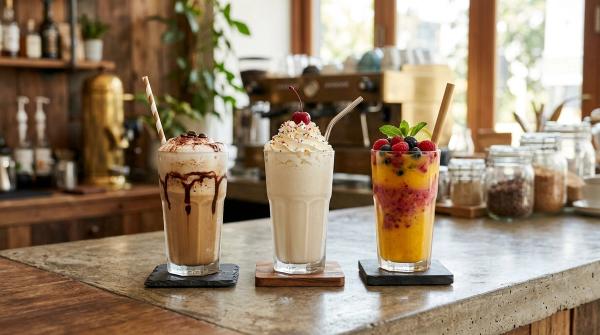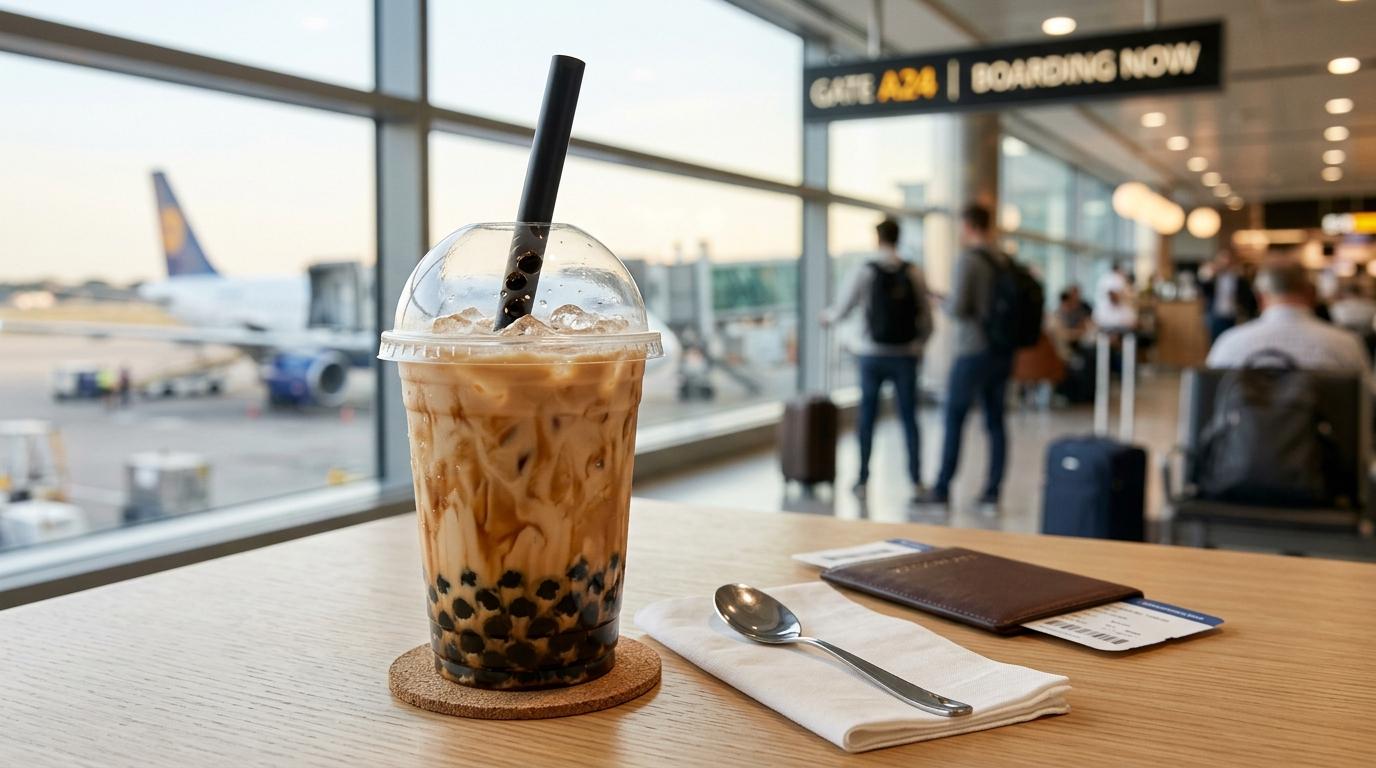
There is something very convincing about airport bubble tea.
You are tired. Your gate changed. Your phone is at 18 percent. You have already walked past three coffee stands and one depressing sandwich case. Then you see it: a cold milk tea, sealed with plastic, pearls at the bottom, maybe brown sugar streaks on the cup.
Suddenly, boba feels less like a drink and more like emotional support.
And honestly? Sometimes it is a great little airport treat. But bubble tea is also one of those things that deserves a quick pause before you buy it before a flight. Not because boba is “bad,” but because flying makes everything more complicated: liquids rules, dairy, ice, sticky toppings, sugar, boarding times, turbulence, and your stomach being trapped in seat 24B with limited bathroom access.
So the real question is not “Is bubble tea good?” Obviously, yes.
The better question is: Is airport bubble tea a good idea right before your flight?
Quick answer: should you get bubble tea at the airport?
#Buy it if you are already past security, the shop looks clean and busy, the toppings look fresh, and you have time to drink it without rushing.
Sip it, but keep it simple if you really want boba before flying. Order a smaller size, lower sugar, less ice, no dairy, or skip the pearls if they look old or questionable.
Skip it if the shop looks messy, the pearls are sitting uncovered, dairy toppings are not clearly chilled, or you are about to board a long flight and your stomach is already feeling dramatic.
And if you are wondering, can you bring bubble tea through airport security? In the U.S., a normal prepared bubble tea is generally treated like a liquid or gel-style item. It usually will not meet the TSA 3-1-1 carry-on liquids rule. Expect to finish it or toss it before screening unless a security officer says otherwise. Rules vary by country and airport, and the final decision always belongs to the screening officers.
Can you bring bubble tea through airport security?
#This is the first thing to think about.
If you buy bubble tea before security, do not assume you can take it through the checkpoint. In the U.S., TSA’s liquids, aerosols, and gels rule generally limits carry-on liquids to containers of 3.4 ounces, or 100 milliliters, or less, packed in a quart-sized bag.
A regular bubble tea is much larger than that. It is mostly liquid, and the toppings do not exactly help. Tapioca pearls, jellies, pudding, popping boba, cream caps, and other add-ins can fall into that awkward liquid/gel/semi-liquid food category.
So the practical advice is simple:
- Do not buy bubble tea before security unless you plan to finish it before the checkpoint.
- Do not pack a full prepared bubble tea in your carry-on.
- If you want boba before your flight, buy it after security.
This is not just a TSA issue either. Many airports around the world have liquid restrictions, though the details vary. Some airports use different screening technology, and some countries have different rules, but screeners still make the final call.
Once you buy bubble tea after security, you can usually carry it toward your gate. Just remember that a sealed plastic cup is not spill-proof magic. It can leak, pop, or get crushed when you are also trying to manage a backpack, passport, boarding pass, laptop, jacket, and rolling suitcase.
Basically: boba is cute until it is dripping down your tote bag.
Why bubble tea before flying needs a little thought
#Bubble tea is basically a dessert drink. That is part of the appeal.
But before a flight, dessert drinks can be tricky. They can be cold, sweet, creamy, and filling all at once. On a normal afternoon, that might be perfect. On a travel day, when you are sleep-deprived, dehydrated, stressed, or slightly motion-sick, it may hit differently.
Before you order, think about:
- Dairy
- Ice
- Tapioca pearls
- Sugar
- How clean the shop looks
- How long your flight is
- Whether your stomach usually behaves on travel days
You do not need to turn this into a full airport investigation. Just give the situation a quick reality check.
Food safety: why airport boba can be a little complicated
#Most bubble tea is made with brewed tea, milk or non-dairy creamer, syrup, ice, and toppings. The toppings are where things get more sensitive.
Tapioca pearls are cooked and usually held in a sweet syrup so they stay soft and chewy. When they are made properly, handled cleanly, and used within a reasonable amount of time, they can be totally fine.
The concern is what happens when they sit too long, are kept at the wrong temperature, or are handled carelessly.
The same goes for other toppings and ingredients: puddings, custards, jellies, cut fruit, dairy, cream caps, and ice. Food safety often comes down to three very unglamorous things: time, temperature, and handling.
That does not mean airport bubble tea is automatically unsafe. Plenty of airport vendors are clean, busy, and well-run. It just means you should take a quick look before ordering, especially when you are about to get on a plane and lose easy access to fresh air, space, and bathrooms.
The main comfort checks: dairy, ice, pearls, and sugar
#1. Dairy check
#Milk tea is delicious, but dairy right before boarding can be a gamble.
If milk or cream is not kept cold, that is a food safety concern. Even when it is handled correctly, dairy can still feel heavy if you are lactose-sensitive, bloated, nervous, or already a little queasy.
Before ordering a milk tea, look for:
- Milk or creamers stored in chilled units
- Clean containers and pumps
- No crusty buildup around lids or spouts
- Staff handling cups, lids, and toppings cleanly
- No open dairy sitting around at room temperature
If you still want bubble tea but do not want to risk a heavy stomach, go for a tea-based drink without milk. A smaller fruit tea or plain iced tea may be much easier to deal with mid-flight.
2. Ice check
#Ice looks harmless, but it is still handled food. The bin, scoop, counter, and staff habits all matter.
Consider less ice or no ice if:
- The ice bin is uncovered
- The scoop is sitting on a dirty surface
- Staff are touching screens, cash, lids, cups, and ice tools without cleaning their hands
- The drink station looks sticky, wet, or chaotic
- Very cold drinks tend to bother your stomach
Ice from a clean, high-turnover shop is usually not a big deal. But a giant icy milk tea right before a long flight may not be the best idea if cold drinks give you cramps or make you feel unsettled.
3. Tapioca pearl check
#The pearls are the whole point of boba. They are also the part where you are trusting the shop the most.
Good signs include:
- The shop is busy, so toppings are moving quickly
- Pearl containers are covered or protected
- Staff use clean scoops
- Pearls look glossy and separate
- The topping station looks organized
Warning signs include:
- Pearls are sitting uncovered
- The container looks old, sticky, or messy
- Pearls are clumped into a thick mass
- The edges look dry or crusty
- The shop is strangely empty during a busy airport period
- Staff cannot answer basic questions about when toppings were made
If you are about to board a long flight, skipping the pearls is a very reasonable compromise. You still get the tea and the flavor without the heaviest, chewiest part of the drink.
4. Sugar check
#Bubble tea can be wildly sweet. That is not automatically a problem, but before flying, lots of sugar can leave some people feeling thirsty, heavy, jittery, or tired later.
If the shop lets you choose sweetness, consider:
- 25 percent sugar
- 50 percent sugar
- No extra syrup
- Unsweetened tea with a light topping
- A smaller cup instead of the largest size
This is especially helpful if you are flying early, connecting through multiple airports, or hoping to sleep on the plane.
Quick hygiene scan before you order
#Before you buy, take ten seconds and look around. You can usually tell a lot without being weird about it.
Good signs
#- The shop is busy
- Ingredients are being used and refreshed
- Counters look wiped down
- Cups, lids, and straws are stored cleanly
- Topping containers are covered or protected
- Dairy and fruit items are visibly chilled
- Staff use scoops or utensils for toppings
- Staff seem to wash hands or change gloves sensibly
- The pickup area is not sticky or cluttered
Not-so-good signs
#- The shop is empty while the terminal is busy
- Pearls look dry, clumped, or crusty
- Toppings are sitting uncovered near heat, sunlight, or crowds
- The ice bin is open or the scoop looks dirty
- Milk, custard, pudding, or cream toppings are not clearly refrigerated
- Staff seem careless with money, screens, cups, and toppings
- The prep area smells sour or looks visibly dirty
Airport food is not automatically riskier than food anywhere else. But airports do add pressure. Workers are rushed. Travelers are rushed. Lines move fast. And if something does not sit well, you may be stuck in the air with very few options.
That is why the quick scan matters.
Buy, sip, or skip: the simple airport boba rule
#Buy airport bubble tea before a flight when:
#- You are already past security
- The vendor looks clean and busy
- Toppings look fresh and protected
- Dairy items are properly chilled
- The ice station looks clean
- You have time to drink it slowly
- Your flight is short
- Your stomach usually handles milk tea, sugar, and tapioca well
Best move: order a smaller drink from a high-turnover shop, choose moderate sweetness, and avoid any toppings that look questionable.
Sip it, but modify your order, when:
#You want the treat, but you also do not want to risk feeling gross on the plane.
Try:
- A smaller size
- Less sugar
- Less ice
- No tapioca pearls if they do not look fresh
- Plain brewed tea or fruit tea instead of heavy milk tea
- No pudding, custard, cream cap, or extra toppings before a long flight
- Drinking it slowly instead of chugging it at the gate
This is the middle path. You still get your airport treat, just in a version that is less likely to become your in-flight regret.
Skip bubble tea before flying when:
#- You bought it before security and have not cleared screening yet
- The shop looks dirty or slow
- Pearls are uncovered, clumped, dry, or sitting in a messy container
- Dairy or custard toppings are not clearly chilled
- The ice area looks poorly handled
- You are about to board a long-haul flight
- You are prone to motion sickness, reflux, bloating, lactose issues, or urgent stomach problems
- You already ate a heavy meal
- You want to sleep soon after takeoff
Skipping boba is not a personal failure. Sometimes the best travel snack is the one that does not follow you onto the plane as a problem.
Better airport dessert drinks if you skip boba
#If you decide bubble tea is not the move before your flight, you still have options.
Consider:
- A sealed bottled tea
- A sealed pasteurized smoothie from a refrigerated case
- Freshly brewed hot tea
- A simple iced tea from a clean coffee shop
- A bottled flavored milk or non-dairy drink from a chilled case
- Water plus a small sweet snack
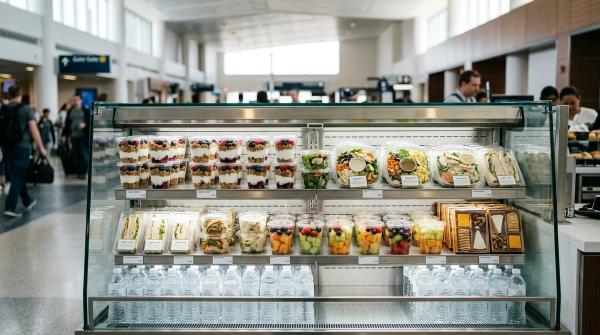
The most practical airport choice is often something sealed, pasteurized, and easy to carry. It may not be as fun as a giant brown sugar milk tea, but it is also less likely to spill, sour, or upset your stomach at cruising altitude.
Travel-friendly bubble tea orders
#If the shop looks good and you still want bubble tea before boarding, keep the order simple.
Better pre-flight choices include:
- Hot black tea with lower sugar
- Hot green tea with lower sugar
- Iced tea with less ice and no toppings
- Fruit tea without dairy, if the fruit ingredients look fresh and properly handled
- Small milk tea with no pearls and lower sugar
- Tea without pudding, custard, cream cap, or extra syrup
More questionable choices before a flight include:
- Large milk tea with full sugar and extra pearls
- Drinks with multiple toppings
- Creamy drinks with pudding or custard
- Anything from a shop where toppings look old or uncovered
- Any drink you have to chug because boarding has started
The goal is not to make bubble tea boring. It is to make it flight-friendly.
Timing matters more than people think
#When you drink boba can matter almost as much as what you order.
If you have a long layover, a small bubble tea early in the layover gives you time to enjoy it and see how your stomach feels before boarding. If your zone is already lining up and the gate agent is making announcements, that is probably not the moment for a giant milky drink with chewy toppings.
A good rule: if you cannot sit and sip it calmly, skip it or choose something sealed for later.
Also think about bathroom access. In the terminal, bathrooms are easy. On the plane, they may not be available during boarding, takeoff, landing, turbulence, drink service, or meal cleanup. If a food or drink has ever bothered your stomach before, do not test it right before you are strapped into a seat.
Final verdict: is airport bubble tea before a flight worth it?
#Airport bubble tea before a flight can absolutely be worth it, but only when the situation makes sense.
Buy it after security, from a clean and busy shop, when you have time to drink it slowly and your flight is not too long. Modify the order if you want the flavor without the heavy stomach load. Skip it if the toppings look questionable, the dairy is not clearly chilled, the ice area looks messy, or your stomach is already warning you not to get creative.
For frequent flyers and layover travelers, the best pre-flight boba is not always the biggest, prettiest, most loaded cup. It is the one that does not cause a security problem, a spill problem, or a stomach problem once you are stuck in your seat.