The bottle that saved my stomach in Spiti, and the tablet that saved my ego
#If you travel enough in India, at some point water becomes a whole personality in your backpack. Not just “paani milega kya?” but “is this paani going to ruin my next 3 days?” I learnt this the slightly ugly way on a Himachal trip, somewhere between a cheap dhaba lunch, a homestay tap, and my overconfidence that mountain water is automatically pure because it looks like a shampoo ad. It is not. Trust me.
So this whole travel water filter vs purification tablets confusion is not some gear-nerd debate for me. It’s practical. Like, very practical. I’ve carried both on treks, bus journeys, beach trips, and those random family temple trips where everyone is sharing one Bisleri bottle and pretending we’re all immune. As Indian travellers, we’re already used to jugaad. We drink matka water, railway station water sometimes, hotel RO, chai from anywhere, nimbu soda from a cart if the mood is right. But when you’re away from home, especially in mountains, forests, small towns, and long road trips, you need to know what to actually pack.
Short answer? I don’t think it’s filter OR tablets. For most serious travel, it’s filter plus a small backup strip of tablets. But there are situations where one makes more sense than the other, and if you pick wrong, you either carry useless weight or end up buying 10 plastic bottles a day. Neither is fun.
First, what are we even trying to remove from water?
#This part sounds boring, but it decides everything. Bad water can have dirt, sand, organic matter, bacteria, protozoa, viruses, weird taste, chemical smell, and sometimes just that “old pipe” flavour you get in budget hotels. A normal backpacking water filter is usually good at removing bacteria and protozoa, because those are physically bigger. Many popular travel filters use hollow-fibre membranes around 0.1 or 0.2 micron, which is great for things like Giardia and many bacteria. But viruses are much smaller, and many basic filters do not remove them unless the product is specifically called a purifier or has a virus-removal claim.
Purification tablets work differently. They don’t strain the water. They disinfect it using chemicals like chlorine, iodine, or chlorine dioxide. So they can deal with bacteria and viruses better than basic filters, depending on the tablet and correct contact time. But tablets don’t remove mud, sediment, microplastics, or that disgusting floaty leaf situation. If the water is visibly dirty, you may need to let it settle, strain it through cloth, filter it, then treat it. Sounds extra, but when you’re stuck in a remote place, you suddenly become very scientific.
Clear water is not always safe water. And dirty-looking water is not always impossible to make safe. The trick is knowing what your filter or tablet can actually do, not what the packaging makes you feel.
My basic rule now: filter for daily use, tablets for backup and risky water
#On normal trips, like Jaipur, Goa, Kochi, Pondy, Mumbai, or Delhi, I’m usually not filtering every glass of water like some dramatic survivalist. I check hotel water, ask if they have RO, refill at known places, and buy sealed bottles when needed. If you’re confused about hotel refills, this guide on Can You Drink Hotel Tap Water? What Travelers Should Check Before Refilling is honestly the kind of basic check most of us skip.
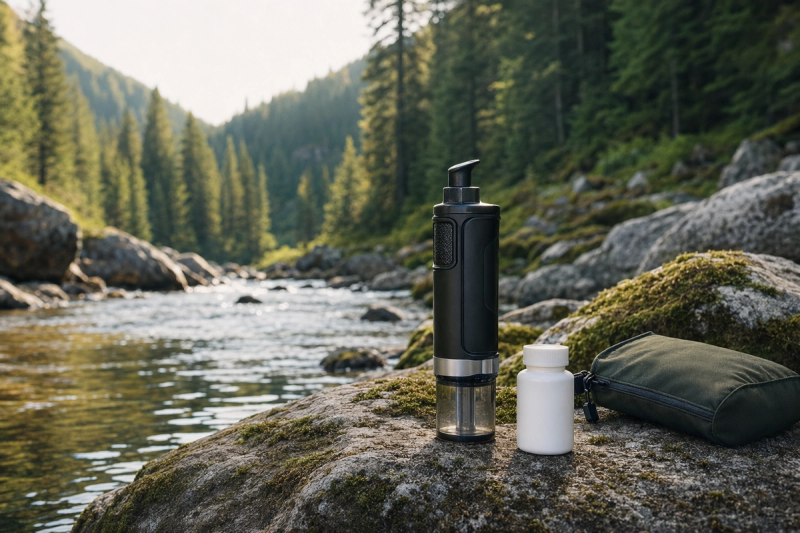
But for trekking, camping, road trips through remote areas, and budget backpacking where you don’t know the water source, a filter becomes a daily-use item. You can fill from a stream, handpump, homestay tap, or public source, filter quickly, and keep moving. Tablets are brilliant as backup because they’re tiny, cheap, and don’t break. I always keep a few in my toiletry pouch now, next to ORS sachets, Digene, and that one safety pin that has travelled more than some people.
The one time tablets really helped me was during a rainy-season road trip in Uttarakhand. Not a trek exactly, more like “let’s drive and see what happens”, which is how half our bad plans start. There had been landslide trouble on the road, small streams were muddy, and one guesthouse had water that looked clear but smelled a bit like tank water. My filter was packed deep inside the rucksack because of course I had packed badly. Tablet went into the bottle, we waited, and yes the taste was not spa-water, but my stomach stayed normal. That day I stopped making fun of tablets.
Travel water filter vs purification tablets: the honest comparison
#| What matters | Travel water filter | Purification tablets |
|---|---|---|
| Best for | Regular drinking water on treks, camping, remote travel, refilling from streams or taps | Emergency backup, virus risk, very lightweight packing, treating stored water |
| Works fast? | Usually yes, you can drink as you filter | No, needs waiting time, often 30 minutes or more depending on tablet and water |
| Removes dirt and particles | Yes, most filters remove sediment and cloudiness to some extent | No, you may need to pre-filter dirty water with cloth or let it settle |
| Viruses | Basic backpacking filters usually don’t remove viruses unless specified | Many chemical treatments are better for viruses if used correctly |
| Taste | Usually better, especially with carbon element | Can taste chemical, iodine is especially noticeable |
| Weight | More weight and space than tablets, but still manageable | Super light, tiny, easy backup |
| Cost over time | Higher upfront cost, cheaper per litre if used a lot | Cheap upfront, cost adds up if used daily |
| Failure risk | Can clog, freeze, crack, or need cleaning | Can expire, lose effectiveness, or be used wrongly |
| Best Indian travel use | Himalayan treks, North East, camping, long road trips, village stays | Monsoon backup, emergencies, questionable hotel tank water, disaster delays |
Price-wise, in India you’ll find basic squeeze or straw-style filters roughly from ₹1,500 to ₹5,000, and better pump or bottle filters can go higher, sometimes ₹6,000 to ₹12,000 depending on brand and import pricing. Tablets are much cheaper to start with, often ₹100 to ₹500 for a pack or strip depending on type and quantity. But please don’t buy random no-name tablets just because Amazon showed “deal of the day”. Check expiry, active ingredient, dosage per litre, and instructions. Also, keep them dry. I ruined one strip because I kept it in the outside pocket of my bag during rain. Full stupidity.
When I pack a filter, and when I don’t bother
#For city breaks, weddings, work trips, and family holidays where accommodation is decent and RO water is available, I usually don’t carry a proper filter. I carry a reusable bottle and ask for filtered water. Most hotels, hostels, and homestays in tourist circuits now understand refill culture because travellers are avoiding plastic more. Hostels in places like Rishikesh, Manali, Bir, Pushkar, Hampi, and Goa often have water refill stations, though you should still check cleanliness. Budget dorms may be ₹500 to ₹1,200 per bed on average in popular backpacker places, private hostel rooms maybe ₹1,500 to ₹3,500 depending on season. Homestays in mountain areas can be ₹800 to ₹2,500 per person with meals, but remote places vary like mad.
I pack a filter when I know water will come from natural sources or uncertain taps. Treks like Hampta Pass, Kashmir Great Lakes, Sandakphu, parts of Spiti road trips, Zanskar routes, Meghalaya village hikes, Western Ghats monsoon trails, even some forest stays in Karnataka and Kerala, all these are places where I prefer having control. In the mountains, people will say “yeh glacier ka paani hai, bilkul safe,” and maybe it is upstream. But downstream there are camps, mules, villages, dead leaves, and everything else nature throws in. Don’t argue with locals, just filter quietly.
Best months and seasons matter more than people think
#Water safety changes with season. Pre-monsoon and post-monsoon months are often better for trekking in many Himalayan regions, depending on route. During monsoon, water sources get muddy, roads get cut, and contamination chances can go up because runoff mixes with everything. In Ladakh and Spiti, summer travel has water scarcity in some stretches, so you may be filling wherever you can. In the Western Ghats, monsoon is gorgeous but leeches, slippery trails, and muddy streams are part of the package. Basically, if the trip includes rain, remote roads, or camping, don’t rely only on bottled water being available.
Also check local travel conditions before heading into hills. Landslides, cloudbursts, road closures, and sudden weather changes are not Instagram problems, they’re actual travel safety issues. I’ve seen people stuck for hours near mountain roads with only chips and one bottle between four people. Carry at least one litre ready to drink, plus a way to treat more. Sounds uncle-ish advice, but useful.
What I like about travel filters, after using them enough
#The best thing about a filter is freedom. You stop panicking about where the next bottle will come from. On one trek near the Dhauladhar side, our guide pointed to a stream and everyone started filling. I filtered mine and filled two bottles. Took maybe 5 minutes extra. Later one guy in the group had stomach issues, though who knows if it was water or that suspicious egg curry. Still, I was happy I filtered. Peace of mind has value, ya.
Filters also reduce plastic, and that matters a lot in Indian travel spots now. Go to any popular hill station after a long weekend and you’ll see plastic bottles stuffed behind rocks, near waterfalls, under bus seats. It’s depressing. Carrying a filter bottle or squeeze filter means fewer bottles bought, fewer awkward “bhaiya dustbin kahan hai?” moments, and more independence.
- A squeeze filter is good if you already carry bottles or a hydration bladder. It’s light and practical for treks.
- A bottle filter is easier for city plus outdoor mixed trips, especially if you don’t want separate parts.
- Pump filters are useful for groups, but personally I find them bulky unless it’s a proper expedition or family camping.
- Gravity filters are nice for camps where you fill once and let it work while everyone makes chai, but not great for quick bus-stop style travel.
Downside? Filters can clog if the water is silty. In Ladakh-type dusty streams or after heavy rain, you may need to backflush or clean it. Some filters are damaged if they freeze when wet, which people forget on winter trips. If water freezes inside the membrane, it can crack and you won’t always know. So in cold places, sleep with the filter inside your sleeping bag or jacket pocket. Sounds weird, works.
What I like, and don’t like, about purification tablets
#Tablets are the laziest brilliant thing. Tiny, light, no moving parts. For Indian train travel, bus trips, backpacking, pilgrimage routes, or emergency delays, they’re excellent. You can keep them in your wallet pouch or first-aid kit and forget about them until needed. If you are travelling to places with flood-affected areas, remote villages, or monsoon uncertainty, tablets make sense. They’re also useful when you suspect viral contamination, because many basic filters aren’t built for viruses.
But tablets test your patience. You can’t just drop and drink immediately. You need to wait as per instructions, and colder or cloudy water may need longer. Some tablets leave a taste. Iodine especially can taste like school chemistry lab. Chlorine dioxide is usually better tasting but may require longer contact time for certain organisms. Also, iodine is not suitable for everyone, especially people with thyroid issues, pregnancy, or iodine sensitivity, so don’t treat it like Hajmola. Read the label, ask a doctor if you have health conditions, and don’t use expired strips.
And one very Indian problem: if the water is full of visible dirt, tablets alone feel emotionally wrong. Even if chemically treated, who wants to drink floating bits? Use a cloth, coffee filter, or let water settle first. On treks, I’ve used a clean handkerchief as a pre-filter. Not fancy, but it helped. Then tablet. Then wait. Then drink while making a face.
My actual packing setup now, after many trial-and-error scenes
#For a normal 3 to 5 day trip in India where I’m moving between towns, I carry a 1-litre steel or BPA-free bottle, a few purification tablets, ORS, and I depend on hotel/hostel filtered water. If it’s a trekking or camping trip, I carry a squeeze filter plus tablets. If I’m with family or a group, I’ll consider a larger gravity filter or at least two smaller filters because one person filtering for six people is a full-time job, and nobody appreciates you until the bottle is empty again.
- For city travel: reusable bottle, hotel or hostel RO refill, tablets as backup only.
- For trekking: squeeze filter or bottle filter, tablets backup, ORS, and one extra clean bottle.
- For monsoon trips: filter plus tablets, because muddy runoff and uncertain sources are common.
- For beach trips: mostly refill stations and bottled water if needed, but tablets in first-aid kit because seafood plus dehydration is a bad combo.
I also don’t mix water safety and food safety separately anymore. They go together. If you’re drinking clean water but eating chutney that’s been sitting outside since morning, you’re still playing with fate. Late-night bus stand meals, railway food courts, airport food at 1 am, all can be fine if you choose smartly. I liked this practical piece on Late-Night Food Court Meals While Traveling: What to Order, Split, and Skip because stomach safety is not only about water, it’s the full plate.
The taste problem nobody warns you about
#People compare filters and tablets like it’s only about microorganisms. But taste matters because if water tastes bad, you drink less. And then headache, fatigue, crankiness, all that starts. On high-altitude trips, dehydration sneaks up very fast. A filter generally improves taste, especially if there’s an activated carbon element. It won’t make sulphur-smelling water into Evian, but it helps. Tablets can make water taste chemical, and some people hate that so much they avoid drinking enough.
My jugaad is simple: after treating water, I sometimes add ORS, electrolyte tab, or even a little nimbu-salt mix if I’m not worried about sugar and hygiene. Not always, but on treks it helps. Don’t add flavour before treatment unless instructions allow it, because organic matter can affect disinfection. First treat, then flavour. Also don’t put tablets directly into metal bottles if the instructions say avoid certain containers. Read it once properly, not while standing in rain with network gone.
What about boiling water?
#Boiling is the old Indian classic. Our parents trust boiling more than any imported filter, and honestly, they’re not wrong in many situations. Bringing water to a rolling boil is a reliable way to kill many pathogens. In homestays, I often ask for boiled water in the evening and fill my flask. In cold places, it’s lovely because warm water feels like luxury. But boiling needs fuel, time, a clean vessel, and it doesn’t remove sediment or chemical contamination. It also doesn’t help much when you’re walking all day and need water from a stream.
So I see boiling as another tool, not the whole solution. In budget guesthouses, if they have a kettle, I boil tap water and let it cool. But if the tap water smells strongly of chemicals or comes from a visibly dirty tank, boiling won’t magically remove that smell. Same with heavy metals or industrial pollution. For city water with possible chemical contamination, don’t assume backpacking filters or tablets solve everything. Use proper RO or sealed water if needed.
Buying tips for Indian travellers, without getting too geeky
#Before buying a travel water filter, check what it removes, not just brand popularity. Look for pore size, filter life in litres, cleaning method, flow rate, replacement cartridge availability in India, and whether it removes viruses. Many popular filters are great for outdoor bacteria/protozoa risk but not viral contamination. If you travel mostly in India and South Asia, where viruses can be a concern in some water sources, tablets as backup are smart.
For tablets, check active ingredient, dosage, waiting time, expiry date, and whether one tablet treats 500 ml, 1 litre, or more. Keep them in original packaging if possible, because loose tablets in a dabba without instructions is how confusion starts. Also keep a marker line on your bottle if you don’t know its capacity. I once treated a 1.5 litre bottle with dosage for 1 litre and then stood there doing mental maths like I was back in school. Avoid.
- Don’t buy only because it says “survival” or “military grade”. Marketing loves drama.
- If you travel with kids or elderly parents, taste and ease of use matter more than ultralight features.
- Carry at least one backup method. Filter can break, tablets can expire, boiling may not be available.
- Clean your bottle. Seriously. People filter water and then pour it into a bottle that smells like old mango juice.
Local travel situations where my choice changes
#On Himalayan treks, I choose filter plus tablets. On Ladakh or Spiti road trips, same, because distances are long and refill points can be uncertain. In Meghalaya, because streams are everywhere but weather changes fast, I keep a filter ready. In Rajasthan desert-side travel, the issue is not always germs but availability and taste, so I rely more on trusted hotel water, sealed bottles when needed, and carrying enough capacity. In Goa or Kerala, I don’t filter restaurant water if it’s clearly RO, but I’m careful with ice in random shacks. Though sometimes the kokum soda wins and common sense loses, what to do.
Transport also affects water planning. Indian trains are better now in many ways, but I still board with filled bottles. Airports have refill stations, bus depots are mixed, and shared taxis in mountains won’t stop just because you want mineral water. Overnight buses dehydrate you like anything. Keep water reachable, not buried under your sweater, power bank, and five packets of banana chips.
So, what should you pack finally?
#If you want one clean answer: for casual urban travel, pack a reusable bottle and purification tablets as emergency backup. For trekking, camping, remote road trips, monsoon travel, or long budget backpacking, pack a good travel water filter and purification tablets. If travelling with a group, think bigger capacity. If travelling solo, keep it light and simple. Don’t buy the most expensive thing just because a YouTuber used it in Patagonia. Your trip may be Pune to Gokarna, not a survival documentary.
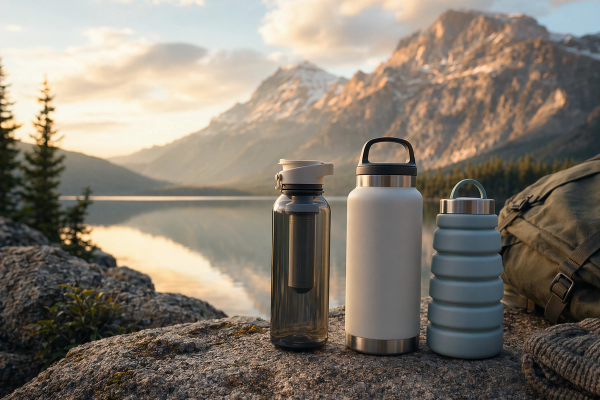
My personal kit now is boring but reliable: one 1-litre bottle, one collapsible bottle for treks, a squeeze filter, 6 to 10 purification tablets, ORS sachets, and a small cloth. For city trips, I remove the filter. For monsoon or mountains, it goes back in. That’s it. No drama. The best gear is the one you’ll actually use when tired, hungry, and slightly irritated because your bus is late.
Final thoughts from someone who has made enough paani mistakes
#Water safety while travelling is one of those topics we Indians sometimes take too casually because we’re used to “adjusting”. And yes, our stomachs may be stronger than some people, but not invincible. One bad bottle can ruin a trek, a wedding trip, a beach holiday, everything. A filter gives you daily confidence. Tablets give you backup and better disinfection in certain risky situations. Together, they’re honestly a small price for peace.
Don’t overthink it till you never buy anything, but don’t underthink it till you’re stuck in a remote homestay boiling water in a Maggi pan at midnight. Pack based on where you’re going, season, accommodation, and how fussy your stomach is. Mine is medium fussy, like it thinks it’s brave but it’s not. Anyway, hope this helped you decide what to carry. For more practical travel stuff, trip planning ideas, and real-world guides, I keep finding useful reads on AllBlogs.in, so ya, worth checking before your next escape.