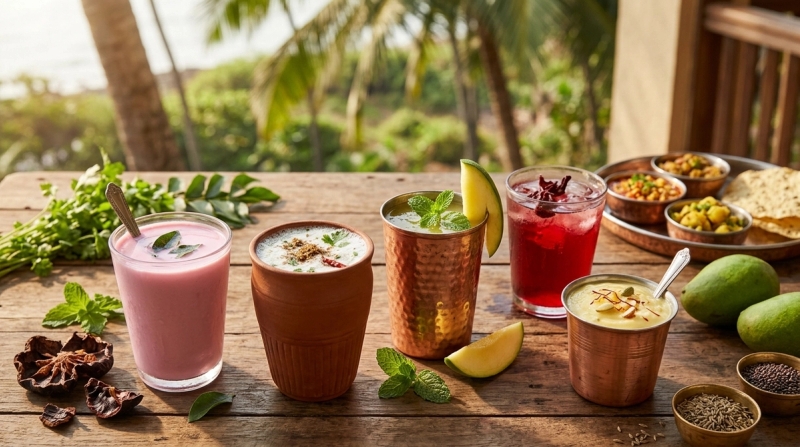
Spend a few days eating your way through Maharashtra and you’ll notice something lovely: drinks here are rarely just “something cold” on the side.
They have a time and place.
A glass of solkadhi makes perfect sense after a coastal thali. Taak feels right after a heavy lunch. Aam panha is what you want when the afternoon sun is doing too much. And piyush? That’s not really for thirst. That’s dessert pretending to be a drink.
This Maharashtra drinks guide is for travellers, not recipe hunters. If you’re on a food walk, ordering a thali, stopping at highway joints, or simply trying to understand Maharashtrian drinks beyond cutting chai, this will help you choose what to sip and when.
Drink-by-Drink Guide
#Maharashtra’s traditional drinks are shaped by the state’s weather, coastline, farms, and daily eating habits. You’ll see kokum, raw mango, coconut, curd, buttermilk, jaggery, spices, and palm sap used in different ways.
Here’s what to know before you order.
Solkadhi
#Solkadhi is one of the most recognisable drinks from coastal Maharashtra, especially the Konkan region. It is usually made with kokum and coconut milk, then flavoured with ingredients like green chilli, garlic, cumin, coriander, or fresh herbs. Every home and restaurant has its own version.
The colour is part of the charm. It can be pale pink, deep rose, or light purple depending on the kokum and coconut milk.
What it tastes like: Tangy, lightly creamy, gently spiced, and refreshing. Kokum gives it that sour, fruity sharpness, while coconut milk makes it mellow.
When to order it:Order solkadhi with coastal thalis, rice meals, vegetarian Konkan food, or seafood meals if you eat seafood. It’s often served toward the end of the meal, but many people sip it throughout.
Traveller tip:Good solkadhi should taste fresh, bright, and balanced. If it smells stale, too sour in a bad way, or the coconut milk looks badly split, skip it. Coconut milk does not love hot weather.
If you want to make it at home later, save a sol kadhi recipe. But while travelling, just focus on freshness and whether it suits the meal in front of you.
Taak
#Taak is Maharashtra’s spiced buttermilk. It is thinner and lighter than lassi, usually savoury, and often seasoned with roasted cumin, coriander, ginger, green chilli, curry leaves, salt, or rock salt.
It isn’t fancy. It’s an everyday drink. And that’s exactly why it works so well.
What it tastes like: Light, tangy, salty, cooling, and gently spiced if seasoned.
When to order it:Taak is ideal after a heavy lunch, with a thali, or whenever you want something cooling but not sweet. It works especially well with fried snacks, spicy gravies, and meals that feel a bit too filling.
Traveller tip:Fresh taak should be mildly tangy. It should not smell sharply sour, stale, or oddly fizzy. If it has been sitting around in the heat, don’t take a chance.
People often say taak helps after meals, and it can feel that way. Just remember it is still dairy, so it may not suit everyone.
Piyush
#Piyush is for the sweet-dairy lovers. It is usually made with shrikhand, yogurt, and flavours like cardamom, nutmeg, or saffron. Compared to taak or solkadhi, it is much thicker and richer.
In other words, this is firmly dessert-drink territory.
What it tastes like: Sweet, creamy, smooth, fragrant, and rich. It has the tang of yogurt, but the shrikhand makes it feel indulgent.
When to order it:Order piyush at traditional snack houses, Maharashtrian eateries, or dairy-style cafés. It can be lovely with snacks, but after a big meal it may feel like too much.
Traveller tip:Piyush should taste fresh and clean. Avoid it if you smell stale dairy, strong sourness, or anything fermented. Since it is sweet and milk-based, choose a place with good turnover and proper chilling.
Kairiche Panhe, or Aam Panha
#Kairiche panhe, also called aam panha, is Maharashtra’s classic raw mango drink. It is usually made with raw mango pulp, jaggery or sugar, and spices. The best versions balance sourness, sweetness, and a little roasted-spice warmth.
It is one of the most loved regional Indian summer drinks, and Maharashtra has a very strong connection with it.
What it tastes like: Sweet-sour, mango-forward, lightly spiced, and deeply refreshing.
When to order it:Choose aam panha in warm weather, especially during afternoon food walks, road trips, or after you’ve been out in the sun. It works better as a cooling break than as a drink with a full meal.
Traveller tip:Ask if it’s freshly made or from a stored concentrate. Stored panha is common and can still be good, but it should smell clean and taste bright. Avoid anything fermented, stale, or strange. Be careful with ice if you’re unsure about the water.
Kokum Sharbat
#Kokum sharbat is kokum in a simpler, sweeter form. Unlike solkadhi, it usually does not have coconut milk. It’s generally made with kokum, water, and sweetener.
It’s a good pick when you want kokum’s tang without the creaminess of coconut.
What it tastes like: Tart, fruity, sweet, and refreshing.
When to order it:Order kokum sharbat during the day when you want something cooling and non-dairy. It’s especially useful if you’re avoiding milk, curd, or buttermilk.
Traveller tip:Like aam panha, kokum sharbat is often served with ice. If hygiene looks doubtful, ask for it without ice or choose a place that seems to use filtered water and clean containers.
Neera
#Neera is fresh, unfermented palm sap. It is traditionally consumed early in the morning before it begins to ferment. You may find it in coastal or rural areas, or at specific stalls known for selling it fresh.
It is not the same as toddy. Neera is the fresh, non-alcoholic stage. If it sits too long in warm weather, it can start fermenting.
What it tastes like: Light, mildly sweet, and earthy.
When to order it:Try neera only early in the morning, from a reliable, busy stall where it is clearly being served fresh.
Traveller tip:Avoid neera that has been sitting around for hours, especially later in the day. This is one drink where timing really matters.
When to Choose Each Drink
#A useful Maharashtra drinks guide should help you order by situation, not just by name. Here’s how to match the drink to the moment.
After a Thali or Heavy Meal
#Choose taak or solkadhi.
Taak is lighter and dairy-based. Solkadhi is tangy, coconut-based, and especially good with coastal meals. Both usually feel better than a sugary drink after a rich or spicy meal.
If you’re eating a Konkan-style meal, solkadhi feels like the natural choice. If you’re having a simple vegetarian thali inland, taak may fit better.
During Hot Weather or Sightseeing
#Choose aam panha or kokum sharbat.
These are the drinks to look for when you’re walking through markets, pausing on a road trip, or recovering from a hot afternoon. They’re sweet, tart, and refreshing, though some versions can be quite sugary.
If you want mango flavour, choose aam panha. If you want something tangier and lighter, go for kokum sharbat.
With Coastal Food
#Choose solkadhi.
Solkadhi works beautifully with rice, coconut-based dishes, spicy food, and coastal thalis. It also connects you to the Konkan side of Maharashtra food culture, where kokum and coconut show up often.
If you’re exploring vegetarian coastal food, you may also enjoy coastal India vegetarian meals with solkadhi on the side.
As a Sweet Snack
#Choose piyush.
Piyush is not the drink you want when you’re hot, sweaty, and thirsty. It’s too rich for that. But as a chilled sweet break at a snack house, it makes complete sense.
Order it when you want something cold, filling, and dessert-like.
Early Morning on the Road
#Choose neera, but only if it’s fresh.
Neera is all about timing. If you find it early and the stall looks clean and busy, it can be a lovely regional sip. If it’s already late in the day, choose something else.
Hygiene and Freshness Checks
#Traditional drinks are one of the best parts of food travel, but a little caution helps. This is especially true with dairy, coconut milk, ice, and fresh sap.
Check the Stall or Eatery First
#Before you judge the drink, look at the place serving it.
Choose vendors or eateries where:
- Drinks are stored covered.
- Glasses are washed properly, or disposable cups are handled cleanly.
- There is steady customer turnover.
- Dairy drinks are kept chilled.
- The counter does not smell sour, stale, or unclean.
A busy place is not automatically safe, but good turnover usually means drinks are not sitting around for too long.
Be Careful With Ice
#For street-side aam panha, kokum sharbat, and other chilled drinks, ice is often the main concern.
If you’re unsure about the water source, ask for the drink without ice. A chilled drink from a refrigerated container is often a safer bet than one poured over unknown crushed ice.
This matters more if you have a sensitive stomach or a packed travel schedule where falling sick would ruin your plans.
Smell Dairy-Based Drinks
#For taak and piyush, freshness is usually easy to smell.
Avoid them if they smell stale, overly sour, or unpleasantly fermented. Taak should be lightly tangy. Piyush should smell like fresh sweetened dairy, not old curd.
If it has been sitting unrefrigerated in hot weather, skip it.
Look Closely at Solkadhi
#Solkadhi can naturally vary in colour and texture, but it should still look and smell fresh.
Avoid it if:
- The coconut milk looks badly curdled.
- It smells rancid or stale.
- The sourness feels harsh rather than kokum-like.
- It has been stored uncovered in the heat.
Fresh solkadhi is delicate. When it’s good, it tastes clean, tangy, and balanced.
Treat Neera as Highly Time-Sensitive
#Neera should be consumed fresh and early. If someone offers it late in the day, be cautious. Warm weather changes it quickly, and once fermentation starts, it is no longer the same drink.
If you’re unsure, choose kokum sharbat, aam panha, taak, or plain packaged water instead.
What to Be Careful About
#A few practical cautions can make your drink choices easier, especially if you’re travelling with kids, older adults, family members, or anyone with dietary restrictions.
Dairy Sensitivity
#Avoid taak and piyush if dairy doesn’t suit you. Taak is buttermilk-based, and piyush is rich in yogurt or shrikhand.
For non-dairy options, consider kokum sharbat or aam panha. Solkadhi is usually coconut milk-based, but ask if you have strict dietary needs because recipes vary.
Coconut Allergy
#Solkadhi usually contains coconut milk. If coconut doesn’t suit you, avoid it and order kokum sharbat instead. You still get kokum’s tang without the coconut base.
Sugar Levels
#Piyush, aam panha, and kokum sharbat can be quite sweet. Some places use jaggery, some use sugar, and some use ready syrups or concentrates.
If you’re watching your sugar intake, ask if they can make it less sweet. Otherwise, taak is usually the safer savoury choice.
Spice and Salt
#Taak and solkadhi may contain chilli, cumin, garlic, coriander, or extra salt. If you prefer mild drinks, ask before ordering.
This is especially useful in smaller eateries where the drink is made in one fixed house style.
Raw and Perishable Drinks
#Be more cautious with neera, fresh coconut milk drinks, and dairy drinks that are not refrigerated. They can change quickly in warm weather.
Simple travel rule: if the drink depends on freshness, buy it from a place that looks clean, busy, and careful.