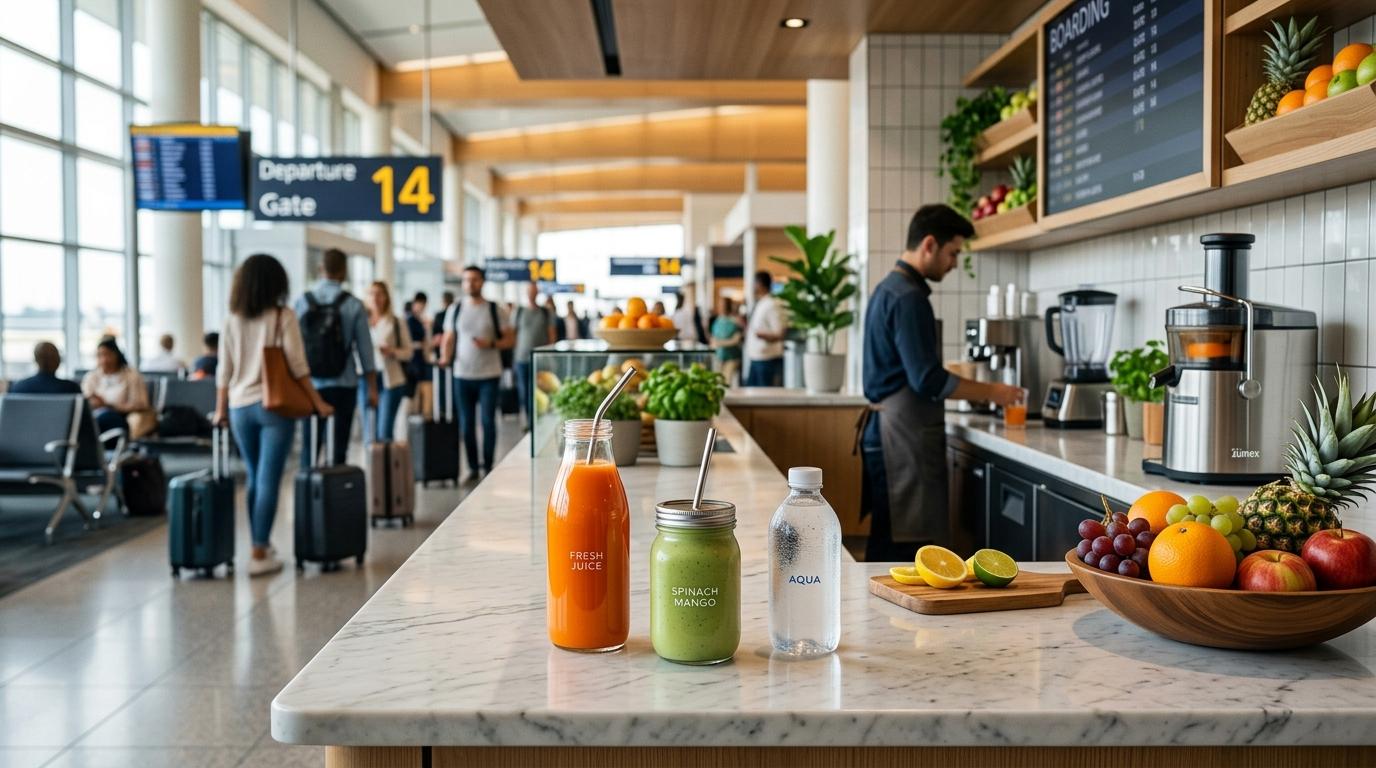
A cold juice or smoothie at the airport can be very tempting. You are tired, a little dehydrated, maybe hungry, and you still have time to kill before boarding. Compared with fries or a packaged snack, a fresh juice feels like the responsible choice.
Sometimes it is. But an airport fresh juice before a flight is not always the safest or most comfortable option.
That does not mean you need to avoid every juice bar in the terminal. It just means you should take a quick look before you order. Is the fruit covered and cold? Does the blender look clean? Is the dairy coming from a fridge? Is the ice being handled properly? And maybe most important: does your stomach usually handle this kind of drink well when you are stuck in a seat for hours?
Airports are busy. Staff are moving fast, counters get messy, and fresh drinks often involve cut fruit, ice, open containers, juicers, blender jars, milk, yogurt, powders, and quick cleaning between orders. Most airport food spots follow safety rules, but as a traveler, you only get a short moment to judge whether something feels right.
Here is a simple, practical guide to what to drink before flying, when airport smoothies are probably fine, and which airport drinks to avoid if you do not want stomach drama at 30,000 feet.
Quick answer
#If you want the safest pre-flight drink, choose sealed bottled water or a commercially sealed pasteurized drink. Freshly brewed hot tea or coffee can also be a good choice, as long as caffeine sits well with you.
An airport fresh juice before a flight can be fine if it is made to order, the produce looks fresh and properly stored, and the juicer area looks clean. Skip it if fruit is sitting pre-cut in open bins, the counter is sticky, the machine has old pulp stuck to it, or the drink depends on ice that looks questionable.
Airport smoothies before a flight need a little extra thought. They can include dairy, yogurt, protein powder, nut butter, cut fruit, ice, and sweetened bases. That may sound healthy and filling, but it also means more chances for bloating, heaviness, or food safety issues.
A good rule: for a short flight, you can be a little more flexible if the shop looks clean and your drink is simple. Before a long-haul flight, a delay, or a tight connection, go with the boring option more often. Water, sealed drinks, and freshly brewed hot drinks are usually easier on your stomach.
What to buy
#These are usually the safer, simpler airport drink choices when you want to stay hydrated without taking too many chances.
Sealed bottled water
#This is the safest default. Not exciting, but reliable.
Flying can dry you out. Airport air, cabin air, walking through terminals, stress, and salty food can all make you feel more dehydrated than usual. Water helps without adding sugar, dairy, carbonation, acid, or caffeine.
If you bring a reusable bottle, empty it before security and refill it after screening if the airport has refill stations. Drinks bought after security are usually easier to take onto the plane. Liquids packed from home may be restricted, depending on the airport and country.
Commercially sealed juices
#If you want juice, a sealed bottle from a refrigerator is often a better choice than raw juice from a kiosk you do not fully trust. Look for pasteurized juices with clear labels.
Bottled juice can still be high in sugar and acidity, so it is not automatically perfect. But from a food safety point of view, a sealed pasteurized drink avoids many of the concerns that come with open cut fruit, shared juicers, and ice.
Sealed smoothies
#A commercially sealed smoothie can be a better option than a made-to-order smoothie when you cannot really judge the shop. Check the label if you care about sugar, dairy, protein, or calories. Some bottled smoothies are closer to dessert than a light drink.
If your stomach is sensitive, choose a smaller bottle. And do not treat it like a full meal right before boarding unless you already know your body handles it well.
Freshly brewed hot tea
#Hot tea is a good airport drink when you want something warm, simple, and not too sugary. It can be especially comforting during early flights, cold mornings, or long delays.
Choose plain tea if dairy bothers you. If you add milk, take a quick look at how it is stored. Individual sealed portions or milk kept properly cold are better than open containers sitting out on the counter.
Freshly brewed coffee
#Coffee is one of the more predictable airport drinks, but timing matters.
For an early flight, coffee may be exactly what you need. Before a red-eye or long-haul flight where you want to sleep, it may work against you. If caffeine makes you anxious, sends you to the bathroom often, or worsens reflux, water or tea may be the better choice.
Also pay attention to the add-ons. Black coffee, or coffee with properly stored milk, is usually simpler than a giant iced coffee with syrup, whipped topping, and lots of ice.
Sealed coconut water or electrolyte drinks
#A sealed coconut water or electrolyte drink can be useful if plain water sounds too boring. Choose bottles or cans instead of open mixed drinks.
Just check the sugar content. Some electrolyte drinks are very sweet, which may not feel great once you are sitting still on the plane.
Canned or bottled sparkling water
#If carbonation does not bother you, sparkling water can be fine. But if you are prone to gas or bloating, skip it before a long flight. Cabin pressure and sitting for hours can make trapped gas feel more uncomfortable.
What to skip
#These are the airport drinks to avoid when the setup looks questionable, your stomach is sensitive, or you are about to board a long flight.
Fresh juice made from pre-cut fruit sitting in open bins
#Cut fruit is more vulnerable than whole fruit because the protective skin is gone. Once fruit is peeled, sliced, or cubed, it needs careful handling and proper cold storage.
If you see pineapple, melon, apple, berries, cucumber, or greens sitting in open containers, especially in a warm or busy area, think twice. The fruit may look colorful and healthy, but you do not know how long it has been there.
This is one of the biggest reasons to be careful with an airport fresh juice before a flight.
Smoothies with dairy that is not clearly refrigerated
#Milk, yogurt, kefir, cream, and similar ingredients need to stay cold. If the smoothie shop pulls dairy from a closed refrigerator, that is a better sign. If cartons or tubs are sitting on the counter during a rush, skip it.
Dairy can also feel heavy before flying. Even if it is handled safely, it may not be ideal if you tend to get bloated, nauseous, or uncomfortable while traveling.
Drinks with questionable ice
#Ice is easy to overlook because it looks clean. But ice still depends on clean machines, clean scoops, and clean storage.
If the kiosk looks messy, staff use cups or hands near the ice, or the ice bin is open and exposed, choose a sealed cold drink instead. This applies to smoothies, iced coffees, iced teas, fountain drinks, and fresh juices served over ice.
Fountain drinks from messy stations
#Fountain drinks are not automatically unsafe, but they rely on equipment that needs regular cleaning. If the nozzles look sticky, the drip tray is dirty, or the self-serve station looks neglected, skip it.
Also think about comfort. Carbonated drinks can cause burping and gas. Large sugary sodas can also make you feel thirsty again later.
Iced tea or lemonade from open dispensers
#Open or frequently handled drink dispensers can be hard to judge. If the area looks clean and well maintained, the risk may be lower. If it looks sticky, cloudy, or ignored, choose a sealed bottle.
Sweetened iced teas and lemonades can also be high in sugar and acid, which is not always ideal before a flight.
Oversized “healthy” smoothies
#A large smoothie can be a lot of food in liquid form. Fruit, yogurt, milk, nut butter, protein powder, honey, and ice can quickly turn into a heavy drink.
That might sound helpful if you skipped breakfast, but before flying it can backfire. Too much volume, sugar, dairy, or fiber can leave you bloated and uncomfortable.
Very acidic juices
#Orange, grapefruit, lemon, pineapple, and some green juices can be rough on the stomach. If you get heartburn or reflux, acidic drinks before boarding may be a bad idea, especially when you will be sitting for a long time.
Alcohol as “hydration”
#A cocktail, beer, or glass of wine may feel relaxing, but it is not hydration. If you drink alcohol at the airport, pair it with water and do not make it your main pre-flight drink.
Airport smoothie checklist
#Airport smoothies before a flight can be okay when the shop is clean, the ingredients are handled well, and your order is simple. Use this quick checklist before buying.
1. Look at the fruit
#Is the fruit whole and cut to order, or already chopped in open containers?
Pre-cut fruit is not always unsafe, but it should be chilled and covered. If it is sitting out in open bins, especially during a slow period, skip the smoothie.
Frozen fruit can be a decent option if it is stored properly and handled with clean scoops. It can also reduce the need for extra ice, which helps if you are unsure about the ice machine.
2. Check the dairy
#If the smoothie contains milk, yogurt, or another dairy base, watch where it comes from. Closed refrigeration is a good sign. Open tubs or cartons left on the counter are not.
If you are lactose-sensitive or prone to travel stomach issues, consider a dairy-free smoothie. Before a long flight, you may want to skip the smoothie altogether.
3. Ask what the smoothie base is
#Some shops use fresh ingredients. Others use pre-mixed purées, sweetened bases, syrups, powders, or concentrates. That is not always bad, but it changes what you are drinking.
If the base is very sweet, creamy, or unclear, it may sit heavily before flying. A simple smoothie with fruit and a sealed liquid base is easier to judge than one with a long list of mystery add-ins.
4. Watch the blender
#A blender should be rinsed and cleaned properly between orders. A quick splash of water may not be enough, especially if the last smoothie had dairy, nut butter, protein powder, or allergens.
If the blender jars look cloudy, sticky, or coated with old residue, choose something else.
5. Be careful with protein powders and nut butters
#Protein powders, peanut butter, almond butter, and similar add-ins can make a smoothie more filling. They can also make it heavier and slower to digest.
Before a long flight, that “meal replacement” feeling may not be worth it. If you want a smoothie, keep it smaller and simpler.
6. Think about sugar and size
#Fruit contains natural sugar, and smoothies can pack a lot of fruit into one cup. Add honey, syrups, sweetened yogurt, or juice bases, and the drink can become very sweet very fast.
A big sugar hit before boarding may leave you feeling sluggish later. Smaller is usually better.
7. Consider bloating
#Blended drinks can feel airy and bulky. Add dairy, high-fiber fruit, carbonation, or a large portion, and you may feel bloated once you are seated.
If you already feel gassy, anxious, or motion-sensitive, water or hot tea is probably the safer move.
Fresh juice checklist
#A fresh juice can be light and refreshing, but raw juice needs a little checking too. Use this list before ordering an airport fresh juice before a flight.
1. Watch the produce prep
#The best sign is produce being washed, peeled, and cut close to the time of juicing. Whole fruits and vegetables are easier to trust than piles of pre-cut ingredients sitting uncovered.
If the juice bar is using pre-cut fruit, check whether it is covered, cold, and handled with utensils. If it looks exposed, warm, or tired, skip it.
2. Look at the juicer
#Juicers have parts where pulp can collect. If the machine looks clogged with old pulp, the counter is sticky, or fruit flies are around, do not order.
A clean juicer area does not guarantee everything is perfect, but a dirty one tells you enough.
3. Skip added sugar
#Fresh juice is already naturally sweet, especially if it includes apple, orange, pineapple, grapes, or carrot. Added sugar, syrups, or sweeteners can make it feel heavier and may leave you thirsty later.
Ask for no added sugar if you order.
4. Go easy on acidic blends
#Citrus-heavy juices can irritate some stomachs. If you have reflux, heartburn, or a sensitive stomach, avoid large citrus or pineapple-based drinks before flying.
A smaller juice, or a milder blend, is usually a better choice.
5. Be cautious with green juices
#Green juices can look like the healthiest thing in the terminal, but they often include raw leafy greens, cucumber, celery, herbs, lemon, and apple. That is a lot of raw produce handling.
Only buy one if the prep area looks very clean and the ingredients look cold and fresh.
6. Avoid juice that has been sitting
#Fresh juice is best soon after it is made. If bottles of “fresh” juice are sitting in a display case without clear sealing, labels, or proper cold storage, choose a commercially sealed pasteurized drink instead.
7. Choose the size wisely
#A small juice is usually enough before a flight. Large juices can mean a lot of sugar and acidity all at once.
If you are thirsty, drink water first. Then decide if you still want juice.
Before long flights
#Long flights change the decision. A drink that feels fine before a one-hour flight can feel like a mistake halfway through a ten-hour one.
Prioritize water first
#Before long-haul flights, water should be your base. Drink some before boarding and keep water available during the flight when possible.
Fresh juice and smoothies may help a little with hydration, but they also bring sugar, acidity, dairy, fiber, or volume. Water is simpler and less likely to cause discomfort.
Be careful with caffeine timing
#Coffee and tea can be useful, but timing matters.
If you are flying early and need to stay awake after landing, coffee may make sense. If you are taking a red-eye and hoping to sleep, caffeine at the gate may work against you.
If caffeine makes you jittery, worsens anxiety, or irritates your stomach, choose water or herbal tea instead.
Avoid heavy liquid meals right before boarding
#A thick smoothie can feel convenient when you do not have time to eat. But on a long flight, a large dairy-heavy drink may leave you too full, bloated, or uncomfortable.
If you need something filling, pair water with a simple solid snack you already know agrees with you. Do not test a giant smoothie just because it looks healthy.
Think about delays
#Delays make fresh drinks trickier. If you buy a smoothie and then boarding gets pushed back, you might sip it slowly for an hour or let it sit at room temperature. That is not ideal, especially if it contains dairy.
For delayed flights, sealed drinks are more practical. You can keep them closed until you need them, and they travel better around the terminal.
Keep acidity in mind
#Long flights already involve sitting, stress, odd meal timing, and sometimes poor sleep. If acidic drinks trigger heartburn for you, avoid citrus juices, lemonade, and strong fruit blends before boarding.
Watch carbonation
#Sparkling water or soda may be fine for short flights. Before long flights, carbonation can add to gas and bloating. If you are sensitive, choose still water.
Do not expect one drink to fix travel fatigue
#No airport drink can guarantee better sleep, prevent jet lag, or protect you from stomach trouble. The best plan is simple: hydrate steadily, avoid questionable food handling, use caffeine intentionally, and choose drinks your body already knows.
A simple flight-by-flight guide
#Short daytime flight
#You have the most flexibility here. Water is still the safest choice, but a small fresh juice or simple smoothie can be fine if the kiosk looks clean and the ingredients are handled well.
Avoid oversized drinks. You do not need a giant smoothie for a short flight.
Early-morning flight
#Coffee or tea can be useful, especially if it is freshly brewed. Drink water too, because coffee alone may not leave you feeling hydrated.
Be careful with dairy-heavy iced coffees or large sweetened drinks first thing in the morning. They can feel rough on an empty stomach.
Long-haul flight
#Choose water first. Add a sealed drink if you want flavor. Keep coffee or tea strategic, depending on whether you want to sleep or stay awake.
Skip raw juice or smoothies unless the vendor looks excellent and your order is small, simple, and familiar.
Delayed flight
#Sealed drinks win. Bottled water, sealed juice, sealed coconut water, or canned sparkling water are easier to manage than fresh juice sitting in a cup.
If you want coffee or tea, buy it closer to when you will actually drink it.
Nervous flyer or sensitive stomach
#Keep it plain. Water, hot tea, or a simple sealed drink is usually better than acidic juice, creamy smoothies, soda, or heavy caffeine.
This is not the time to try a new green juice with ginger, lemon, celery, and extra boosters, even if it sounds good in the moment.
Security note for airport drinks
#Airport liquid rules vary by country and airport, so keep this general rule in mind: liquids bought after security are usually easier to carry to the gate. Packed liquids from home may face limits at screening.
That includes juices, smoothies, yogurt drinks, soups, and other liquid or gel-like items. If you want to bring your own bottle, carry it empty through security and fill it afterward where available.